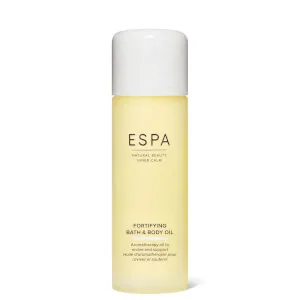
Works for
MoisturizingCocos nucifera oil, Glycine soja oil + 3 moreWorks
“Our formula features a rich melange of Avocado, Sweet Almond, and Soybean Oils to support skin's natural moisture barrier, leaving skin soft and supple.”
This product can help soften the skin and reduce its moisture loss with emollients and occlusives: cocos nucifera oil, helianthus annuus seed oil.
Keep in mind that this product does not contain effective ingredients to attract water to the upper layer of the skin. This is why an additional product with humectants like glycerin or hyaluronic acid can be helpful (apply it before this product for the best results).
Can it cause trouble?
Irritancy7 strong irritants: Parfum, Lavandula angustifolia flower oil + 5 more — patch-test recommendedHigh risk
Comedogenic2 ingredients rated 2 or more on the 0–5 pore-clogging scale2 flagged
User reviews
Be the first — your take helps the next person decide.
Ingredients
Filter by role to see what each ingredient is doing.
Cocos nucifera oil~22–33%
- Irritation risk
- Low
- Comedogenicity
- 3/5
An emollient. Found to be as effective as a moisturizer for dry skin as mineral oil. Could be comedogenic
More about Cocos nucifera oilGlycine soja oil~5.2–7.8%
- Irritation risk
- Medium
- Comedogenicity
- 2/5
A good emollient that helps soften the skin and helps repair its barrier function. It can clog pores if used in high concentrations.
More about Glycine soja oilPrunus amygdalus dulcis seed~4.3–6.5%
- Irritation risk
- Low
Helps soften the upper layer of the skin
More about Prunus amygdalus dulcis seedPersea gratissima oil~3.6–5.3%
- Irritation risk
- Medium
An emollient that helps soften the skin and could be helpful in repairing its barrier function
More about Persea gratissima oilParfum~2–3%
- Irritation risk
- High
An aromatic blend of unspecified and possibly irritating ingredients
More about ParfumHelianthus annuus seed oil~2.2–3.2%
- Irritation risk
- Low
A great emollient due to its high linoleic acid content. One of the most effective plant oils in helping skin hydration and repairing skin barrier function
More about Helianthus annuus seed oilLavandula angustifolia flower oil~1.3–2%
- Irritation risk
- High
A fragrant plant oil, can be irritating
More about Lavandula angustifolia flower oilMelaleuca alternifolia leaf oil~0.9–1.35%
- Irritation risk
- High
An essential oil that can be irritating. Has some anti-bacterial properties
More about Melaleuca alternifolia leaf oilLinalool~0.6–1.4%
Tocopheryl acetate~0.5–1.2%
- Irritation risk
- Medium
A more stable but less bio-available form of vitamin E compared to Tocopherol. Might help moisturize and protect the skin from free radicals, but mostly used in low concentrations to stabilize other ingredients.
More about Tocopheryl acetateEucalyptus globulus leaf oil~0.4–0.95%
- Irritation risk
- High
An essential oil that can be very irritating. Has some anti-bacterial properties
More about Eucalyptus globulus leaf oilLimonene~0.2–0.75%
- Irritation risk
- High
A common frangrance that can easily irritate skin, especially if exposed to air, light or heat
More about LimoneneGeraniol~0.15–0.5%
Beta-carotene~0.1–0.5%
Daucus carota sativa root extract~0.05–0.25%
- Irritation risk
- Low
Carrot extract. Might have anti-oxidant properties and be used to add orange color
More about Daucus carota sativa root extractDaucus carota sativa seed oil~0.1–0.5%
- Irritation risk
- Low
A plant oil that might help neutralize free radicals and have an anti-bacterial effect
More about Daucus carota sativa seed oilAscorbyl palmitate~0.05–0.1%
- Irritation risk
- Medium
Being a lipid soluble form of vitamin C, it is more stable and can penetrate the skin better than L-Ascorbic acid. It is effective in protecting the skin from free radicals, as well as evening the skin tone, but is less effective in stimulating collagen production compared to L-Ascorbic acid.
More about Ascorbyl palmitateIngredient list view
Cocos nucifera oil, Glycine soja oil, Prunus amygdalus dulcis seed, Persea gratissima oil, Parfum, Helianthus annuus seed oil, Lavandula angustifolia flower oil, Melaleuca alternifolia leaf oil, Linalool, Tocopheryl acetate, Eucalyptus globulus leaf oil, Limonene, Geraniol, Beta-carotene, Daucus carota sativa root extract, Daucus carota sativa seed oil, Ascorbyl palmitate
Compare prices
Retailers ranked by price — lowest first.


Worth comparing, line by line.
Match % combines shared ingredients, the first five ingredients, shared actives and hero ingredients, irritancy (lower counts in the alternative's favour), texture and body area. Only products in the same routine step are compared.
| ESPAFortifying Bath & Body OilYOUR PRODUCT | Mama MioTummy Rub Oil | SahajanRitual Body Oil | VitabathLavender Chamomile Body Oil | |
|---|---|---|---|---|
| Match | — | 43% | 39% | 39% |
| Price | $73.00 | $13.02−$59.98 | — | — |
| Shared key ingredients | — | 3 of 5 | 3 of 5 | 3 of 5 |
| Key difference | — | Agran Oil | Camellia Oleifera Seed Oil | Retinyl Palmitate |
| Irritancy | High | High | Medium | Medium |
| Drying alcohol | — | — | — | — |
| View product | Shop | Shop | Shop |


More alternatives: Dermalogica phyto replenish body oilTammy Fender Bulgarian Lavender Body Oil
Sources cited in this review
Every concentration estimate and effectiveness label is anchored to one of these 6 studies and safety reviews.
- 1
- 2
- 3Effect of topically applied lipids on surfactant-irritated skinonlinelibrary.wiley.com
- 4
- 5
- 6

Affiliate links · As an Amazon Associate, WIMJ earns from qualifying purchases.