Works for
1 of 1 advertised claim delivered
Moisturizing12 ingredients credited for this claimGood support
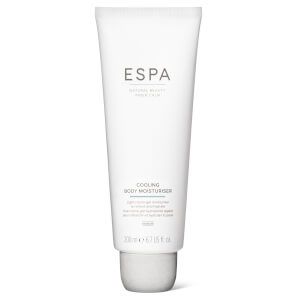
“Cooling Body Moisturiser”
This product can help improve hydration of the skin with the two types of ingredients.
The first type is called “humectants”:
these ingredients help attract water.
When humectants are on the surface of the skin, they “pull in” the moisture from the outside environment, or from
within deeper layers of the skin. The following ingredients in this product do the job:
glycerin, sodium hyaluronate.
This product also contains ingredients called “occlusives”. They help reduce the speed with which our skin loses moisture to the outside environment. These ingredients also help soften the upper layer of the skin, so it feels less tight and nicer to the touch. The following ingredients in this product do the job: caprylic/capric triglyceride, helianthus annuus seed oil unsaponifiables.
Can it cause trouble?
Irritancy8 strong irritants: Parfum, Linalool + 6 more — patch-test recommendedHigh risk
Comedogenic1 ingredient rated 2 or more on the 0–5 pore-clogging scale1 flagged
User reviews
Be the first — your take helps the next person decide.
Ingredients
Filter by role to see what each ingredient is doing.
Water~45–55%
Aloe barbadensis leaf juice~7.1–8.7%
- Irritation risk
- Medium
Traditionally used to treat sunburns, dermatitis and inflammation, but evidence for its effectiveness is lacking. The extract can contain humectants that help attract water into the skin
More about Aloe barbadensis leaf juiceGlycerin~4.1–5%
- Irritation risk
- Low
One of the best moisturizing ingredients. Naturally present in skin. It attracts water to the upper layer of the skin working as a humectant
More about GlycerinCaprylic/capric triglyceride~3.2–3.9%
- Irritation risk
- Medium
A good mix of fatty acids that forms a protective layer on the skin. Improves the shelf life of products. Derived from coconut and glycerin
More about Caprylic/capric triglycerideMenthyl pca~2.3–2.8%
- Irritation risk
- Low
Helianthus annuus seed oil unsaponifiables~1.9–2.3%
- Irritation risk
- Low
A great emollient due to its high linoleic acid content. One of the most effective plant oils in helping skin hydration and repairing skin barrier function
More about Helianthus annuus seed oil unsaponifiablesSclerotium gum~1.6–1.9%
- Irritation risk
- Low
Used to create gel-like formulas and stabilize emulsions
More about Sclerotium gumSorbitol~1.4–1.7%
- Irritation risk
- Low
Helps attract water to the upper layer of the skin and improves the product texture
More about SorbitolPotato starch modified~1.1–1.4%
- Irritation risk
- Low
Phenoxyethanol~0.5–1%
- Irritation risk
- Low
A preservative. It helps prevent bacterial growth in cosmetic products
More about PhenoxyethanolCaprylyl glycol~0.7–1.05%
- Irritation risk
- Medium
Helps preserve products and creates a nice product texture
More about Caprylyl glycolButylene glycol~0.55–0.85%
- Irritation risk
- Low
Used to create a nice product texture and help delivery of other ingredients. Might be somewhat helpful in attracting water to the upper layer of the skin
More about Butylene glycolHectorite~0.55–0.85%
- Irritation risk
- Low
Sodium pca~0.45–0.7%
- Irritation risk
- Low
Naturally present in skin and helps to attract water to its upper layer
More about Sodium pcaCetearyl wheat straw glycosides~0.45–0.65%
- Irritation risk
- Medium
Helps water and oil mix together. Avoid if sensitive to gluten
More about Cetearyl wheat straw glycosidesSucrose cocoate~0.4–0.6%
Cetearyl alcohol~0.45–0.7%
- Irritation risk
- Low
- Comedogenicity
- 2/5
A non-drying alcohol. Works as an emollient. Helps water and oil mix together and creates a nice product texture
More about Cetearyl alcoholParfum~0.3–0.55%
- Irritation risk
- High
An aromatic blend of unspecified and possibly irritating ingredients
More about ParfumLinalool~0.3–0.5%
Citrus aurantium bergamia fruit oil~0.25–0.45%
- Irritation risk
- High
A plant oil with a high content of volatile compounds that can irritate the skin and lead to allergic reactions. Can lead to photosensitivity
More about Citrus aurantium bergamia fruit oilLavandula angustifolia oil~0.25–0.45%
- Irritation risk
- High
An essential oil. Potential allergen and can be irritating. It has some anti-bacterial properties
More about Lavandula angustifolia oilLonicera caprifolium flower extract~0.2–0.4%
- Irritation risk
- High
A plant extract that might help neutralize free radicals in skin. Can contain volalite oils and be irritating
More about Lonicera caprifolium flower extractSodium lactate~0.25–0.4%
- Irritation risk
- Medium
Helps attract water to the upper layer of the skin. Is often used to adjust the pH level of the product
More about Sodium lactatePelargonium graveolens oil~0.25–0.4%
Limonene~0.2–0.4%
- Irritation risk
- High
A common frangrance that can easily irritate skin, especially if exposed to air, light or heat
More about LimoneneLactic acid~0.25–0.45%
- Irritation risk
- Medium
An exfoliating and moisturizing alpha-hydroxy acid (AHA). Typically causes less irritation than other AHAs, for example, glycolic acid. At high concentrations (about 15%), lactic acid can help reduce lines and wrinkles. Recent studies show that lactic acid can support the "good" bacteria living on skin's surface (healthy skin microbiome)
More about Lactic acidLonicera japonica flower extract~0.25–0.45%
- Irritation risk
- High
A plant extract that might help neutralize free radicals in skin. Can contain volalite oils and be irritating
More about Lonicera japonica flower extractCitric acid~0.2–0.4%
- Irritation risk
- Medium
Can work as an exfoliant but is typically used to adjust the product pH
More about Citric acidSodium hyaluronate~0.2–0.4%
- Irritation risk
- Low
One of the best moisturizing ingredients. Attracts water into the upper layer of the skin
More about Sodium hyaluronateBoerhavia diffusa root extract~0.2–0.4%
- Irritation risk
- Medium
A plant extract that might help reduce inflammation and neutralize free radicals
More about Boerhavia diffusa root extractPotassium sorbate~0.2–0.35%
Sodium benzoate~0.15–0.25%
Geraniol~0.15–0.25%
Sodium sulfite~0.1–0.2%
Phytic acid~0.1–0.2%
- Irritation risk
- Medium
An alpha-hydroxy acid (AHA), but is mostly used to stabilize product formulations in cosmetics
More about Phytic acidCitral~0.05–0.15%
Parfum~0.05–0.1%
- Irritation risk
- High
An aromatic blend of unspecified and possibly irritating ingredients
More about ParfumIngredient list view
Water, Aloe barbadensis leaf juice, Glycerin, Caprylic/capric triglyceride, Menthyl pca, Helianthus annuus seed oil unsaponifiables, Sclerotium gum, Sorbitol, Potato starch modified, Phenoxyethanol, Caprylyl glycol, Butylene glycol, Hectorite, Sodium pca, Cetearyl wheat straw glycosides, Sucrose cocoate, Cetearyl alcohol, Parfum, Linalool, Citrus aurantium bergamia fruit oil, Lavandula angustifolia oil, Lonicera caprifolium flower extract, Sodium lactate, Pelargonium graveolens oil, Limonene, Lactic acid, Lonicera japonica flower extract, Citric acid, Sodium hyaluronate, Boerhavia diffusa root extract, Potassium sorbate, Sodium benzoate, Geraniol, Sodium sulfite, Phytic acid, Citral, Parfum
Compare prices
Retailers ranked by price — lowest first.

Worth comparing, line by line.
Match % combines shared ingredients, the first five ingredients, shared actives and hero ingredients, irritancy (lower counts in the alternative's favour), texture and body area. Only products in the same routine step are compared.
| ESPACooling Body MoisturiserYOUR PRODUCT | PRIORI SkincareLCA fx141 Hand and Body Replenisher | PCA SKINBody Therapy | |
|---|---|---|---|
| Match | — | 52% | 50% |
| Price | $28.00 | $35.63+$7.63 | $59.97+$31.97 |
| Shared key ingredients | — | 4 of 7 | 3 of 7 |
| Key difference | — | Retinyl Palmitate | Gluconolactone |
| Irritancy | High | Medium | Medium |
| Drying alcohol | — | — | — |
| View product | Shop | Shop |


Sources cited in this review
Every concentration estimate and effectiveness label is anchored to one of these 15 studies and safety reviews.
- 1
- 2
- 3
- 4Air oxidation increases skin irritation from fragrance terpenesonlinelibrary.wiley.com
- 5
- 6Epidermal and dermal effects of topical lactic acidncbi.nlm.nih.gov

Affiliate links · As an Amazon Associate, WIMJ earns from qualifying purchases.