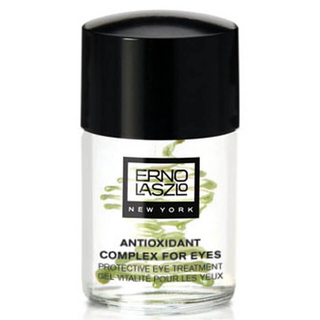
Erno Laszlo Antioxidant Complex for Eyes

Erno Laszlo Antioxidant Complex for Eyes

Efficacy75/100IrritancyHigh
Edit

Works for

3 of 3 advertised claims delivered

Anti-aging
Retinyl palmitate, Magnesium ascorbyl phosphate
Moderate evidence
What the product description says
“Suitable for all skin types, the Antioxidant Complex for Eyes by Erno Laszlo works to fortify, brighten and tighten the delicate eye area for a younger look and feel.”
Source: Lookfantastic

This product contains retinyl palmitate. This ingredient might be able to help reduce and prevent fine lines and wrinkles, improve skin elasticity and firmness, but there is not enough evidence that it actually works.

Retinyl palmitateKey activeEffect: MediumThree steps removed from the active form of vitamin A - retinoic acid. To have an effect in the skin, it first needs to be converted twice to become the retinoic acid. This means it is less potent than retinol, but could also be less irritating. Once converted to the retinoic acid in the skin, it helps against all signs of aging, improves skin cell turnover and helps fight blemishes and clogged pores. However, in many cosmetic formulations, it is used in a concentration that is too low to have the full effect~1.4–2.1%
Magnesium ascorbyl phosphateEffect: Low, below effective doseA derivative of vitamin C that is more stable, but less bioavailable than the pure form of vitamin C. It does not penetrate the skin well, but has been shown to convert to pure vitamin C once in skin. It can be helpful in stimulating collagen production and lightening the skin tone, but the required concentration is likely to be very high~0.3–0.75%
Evens skin tone
Retinyl palmitate, Magnesium ascorbyl phosphate
Moderate evidence
What the product description says
“Formulated with Vitamin C and Retinyl Palmitate to strengthen the skin and increase elasticity, in addition to Grape, Mulberry, Saxifraga and Scutellaria extracts to reduce melanin production, this cream will induce a new lease of life to tired eyes.”
Source: Mankind

The following ingredient (ingredients) in this product might be helpful, but there is no evidence to confirm that it actually works: retinyl palmitate.

Retinyl palmitateKey activeEffect: MediumThree steps removed from the active form of vitamin A - retinoic acid. To have an effect in the skin, it first needs to be converted twice to become the retinoic acid. This means it is less potent than retinol, but could also be less irritating. Once converted to the retinoic acid in the skin, it helps against all signs of aging, improves skin cell turnover and helps fight blemishes and clogged pores. However, in many cosmetic formulations, it is used in a concentration that is too low to have the full effect~1.4–2.1%
Magnesium ascorbyl phosphateEffect: Low, below effective doseA derivative of vitamin C that is more stable, but less bioavailable than the pure form of vitamin C. It does not penetrate the skin well, but has been shown to convert to pure vitamin C once in skin. It can be helpful in stimulating collagen production and lightening the skin tone, but the required concentration is likely to be very high~0.3–0.75%
Moisturizing
Sodium hyaluronate, Glycerin + 7 more
Good evidence
What the product description says
“It's formulated with Retinyl Palmitate and Vitamin C to strengthen the skin and increase elasticity, whilst Grape, Mulberry, Saxifraga and Scutellaria extracts work to reduce melanin production and boost hydration.”
Source: Lookfantastic

This product can help improve hydration of the skin with the two types of ingredients.

The first type is called “humectants”:
these ingredients help attract water. When humectants are on the surface of the skin, they “pull in” the moisture from the outside environment, or from within deeper layers of the skin. The following ingredients in this product do the job: glycerin, sodium hyaluronate.

This product also contains ingredients called “occlusives”. They help reduce the speed with which our skin loses moisture to the outside environment. These ingredients also help soften the upper layer of the skin, so it feels less tight and nicer to the touch. The following ingredients in this product do the job: glycosaminoglycans, aloe barbadensis leaf extract.

Sodium hyaluronateKey active· HumectantEffect: HighOne of the best moisturizing ingredients. Attracts water into the upper layer of the skin~0.2–0.7%
GlycerinKey active· HumectantEffect: HighOne of the best moisturizing ingredients. Naturally present in skin. It attracts water to the upper layer of the skin working as a humectant~2.1–3.2%
GlycosaminoglycansKey active· EmollientEffect: HighLong sugars that help attract water to the upper layer of the skin~0.4–0.95%
Vitis vinifera fruit extractKey activeEffect: MediumA plant extract that helps attract water to the upper layer of the skin. It might be helpful in neutralizing free radicals in skin, but is less potent than the extract from the seeds~1–1.5%
Scutellaria baicalensis root extract· HumectantEffect: LowA plant extract that might contain a compound baicalin that could be helpful in neutralizing free radicals and reducing inflammation in skin. The baicalin concentration in skincare products is often too low for an effective action. Can be used for its fragrant properties~0.5–1.2%
Propylene glycol· HumectantEffect: LowHelps oil and water mix together and can enhance the penetration of other ingredients into the skin. It can be irritating~3.7–5.6%
Aloe barbadensis leaf extract· Humectant, EmollientEffect: LowTraditionally used to treat sunburns, dermatitis and inflammation, but evidence for its effectiveness is lacking. The extract can contain humectants that help attract water into the skin~4.7–7.1%
Butylene glycol· HumectantEffect: LowUsed to create a nice product texture and help delivery of other ingredients. Might be somewhat helpful in attracting water to the upper layer of the skin~0.15–0.55%
Glyceryl polymethacrylate· Humectant, EmollientEffect: LowUsed to create a nice product texture~2.8–4.2%
Anti-oxidation
Not advertised by the brand · Ginkgo biloba leaf extract, Scutellaria baicalensis root extract + 4 more
Moderate evidence

This product contains antioxidants (ginkgo biloba leaf extract) that might be able to help neutralize free radicals in skin to lessen the damage it gets from the UV light (sun). There is not enough evidence to confirm their effectiveness in skin though.

Ginkgo biloba leaf extractKey activeEffect: MediumA plant extract that might help neutralize free radicals and reduce inflammation in skin. It can be irritating~0.4–0.95%
Scutellaria baicalensis root extractEffect: LowA plant extract that might contain a compound baicalin that could be helpful in neutralizing free radicals and reducing inflammation in skin. The baicalin concentration in skincare products is often too low for an effective action. Can be used for its fragrant properties~0.5–1.2%
Vitis vinifera fruit extractEffect: LowA plant extract that helps attract water to the upper layer of the skin. It might be helpful in neutralizing free radicals in skin, but is less potent than the extract from the seeds~1–1.5%
BisabololEffect: Low, below effective doseAn active component of chamomile plant that historically has been used to calm down irritated skin. A recent study shows that bisabolol indeed can have some anti-inflammatory effect on skin, even though conclusive data is lacking. Bisabolol has a sweet floral scent and can be added to products for its aromatic properties~0.3–0.75%
Tocopheryl acetateEffect: Low, below effective doseA more stable but less bio-available form of vitamin E compared to Tocopherol. Might help moisturize and protect the skin from free radicals, but mostly used in low concentrations to stabilize other ingredients.~0.15–0.65%
Magnesium ascorbyl phosphateEffect: Low, below effective doseA derivative of vitamin C that is more stable, but less bioavailable than the pure form of vitamin C. It does not penetrate the skin well, but has been shown to convert to pure vitamin C once in skin. It can be helpful in stimulating collagen production and lightening the skin tone, but the required concentration is likely to be very high~0.3–0.75%

Can it cause trouble?

Irritancy
3 strong irritants: Retinyl palmitate, Diazolidinyl urea + 1 more — patch-test recommended
High risk
We flagged 11 ingredients with irritancy potential. Severity depends on your sensitivity threshold; the table lists the worst offenders first.
IngredientFunctionIrritationEst. amount
Propylene glycolHelps oil and water mix together and can enhance the penetration of other ingredients into the skin. It can be irritatingHigh~3.7–5.6%est.
Retinyl palmitateThree steps removed from the active form of vitamin A - retinoic acid. To have an effect in the skin, it first needs to be converted twice to become the retinoic acid. This means it is less potent than retinol, but could also be less irritating. Once converted to the retinoic acid in the skin, it helps against all signs of aging, improves skin cell turnover and helps fight blemishes and clogged pores. However, in many cosmetic formulations, it is used in a concentration that is too low to have the full effectHigh~1.4–2.1%est.
Scutellaria baicalensis root extractA plant extract that might contain a compound baicalin that could be helpful in neutralizing free radicals and reducing inflammation in skin. The baicalin concentration in skincare products is often too low for an effective action. Can be used for its fragrant propertiesHigh~0.5–1.2%est.
Ginkgo biloba leaf extractA plant extract that might help neutralize free radicals and reduce inflammation in skin. It can be irritatingHigh~0.4–0.95%est.
Diazolidinyl ureaA preservative. Works by releasing formaldehyde. Can be irritatingHigh~0.05–0.3%est.
Iodopropynyl butylcarbamateA preservative. Can be irritatingHigh~0.01–0.02%est.
Aloe barbadensis leaf extractTraditionally used to treat sunburns, dermatitis and inflammation, but evidence for its effectiveness is lacking. The extract can contain humectants that help attract water into the skinMedium~4.7–7.1%est.
Vitis vinifera fruit extractA plant extract that helps attract water to the upper layer of the skin. It might be helpful in neutralizing free radicals in skin, but is less potent than the extract from the seedsMedium~1–1.5%est.
Magnesium ascorbyl phosphateA derivative of vitamin C that is more stable, but less bioavailable than the pure form of vitamin C. It does not penetrate the skin well, but has been shown to convert to pure vitamin C once in skin. It can be helpful in stimulating collagen production and lightening the skin tone, but the required concentration is likely to be very highMedium~0.3–0.75%est.
Tocopheryl acetateA more stable but less bio-available form of vitamin E compared to Tocopherol. Might help moisturize and protect the skin from free radicals, but mostly used in low concentrations to stabilize other ingredients.Medium~0.15–0.65%est.
Disodium edtaStabilizes the product formulationMedium~0.1–0.4%est.
Comedogenic
Clean of flagged comedogenic ingredients
None flagged
Edit

User reviews

Would you recommend?
No community reviews yet.

Be the first — your take helps the next person decide.

Write a review · ~30s

Ingredients

Filter by role to see what each ingredient is doing.

Water~40–60%
Formula
Irritation risk
Low

Plain old water

More about Water
Aloe barbadensis leaf extract~4.7–7.1%
Irritant · medium
Irritation risk
Medium
Works for
Moisturizing

Traditionally used to treat sunburns, dermatitis and inflammation, but evidence for its effectiveness is lacking. The extract can contain humectants that help attract water into the skin

More about Aloe barbadensis leaf extract
Propylene glycol~3.7–5.6%
Irritant · high
Irritation risk
High
Works for
Moisturizing

Helps oil and water mix together and can enhance the penetration of other ingredients into the skin. It can be irritating

More about Propylene glycol
Glyceryl polymethacrylate~2.8–4.2%
Formula
Irritation risk
Low
Works for
Moisturizing

Used to create a nice product texture

More about Glyceryl polymethacrylate
Glycerin~2.1–3.2%
Key active
Irritation risk
Low
Works for
Moisturizing

One of the best moisturizing ingredients. Naturally present in skin. It attracts water to the upper layer of the skin working as a humectant

More about Glycerin
Carbomer~1.6–2.5%
Formula
Irritation risk
Low
Works for
Cleansing

Helps create a thicker or gel-like product texture. It is not a surfactant but can be used in gentle cleansing formulations

More about Carbomer
Retinyl palmitate~1.4–2.1%
Key activeIrritant · high
Irritation risk
High
Works for
Anti-agingEvens skin toneAnti-blemishExfoliation

Three steps removed from the active form of vitamin A - retinoic acid. To have an effect in the skin, it first needs to be converted twice to become the retinoic acid. This means it is less potent than retinol, but could also be less irritating. Once converted to the retinoic acid in the skin, it helps against all signs of aging, improves skin cell turnover and helps fight blemishes and clogged pores. However, in many cosmetic formulations, it is used in a concentration that is too low to have the full effect

More about Retinyl palmitate
Saxifraga sarmentosa extract~1.2–1.8%
Formula
Vitis vinifera fruit extract~1–1.5%
Key activeIrritant · medium
Irritation risk
Medium
Works for
MoisturizingAnti-oxidation

A plant extract that helps attract water to the upper layer of the skin. It might be helpful in neutralizing free radicals in skin, but is less potent than the extract from the seeds

More about Vitis vinifera fruit extract
Scutellaria baicalensis root extract~0.5–1.2%
Irritant · high
Irritation risk
High
Works for
Anti-inflammatoryAnti-oxidationMoisturizingReduces irritationAntibacterial

A plant extract that might contain a compound baicalin that could be helpful in neutralizing free radicals and reducing inflammation in skin. The baicalin concentration in skincare products is often too low for an effective action. Can be used for its fragrant properties

More about Scutellaria baicalensis root extract
Morus bombycis leaf extract~0.5–1.15%
Formula
Ginkgo biloba leaf extract~0.4–0.95%
Key activeIrritant · high
Irritation risk
High
Works for
Anti-oxidationAnti-blemishAnti-inflammatoryAntibacterial

A plant extract that might help neutralize free radicals and reduce inflammation in skin. It can be irritating

More about Ginkgo biloba leaf extract
Glycosaminoglycans~0.4–0.95%
Key active
Irritation risk
Low
Works for
Moisturizing

Long sugars that help attract water to the upper layer of the skin

More about Glycosaminoglycans
Bisabolol~0.3–0.75%
Formula
Irritation risk
Low
Works for
Reduces irritationAnti-inflammatoryAnti-oxidation

An active component of chamomile plant that historically has been used to calm down irritated skin. A recent study shows that bisabolol indeed can have some anti-inflammatory effect on skin, even though conclusive data is lacking. Bisabolol has a sweet floral scent and can be added to products for its aromatic properties

More about Bisabolol
Magnesium ascorbyl phosphate~0.3–0.75%
Irritant · medium
Irritation risk
Medium
Works for
Evens skin toneAnti-agingAnti-oxidation

A derivative of vitamin C that is more stable, but less bioavailable than the pure form of vitamin C. It does not penetrate the skin well, but has been shown to convert to pure vitamin C once in skin. It can be helpful in stimulating collagen production and lightening the skin tone, but the required concentration is likely to be very high

More about Magnesium ascorbyl phosphate
Sodium hyaluronate~0.2–0.7%
Key active
Irritation risk
Low
Works for
Moisturizing

One of the best moisturizing ingredients. Attracts water into the upper layer of the skin

More about Sodium hyaluronate
Tocopheryl acetate~0.15–0.65%
Irritant · medium
Irritation risk
Medium
Works for
Anti-oxidation

A more stable but less bio-available form of vitamin E compared to Tocopherol. Might help moisturize and protect the skin from free radicals, but mostly used in low concentrations to stabilize other ingredients.

More about Tocopheryl acetate
Butylene glycol~0.15–0.55%
Formula
Irritation risk
Low
Works for
Moisturizing

Used to create a nice product texture and help delivery of other ingredients. Might be somewhat helpful in attracting water to the upper layer of the skin

More about Butylene glycol
Sodium hydroxide~0.15–0.5%
Formula
Irritation risk
Low

Used to adjust the product's pH

More about Sodium hydroxide
Disodium edta~0.1–0.4%
Irritant · medium
Irritation risk
Medium

Stabilizes the product formulation

More about Disodium edta
Diazolidinyl urea~0.05–0.3%
Irritant · high
Irritation risk
High

A preservative. Works by releasing formaldehyde. Can be irritating

More about Diazolidinyl urea
Iodopropynyl butylcarbamate~0.01–0.02%
Irritant · high
Irritation risk
High

A preservative. Can be irritating

More about Iodopropynyl butylcarbamate
Mica~0.05–0.3%
Formula
Irritation risk
Low

Creates an illusion of smoother and more radiant skin tone. Adds shimmer to the skin by reflecting light

More about Mica
Ci 77891~0.05–0.2%
Formula
Irritation risk
Low
More about Ci 77891
Ci 77288~0.05–0.15%
Formula
Irritation risk
Low
More about Ci 77288
Ingredient list view

Water, Aloe barbadensis leaf extract, Propylene glycol, Glyceryl polymethacrylate, Glycerin, Carbomer, Retinyl palmitate, Saxifraga sarmentosa extract, Vitis vinifera fruit extract, Scutellaria baicalensis root extract, Morus bombycis leaf extract, Ginkgo biloba leaf extract, Glycosaminoglycans, Bisabolol, Magnesium ascorbyl phosphate, Sodium hyaluronate, Tocopheryl acetate, Butylene glycol, Sodium hydroxide, Disodium edta, Diazolidinyl urea, Iodopropynyl butylcarbamate, Mica, Ci 77891, Ci 77288

Compare prices

Retailers ranked by price — lowest first.

Amazon US
Price unavailable
Check

Affiliate links · prices updated regularly · As an Amazon Associate, WIMJ earns from qualifying purchases.

Cheaper alternatives? See how this stacks up against similar formulas.
We compare ingredient profiles across our catalog — pick the closest match for your budget.
Open dupe finder

Sources cited in this review

Every concentration estimate and effectiveness label is anchored to one of these 17 studies and safety reviews.

  1. 1
  2. 2
    Propylene Glycolpubmed.ncbi.nlm.nih.gov
  3. 3
  4. 4
  5. 5
  6. 6
Erno Laszlo Antioxidant Complex for Eyes
Erno LaszloAntioxidant Complex for Eyes

Affiliate links · As an Amazon Associate, WIMJ earns from qualifying purchases.

As an Amazon Associate, WIMJ earns from qualifying purchases.