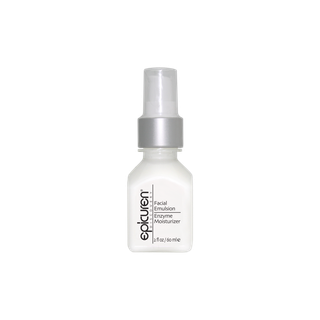
Epicuren Facial Emulsion Enzyme Moisturizer
Works for
1 of 1 advertised claim delivered
Moisturizing16 ingredients credited for this claimGood support
“Facial Emulsion Enzyme Moisturizer”
This product can help improve hydration of the skin with the two types of ingredients.
The first type is called “humectants”:
these ingredients help attract water.
When humectants are on the surface of the skin, they “pull in” the moisture from the outside environment, or from
within deeper layers of the skin. The following ingredients in this product do the job:
sucrose, aloe barbadensis leaf extract.
This product also contains ingredients called “occlusives”. They help reduce the speed with which our skin loses moisture to the outside environment. These ingredients also help soften the upper layer of the skin, so it feels less tight and nicer to the touch. The following ingredients in this product do the job: caprylic/capric triglyceride, carthamus tinctorius seed oil.
Can it cause trouble?
Irritancy2 strong irritants: Citrus grandis seed extract, Retinyl palmitateMedium risk
Comedogenic3 ingredients rated 2 or more on the 0–5 pore-clogging scale3 flagged


User reviews
Be the first — your take helps the next person decide.
Ingredients
Filter by role to see what each ingredient is doing.
Water~45–55%
Carthamus tinctorius seed oil~6.5–8%
- Irritation risk
- Low
An emollient that helps soften the skin and might help calm down inflammation
More about Carthamus tinctorius seed oilCaprylic/capric triglyceride~4.7–5.7%
- Irritation risk
- Medium
A good mix of fatty acids that forms a protective layer on the skin. Improves the shelf life of products. Derived from coconut and glycerin
More about Caprylic/capric triglycerideCetearyl alcohol~3–3.7%
- Irritation risk
- Low
- Comedogenicity
- 2/5
A non-drying alcohol. Works as an emollient. Helps water and oil mix together and creates a nice product texture
More about Cetearyl alcoholTocopheryl acetate~2.2–2.7%
- Irritation risk
- Medium
A more stable but less bio-available form of vitamin E compared to Tocopherol. Might help moisturize and protect the skin from free radicals, but mostly used in low concentrations to stabilize other ingredients.
More about Tocopheryl acetateCollagen amino acids~1.9–2.3%
- Irritation risk
- Low
Help attract water to the upper layer of the skin, soften it and support the skin barrier function
More about Collagen amino acidsElastin amino acids~1.6–2%
- Irritation risk
- Low
Biotin~1.3–1.6%
- Irritation risk
- Low
Might have some moisturising properties. Is not effective when applied topically beyond some moisturizing effect
More about BiotinNiacin~1.1–1.3%
- Irritation risk
- High
A form of vitamin B3. It is similar in action to niacinamide, but is more likely to cause red flashes in skin as the side effect
More about NiacinRiboflavin~0.75–1.15%
- Irritation risk
- Low
Aloe barbadensis leaf extract~0.7–1%
- Irritation risk
- Medium
Traditionally used to treat sunburns, dermatitis and inflammation, but evidence for its effectiveness is lacking. The extract can contain humectants that help attract water into the skin
More about Aloe barbadensis leaf extractSesamum indicum seed oil~0.55–0.8%
- Irritation risk
- Low
A good moisturizing plant oil. Due to the high linoleic acid content, it helps soften the upper layer of the skin, reduce water loss and support skin barrier function
More about Sesamum indicum seed oilEthylhexyl palmitate~0.5–0.7%
- Irritation risk
- Low
- Comedogenicity
- 3/5
An emollient that helps soften the skin and create a nice product texture
More about Ethylhexyl palmitateCitrus grandis seed extract~0.3–0.55%
- Irritation risk
- High
Chamomilla recutita extract~0.3–0.55%
- Irritation risk
- High
Plant extract that can have healing and anti-inflammatory properties. It is a potential allergen and can be irritating
More about Chamomilla recutita extractArctostaphylos uva-ursi leaf extract~0.3–0.55%
- Irritation risk
- Low
Carbomer~0.3–0.55%
- Irritation risk
- Low
Helps create a thicker or gel-like product texture. It is not a surfactant but can be used in gentle cleansing formulations
More about CarbomerAllantoin~0.25–0.45%
- Irritation risk
- Low
Helps calm down inflammation in skin and can help reduce itching. Helps to repair the skin barrier and keep skin hydrated
More about AllantoinAscorbyl palmitate~0.25–0.5%
- Irritation risk
- Medium
Being a lipid soluble form of vitamin C, it is more stable and can penetrate the skin better than L-Ascorbic acid. It is effective in protecting the skin from free radicals, as well as evening the skin tone, but is less effective in stimulating collagen production compared to L-Ascorbic acid.
More about Ascorbyl palmitateCeteareth-20~0.35–0.6%
- Irritation risk
- Medium
- Comedogenicity
- 2/5
Helps oil and water mix together. Has some emollient properties
More about Ceteareth-20Sorbitan stearate~0.25–0.45%
Retinyl palmitate~0.2–0.35%
- Irritation risk
- High
Three steps removed from the active form of vitamin A - retinoic acid. To have an effect in the skin, it first needs to be converted twice to become the retinoic acid. This means it is less potent than retinol, but could also be less irritating. Once converted to the retinoic acid in the skin, it helps against all signs of aging, improves skin cell turnover and helps fight blemishes and clogged pores. However, in many cosmetic formulations, it is used in a concentration that is too low to have the full effect
More about Retinyl palmitatePrunus armeniaca kernel oil~0.25–0.4%
- Irritation risk
- Medium
An emollient that helps soften the skin
More about Prunus armeniaca kernel oilSucrose~0.15–0.3%
- Irritation risk
- Low
Can help attract water to the upper layer of the skin. In crystal form, it can work as a gentle exfoliant, gentler than the salt scrub. Helps stabilize the emulsion
More about SucroseLactic acid~0.15–0.3%
- Irritation risk
- Medium
An exfoliating and moisturizing alpha-hydroxy acid (AHA). Typically causes less irritation than other AHAs, for example, glycolic acid. At high concentrations (about 15%), lactic acid can help reduce lines and wrinkles. Recent studies show that lactic acid can support the "good" bacteria living on skin's surface (healthy skin microbiome)
More about Lactic acidPanthenol~0.15–0.25%
- Irritation risk
- Low
Helps attract water to the upper layer of the skin and can help improve skin barrier function
More about PanthenolLecithin~0.15–0.3%
- Irritation risk
- Low
Used mostly for creating emulsions - helping oil and water mix together. Helps soften the upper layer of the skin
More about LecithinCyclopentasiloxane~0.15–0.25%
- Irritation risk
- Low
A silicone that helps improve the product texture and spreadability. Can absorb oil creating a short-term mattifying effect on the skin
More about CyclopentasiloxaneAminomethyl propanol~0.05–0.15%
Propanediol~0.1–0.2%
- Irritation risk
- Low
Acts as a solvent for other ingredients. Speeds up the absorption of other ingredients into the skin
More about PropanediolPhenoxyethanol~0.15–0.25%
- Irritation risk
- Low
A preservative. It helps prevent bacterial growth in cosmetic products
More about PhenoxyethanolEthylhexylglycerin~0.1–0.15%
Ingredient list view
Water, Carthamus tinctorius seed oil, Caprylic/capric triglyceride, Cetearyl alcohol, Tocopheryl acetate, Unknown, Collagen amino acids, Unknown, Elastin amino acids, Biotin, Niacin, Riboflavin, Aloe barbadensis leaf extract, Sesamum indicum seed oil, Ethylhexyl palmitate, Citrus grandis seed extract, Chamomilla recutita extract, Arctostaphylos uva-ursi leaf extract, Carbomer, Allantoin, Ascorbyl palmitate, Ceteareth-20, Sorbitan stearate, Retinyl palmitate, Prunus armeniaca kernel oil, Sucrose, Unknown, Lactic acid, Panthenol, Lecithin, Cyclopentasiloxane, Aminomethyl propanol, Propanediol, Phenoxyethanol, Ethylhexylglycerin
Compare prices
Retailers ranked by price — lowest first.

Worth comparing, line by line.
Match % combines shared ingredients, the first five ingredients, shared actives and hero ingredients, irritancy (lower counts in the alternative's favour), texture and body area. Only products in the same routine step are compared.
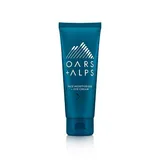
| EpicurenFacial Emulsion Enzyme MoisturizerYOUR PRODUCT | OARS + ALPSMen's Daily All | DiscoHydrating Face Moisturizer | CetaphilRedness Relieving Night Moisturizer | |
|---|---|---|---|---|
| Match | — | 51% | 51% | 51% |
| Price | $37.00 | $15.00−$22.00 | $30.00−$7.00 | $9.51−$27.49 |
| Shared key ingredients | — | 3 of 11 | 3 of 11 | 3 of 11 |
| Key difference | — | Dimethicone | Sodium Ascorbyl Phosphate | Niacinamide |
| Irritancy | Medium | Low | Low | Low |
| Drying alcohol | — | — | — | — |
| View product | Shop | Shop | Shop |


Sources cited in this review
Every concentration estimate and effectiveness label is anchored to one of these 8 studies and safety reviews.
- 1
- 2Triglyceride composition of Sesamum indicum seed oilonlinelibrary.wiley.com
- 3
- 4
- 5Epidermal and dermal effects of topical lactic acidncbi.nlm.nih.gov
- 6Dual Effects of Alpha-Hydroxy Acids on the Skinpdfs.semanticscholar.org

Affiliate links · As an Amazon Associate, WIMJ earns from qualifying purchases.