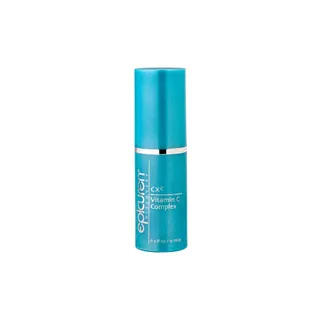
Works for
MoisturizingButyrospermum parkii butter, Caprylic/capric triglyceride + 8 moreWorks
“Applied daily, this moisturizing formula helps to dramatically reduce the appearance of fine lines and improve your complexion's overall radiance.”
This product can help improve hydration of the skin with the two types of ingredients.
The first type is called “humectants”:
these ingredients help attract water.
When humectants are on the surface of the skin, they “pull in” the moisture from the outside environment, or from
within deeper layers of the skin. The following ingredients in this product do the job:
glycerin.
This product also contains ingredients called “occlusives”. They help reduce the speed with which our skin loses moisture to the outside environment. These ingredients also help soften the upper layer of the skin, so it feels less tight and nicer to the touch. The following ingredients in this product do the job: butyrospermum parkii butter, caprylic/capric triglyceride.
Anti-agingButyrospermum parkii butter, Sodium ascorbyl phosphate + 4 moreNot delivered
“Applied daily, this moisturizing formula helps to dramatically reduce the appearance of fine lines and improve your complexion's overall radiance.”
This product does not contain ingredients that are able to reduce fine lines and wrinkles or help with skin elasticity, but it can improve the look of the skin temporarily through moisturization. Well-moisturized skin might also be able to repair the sun damage better.This ingredient - butyrospermum parkii butter - could be helpful for preventing or repairing signs of aging in theory, but there is no evidence that it actually works.
Can it cause trouble?
Irritancy2 strong irritants: Citrus nobilis peel oil, Citrus aurantium dulcis oilMedium risk
Comedogenic1 ingredient rated 2 or more on the 0–5 pore-clogging scale1 flagged


User reviews
Be the first — your take helps the next person decide.
Ingredients
Filter by role to see what each ingredient is doing.
Water~45–55%
Butyrospermum parkii butter~5.8–7.1%
- Irritation risk
- Low
- Comedogenicity
- 3/5
A great moisturising ingredient that softens the skin and reduces water loss from its upper layer. It also can be helpful in protecting skin from free radicals
More about Butyrospermum parkii butterCaprylic/capric triglyceride~4.6–5.6%
- Irritation risk
- Medium
A good mix of fatty acids that forms a protective layer on the skin. Improves the shelf life of products. Derived from coconut and glycerin
More about Caprylic/capric triglycerideHelianthus annuus seed oil~3.4–4.1%
- Irritation risk
- Low
A great emollient due to its high linoleic acid content. One of the most effective plant oils in helping skin hydration and repairing skin barrier function
More about Helianthus annuus seed oilGlycerin~2.5–3.1%
- Irritation risk
- Low
One of the best moisturizing ingredients. Naturally present in skin. It attracts water to the upper layer of the skin working as a humectant
More about GlycerinPotassium cetyl phosphate~2–2.5%
- Irritation risk
- Medium
Helps oil and water mix together
More about Potassium cetyl phosphateSodium ascorbyl phosphate~1.7–2%
- Irritation risk
- Medium
A stable derivative of vitamin C. It is oil-soluble which means it is more likely to penetrate the skin compared to the pure form of vitamin C (which is water-soluble), but it is less bio-available and is way less effective in stimulating collagen and reducing wrinkles compared to the pure form of vitamin C (L-ascorbic acid) and its other derivatives (for example, magnesium ascorbyl phosphate). At the same time, this vitamin C derivative has been shown in studies to be effective in reducing acne, blemishes and clogged pores. It is less irritating then the pure form of vitamin C
More about Sodium ascorbyl phosphateCetyl alcohol~1.5–1.8%
- Irritation risk
- Low
A non-drying alcohol that works to soften the skin and stabilize product formulations helping oil and water mix together
More about Cetyl alcoholStearyl alcohol~1.3–1.5%
- Irritation risk
- Low
An emollient that helps soften the skin
More about Stearyl alcoholGlyceryl stearate~1–1.2%
- Irritation risk
- Low
An emollient that softens the skin and forms a protective layer on its surface. Helps water and oil mix together
More about Glyceryl stearateMacadamia ternifolia seed oil~0.7–1.1%
- Irritation risk
- Medium
Plant oil from nuts that helps soften the upper layer of the skin. Contains a high concentration of oleic acid that can weaken skin's barrier function and increase water-loss while enhancing penetration of other ingredients
More about Macadamia ternifolia seed oilSqualane~0.6–0.9%
- Irritation risk
- Low
An oil naturally present in skin. Works as an emollient to soften the skin and form a protective layer on its surface without a greasy feeling.
More about SqualaneSodium stearoyl glutamate~0.55–0.85%
- Irritation risk
- Medium
Helps oil and water mix together
More about Sodium stearoyl glutamateTocopherol~0.45–0.7%
- Irritation risk
- Low
Pure form of vitamin E. Can help moisturise and protect the skin from free radicals. Often used to help stabilise other ingredients or the formula itself
More about TocopherolCitrus nobilis peel oil~0.35–0.65%
- Irritation risk
- High
A plant oil with high content of volatile compounds that, especially when exposed to air, can cause allergic reactions and irritate the skin
More about Citrus nobilis peel oilCitric acid~0.4–0.6%
- Irritation risk
- Medium
Can work as an exfoliant but is typically used to adjust the product pH
More about Citric acidLonicera caprifolium flower extract~0.3–0.6%
- Irritation risk
- High
A plant extract that might help neutralize free radicals in skin. Can contain volalite oils and be irritating
More about Lonicera caprifolium flower extractLonicera japonica flower extract~0.3–0.6%
- Irritation risk
- High
A plant extract that might help neutralize free radicals in skin. Can contain volalite oils and be irritating
More about Lonicera japonica flower extractMagnesium ascorbyl phosphate~0.3–0.55%
- Irritation risk
- Medium
A derivative of vitamin C that is more stable, but less bioavailable than the pure form of vitamin C. It does not penetrate the skin well, but has been shown to convert to pure vitamin C once in skin. It can be helpful in stimulating collagen production and lightening the skin tone, but the required concentration is likely to be very high
More about Magnesium ascorbyl phosphateTetrahexyldecyl ascorbate~0.3–0.5%
- Irritation risk
- Medium
Being a lipid soluble form of vitamin C, it is more stable than ascorbic acid, but still degrades quickly and needs to be stabilized in a formulation with another ingredient. It is claimed to penetrate skin better than pure vitamin C and have the the similar benefits, but solid studies of its effectiveness are lacking. Is likely to require a higher concentration in a product than pure vitamin C to be effective. It might be able to help reduce pore clogging.
More about Tetrahexyldecyl ascorbateDaucus carota sativa seed oil~0.3–0.55%
- Irritation risk
- Low
A plant oil that might help neutralize free radicals and have an anti-bacterial effect
More about Daucus carota sativa seed oilDaucus carota sativa root extract~0.25–0.45%
- Irritation risk
- Low
Carrot extract. Might have anti-oxidant properties and be used to add orange color
More about Daucus carota sativa root extractHydroxypropyl starch phosphate~0.25–0.5%
- Irritation risk
- Medium
Helps oil and water mix together and used to stabilize product formulations
More about Hydroxypropyl starch phosphateTrisodium ethylenediamine disuccinate~0.2–0.4%
- Irritation risk
- Medium
Used to improve stability of the formulation
More about Trisodium ethylenediamine disuccinateCitrus aurantium dulcis oil~0.2–0.4%
- Irritation risk
- High
Used as a fragrance. It can be irritating and cause photosensitivity
More about Citrus aurantium dulcis oilBeta-carotene~0.2–0.4%
Ascorbyl palmitate~0.15–0.3%
- Irritation risk
- Medium
Being a lipid soluble form of vitamin C, it is more stable and can penetrate the skin better than L-Ascorbic acid. It is effective in protecting the skin from free radicals, as well as evening the skin tone, but is less effective in stimulating collagen production compared to L-Ascorbic acid.
More about Ascorbyl palmitateHydroxyethylcellulose~0.15–0.3%
- Irritation risk
- Low
Used to thicken product formulations and create gel-like textures
More about HydroxyethylcelluloseLecithin~0.2–0.35%
- Irritation risk
- Low
Used mostly for creating emulsions - helping oil and water mix together. Helps soften the upper layer of the skin
More about LecithinPhenoxyethanol~0.15–0.25%
- Irritation risk
- Low
A preservative. It helps prevent bacterial growth in cosmetic products
More about PhenoxyethanolSodium hydroxide~0.1–0.2%
Ethylhexylglycerin~0.1–0.15%
Ingredient list view
Water, Butyrospermum parkii butter, Caprylic/capric triglyceride, Helianthus annuus seed oil, Glycerin, Potassium cetyl phosphate, Sodium ascorbyl phosphate, Cetyl alcohol, Stearyl alcohol, Glyceryl stearate, Macadamia ternifolia seed oil, Squalane, Sodium stearoyl glutamate, Tocopherol, Citrus nobilis peel oil, Citric acid, Lonicera caprifolium flower extract, Lonicera japonica flower extract, Magnesium ascorbyl phosphate, Tetrahexyldecyl ascorbate, Daucus carota sativa seed oil, Daucus carota sativa root extract, Hydroxypropyl starch phosphate, Trisodium ethylenediamine disuccinate, Citrus aurantium dulcis oil, Beta-carotene, Ascorbyl palmitate, Hydroxyethylcellulose, Lecithin, Phenoxyethanol, Sodium hydroxide, Ethylhexylglycerin
Compare prices
Retailers ranked by price — lowest first.

Worth comparing, line by line.
Match % combines shared ingredients, the first five ingredients, shared actives and hero ingredients, irritancy (lower counts in the alternative's favour), texture and body area. Only products in the same routine step are compared.
| EpicurenCXC Vitamin C ComplexYOUR PRODUCT | InstaNaturalAll-in-One Hydrating Night Serum | EmerginCVitamin C Serum | Dr. Barbara SturmThe Good C Vitamin C Serum | |
|---|---|---|---|---|
| Match | — | 50% | 50% | 49% |
| Price | $55.44 | — | $77.01+$21.57 | $139.76+$84.32 |
| Shared key ingredients | — | 6 of 7 | 4 of 7 | 6 of 7 |
| Key difference | — | Niacinamide | Glycolic Acid | Panthenol |
| Irritancy | Medium | High | Medium | Low |
| Drying alcohol | — | — | — | — |
| View product | Shop | Shop | Shop |


More alternatives: Nakery Collagen Wrinkle Plumping Serum-in-CreamESPA Face Serums Tri-Active Resilience ProBiome Serum
Product summary
"Epicuren - CXC Vitamin C Complex" could be helpful for: Moisturizing, but its actives are not the most effective or are not well-studied.
Ingredient callouts
- Humectants (glycerin 3.20% - 3.90%). These ingredients help attract water to the upper layer of the skin and improve the skin hydration.
Price
The product retails for 48.00$ in the United States and for 89.00A$ in Australia.
For a detailed price comparison: click here.
Sources cited in this review
Every concentration estimate and effectiveness label is anchored to one of these 25 studies and safety reviews.
- 1
- 2
- 3Effect of topically applied lipids on surfactant-irritated skinonlinelibrary.wiley.com
- 4
- 5
- 6

Affiliate links · As an Amazon Associate, WIMJ earns from qualifying purchases.