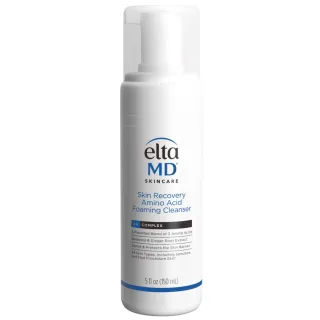
EltaMD Skin Recovery Amino Acid Foaming Cleanser
Works for
CleansingDecyl glucoside, Sodium methyl cocoyl taurate + 6 moreCleanses gently
“Removes sunscreen, makeup, skin damaging pollution, excess oil and impurities without causing irritation”
This product works by removing dirt and oil from the surface of the skin. It uses a combination of mild cleansing agents (cocamidopropyl hydroxysultaine, coconut acid, decyl glucoside, hexylene glycol, sodium cocoyl apple amino acids, sodium cocoyl glycinate, sodium lauroyl lactylate, sodium methyl cocoyl taurate) and should be able to cleanse the skin gently. Still keep in mind that any cleansing can disrupt the skin barrier, and most people do not need to cleanse their skin more than once per day.
Even though this formulation is mild, the following cleansing agents could trigger an irritation or allergy for some people: decyl glucoside, sodium methyl cocoyl taurate
Can it cause trouble?
Irritancy1 strong irritant: Zingiber officinale root extractMedium risk
ComedogenicClean of flagged comedogenic ingredientsNone flagged
User reviews
Be the first — your take helps the next person decide.
Ingredients
Filter by role to see what each ingredient is doing.
Water~45–55%
Glycerin~5.6–6.8%
- Irritation risk
- Low
One of the best moisturizing ingredients. Naturally present in skin. It attracts water to the upper layer of the skin working as a humectant
More about GlycerinDecyl glucoside~5.2–6.4%
- Irritation risk
- High
Helps oil and water mix together. Can be irritating
More about Decyl glucosideSodium methyl cocoyl taurate~4.1–5%
- Irritation risk
- High
Helps oil and water mix together. Can be used as cleansing agent
More about Sodium methyl cocoyl taurateTaurine~2.5–3.1%
- Irritation risk
- Medium
Could be helpful in reducing inflammation in skin, evening out the skin tone and neutralizing free radicals, but more research is needed to confirm its effectiveness
More about TaurineSodium cocoyl apple amino acids~2.1–2.5%
Phenoxyethanol~0.5–1%
- Irritation risk
- Low
A preservative. It helps prevent bacterial growth in cosmetic products
More about PhenoxyethanolCocamidopropyl hydroxysultaine~1.8–2.2%
- Irritation risk
- Medium
Used as a cleansing agent. Helps water and oil mix together
More about Cocamidopropyl hydroxysultaineSodium cocoyl glycinate~1.3–1.6%
- Irritation risk
- Medium
Helps oil and water mix together
More about Sodium cocoyl glycinateArginine~0.95–1.15%
- Irritation risk
- Low
An amino acid that is naturally present in skin and helps keep it hydrated. When used together with AHAs, it can reduce their irritating effect on the skin
More about ArginineSodium chloride~0.75–1.1%
- Irritation risk
- Low
Used to stabilize mixtures of oil and water, and create thicker, gel-like product textures
More about Sodium chlorideHexylene glycol~0.55–0.85%
- Irritation risk
- Medium
Helps create a more spreadable product texture
More about Hexylene glycolBisabolol~0.45–0.7%
- Irritation risk
- Low
An active component of chamomile plant that historically has been used to calm down irritated skin. A recent study shows that bisabolol indeed can have some anti-inflammatory effect on skin, even though conclusive data is lacking. Bisabolol has a sweet floral scent and can be added to products for its aromatic properties
More about BisabololLactobacillus/pumpkin ferment extract~0.5–0.7%
- Irritation risk
- Medium
An enzyme-based exfoliant
More about Lactobacillus/pumpkin ferment extractSaccharide isomerate~0.45–0.65%
- Irritation risk
- Low
Helps attract water to the upper layer of the skin
More about Saccharide isomerateEthylhexylglycerin~0.45–0.65%
Tocopheryl acetate~0.4–0.65%
- Irritation risk
- Medium
A more stable but less bio-available form of vitamin E compared to Tocopherol. Might help moisturize and protect the skin from free radicals, but mostly used in low concentrations to stabilize other ingredients.
More about Tocopheryl acetateSodium lauroyl lactylate~0.3–0.55%
- Irritation risk
- Medium
Helps water and oil mix together
More about Sodium lauroyl lactylateCoconut acid~0.45–0.65%
Glycine~0.25–0.45%
- Irritation risk
- Low
Helps to attract water to the upper layer of the skin and can help restore the skin barrier function
More about GlycineTetrasodium glutamate diacetate~0.25–0.45%
- Irritation risk
- Low
Helps stabilize the product formulation
More about Tetrasodium glutamate diacetateSodium ascorbyl phosphate~0.25–0.4%
- Irritation risk
- Medium
A stable derivative of vitamin C. It is oil-soluble which means it is more likely to penetrate the skin compared to the pure form of vitamin C (which is water-soluble), but it is less bio-available and is way less effective in stimulating collagen and reducing wrinkles compared to the pure form of vitamin C (L-ascorbic acid) and its other derivatives (for example, magnesium ascorbyl phosphate). At the same time, this vitamin C derivative has been shown in studies to be effective in reducing acne, blemishes and clogged pores. It is less irritating then the pure form of vitamin C
More about Sodium ascorbyl phosphateBromelain~0.2–0.35%
- Irritation risk
- Low
Lactobacillus ferment~0.15–0.3%
- Irritation risk
- Low
A fermentation product created by bacteria Lactobacillus. The fermented product has anti-bacterial properties and might be helpful in calming down inflammation, but studies are lacking. Helps attract water to the upper layer of the skin. Can be used as a preservative
More about Lactobacillus fermentSodium citrate~0.15–0.25%
- Irritation risk
- Medium
Helps to control the skin's pH level. Maintains the skin's natural film of amino-lactic acids and oils. Helps to preserve products
More about Sodium citrateZingiber officinale root extract~0.1–0.15%
- Irritation risk
- High
A plant extract that can contain an irritating essential oil. Might have some anti-oxidant effect, but evidence is lacking
More about Zingiber officinale root extractMaltodextrin~0.1–0.2%
- Irritation risk
- Low
Used to stabilize the product formulation and can help absorb oil
More about MaltodextrinIngredient list view
Water, Glycerin, Decyl glucoside, Sodium methyl cocoyl taurate, Taurine, Sodium cocoyl apple amino acids, Phenoxyethanol, Cocamidopropyl hydroxysultaine, Sodium cocoyl glycinate, Arginine, Sodium chloride, Hexylene glycol, Bisabolol, Lactobacillus/pumpkin ferment extract, Saccharide isomerate, Ethylhexylglycerin, Tocopheryl acetate, Sodium lauroyl lactylate, Coconut acid, Glycine, Tetrasodium glutamate diacetate, Sodium ascorbyl phosphate, Bromelain, Lactobacillus ferment, Sodium citrate, Zingiber officinale root extract, Maltodextrin
Compare prices
Retailers ranked by price — lowest first.

Worth comparing, line by line.
Match % combines shared ingredients, the first five ingredients, shared actives and hero ingredients, irritancy (lower counts in the alternative's favour), texture and body area. Only products in the same routine step are compared.
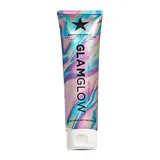
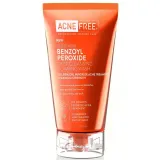
| EltaMDSkin Recovery Amino Acid Foaming CleanserYOUR PRODUCT | GLAMGLOWGENTLEBUBBLE Cleanser | AcneFree Dermatology Inspired CareNEW Benzoyl Peroxide Deep Cleansing Foaming Wash | CliniqueAll About Clean™ Rinse-Off Foaming Cleanser | |
|---|---|---|---|---|
| Match | — | 36% | 36% | 35% |
| Price | $38.00 | $14.58−$23.42 | $8.99−$29.01 | $9.12−$28.88 |
| Shared key ingredients | — | 4 of 14 | 4 of 14 | 2 of 14 |
| Key difference | — | Lauric Acid | Benzoyl Peroxide | Sodium Hyaluronate |
| Irritancy | Medium | Low | Medium | Low |
| Drying alcohol | — | — | — | — |
| View product | Shop | Shop | Shop |

More alternatives: AlumierMD UK Gentle Foaming CleanserCeraVe Balancing Air Foam Facial Cleanser
Sources cited in this review
Every concentration estimate and effectiveness label is anchored to one of these 18 studies and safety reviews.
- 1
- 2
- 3
- 4Cosmeceuttical Critigue: Taurinemdedge.com
- 5
- 6

Affiliate links · As an Amazon Associate, WIMJ earns from qualifying purchases.