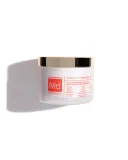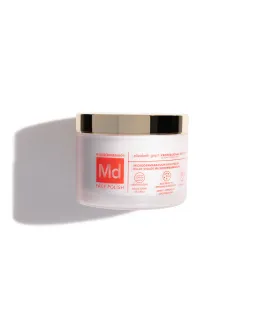
Elizabeth Grant Professional Institute Microdermabrasion Face Polish

Elizabeth Grant Professional Institute Microdermabrasion Face Polish

Efficacy37/100IrritancyMedium

Works for

Anti-aging
Aloe barbadensis leaf juice, Ubiquinone + 2 more
May help
What the product description says
“It lasts longer within the skin and promotes up to 50% more collagen production.”
Source: Elizabeth Grant

This product contains camellia oleifera leaf extract, ubiquinone. These ingredients help neutralize free radicals in skin. By doing so, they might be able to prevent early signs of aging (like fine lines and wrinkles), at least to some extent. These ingredients will not be able to "reverse" signs of aging.

Aloe barbadensis leaf juiceEffect: LowTraditionally used to treat sunburns, dermatitis and inflammation, but evidence for its effectiveness is lacking. The extract can contain humectants that help attract water into the skin~1.7–2.1%
UbiquinoneEffect: LowCoenzyme Q10. It helps neutralize free radicals in skin, improves skin hydration and might be helpful agains fine lines and wrinkles. It can be an allergen~0.25–0.45%
Laminaria digitata extractEffect: Low, below effective doseSeaweed extract that helps the skin to attract water and make it more smooth for touch. Also shows promise of anti-aging properties, but good research is lacking at the moment~0.45–0.7%
Tetrahexyldecyl ascorbateUnder-dosedBeing a lipid soluble form of vitamin C, it is more stable than ascorbic acid, but still degrades quickly and needs to be stabilized in a formulation with another ingredient. It is claimed to penetrate skin better than pure vitamin C and have the the similar benefits, but solid studies of its effectiveness are lacking. Is likely to require a higher concentration in a product than pure vitamin C to be effective. It might be able to help reduce pore clogging.~1–1.3%
Exfoliation
Allantoin
Not delivered
What the product description says
“The Microdermabrasion Face Polish contains perfectly round spherical crystals that, while massaging, roll along the surface of the skin gently exfoliating and polishing the skin.”
Source: Elizabeth Grant

This product does not contain effective exfoliating ingredients. It might be able to deliver physical exfoliation, that is scrub off some of the dead cells on the surface of the skin. We do not recommend physical exfoliation, because it is not uniform (some bits of skin can get exfoliated too much while others not at all). It can also traumatize the skin and aggrevate acne and other skin conditions.

AllantoinEffect: Low, below effective doseHelps calm down inflammation in skin and can help reduce itching. Helps to repair the skin barrier and keep skin hydrated~0.2–0.4%
Anti-oxidation
Side benefit · Camellia oleifera leaf extract, Ubiquinone + 4 more
Works well

This product contains antioxidants (camellia oleifera leaf extract, ubiquinone) that can help neutralize free radicals in skin. By doing so, they can lessen the damage the skin gets from the UV light (sun).

Camellia oleifera leaf extractKey activeEffect: HighA plant extract that can help neutralize free radicals and reduce inflammation, even though it is not usually used in sufficient concentration in cosmetics~0.25–0.45%
UbiquinoneKey activeEffect: HighCoenzyme Q10. It helps neutralize free radicals in skin, improves skin hydration and might be helpful agains fine lines and wrinkles. It can be an allergen~0.25–0.45%
Laminaria digitata extractEffect: Low, below effective doseSeaweed extract that helps the skin to attract water and make it more smooth for touch. Also shows promise of anti-aging properties, but good research is lacking at the moment~0.45–0.7%
Tocopheryl acetateEffect: Low, below effective doseA more stable but less bio-available form of vitamin E compared to Tocopherol. Might help moisturize and protect the skin from free radicals, but mostly used in low concentrations to stabilize other ingredients.~0.3–0.6%
Cucumis sativus fruit extractEffect: Low, below effective doseMight be somewhat helpful in reducing hyperpigmentation and neutralizing free radicals but its typical concentration in a product is too low for having an effect~0.25–0.45%
Tetrahexyldecyl ascorbateUnder-dosedBeing a lipid soluble form of vitamin C, it is more stable than ascorbic acid, but still degrades quickly and needs to be stabilized in a formulation with another ingredient. It is claimed to penetrate skin better than pure vitamin C and have the the similar benefits, but solid studies of its effectiveness are lacking. Is likely to require a higher concentration in a product than pure vitamin C to be effective. It might be able to help reduce pore clogging.~1–1.3%
Moisturizing
Side benefit · Panthenol, Caprylic/capric triglyceride + 13 more
Works well

This product can help improve hydration of the skin with the two types of ingredients.

The first type is called “humectants”:
these ingredients help attract water. When humectants are on the surface of the skin, they “pull in” the moisture from the outside environment, or from within deeper layers of the skin. The following ingredients in this product do the job: glycerin, sodium hyaluronate.

This product also contains ingredients called “occlusives”. They help reduce the speed with which our skin loses moisture to the outside environment. These ingredients also help soften the upper layer of the skin, so it feels less tight and nicer to the touch. The following ingredients in this product do the job: bis-diglyceryl polyacyladipate-2, caprylic/capric triglyceride.

The following ingredients in this product are especially good for supporting the skin barrier and helping with the hydration level: panthenol

PanthenolHero· HumectantEffect: HighHelps attract water to the upper layer of the skin and can help improve skin barrier function~0.2–0.4%
Caprylic/capric triglycerideKey active· Emollient, OcclusiveEffect: HighA good mix of fatty acids that forms a protective layer on the skin. Improves the shelf life of products. Derived from coconut and glycerin~3.1–3.8%
Bis-diglyceryl polyacyladipate-2Key active· Emollient, OcclusiveEffect: HighHelps soften the upper layer of the skin and reduce water loss from its surface~1.6–2%
GlycerinKey active· HumectantEffect: HighOne of the best moisturizing ingredients. Naturally present in skin. It attracts water to the upper layer of the skin working as a humectant~1.4–1.7%
Cetearyl alcoholKey active· EmollientEffect: MediumA non-drying alcohol. Works as an emollient. Helps water and oil mix together and creates a nice product texture~1–1.2%
Sodium hyaluronateKey active· HumectantEffect: HighOne of the best moisturizing ingredients. Attracts water into the upper layer of the skin~0.6–0.9%
UbiquinoneKey activeEffect: HighCoenzyme Q10. It helps neutralize free radicals in skin, improves skin hydration and might be helpful agains fine lines and wrinkles. It can be an allergen~0.25–0.45%
Palmitic acid· EmollientEffect: LowAn emollient that is naturally present in skin and helps soften it~3.8–4.6%
Stearic acid· EmollientEffect: LowHelps oil and water mix together and works as an emollient~2.3–2.8%
Aloe barbadensis leaf juice· HumectantEffect: LowTraditionally used to treat sunburns, dermatitis and inflammation, but evidence for its effectiveness is lacking. The extract can contain humectants that help attract water into the skin~1.7–2.1%
Butylene glycol· HumectantEffect: LowUsed to create a nice product texture and help delivery of other ingredients. Might be somewhat helpful in attracting water to the upper layer of the skin~0.2–0.4%
Propylene glycol· HumectantEffect: LowHelps oil and water mix together and can enhance the penetration of other ingredients into the skin. It can be irritating~0.2–0.35%
Cucumis sativus fruit extractEffect: Low, below effective doseMight be somewhat helpful in reducing hyperpigmentation and neutralizing free radicals but its typical concentration in a product is too low for having an effect~0.25–0.45%
Laminaria digitata extractUnder-dosedSeaweed extract that helps the skin to attract water and make it more smooth for touch. Also shows promise of anti-aging properties, but good research is lacking at the moment~0.45–0.7%
AllantoinUnder-dosedHelps calm down inflammation in skin and can help reduce itching. Helps to repair the skin barrier and keep skin hydrated~0.2–0.4%

Can it cause trouble?

Irritancy
1 strong irritant: Salvia officinalis leaf extract
Medium risk
We flagged 15 ingredients with irritancy potential. Severity depends on your sensitivity threshold; the table lists the worst offenders first.
IngredientFunctionIrritationEst. amount
Chamomilla recutita flower extractPlant extract that can have healing and anti-inflammatory properties. It is a potential allergen and can be irritatingHigh~0.4–0.6%est.
Salvia officinalis leaf extractSage leaf extract. It can be irritatingHigh~0.3–0.55%est.
Propylene glycolHelps oil and water mix together and can enhance the penetration of other ingredients into the skin. It can be irritatingHigh~0.2–0.35%est.
Caprylic/capric triglycerideA good mix of fatty acids that forms a protective layer on the skin. Improves the shelf life of products. Derived from coconut and glycerinMedium~3.1–3.8%est.
Aloe barbadensis leaf juiceTraditionally used to treat sunburns, dermatitis and inflammation, but evidence for its effectiveness is lacking. The extract can contain humectants that help attract water into the skinMedium~1.7–2.1%est.
Tetrahexyldecyl ascorbateBeing a lipid soluble form of vitamin C, it is more stable than ascorbic acid, but still degrades quickly and needs to be stabilized in a formulation with another ingredient. It is claimed to penetrate skin better than pure vitamin C and have the the similar benefits, but solid studies of its effectiveness are lacking. Is likely to require a higher concentration in a product than pure vitamin C to be effective. It might be able to help reduce pore clogging.Medium~1–1.3%est.
Ceteareth-20Helps oil and water mix together. Has some emollient propertiesMedium~0.6–0.9%est.
Tocopheryl acetateA more stable but less bio-available form of vitamin E compared to Tocopherol. Might help moisturize and protect the skin from free radicals, but mostly used in low concentrations to stabilize other ingredients.Medium~0.3–0.6%est.
Myristic acidHelps oil and water mix together. Could be comedogenicMedium~0.35–0.6%est.
Cucumis sativus fruit extractMight be somewhat helpful in reducing hyperpigmentation and neutralizing free radicals but its typical concentration in a product is too low for having an effectMedium~0.25–0.45%est.
Citric acidCan work as an exfoliant but is typically used to adjust the product pHMedium~0.25–0.4%est.
Potassium sorbateA preservativeMedium~0.2–0.4%est.
TriethanolamineUsed to adjust pH of the product and can help improve the product's smellMedium~0.15–0.3%est.
Disodium edtaStabilizes the product formulationMedium~0.1–0.2%est.
EthylhexylglycerinA preservativeMedium~0.1–0.2%est.
Comedogenic
4 ingredients rated 2 or more on the 0–5 pore-clogging scale
4 flagged
These ingredients have a comedogenic rating of 2 or more on a 0–5 scale; the table shows each one's rating. In leave-on products they can clog pores in acne-prone skin.
IngredientFunctionRatingEst. amount
Laminaria digitata extractSeaweed extract that helps the skin to attract water and make it more smooth for touch. Also shows promise of anti-aging properties, but good research is lacking at the moment3/5~0.45–0.7%est.
Myristic acidHelps oil and water mix together. Could be comedogenic3/5~0.35–0.6%est.
Cetearyl alcoholA non-drying alcohol. Works as an emollient. Helps water and oil mix together and creates a nice product texture2/5~1–1.2%est.
Ceteareth-20Helps oil and water mix together. Has some emollient properties2/5~0.6–0.9%est.

User reviews

Would you recommend?
No community reviews yet.

Be the first — your take helps the next person decide.

Ingredients

Filter by role to see what each ingredient is doing.

Water~45–55%
Formula
Irritation risk
Low

Plain old water

More about Water
Alumina~7.3–8.9%
Formula
Irritation risk
Low

The same compound that is used safely in dental implants and bone cements. In cosmetics, it is used to improve the consistency of products

More about Alumina
Palmitic acid~3.8–4.6%
Formula
Irritation risk
Low
Works for
CleansingMoisturizing

An emollient that is naturally present in skin and helps soften it

More about Palmitic acid
Caprylic/capric triglyceride~3.1–3.8%
Key activeIrritant · medium
Irritation risk
Medium
Works for
Moisturizing

A good mix of fatty acids that forms a protective layer on the skin. Improves the shelf life of products. Derived from coconut and glycerin

More about Caprylic/capric triglyceride
Stearic acid~2.3–2.8%
Formula
Irritation risk
Low
Works for
CleansingMoisturizing

Helps oil and water mix together and works as an emollient

More about Stearic acid
Aloe barbadensis leaf juice~1.7–2.1%
Irritant · medium
Irritation risk
Medium
Works for
MoisturizingAntibacterialReduces irritationReduces rednessAnti-inflammatoryAnti-blemishAnti-aging

Traditionally used to treat sunburns, dermatitis and inflammation, but evidence for its effectiveness is lacking. The extract can contain humectants that help attract water into the skin

More about Aloe barbadensis leaf juice
Bis-diglyceryl polyacyladipate-2~1.6–2%
Key active
Irritation risk
Low
Works for
Moisturizing

Helps soften the upper layer of the skin and reduce water loss from its surface

More about Bis-diglyceryl polyacyladipate-2
Glycerin~1.4–1.7%
Key active
Irritation risk
Low
Works for
Moisturizing

One of the best moisturizing ingredients. Naturally present in skin. It attracts water to the upper layer of the skin working as a humectant

More about Glycerin
Tetrahexyldecyl ascorbate~1–1.3%
Under-dosedIrritant · medium
Irritation risk
Medium
Works for
Anti-agingEvens skin toneAnti-oxidation

Being a lipid soluble form of vitamin C, it is more stable than ascorbic acid, but still degrades quickly and needs to be stabilized in a formulation with another ingredient. It is claimed to penetrate skin better than pure vitamin C and have the the similar benefits, but solid studies of its effectiveness are lacking. Is likely to require a higher concentration in a product than pure vitamin C to be effective. It might be able to help reduce pore clogging.

More about Tetrahexyldecyl ascorbate
Cetearyl alcohol~1–1.2%
Key activeComedogenic 2/5
Irritation risk
Low
Comedogenicity
2/5
Works for
CleansingMoisturizing

A non-drying alcohol. Works as an emollient. Helps water and oil mix together and creates a nice product texture

More about Cetearyl alcohol
Sodium hyaluronate~0.6–0.9%
Key active
Irritation risk
Low
Works for
Moisturizing

One of the best moisturizing ingredients. Attracts water into the upper layer of the skin

More about Sodium hyaluronate
Ceteareth-20~0.6–0.9%
Comedogenic 2/5Irritant · medium
Irritation risk
Medium
Comedogenicity
2/5
Works for
Cleansing

Helps oil and water mix together. Has some emollient properties

More about Ceteareth-20
Laminaria digitata extract~0.45–0.7%
Under-dosedComedogenic 3/5
Irritation risk
Low
Comedogenicity
3/5
Works for
MoisturizingAnti-oxidationAnti-aging

Seaweed extract that helps the skin to attract water and make it more smooth for touch. Also shows promise of anti-aging properties, but good research is lacking at the moment

More about Laminaria digitata extract
Chamomilla recutita flower extract~0.4–0.6%
Irritant · high
Irritation risk
High
Works for
Anti-inflammatory

Plant extract that can have healing and anti-inflammatory properties. It is a potential allergen and can be irritating

More about Chamomilla recutita flower extract
Dioscorea villosa root extract~0.3–0.6%
Formula
Trifolium pratense leaf extract~0.3–0.6%
Formula
Tocopheryl acetate~0.3–0.6%
Irritant · medium
Irritation risk
Medium
Works for
Anti-oxidation

A more stable but less bio-available form of vitamin E compared to Tocopherol. Might help moisturize and protect the skin from free radicals, but mostly used in low concentrations to stabilize other ingredients.

More about Tocopheryl acetate
Myristic acid~0.35–0.6%
Comedogenic 3/5Irritant · medium
Irritation risk
Medium
Comedogenicity
3/5
Works for
Cleansing

Helps oil and water mix together. Could be comedogenic

More about Myristic acid
Salvia officinalis leaf extract~0.3–0.55%
Irritant · high
Irritation risk
High

Sage leaf extract. It can be irritating

More about Salvia officinalis leaf extract
Camellia oleifera leaf extract~0.25–0.45%
Key active
Irritation risk
Low
Works for
Anti-oxidationAnti-inflammatory

A plant extract that can help neutralize free radicals and reduce inflammation, even though it is not usually used in sufficient concentration in cosmetics

More about Camellia oleifera leaf extract
Ubiquinone~0.25–0.45%
Key active
Irritation risk
Low
Works for
Anti-oxidationMoisturizingAnti-aging

Coenzyme Q10. It helps neutralize free radicals in skin, improves skin hydration and might be helpful agains fine lines and wrinkles. It can be an allergen

More about Ubiquinone
Cucumis sativus fruit extract~0.25–0.45%
Irritant · medium
Irritation risk
Medium
Works for
MoisturizingAnti-oxidation

Might be somewhat helpful in reducing hyperpigmentation and neutralizing free radicals but its typical concentration in a product is too low for having an effect

More about Cucumis sativus fruit extract
Allantoin~0.2–0.4%
Under-dosed
Irritation risk
Low
Works for
MoisturizingAnti-inflammatoryReduces irritationReduces rednessAnti-blemishExfoliation

Helps calm down inflammation in skin and can help reduce itching. Helps to repair the skin barrier and keep skin hydrated

More about Allantoin
Panthenol~0.2–0.4%
Hero · Moisturizing
Irritation risk
Low
Works for
Reduces rednessMoisturizingReduces irritation

Helps attract water to the upper layer of the skin and can help improve skin barrier function

More about Panthenol
Arachidic acid~0.35–0.6%
Formula
Irritation risk
Low
Works for
Cleansing
More about Arachidic acid
Citric acid~0.25–0.4%
Irritant · medium
Irritation risk
Medium

Can work as an exfoliant but is typically used to adjust the product pH

More about Citric acid
Butylene glycol~0.2–0.4%
Formula
Irritation risk
Low
Works for
Moisturizing

Used to create a nice product texture and help delivery of other ingredients. Might be somewhat helpful in attracting water to the upper layer of the skin

More about Butylene glycol
Potassium sorbate~0.2–0.4%
Irritant · medium
Irritation risk
Medium

A preservative

More about Potassium sorbate
Sodium benzoate~0.2–0.35%
Formula
Irritation risk
Low

A preservative

More about Sodium benzoate
Propylene glycol~0.2–0.35%
Irritant · high
Irritation risk
High
Works for
Moisturizing

Helps oil and water mix together and can enhance the penetration of other ingredients into the skin. It can be irritating

More about Propylene glycol
Triethanolamine~0.15–0.3%
Irritant · medium
Irritation risk
Medium
Works for
Cleansing

Used to adjust pH of the product and can help improve the product's smell

More about Triethanolamine
Carbomer~0.15–0.25%
Formula
Irritation risk
Low
Works for
Cleansing

Helps create a thicker or gel-like product texture. It is not a surfactant but can be used in gentle cleansing formulations

More about Carbomer
Disodium edta~0.1–0.2%
Irritant · medium
Irritation risk
Medium

Stabilizes the product formulation

More about Disodium edta
Ethylhexylglycerin~0.1–0.2%
Irritant · medium
Irritation risk
Medium

A preservative

More about Ethylhexylglycerin
Phenoxyethanol~0.1–0.2%
Formula
Irritation risk
Low

A preservative. It helps prevent bacterial growth in cosmetic products

More about Phenoxyethanol
Ingredient list view

Water, Alumina, Palmitic acid, Caprylic/capric triglyceride, Stearic acid, Aloe barbadensis leaf juice, Bis-diglyceryl polyacyladipate-2, Glycerin, Tetrahexyldecyl ascorbate, Cetearyl alcohol, Sodium hyaluronate, Ceteareth-20, Laminaria digitata extract, Chamomilla recutita flower extract, Dioscorea villosa root extract, Trifolium pratense leaf extract, Tocopheryl acetate, Myristic acid, Salvia officinalis leaf extract, Camellia oleifera leaf extract, Ubiquinone, Cucumis sativus fruit extract, Allantoin, Panthenol, Arachidic acid, Citric acid, Butylene glycol, Potassium sorbate, Sodium benzoate, Propylene glycol, Triethanolamine, Carbomer, Disodium edta, Ethylhexylglycerin, Phenoxyethanol

Compare prices

Retailers ranked by price — lowest first.

Elizabeth Grant
$54.00
Buy

Affiliate links · As an Amazon Associate, WIMJ earns from qualifying purchases.

Worth comparing, line by line.

Match % combines shared ingredients, the first five ingredients, shared actives and hero ingredients, irritancy (lower counts in the alternative's favour), texture and body area. Only products in the same routine step are compared.

Side-by-side comparison of this product against its closest alternatives
Elizabeth GrantProfessional Institute Microdermabrasion Face PolishYOUR PRODUCTBeplainCicaful Calming PadRéViveLe Polish Micro-Resurfacing TreatmentPaula's choiceResist Anti-Aging Daily Pore-Refining Treatment BHA Full size
Match—42%41%41%
Price$54.00—$15.33−$38.67$40.81−$13.19
Shared key ingredients—4 of 95 of 94 of 9
Key difference—MadecassosideButyrospermum Parkii ButterSalicylic Acid
Irritancy Medium Low Medium Low
Drying alcohol————
View product Shop Shop Shop

More alternatives: S. Nature Aqua Oasis Panthe-Allan Calming Pad (60ea)Krave Beauty Kale-Lalu-yAHA

Cheaper alternatives? See how this stacks up against similar formulas.
We compare ingredient profiles across our catalog — pick the closest match for your budget.
Open dupe finder
Elizabeth Grant Professional Institute Microdermabrasion Face Polish
Elizabeth GrantProfessional Institute Microdermabrasion Face Polish

Affiliate links · As an Amazon Associate, WIMJ earns from qualifying purchases.

As an Amazon Associate, WIMJ earns from qualifying purchases.