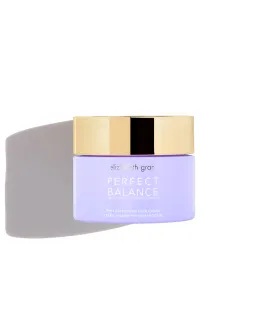
Elizabeth Grant Perfect Balance Face Cream
Works for
2 of 2 advertised claims delivered
MoisturizingPalmitoyl tetrapeptide-7, Palmitoyl tripeptide-1 + 19 moreStrong evidence
“Combines plant-derived phytoestrogens with advanced moisturizing technology to address the specific needs of mature skin with the respect and effectiveness it deserves.”
This product can help improve hydration of the skin with the two types of ingredients.
The first type is called “humectants”:
these ingredients help attract water.
When humectants are on the surface of the skin, they “pull in” the moisture from the outside environment, or from
within deeper layers of the skin. The following ingredients in this product do the job:
glycerin, sodium hyaluronate.
This product also contains ingredients called “occlusives”. They help reduce the speed with which our skin loses moisture to the outside environment. These ingredients also help soften the upper layer of the skin, so it feels less tight and nicer to the touch. The following ingredients in this product do the job: bis-diglyceryl polyacyladipate-2, caprylic/capric triglyceride.
The following ingredients in this product are especially good for supporting the skin barrier and helping with the hydration level: palmitoyl tetrapeptide-7, palmitoyl tripeptide-1, panthenol
Anti-agingPalmitoyl tetrapeptide-7, Palmitoyl tripeptide-1 + 3 moreModerate evidence
“the specific needs of mature skin”
This product contains palmitoyl tetrapeptide-7, palmitoyl tripeptide-1. These ingredients might be able to help reduce and prevent fine lines and wrinkles, improve skin elasticity and firmness, but there is not enough evidence that it actually works.
Can it cause trouble?
Irritancy1 strong irritant: AlcoholMedium risk
Comedogenic4 ingredients rated 2 or more on the 0–5 pore-clogging scale4 flagged

User reviews
Be the first — your take helps the next person decide.
Ingredients
Filter by role to see what each ingredient is doing.
Water~45–55%
Caprylic/capric triglyceride~5.9–7.3%
- Irritation risk
- Medium
A good mix of fatty acids that forms a protective layer on the skin. Improves the shelf life of products. Derived from coconut and glycerin
More about Caprylic/capric triglycerideGlyceryl isostearate~3.7–4.5%
Aloe barbadensis leaf juice~3.2–3.9%
- Irritation risk
- Medium
Traditionally used to treat sunburns, dermatitis and inflammation, but evidence for its effectiveness is lacking. The extract can contain humectants that help attract water into the skin
More about Aloe barbadensis leaf juiceIsostearyl alcohol~2.5–3%
- Irritation risk
- Low
Helps soften the upper layer of the skin
More about Isostearyl alcoholBehenyl alcohol~2.1–2.6%
- Irritation risk
- Low
Non-drying alcohol that helps water and oil mix together. Also serves as an emollient
More about Behenyl alcoholGlycerin~1.8–2.2%
- Irritation risk
- Low
One of the best moisturizing ingredients. Naturally present in skin. It attracts water to the upper layer of the skin working as a humectant
More about GlycerinCetearyl alcohol~1.5–1.9%
- Irritation risk
- Low
- Comedogenicity
- 2/5
A non-drying alcohol. Works as an emollient. Helps water and oil mix together and creates a nice product texture
More about Cetearyl alcoholVitex agnus-castus extract~1.2–1.4%
- Irritation risk
- Medium
A plant extract that might have some antioxidant properties but evidence of effectiveness in skin is missing
More about Vitex agnus-castus extractDioscorea villosa root extract~0.95–1.15%
- Irritation risk
- Low
Palmitoyl tetrapeptide-7~0.7–1.05%
- Irritation risk
- Low
A type of peptide. Peptides are excellent moisturizers and might be able support collagen production reducing fine lines and wrinkles
More about Palmitoyl tetrapeptide-7Oenothera biennis oil~0.6–0.9%
- Irritation risk
- Medium
Helps soften the upper layer of the skin and can support skin barrier function
More about Oenothera biennis oilGlycyrrhiza glabra root extract~0.35–0.6%
- Irritation risk
- Medium
A plant extract that can help lighten the skin and calm down inflammation. Might be helpful in neutralizing free radicals
More about Glycyrrhiza glabra root extractPalmitoyl tripeptide-1~0.5–0.75%
- Irritation risk
- Low
A type of peptide. Peptides are excellent moisturizers and might be able support collagen production reducing fine lines and wrinkles
More about Palmitoyl tripeptide-1Laminaria digitata extract~0.45–0.65%
- Irritation risk
- Low
- Comedogenicity
- 3/5
Seaweed extract that helps the skin to attract water and make it more smooth for touch. Also shows promise of anti-aging properties, but good research is lacking at the moment
More about Laminaria digitata extractSodium hyaluronate~0.45–0.65%
- Irritation risk
- Low
One of the best moisturizing ingredients. Attracts water into the upper layer of the skin
More about Sodium hyaluronateCollagen~0.4–0.6%
- Irritation risk
- Low
Cannot penetrate the skin barrier so is not particularly useful in skincare products
More about CollagenButyrospermum parkii butter extract~0.45–0.65%
- Irritation risk
- Low
- Comedogenicity
- 3/5
A great moisturising ingredient that softens the skin and reduces water loss from its upper layer. It also can be helpful in protecting skin from free radicals
More about Butyrospermum parkii butter extractCandelilla cera~0.4–0.65%
- Irritation risk
- Low
Brassica campestris sterols~0.3–0.6%
- Irritation risk
- Low
Help soften the upper layer of the skin
More about Brassica campestris sterolsAllantoin~0.25–0.45%
- Irritation risk
- Low
Helps calm down inflammation in skin and can help reduce itching. Helps to repair the skin barrier and keep skin hydrated
More about AllantoinTocopheryl acetate~0.3–0.5%
- Irritation risk
- Medium
A more stable but less bio-available form of vitamin E compared to Tocopherol. Might help moisturize and protect the skin from free radicals, but mostly used in low concentrations to stabilize other ingredients.
More about Tocopheryl acetateBis-diglyceryl polyacyladipate-2~0.3–0.55%
- Irritation risk
- Low
Helps soften the upper layer of the skin and reduce water loss from its surface
More about Bis-diglyceryl polyacyladipate-2Panthenol~0.25–0.45%
- Irritation risk
- Low
Helps attract water to the upper layer of the skin and can help improve skin barrier function
More about PanthenolButylene glycol~0.25–0.45%
- Irritation risk
- Low
Used to create a nice product texture and help delivery of other ingredients. Might be somewhat helpful in attracting water to the upper layer of the skin
More about Butylene glycolChamomilla recutita flower extract~0.25–0.45%
- Irritation risk
- High
Plant extract that can have healing and anti-inflammatory properties. It is a potential allergen and can be irritating
More about Chamomilla recutita flower extractSodium lactate~0.25–0.45%
- Irritation risk
- Medium
Helps attract water to the upper layer of the skin. Is often used to adjust the pH level of the product
More about Sodium lactatePolysorbate 20~0.25–0.5%
Propylene glycol~0.25–0.45%
- Irritation risk
- High
Helps oil and water mix together and can enhance the penetration of other ingredients into the skin. It can be irritating
More about Propylene glycolTocopherol~0.25–0.45%
- Irritation risk
- Low
Pure form of vitamin E. Can help moisturise and protect the skin from free radicals. Often used to help stabilise other ingredients or the formula itself
More about TocopherolCeteareth-20~0.35–0.6%
- Irritation risk
- Medium
- Comedogenicity
- 2/5
Helps oil and water mix together. Has some emollient properties
More about Ceteareth-20Alcohol~0.25–0.45%
- Irritation risk
- High
Can be drying and contribute to skin irritation. Used in formulars to dissolve other ingredients, create a thinner product consistency or for its antibacterial properties
More about AlcoholCitric acid~0.2–0.4%
- Irritation risk
- Medium
Can work as an exfoliant but is typically used to adjust the product pH
More about Citric acidSodium polyacrylate~0.25–0.5%
- Irritation risk
- Low
Used to create a gel-like product texture, as well as to stabilize emulsions
More about Sodium polyacrylateSodium hydroxide~0.2–0.4%
Carbomer~0.2–0.35%
- Irritation risk
- Low
Helps create a thicker or gel-like product texture. It is not a surfactant but can be used in gentle cleansing formulations
More about CarbomerDisodium edta~0.15–0.3%
Phenoxyethanol~0.15–0.25%
- Irritation risk
- Low
A preservative. It helps prevent bacterial growth in cosmetic products
More about PhenoxyethanolEthylhexylglycerin~0.1–0.2%
Potassium sorbate~0.15–0.25%
Sodium benzoate~0.1–0.25%
Ingredient list view
Water, Caprylic/capric triglyceride, Glyceryl isostearate, Aloe barbadensis leaf juice, Isostearyl alcohol, Behenyl alcohol, Glycerin, Cetearyl alcohol, Vitex agnus-castus extract, Dioscorea villosa root extract, Palmitoyl tetrapeptide-7, Oenothera biennis oil, Glycyrrhiza glabra root extract, Palmitoyl tripeptide-1, Laminaria digitata extract, Sodium hyaluronate, Collagen, Butyrospermum parkii butter extract, Candelilla cera, Brassica campestris sterols, Allantoin, Tocopheryl acetate, Bis-diglyceryl polyacyladipate-2, Panthenol, Butylene glycol, Chamomilla recutita flower extract, Sodium lactate, Polysorbate 20, Propylene glycol, Tocopherol, Ceteareth-20, Alcohol, Citric acid, Sodium polyacrylate, Sodium hydroxide, Carbomer, Disodium edta, Phenoxyethanol, Ethylhexylglycerin, Potassium sorbate, Sodium benzoate
Compare prices
Retailers ranked by price — lowest first.

Affiliate links · prices updated regularly
Worth comparing, line by line.
Match % combines shared ingredients, the first five ingredients, shared actives and hero ingredients, irritancy (lower counts in the alternative's favour), texture and body area. Only products in the same routine step are compared.
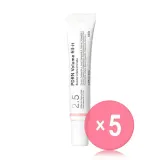
| Elizabeth GrantPerfect Balance Face CreamYOUR PRODUCT | e.l.f. CosmeticsFragrance Free Holy Hydration! Face Cream | M-61Hydraboost Rich Cream | AbibYesStyle Exclusive PDRN Volume Fill-it Booster Crème 2.5 Tube Mini 5pcs Bundle Set | |
|---|---|---|---|---|
| Match | — | 56% | 55% | 55% |
| Price | $35.00 | $12.13−$22.87 | $94.00+$59.00 | $37.53+$2.53 |
| Shared key ingredients | — | 5 of 13 | 7 of 13 | 8 of 13 |
| Key difference | — | Niacinamide | Acetyl Hexapeptide-8 | Copper Tripeptide-1 |
| Irritancy | Medium | Low | Medium | Medium |
| Drying alcohol | Contains drying alcohol | — | — | — |
| View product | Shop | Shop | Shop |

Sources cited in this review
Every concentration estimate and effectiveness label is anchored to one of these 12 studies and safety reviews.
- 1
- 2Hyaluronic acid: A key molecule in skin agingncbi.nlm.nih.gov
- 3
- 4
- 5
- 6Skin moisturizing effects of panthenol-based formulationspdfs.semanticscholar.org

Affiliate links · As an Amazon Associate, WIMJ earns from qualifying purchases.