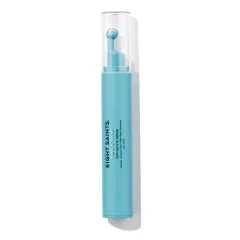
Works for:
based on ingredients and %- Moisturizing
- Anti-aging
- Anti-oxidation
Can it cause trouble?
- Irritation risk: high
- Comedogenic risk ingredients: 1
Key actives

Works for
Moisturizing
What does the product description say?
This serum floods your skin with smoothing peptides to boost skin elasticity and hyaluronic acid hydration for a fresh-faced look.
Source: Eight Saints
This product can help improve hydration of the skin with the two types of ingredients.
The first type is called “humectants”:
these ingredients help attract water.
When humectants are on the surface of the skin, they “pull in” the moisture from the outside environment, or from
within deeper layers of the skin. The following ingredients in this product do the job:
alanine, arginine.
This product also contains ingredients called “occlusives”. They help reduce the speed with which our skin loses moisture to the outside environment. These ingredients also help soften the upper layer of the skin, so it feels less tight and nicer to the touch. The following ingredients in this product do the job: arginine, vaccinium macrocarpon seed oil.
The following ingredients in this product are especially good for supporting the skin barrier and helping with the hydration level: dipeptide diaminobutyroyl benzylamide diacetate, palmitoyl dipeptide-5 diaminobutyroyl hydroxythreonine, palmitoyl tripeptide-5, panthenol, tripeptide-29
A plant oil that helps soften the upper layer of the skin. It might have anti-oxidant properties. Might help reduce inflammation in skin and help against blemishes
An amino acid that can help attract water to the upper layer of the skin and support skin's barrier function
A type of peptide. Peptides are excellent moisturizers and might be able support collagen production reducing fine lines and wrinkles
Helps attract water to the upper layer of the skin and can help improve skin barrier function
Naturally present in skin and helps to attract water to its upper layer
An amino-acid that helps to attract water to the upper layer of the skin. In combination with other amino-acids, might help to reduce fine lines and wrinkles
Helps attract water to the upper layer of the skin. Is often used to adjust the pH level of the product
Naturally present in skin and helps to attract water to its upper layer
An amino-acid that helps to attract water to the upper layer of the skin. In combination with other amino-acids, might help to reduce fine lines and wrinkles
A plant oil that can help neutralize free radicals, soften the upper layer of the skin, and support skin's barrier function
An amino-acid that helps to attract water to the upper layer of the skin and might help to lighten the skin, but solid evidence is lacking
An amino acid that is naturally present in skin and helps keep it hydrated. When used together with AHAs, it can reduce their irritating effect on the skin
An amino-acid that helps increase skin hydration and might help to slightly improve skin firmness, potentially reducing lines and wrinkles
A plant extract that has been shown to be able to reduce inflammation in skin, support restoration of skin barrier function, as well as support collagen production. Contains active compounds called centelloids: asiaticoside, madecasosside, asiatic acid and madecassic acid. Might be helpful in preventing stretch marks. It can be itself be irritating though.
A type of peptide. Peptides are excellent moisturizers and might be able support collagen production reducing fine lines and wrinkles
Helps attract water to the upper layer of the skin
One of the best moisturizing ingredients. Naturally present in skin. It attracts water to the upper layer of the skin working as a humectant
Helps to attract water to the upper layer of the skin and can help restore the skin barrier function
One of the best moisturizing ingredients. Attracts water into the upper layer of the skin. Naturally present in skin. Typically has large molecule size unless advertised otherwise on the product label. Helps support skin's barrier function and may help to reduce inflammation
A green micro-algae extract that might help neutralize free radicals in skin, but solid evidence is lacking. It helps to soften the upper layer of the skin
A complex substance produced by honey bees. Can have anti-bacterial and some anti-oxidant effect. Is an allergen and can be irritating
An algae extract that might have anti-oxidant properties
A compound secreted by bees. Might be able to attract water to the top layer of the skin. Avoid if sensitive to honey and bee products
Traditionally used to treat sunburns, dermatitis and inflammation, but evidence for its effectiveness is lacking. The extract can contain humectants that help attract water into the skin
Used to preserve products, dissolve other ingredients and create a nice product texture
Used to create a nice product texture and help delivery of other ingredients. Might be somewhat helpful in attracting water to the upper layer of the skin
A good mix of fatty acids that forms a protective layer on the skin. Improves the shelf life of products. Derived from coconut and glycerin
An exfoliating and moisturizing alpha-hydroxy acid (AHA). Typically causes less irritation than other AHAs, for example, glycolic acid. At high concentrations (about 15%), lactic acid can help reduce lines and wrinkles. Recent studies show that lactic acid can support the "good" bacteria living on skin's surface (healthy skin microbiome)
Can contain potent anti-oxidant compounds (abbreviated ECG, GCG, EGC, and EGCG) that might help protect the skin from free radicals. Can help calm down inflammation and has some anti-bacterial properties. Unfortunately, these antioxidants are unstable and lose their effectiveness very quickly in products. The concentration of the antioxidant compounds in the extract also tends to be low to be effective in topical formulation
Anti-aging
What does the product description say?
Protect the delicate eye area, fade crow's feet, and reverse damage with a little antioxidant mushroom magic.
Source: Eight Saints
This product contains aspartic acid, centella asiatica extract, dipeptide diaminobutyroyl benzylamide diacetate, palmitoyl dipeptide-5 diaminobutyroyl hydroxythreonine, palmitoyl tripeptide-5, serine, threonine, tripeptide-29. These ingredients might be able to help reduce and prevent fine lines and wrinkles, improve skin elasticity and firmness, but there is not enough evidence that it actually works.
A type of peptide. Peptides are excellent moisturizers and might be able support collagen production reducing fine lines and wrinkles
An amino-acid that helps increase skin hydration and might help to slightly improve skin firmness, potentially reducing lines and wrinkles
A plant extract that has been shown to be able to reduce inflammation in skin, support restoration of skin barrier function, as well as support collagen production. Contains active compounds called centelloids: asiaticoside, madecasosside, asiatic acid and madecassic acid. Might be helpful in preventing stretch marks. It can be itself be irritating though.
A type of peptide. Peptides are excellent moisturizers and might be able support collagen production reducing fine lines and wrinkles
An amino-acid that helps to attract water to the upper layer of the skin. In combination with other amino-acids, might help to reduce fine lines and wrinkles
An amino-acid that helps to attract water to the upper layer of the skin. In combination with other amino-acids, might help to reduce fine lines and wrinkles
One of the best moisturizing ingredients. Attracts water into the upper layer of the skin. Naturally present in skin. Typically has large molecule size unless advertised otherwise on the product label. Helps support skin's barrier function and may help to reduce inflammation
Traditionally used to treat sunburns, dermatitis and inflammation, but evidence for its effectiveness is lacking. The extract can contain humectants that help attract water into the skin
An exfoliating and moisturizing alpha-hydroxy acid (AHA). Typically causes less irritation than other AHAs, for example, glycolic acid. At high concentrations (about 15%), lactic acid can help reduce lines and wrinkles. Recent studies show that lactic acid can support the "good" bacteria living on skin's surface (healthy skin microbiome)
Can contain potent anti-oxidant compounds (abbreviated ECG, GCG, EGC, and EGCG) that might help protect the skin from free radicals. Can help calm down inflammation and has some anti-bacterial properties. Unfortunately, these antioxidants are unstable and lose their effectiveness very quickly in products. The concentration of the antioxidant compounds in the extract also tends to be low to be effective in topical formulation
Anti-oxidation
This product contains antioxidants (centella asiatica extract, vaccinium macrocarpon seed oil) that might be able to help neutralize free radicals in skin to lessen the damage it gets from the UV light (sun). There is not enough evidence to confirm their effectiveness in skin though.
A plant oil that can help neutralize free radicals, soften the upper layer of the skin, and support skin's barrier function
A plant extract that has been shown to be able to reduce inflammation in skin, support restoration of skin barrier function, as well as support collagen production. Contains active compounds called centelloids: asiaticoside, madecasosside, asiatic acid and madecassic acid. Might be helpful in preventing stretch marks. It can be itself be irritating though.
A complex substance produced by honey bees. Can have anti-bacterial and some anti-oxidant effect. Is an allergen and can be irritating
A green micro-algae extract that might help neutralize free radicals in skin, but solid evidence is lacking. It helps to soften the upper layer of the skin
A plant extract that can have some anti-oxidant effect in skin
A plant oil that helps soften the upper layer of the skin. It might have anti-oxidant properties. Might help reduce inflammation in skin and help against blemishes
An algae extract that might have anti-oxidant properties
Can contain potent anti-oxidant compounds (abbreviated ECG, GCG, EGC, and EGCG) that might help protect the skin from free radicals. Can help calm down inflammation and has some anti-bacterial properties. Unfortunately, these antioxidants are unstable and lose their effectiveness very quickly in products. The concentration of the antioxidant compounds in the extract also tends to be low to be effective in topical formulation
How honest is this product?
| Promise | Can it deliver? |
|---|---|
| Moisturizing | |
| Anti-aging |
Total Promises Fulfilled score: 87/100.
We receive a small commission for purchases made through these links at no cost for you. Thank you for your support! Learn more
Potential irritants
Comedogenic ingredients
User reviews (0)
Averages from community submissions.
No reviews yet for this product.
Be the first to share your experience!
Tried this product?
Help capture what the ingredient list can't—texture, finish, pilling, scent, and more. Answer what you can, skip the rest.
Takes ~30 seconds.
Reviews are shown in aggregate. No personal details.
| Product | Similarity | Price | Irritancy |
|---|---|---|---|
 Eight Saints Tide & True Eye Serum | Current | $39.00 | |
 Elizabeth Grant Miracle 02 Eye Serum | 40% | $29.00 | |
 NEOGEN X SUR.MEDIC AGECURE ONE MINUTE WRINKLE PERFECTION | 39% | - | |
 BABOR Doctor Babor Lifting Cellular: Dual Eye Solution | 39% | ≈ $66.98 | |
 Superegg Phyto Bounce Eye Contour Solution | 39% | $50.00 | |
 Formotopia BFFECT Revi Anti-Aging Eye Serum | 38% | $26.10 |
Key Actives
A plant extract that has been shown to be able to reduce inflammation in skin, support restoration of skin barrier function, as well as support collagen production. Contains active compounds called centelloids: asiaticoside, madecasosside, asiatic acid and madecassic acid. Might be helpful in preventing stretch marks. It can be itself be irritating though.
Can contain potent anti-oxidant compounds (abbreviated ECG, GCG, EGC, and EGCG) that might help protect the skin from free radicals. Can help calm down inflammation and has some anti-bacterial properties. Unfortunately, these antioxidants are unstable and lose their effectiveness very quickly in products. The concentration of the antioxidant compounds in the extract also tends to be low to be effective in topical formulation
An exfoliating and moisturizing alpha-hydroxy acid (AHA). Typically causes less irritation than other AHAs, for example, glycolic acid. At high concentrations (about 15%), lactic acid can help reduce lines and wrinkles. Recent studies show that lactic acid can support the "good" bacteria living on skin's surface (healthy skin microbiome)
One of the best moisturizing ingredients. Attracts water into the upper layer of the skin. Naturally present in skin. Typically has large molecule size unless advertised otherwise on the product label. Helps support skin's barrier function and may help to reduce inflammation
Helps attract water to the upper layer of the skin and can help improve skin barrier function
A plant oil that helps soften the upper layer of the skin. It might have anti-oxidant properties. Might help reduce inflammation in skin and help against blemishes
Helps attract water to the upper layer of the skin and can help improve skin barrier function
A plant oil that can help neutralize free radicals, soften the upper layer of the skin, and support skin's barrier function
One of the best moisturizing ingredients. Attracts water into the upper layer of the skin. Naturally present in skin. Typically has large molecule size unless advertised otherwise on the product label. Helps support skin's barrier function and may help to reduce inflammation
A type of peptide. Peptides are excellent moisturizers and might be able support collagen production reducing fine lines and wrinkles
An amino-acid that helps increase skin hydration and might help to slightly improve skin firmness, potentially reducing lines and wrinkles
An amino-acid that helps to attract water to the upper layer of the skin and might help to lighten the skin, but solid evidence is lacking
An amino-acid that helps to attract water to the upper layer of the skin. In combination with other amino-acids, might help to reduce fine lines and wrinkles
An amino-acid that helps to attract water to the upper layer of the skin. In combination with other amino-acids, might help to reduce fine lines and wrinkles
A type of peptide. Peptides are excellent moisturizers and might be able support collagen production reducing fine lines and wrinkles
One of the best moisturizing ingredients. Naturally present in skin. It attracts water to the upper layer of the skin working as a humectant
Naturally present in skin and helps to attract water to its upper layer
A good mix of fatty acids that forms a protective layer on the skin. Improves the shelf life of products. Derived from coconut and glycerin
Helps attract water to the upper layer of the skin
Helps attract water to the upper layer of the skin. Is often used to adjust the pH level of the product
An amino acid that is naturally present in skin and helps keep it hydrated. When used together with AHAs, it can reduce their irritating effect on the skin
Naturally present in skin and helps to attract water to its upper layer
Helps to attract water to the upper layer of the skin and can help restore the skin barrier function
An amino acid that can help attract water to the upper layer of the skin and support skin's barrier function
Potential irritants
Can be drying and contribute to skin irritation. Used in formulars to dissolve other ingredients, create a thinner product consistency or for its antibacterial properties
A plant extract that is used as a fragrance. Its main fragrant compound is linalool
A plant extract that might have anti-oxidant properties. Can be irritating
A complex substance produced by honey bees. Can have anti-bacterial and some anti-oxidant effect. Is an allergen and can be irritating
Traditionally used to treat sunburns, dermatitis and inflammation, but evidence for its effectiveness is lacking. The extract can contain humectants that help attract water into the skin
A good mix of fatty acids that forms a protective layer on the skin. Improves the shelf life of products. Derived from coconut and glycerin
An exfoliating and moisturizing alpha-hydroxy acid (AHA). Typically causes less irritation than other AHAs, for example, glycolic acid. At high concentrations (about 15%), lactic acid can help reduce lines and wrinkles. Recent studies show that lactic acid can support the "good" bacteria living on skin's surface (healthy skin microbiome)
A plant oil that helps soften the upper layer of the skin. It might have anti-oxidant properties. Might help reduce inflammation in skin and help against blemishes
Used to preserve products, dissolve other ingredients and create a nice product texture
Can work as an exfoliant but is typically used to adjust the product pH
Helps attract water to the upper layer of the skin
A compound secreted by bees. Might be able to attract water to the top layer of the skin. Avoid if sensitive to honey and bee products
A plant extract that has been shown to be able to reduce inflammation in skin, support restoration of skin barrier function, as well as support collagen production. Contains active compounds called centelloids: asiaticoside, madecasosside, asiatic acid and madecassic acid. Might be helpful in preventing stretch marks. It can be itself be irritating though.
Helps attract water to the upper layer of the skin. Is often used to adjust the pH level of the product
A plant oil that can help neutralize free radicals, soften the upper layer of the skin, and support skin's barrier function
A plant extract that can have some anti-oxidant effect in skin
Comedogenic ingredients
An algae extract that might have anti-oxidant properties
All ingredients
Traditionally used to treat sunburns, dermatitis and inflammation, but evidence for its effectiveness is lacking. The extract can contain humectants that help attract water into the skin
Used to create a nice product texture and help delivery of other ingredients. Might be somewhat helpful in attracting water to the upper layer of the skin
One of the best moisturizing ingredients. Naturally present in skin. It attracts water to the upper layer of the skin working as a humectant
Naturally present in skin and helps to attract water to its upper layer
A preservative. It helps prevent bacterial growth in cosmetic products
One of the best moisturizing ingredients. Attracts water into the upper layer of the skin. Naturally present in skin. Typically has large molecule size unless advertised otherwise on the product label. Helps support skin's barrier function and may help to reduce inflammation
A good mix of fatty acids that forms a protective layer on the skin. Improves the shelf life of products. Derived from coconut and glycerin
Acts as a solvent for other ingredients. Speeds up the absorption of other ingredients into the skin
Helps attract water to the upper layer of the skin and can help improve skin barrier function
An exfoliating and moisturizing alpha-hydroxy acid (AHA). Typically causes less irritation than other AHAs, for example, glycolic acid. At high concentrations (about 15%), lactic acid can help reduce lines and wrinkles. Recent studies show that lactic acid can support the "good" bacteria living on skin's surface (healthy skin microbiome)
A plant oil that helps soften the upper layer of the skin. It might have anti-oxidant properties. Might help reduce inflammation in skin and help against blemishes
A type of peptide. Peptides are excellent moisturizers and might be able support collagen production reducing fine lines and wrinkles
Helps attract water to the upper layer of the skin and can help improve skin barrier function
A green micro-algae extract that might help neutralize free radicals in skin, but solid evidence is lacking. It helps to soften the upper layer of the skin
Used to preserve products, dissolve other ingredients and create a nice product texture
Can work as an exfoliant but is typically used to adjust the product pH
Can be drying and contribute to skin irritation. Used in formulars to dissolve other ingredients, create a thinner product consistency or for its antibacterial properties
Helps attract water to the upper layer of the skin
A compound secreted by bees. Might be able to attract water to the top layer of the skin. Avoid if sensitive to honey and bee products
A plant extract that is used as a fragrance. Its main fragrant compound is linalool
A plant extract that might have anti-oxidant properties. Can be irritating
A complex substance produced by honey bees. Can have anti-bacterial and some anti-oxidant effect. Is an allergen and can be irritating
Can contain potent anti-oxidant compounds (abbreviated ECG, GCG, EGC, and EGCG) that might help protect the skin from free radicals. Can help calm down inflammation and has some anti-bacterial properties. Unfortunately, these antioxidants are unstable and lose their effectiveness very quickly in products. The concentration of the antioxidant compounds in the extract also tends to be low to be effective in topical formulation
A plant extract that has been shown to be able to reduce inflammation in skin, support restoration of skin barrier function, as well as support collagen production. Contains active compounds called centelloids: asiaticoside, madecasosside, asiatic acid and madecassic acid. Might be helpful in preventing stretch marks. It can be itself be irritating though.
An algae extract that might have anti-oxidant properties
Helps attract water to the upper layer of the skin. Is often used to adjust the pH level of the product
An amino acid that is naturally present in skin and helps keep it hydrated. When used together with AHAs, it can reduce their irritating effect on the skin
An amino-acid that helps increase skin hydration and might help to slightly improve skin firmness, potentially reducing lines and wrinkles
Naturally present in skin and helps to attract water to its upper layer
Helps to attract water to the upper layer of the skin and can help restore the skin barrier function
An amino-acid that helps to attract water to the upper layer of the skin and might help to lighten the skin, but solid evidence is lacking
An amino-acid that helps to attract water to the upper layer of the skin. In combination with other amino-acids, might help to reduce fine lines and wrinkles
An amino-acid that helps to attract water to the upper layer of the skin. In combination with other amino-acids, might help to reduce fine lines and wrinkles
An amino acid that can help attract water to the upper layer of the skin and support skin's barrier function
A type of peptide. Peptides are excellent moisturizers and might be able support collagen production reducing fine lines and wrinkles
A plant oil that can help neutralize free radicals, soften the upper layer of the skin, and support skin's barrier function
A plant extract that can have some anti-oxidant effect in skin
One of the best moisturizing ingredients. Attracts water into the upper layer of the skin. Naturally present in skin. Typically has large molecule size unless advertised otherwise on the product label. Helps support skin's barrier function and may help to reduce inflammation
Ingredient list view
Water, Aloe barbadensis leaf juice, Butylene glycol, Glycerin, Sclerotium gum, Sodium pca, Xanthan gum, Tetrasodium glutamate diacetate, Phenoxyethanol, Hyaluronic acid, Caprylic/capric triglyceride, Propanediol, Dimethyl sulfone, Panthenol, Lactic acid, Citrus paradisi seed oil, Rosa canina seed oil, Unspecified form of vitamin c, Tripeptide-29, Palmitoyl tripeptide-5, Panthenol, Dunaliella salina extract, Pentylene glycol, Citric acid, Unknown, Alcohol, Ganoderma lucidum extract, Royal jelly extract, Achillea millefolium flower extract, Unknown, Equisetum arvense extract, Yucca glauca root extract, Propolis extract, Camellia sinensis leaf extract, Centella asiatica extract, Crithmum maritimum extract, Sodium lactate, Arginine, Aspartic acid, Pca, Glycine, Alanine, Serine, Valine, Proline, Threonine, Isoleucine, Histidine, Phenylalanine, Palmitoyl dipeptide-5 diaminobutyroyl hydroxythreonine, Palmitoyl dipeptide-5 diaminohydroxybutyrate, Dipeptide diaminobutyroyl benzylamide diacetate, Vaccinium macrocarpon seed oil, Euterpe oleracea fruit extract, Hyaluronic acid, Caesalpinia spinosa gum, Cinnamomum camphora wood oil, Unknown
- Glycerol and the skin: holistic approach to its origin and functions
- Efficacy of a New Topical Nano-hyaluronic Acid in Humans
- Physiochemical properties and application of hyaluronic acid: a systematic review
- Skin moisturizing effects of panthenol-based formulations
- Safety Assessment of Panthenol, Pantothenic Acid, and Derivatives as Used in Cosmetics
- Epidermal and dermal effects of topical lactic acid
- Dual Effects of Alpha-Hydroxy Acids on the Skin
- Nutrient composition of rose (Rosa canina L.) seed and oils
- Characterization of Rosehip (Rosa canina L.) Seed and Seed Oil
- Bioactive ingredients of rose hips (Rosa canina L) with special reference to antioxidative and anti-inflammatory properties: in vitro studies
- Dunaliella salina alga extract inhibits the production of interleukin-6, nitric oxide, and reactive oxygen species by regulating nuclear factor-κB/Janus kinase/signal transducer and activator of transcription in virus-infected RAW264.7 cells
- Biochemical composition and bioactivity screening of various extracts from Dunaliella salina, a green microalga
- Amended Safety Assessment of Achillea Millefolium-Derived Ingredients as Used in Cosmetics
- Propolis: A Wonder Bees Product and Its Pharmacological Potentials
- Anti-Inflammatory Effect of Titrated Extract of Centella asiatica in Phthalic Anhydride-Induced Allergic Dermatitis Animal Model
- Centella asiatica in cosmetology
- Triterpene Composition and Bioactivities of Centella asiatica
- Asiaticoside induction for cell-cycle progression, proliferation and collagen synthesis in human dermal fibroblasts
- Assessment report on Centella asiatica (L.) Urban, herba
- Contact dermatitis due to Madecassol
- The Effects of a Standardized Extract of Centella asiatica on Postlaser Resurfacing Wound Healing on the Face: A Split-Face, Double-Blind, Randomized, Placebo-Controlled Trial
- Acetyl aspartic acid, a novel active ingredient, demonstrates potential to improve signs of skin ageing: from consumer need to clinical proof
- In vivo topical application of acetyl aspartic acid increases fibrillin-1 and collagen IV deposition leading to a significant improvement of skin firmness
- Effect of Topical Application of Glycine and Proline on Recalcitrant Leg Ulcers of Prolidase Deficiency
- Functional glycine receptor in cultured human keratinocytes
- Combination of amino acids reduces pigmentation in B16F0 melanoma cells
- Topical palmitoyl pentapeptide provides improvement in photoaged human facial skin
- Local rhamnosoft, ceramides and L‐isoleucine in atopic eczema: a randomized, placebo controlled trial
- Histidine and/or Histidine Derivative for the Treatment of Inflammatory Skin Diseases
- Safety Assessment of α-Amino Acids as Used in Cosmetics
- Wound‐healing Properties of the Oils of Vitis vinifera and Vaccinium macrocarpon
- BERRY SEEDS: A SOURCE OF SPECIALTY OILS WITH HIGH CONTENT OF BIOACTIVES AND NUTRITIONAL VALUE
- Total Oxidant Scavenging Capacity of Euterpe oleracea Mart. (Açaí) Seeds and Identification of Their Polyphenolic Compounds
- Euterpe oleracea, Matricaria chamomilla, and Camellia sinensis as promising ingredients for development of skin care formulations
- Final Report On the Safety Assessment of Galactomannans As Used in Cosmetics