Works for
1 of 1 advertised claim delivered
Moisturizing18 ingredients credited for this claimStrong support
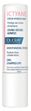
“Thanks to its protective formula, Ducray Ictyane Lip Stick 3g moisturises and protects the desiccated lips, dried out by climatic conditions.”
This product can help improve hydration of the skin with the two types of ingredients.
The first type is called “humectants”:
these ingredients help attract water.
When humectants are on the surface of the skin, they “pull in” the moisture from the outside environment, or from
within deeper layers of the skin. The following ingredients in this product do the job:
glycerin, propylene glycol.
This product also contains ingredients called “occlusives”. They help reduce the speed with which our skin loses moisture to the outside environment. These ingredients also help soften the upper layer of the skin, so it feels less tight and nicer to the touch. The following ingredients in this product do the job: bis-diglyceryl polyacyladipate-2, caprylic/capric triglyceride.
The following ingredients in this product are especially good for supporting the skin barrier and helping with the hydration level: petrolatum
Can it cause trouble?
Irritancy2 strong irritants: Parfum, Retinyl palmitateMedium risk
Comedogenic3 ingredients rated 2 or more on the 0–5 pore-clogging scale3 flagged
User reviews
Be the first — your take helps the next person decide.
Ingredients
Filter by role to see what each ingredient is doing.
Ricinus communis seed oil~25–37%
- Irritation risk
- Medium
A plant oil that can help soften the skin. It might be helpful in calming down inflammation, but solid research is lacking. Is often used in lip products to create the needed product consistency
More about Ricinus communis seed oilPetrolatum~5.6–8.3%
- Irritation risk
- Low
One of the most effective and the most studied occlusive ingredients that creates a protective layer on top of the skin preventing moisture loss
More about PetrolatumIsopropyl palmitate~4.6–7%
- Irritation risk
- Medium
- Comedogenicity
- 3/5
Helps soften the upper layer of the skin and create a thicker product consistency
More about Isopropyl palmitateHydrogenated lanolin~3.7–5.5%
- Irritation risk
- Low
Hydrogenated castor oil~2.7–4.1%
- Irritation risk
- Medium
A plant oil that can help soften the skin. It might be helpful in calming down inflammation, but solid research is lacking. Is often used in lip products to create the needed product consistency
More about Hydrogenated castor oilCaprylic/capric triglyceride~2.3–3.4%
- Irritation risk
- Medium
A good mix of fatty acids that forms a protective layer on the skin. Improves the shelf life of products. Derived from coconut and glycerin
More about Caprylic/capric triglycerideOzokerite~1.6–2.4%
Nylon-12~1.5–2.2%
Bis-diglyceryl polyacyladipate-2~1.3–2%
- Irritation risk
- Low
Helps soften the upper layer of the skin and reduce water loss from its surface
More about Bis-diglyceryl polyacyladipate-2Cetyl esters~1–1.5%
- Irritation risk
- Low
Helps soften upper layer of the skin and can enhance penetration of other ingredients into the upper layer of the skin
More about Cetyl estersCera alba~1.1–1.6%
- Irritation risk
- Medium
Forms a protective barrier that holds water and keeps dry skin hydrated. Keeps an emulsion from separating into its oil and liquid components, and increases the thickness of a product. Can be an allergen
More about Cera albaButyrospermum parkii butter~0.55–1.3%
- Irritation risk
- Low
- Comedogenicity
- 3/5
A great moisturising ingredient that softens the skin and reduces water loss from its upper layer. It also can be helpful in protecting skin from free radicals
More about Butyrospermum parkii butterHydrogenated polyisobutene~0.5–1.2%
- Irritation risk
- Low
Used to improve the product consistency and soften the upper layer of the skin
More about Hydrogenated polyisobuteneCetearyl ethylhexanoate~0.5–1.15%
- Irritation risk
- Low
An emollient that helps soften the skin
More about Cetearyl ethylhexanoateGlycerin~0.45–1%
- Irritation risk
- Low
One of the best moisturizing ingredients. Naturally present in skin. It attracts water to the upper layer of the skin working as a humectant
More about GlycerinTocopheryl acetate~0.4–0.9%
- Irritation risk
- Medium
A more stable but less bio-available form of vitamin E compared to Tocopherol. Might help moisturize and protect the skin from free radicals, but mostly used in low concentrations to stabilize other ingredients.
More about Tocopheryl acetateBht~0.35–0.85%
Copernicia cerifera wax~0.45–1%
- Irritation risk
- Low
Helps to soften the upper layer of the skin and create a nice product consistency
More about Copernicia cerifera waxParfum~0.15–0.7%
- Irritation risk
- High
An aromatic blend of unspecified and possibly irritating ingredients
More about ParfumIsopropyl myristate~0.35–0.75%
- Irritation risk
- Low
- Comedogenicity
- 3/5
An emollient that helps soften the skin. Could be comedogenic
More about Isopropyl myristatePanthenol~0.15–0.6%
- Irritation risk
- Low
Helps attract water to the upper layer of the skin and can help improve skin barrier function
More about PanthenolPpg-12/smdi copolymer~0.4–0.95%
Propylene glycol~0.15–0.55%
- Irritation risk
- High
Helps oil and water mix together and can enhance the penetration of other ingredients into the skin. It can be irritating
More about Propylene glycolPropylparaben~0.1–0.35%
Retinyl palmitate~0.1–0.35%
- Irritation risk
- High
Three steps removed from the active form of vitamin A - retinoic acid. To have an effect in the skin, it first needs to be converted twice to become the retinoic acid. This means it is less potent than retinol, but could also be less irritating. Once converted to the retinoic acid in the skin, it helps against all signs of aging, improves skin cell turnover and helps fight blemishes and clogged pores. However, in many cosmetic formulations, it is used in a concentration that is too low to have the full effect
More about Retinyl palmitateSorbitol~0.1–0.35%
- Irritation risk
- Low
Helps attract water to the upper layer of the skin and improves the product texture
More about SorbitolTrehalose~0.05–0.3%
- Irritation risk
- Low
A sugar that attracts water to the upper layer of the skin
More about TrehaloseWater~0.05–0.25%
Ingredient list view
Ricinus communis seed oil, Petrolatum, Isopropyl palmitate, Hydrogenated lanolin, Hydrogenated castor oil, Caprylic/capric triglyceride, Ozokerite, Nylon-12, Bis-diglyceryl polyacyladipate-2, Cetyl esters, Cera alba, Butyrospermum parkii butter, Hydrogenated polyisobutene, Cetearyl ethylhexanoate, Glycerin, Tocopheryl acetate, Bht, Copernicia cerifera wax, Parfum, Isopropyl myristate, Panthenol, Ppg-12/smdi copolymer, Propylene glycol, Propylparaben, Retinyl palmitate, Sorbitol, Trehalose, Water
Compare prices
Retailers ranked by price — lowest first.

Product summary
"Ducray - Ictyane Lip Stick" is effective for: Moisturizing
Ingredient callouts
- it includes a form of Retinoids (vitamin A) - retinyl palmitate 0.10% - 0.35%, but this type of vitamin A is not very effective. It could in theory help with fine lines and wrinkles, but the effect is most likely minimal.
Price
The product retails for 97.77$ in the United States and from 3.16£ up to 15.38£ in the United Kingdom.
For a detailed price comparison: click here.
Sources cited in this review
Every concentration estimate and effectiveness label is anchored to one of these 15 studies and safety reviews.
- 1
- 2
- 3
- 4Final Report on the Safety Assessment of Isopropyl Isostearatejournals.sagepub.com
- 5
- 6

Affiliate links · As an Amazon Associate, WIMJ earns from qualifying purchases.