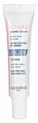
Works for
MoisturizingParaffinum liquidum, Ricinus communis seed oil + 13 moreWorks well
“Glycerine, used as an emollient, known for its moisturizing properties, to repair the lips in depth.”
This product can help improve hydration of the skin with the two types of ingredients.
The first type is called “humectants”:
these ingredients help attract water.
When humectants are on the surface of the skin, they “pull in” the moisture from the outside environment, or from
within deeper layers of the skin. The following ingredients in this product do the job:
glycerin.
This product also contains ingredients called “occlusives”. They help reduce the speed with which our skin loses moisture to the outside environment. These ingredients also help soften the upper layer of the skin, so it feels less tight and nicer to the touch. The following ingredients in this product do the job: bis-diglyceryl polyacyladipate-2, cera alba.
The following ingredients in this product are especially good for supporting the skin barrier and helping with the hydration level: paraffinum liquidum
Can it cause trouble?
Irritancy8 flagged ingredientsLow risk
Comedogenic4 ingredients rated 2 or more on the 0–5 pore-clogging scale4 flagged

User reviews
Be the first — your take helps the next person decide.
Ingredients
Filter by role to see what each ingredient is doing.
Ricinus communis seed oil~25–37%
- Irritation risk
- Medium
A plant oil that can help soften the skin. It might be helpful in calming down inflammation, but solid research is lacking. Is often used in lip products to create the needed product consistency
More about Ricinus communis seed oilBis-diglyceryl polyacyladipate-2~5.9–8.9%
- Irritation risk
- Low
Helps soften the upper layer of the skin and reduce water loss from its surface
More about Bis-diglyceryl polyacyladipate-2Paraffinum liquidum~4.9–7.3%
- Irritation risk
- Low
Mineral oil. One of the most effective and well studied occlusive and emollient moisturizing ingredients. Helps reduce moisture loss in skin and repair skin barrier function
More about Paraffinum liquidumGlycerin~3.2–4.8%
- Irritation risk
- Low
One of the best moisturizing ingredients. Naturally present in skin. It attracts water to the upper layer of the skin working as a humectant
More about GlycerinIsopropyl palmitate~2.6–3.9%
- Irritation risk
- Medium
- Comedogenicity
- 3/5
Helps soften the upper layer of the skin and create a thicker product consistency
More about Isopropyl palmitateHydrogenated vegetable oil~2.1–3.1%
- Irritation risk
- Low
- Comedogenicity
- 2/5
An oil from a mixture of different vegetables. Helps soften the upper layer of the skin
More about Hydrogenated vegetable oilCetearyl ethylhexanoate~1.6–2.4%
- Irritation risk
- Low
An emollient that helps soften the skin
More about Cetearyl ethylhexanoateHydrogenated polyisobutene~1.5–2.3%
- Irritation risk
- Low
Used to improve the product consistency and soften the upper layer of the skin
More about Hydrogenated polyisobutenePolyethylene~1.4–2.1%
Vp/hexadecene copolymer~1–1.5%
- Irritation risk
- Low
Creates a nice product texture and can support water-resistance of sunscreens
More about Vp/hexadecene copolymerCera alba~1–1.45%
- Irritation risk
- Medium
Forms a protective barrier that holds water and keeps dry skin hydrated. Keeps an emulsion from separating into its oil and liquid components, and increases the thickness of a product. Can be an allergen
More about Cera albaHydrogenated castor oil~0.5–1.2%
- Irritation risk
- Medium
A plant oil that can help soften the skin. It might be helpful in calming down inflammation, but solid research is lacking. Is often used in lip products to create the needed product consistency
More about Hydrogenated castor oilNylon-12~0.5–1.15%
10-hydroxydecenoic acid~0.35–0.85%
- Irritation risk
- Low
Disteardimonium hectorite~0.35–0.8%
- Irritation risk
- Low
A type of clay that is used to thicken the product consistency
More about Disteardimonium hectoriteGlyceryl linoleate~0.35–0.85%
- Irritation risk
- Medium
Helps oil and water mix together
More about Glyceryl linoleateGlyceryl linolenate~0.35–0.8%
- Irritation risk
- Low
Helps soften the upper layer of the skin
More about Glyceryl linolenateGlyceryl oleate~0.2–0.8%
- Irritation risk
- High
Helps oil and water mix together. Can be irritating
More about Glyceryl oleateGlyceryl palmitate~0.2–0.75%
- Irritation risk
- Low
Glyceryl stearate~0.2–0.75%
- Irritation risk
- Low
An emollient that softens the skin and forms a protective layer on its surface. Helps water and oil mix together
More about Glyceryl stearateGlycine soja oil~0.15–0.55%
- Irritation risk
- Medium
- Comedogenicity
- 2/5
A good emollient that helps soften the skin and helps repair its barrier function. It can clog pores if used in high concentrations.
More about Glycine soja oilIsopropyl myristate~0.15–0.55%
- Irritation risk
- Low
- Comedogenicity
- 3/5
An emollient that helps soften the skin. Could be comedogenic
More about Isopropyl myristateTocopherol~0.1–0.35%
- Irritation risk
- Low
Pure form of vitamin E. Can help moisturise and protect the skin from free radicals. Often used to help stabilise other ingredients or the formula itself
More about TocopherolTocopheryl acetate~0.05–0.3%
- Irritation risk
- Medium
A more stable but less bio-available form of vitamin E compared to Tocopherol. Might help moisturize and protect the skin from free radicals, but mostly used in low concentrations to stabilize other ingredients.
More about Tocopheryl acetateWater~0.05–0.25%
Ingredient list view
Ricinus communis seed oil, Bis-diglyceryl polyacyladipate-2, Paraffinum liquidum, Glycerin, Isopropyl palmitate, Hydrogenated vegetable oil, Cetearyl ethylhexanoate, Hydrogenated polyisobutene, Polyethylene, Vp/hexadecene copolymer, Cera alba, Hydrogenated castor oil, Nylon-12, 10-hydroxydecenoic acid, Disteardimonium hectorite, Glyceryl linoleate, Glyceryl linolenate, Glyceryl oleate, Glyceryl palmitate, Glyceryl stearate, Glycine soja oil, Isopropyl myristate, Tocopherol, Tocopheryl acetate, Water
Compare prices
Retailers ranked by price — lowest first.

Worth comparing, line by line.
Match % combines shared ingredients, the first five ingredients, shared actives and hero ingredients, irritancy (lower counts in the alternative's favour), texture and body area. Only products in the same routine step are compared.
| DucrayIctyane Lip BalmYOUR PRODUCT | Eau Thermale AveneCold Cream Lip Cream | AvèneCare for Sensitive Lips | CeraVeHealing Lip Balm | |
|---|---|---|---|---|
| Match | — | 57% | 56% | 50% |
| Price | — | $12.57 | $14.00 | $7.99 |
| Shared key ingredients | — | 6 of 7 | 6 of 7 | 2 of 7 |
| Key difference | — | Beeswax | Butyrospermum Parkii Butter | Ceramide Eop |
| Irritancy | Low | Medium | Medium | Low |
| Drying alcohol | — | — | — | — |
| View product | Shop | Shop | Shop |


More alternatives: Aquaphor Healing Ointment With No Touch ApplicatorElizabeth Arden Eight Hour Cream Skin Protectant Lightly Scented
Product summary
"Ducray - Ictyane Lip Balm" is effective for: Moisturizing
Price
The product retails for 77.77$ in the United States and for 6.61£ in the United Kingdom.
For a detailed price comparison: click here.
Sources cited in this review
Every concentration estimate and effectiveness label is anchored to one of these 12 studies and safety reviews.
- 1
- 2
- 3
- 4
- 5A review on the extensive skin benefits of mineral oilncbi.nlm.nih.gov
- 6

Affiliate links · As an Amazon Associate, WIMJ earns from qualifying purchases.