Works for
1 of 1 advertised claim delivered
Moisturizing11 ingredients credited for this claimGood support
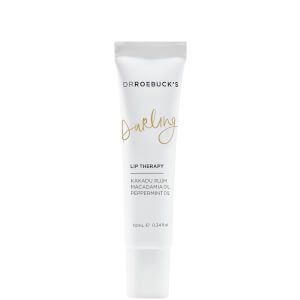
“Dr Roebuck's Darling is a super-nourishing lip balm to hydrate and protect this delicate skin.”
This product can help improve hydration of the skin with the two types of ingredients.
The first type is called “humectants”:
these ingredients help attract water.
When humectants are on the surface of the skin, they “pull in” the moisture from the outside environment, or from
within deeper layers of the skin. The following ingredients in this product do the job:
terminalia ferdinandiana seed oil.
This product also contains ingredients called “occlusives”. They help reduce the speed with which our skin loses moisture to the outside environment. These ingredients also help soften the upper layer of the skin, so it feels less tight and nicer to the touch. The following ingredients in this product do the job: butyrospermum parkii butter, ricinus communis seed oil.
Can it cause trouble?
Irritancy2 strong irritants: Mentha piperita oil, Citrus grandis peel oilMedium risk
Comedogenic2 ingredients rated 2 or more on the 0–5 pore-clogging scale2 flagged
User reviews
Be the first — your take helps the next person decide.
Ingredients
Filter by role to see what each ingredient is doing.
Butyrospermum parkii butter~23–34%
- Irritation risk
- Low
- Comedogenicity
- 3/5
A great moisturising ingredient that softens the skin and reduces water loss from its upper layer. It also can be helpful in protecting skin from free radicals
More about Butyrospermum parkii butterMacadamia ternifolia seed oil~5.4–8.1%
- Irritation risk
- Medium
Plant oil from nuts that helps soften the upper layer of the skin. Contains a high concentration of oleic acid that can weaken skin's barrier function and increase water-loss while enhancing penetration of other ingredients
More about Macadamia ternifolia seed oilCanola oil~4.6–6.9%
- Irritation risk
- Medium
A plant oil that can help soften the upper layer of the skin
More about Canola oilOlea europaea fruit oil~3.7–5.6%
- Irritation risk
- Medium
An emollient that helps soften the skin but is not effective for restoring its barrier function. Might be helpful to calm down inflammation
More about Olea europaea fruit oilOryza sativa bran wax~2.7–4.1%
- Irritation risk
- Low
Ricinus communis seed oil~2.3–3.4%
- Irritation risk
- Medium
A plant oil that can help soften the skin. It might be helpful in calming down inflammation, but solid research is lacking. Is often used in lip products to create the needed product consistency
More about Ricinus communis seed oilPolyhydroxystearic acid~1.5–2.2%
- Irritation risk
- Medium
Used to create a thicker product consistency and stabilize the formulation
More about Polyhydroxystearic acidEuphorbia cerifera wax~1.5–2.3%
- Irritation risk
- Low
Terminalia ferdinandiana seed oil~1.2–1.8%
- Irritation risk
- Low
Helps soften the upper layer of the skin
More about Terminalia ferdinandiana seed oilTocopherol~0.85–1.3%
- Irritation risk
- Low
Pure form of vitamin E. Can help moisturise and protect the skin from free radicals. Often used to help stabilise other ingredients or the formula itself
More about TocopherolGlycine soja oil~0.6–1.4%
- Irritation risk
- Medium
- Comedogenicity
- 2/5
A good emollient that helps soften the skin and helps repair its barrier function. It can clog pores if used in high concentrations.
More about Glycine soja oilMentha piperita oil~0.45–1%
Citrus grandis peel oil~0.35–0.85%
- Irritation risk
- High
A plant oil with high content of volatile compounds that, especially when exposed to air, can cause allergic reactions and irritate the skin
More about Citrus grandis peel oilCarthamus tinctorius seed oil~0.4–0.9%
- Irritation risk
- Low
An emollient that helps soften the skin and might help calm down inflammation
More about Carthamus tinctorius seed oilGlyceryl rosinate~0.35–0.85%
- Irritation risk
- Low
Olea europaea oil unsaponifiables~0.15–0.55%
- Irritation risk
- Low
Help soften the upper layer of the skin
More about Olea europaea oil unsaponifiablesHelianthus annuus seed wax~0.2–0.8%
- Irritation risk
- Low
Helps soften the upper layer of the skin and support skin's barrier function while creating a thicker product consistency
More about Helianthus annuus seed waxTocopheryl acetate~0.1–0.45%
- Irritation risk
- Medium
A more stable but less bio-available form of vitamin E compared to Tocopherol. Might help moisturize and protect the skin from free radicals, but mostly used in low concentrations to stabilize other ingredients.
More about Tocopheryl acetateIngredient list view
Butyrospermum parkii butter, Macadamia ternifolia seed oil, Canola oil, Olea europaea fruit oil, Oryza sativa bran wax, Ricinus communis seed oil, Polyhydroxystearic acid, Euphorbia cerifera wax, Terminalia ferdinandiana seed oil, Tocopherol, Glycine soja oil, Mentha piperita oil, Citrus grandis peel oil, Carthamus tinctorius seed oil, Glyceryl rosinate, Olea europaea oil unsaponifiables, Helianthus annuus seed wax, Tocopheryl acetate
Compare prices
Retailers ranked by price — lowest first.

Affiliate links · prices updated regularly
Sources cited in this review
Every concentration estimate and effectiveness label is anchored to one of these 10 studies and safety reviews.
- 1
- 2Canola Oilsciencedirect.com
- 3Use of “natural” oils for moisturization: Review of olive, coconut, and sunflower seed oilonlinelibrary.wiley.com
- 4
- 5
- 6

Affiliate links · As an Amazon Associate, WIMJ earns from qualifying purchases.