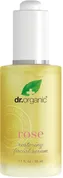
Dr.Organic Rose Restoring Facial Serum

Dr.Organic Rose Restoring Facial Serum

Efficacy37/100IrritancyHigh

Works for

Moisturizing
Carthamus tinctorius seed oil, Simmondsia chinensis seed oil + 14 more
Works
What the product description says
“This lightweight, ultra-hydrating serum is made with organic rose oil and helps restore skin¿s health, radiance, and overall moisture.”
Source: Ulta

This product can help soften the skin and reduce its moisture loss with emollients and occlusives: helianthus annuus seed oil, simmondsia chinensis seed oil.

Keep in mind that this product does not contain effective ingredients to attract water to the upper layer of the skin. This is why an additional product with humectants like glycerin or hyaluronic acid can be helpful (apply it before this product for the best results).

Carthamus tinctorius seed oilKey active· EmollientEffect: HighAn emollient that helps soften the skin and might help calm down inflammation~22–34%
Simmondsia chinensis seed oilKey active· Emollient, OcclusiveEffect: HighSoftens the upper layer of skin and helps restore the healthy skin barrier. Has shown to help calm down inflammation in skin. It is a stable oil, meaning that it retains its properties even when exposed to air.~5.1–7.7%
Oleyl erucateKey active· EmollientEffect: HighHelps soften the upper layer of the skin and create a nice product texture~4.4–6.5%
Glycine soja oilKey active· EmollientEffect: HighA good emollient that helps soften the skin and helps repair its barrier function. It can clog pores if used in high concentrations.~2–3.1%
Prunus amygdalus dulcis oilKey active· EmollientEffect: MediumAn emollient that softens the skin~1.2–1.8%
Helianthus annuus seed oilKey active· Emollient, OcclusiveEffect: HighA great emollient due to its high linoleic acid content. One of the most effective plant oils in helping skin hydration and repairing skin barrier function~1–1.45%
Oryza sativa bran oilKey active· EmollientEffect: HighHelps soften the upper layer of the skin and might have some anti-oxidant properties~0.55–1.25%
Limnanthes alba seed oilKey active· EmollientEffect: HighThis oil's cmposition is closest to rapeseed oil. It is a very stable oil and serves as an emoillient~0.5–1.15%
Dicaprylyl carbonate· EmollientEffect: LowHelps products spread more easily and works as an emollient to soften skin~3.7–5.6%
Dicaprylyl ether· EmollientEffect: LowHelps soften the upper layer of the skin while creating a non-greasy feel on the skin. Helps to dissolve other ingredients~2.8–4.2%
Passiflora incarnata seed oilEffect: LowA plant oil that can help soften the upper layer of the skin. Contains essential oil that can be irritating~0.4–0.95%
Rosa damascena flower oilEffect: LowUsed as a fragrance. Can be irritating~0.1–0.45%
LecithinEffect: Low, below effective doseUsed mostly for creating emulsions - helping oil and water mix together. Helps soften the upper layer of the skin~0.15–0.7%
TocopherolEffect: Low, below effective dosePure form of vitamin E. Can help moisturise and protect the skin from free radicals. Often used to help stabilise other ingredients or the formula itself~0.1–0.3%
Rosa canina fruit oilUnder-dosedA great emollient. Contains vitamin E (tocopherol) which may give it some anti-oxidant properties. Can contain volatile compounds and can be irritating~1.7–2.5%
Argania spinosa kernel oilUnder-dosedAn emollient that helps soften the upper layer of the skin. Might have some weak anti-oxidant properties~0.35–0.8%
Anti-aging
Prunus amygdalus dulcis oil, Limnanthes alba seed oil + 2 more
Not delivered
What the product description says
“Dr. Organic Rose Restoring Facial Serum nourishes and restores skin's youthful glow with the natural essence of Bulgarian roses.”
Source: Ulta

Effective ingredients missing or their concentration is too low.

Prunus amygdalus dulcis oilEffect: LowAn emollient that softens the skin~1.2–1.8%
Limnanthes alba seed oilEffect: LowThis oil's cmposition is closest to rapeseed oil. It is a very stable oil and serves as an emoillient~0.5–1.15%
TocopherolEffect: Low, below effective dosePure form of vitamin E. Can help moisturise and protect the skin from free radicals. Often used to help stabilise other ingredients or the formula itself~0.1–0.3%
Ascorbyl palmitateEffect: Low, below effective doseBeing a lipid soluble form of vitamin C, it is more stable and can penetrate the skin better than L-Ascorbic acid. It is effective in protecting the skin from free radicals, as well as evening the skin tone, but is less effective in stimulating collagen production compared to L-Ascorbic acid.~0.05–0.3%

Can it cause trouble?

Irritancy
7 strong irritants: Parfum, Passiflora incarnata seed oil + 5 more — patch-test recommended
High risk
We flagged 13 ingredients with irritancy potential. Severity depends on your sensitivity threshold; the table lists the worst offenders first.
IngredientFunctionIrritationEst. amount
ParfumAn aromatic blend of unspecified and possibly irritating ingredientsHigh~1.3–1.9%est.
Passiflora incarnata seed oilA plant oil that can help soften the upper layer of the skin. Contains essential oil that can be irritatingHigh~0.4–0.95%est.
Calendula officinalis flower oilA plant oil that might have an antibacterial and some antioxidant effect. Is a common allergen and irritantHigh~0.35–0.85%est.
Pelargonium graveolens oilUsed as a fragrance. Can be irritatingHigh~0.2–0.7%est.
Arnica montana flower extractA plant extract that can be irritating. It can have some anti-bacterial properties, but there are no evidence of a beneficial effect for skinHigh~0.15–0.55%est.
Eugenia caryophyllus bud oilUsed as a fragrance. Can be irritatingHigh~0.1–0.45%est.
Rosa damascena flower oilUsed as a fragrance. Can be irritatingHigh~0.1–0.45%est.
Simmondsia chinensis seed oilSoftens the upper layer of skin and helps restore the healthy skin barrier. Has shown to help calm down inflammation in skin. It is a stable oil, meaning that it retains its properties even when exposed to air.Medium~5.1–7.7%est.
Glycine soja oilA good emollient that helps soften the skin and helps repair its barrier function. It can clog pores if used in high concentrations.Medium~2–3.1%est.
Rosa canina fruit oilA great emollient. Contains vitamin E (tocopherol) which may give it some anti-oxidant properties. Can contain volatile compounds and can be irritatingMedium~1.7–2.5%est.
Tocopheryl acetateA more stable but less bio-available form of vitamin E compared to Tocopherol. Might help moisturize and protect the skin from free radicals, but mostly used in low concentrations to stabilize other ingredients.Medium~0.35–0.8%est.
Argania spinosa kernel oilAn emollient that helps soften the upper layer of the skin. Might have some weak anti-oxidant propertiesMedium~0.35–0.8%est.
Ascorbyl palmitateBeing a lipid soluble form of vitamin C, it is more stable and can penetrate the skin better than L-Ascorbic acid. It is effective in protecting the skin from free radicals, as well as evening the skin tone, but is less effective in stimulating collagen production compared to L-Ascorbic acid.Medium~0.05–0.3%est.
Comedogenic
2 ingredients rated 2 or more on the 0–5 pore-clogging scale
2 flagged
These ingredients have a comedogenic rating of 2 or more on a 0–5 scale; the table shows each one's rating. In leave-on products they can clog pores in acne-prone skin.
IngredientFunctionRatingEst. amount
Gossypium herbaceum seed oilCottonseed oil. It is used as an emollient and occlusive in products. It is rich palmitic, oleic acid, and linoleic fatty acids.3/5~0.55–1.3%est.
Glycine soja oilA good emollient that helps soften the skin and helps repair its barrier function. It can clog pores if used in high concentrations.2/5~2–3.1%est.

User reviews

Would you recommend?
No community reviews yet.

Be the first — your take helps the next person decide.

Ingredients

Filter by role to see what each ingredient is doing.

Carthamus tinctorius seed oil~22–34%
Key active
Irritation risk
Low
Works for
MoisturizingAnti-oxidation

An emollient that helps soften the skin and might help calm down inflammation

More about Carthamus tinctorius seed oil
Simmondsia chinensis seed oil~5.1–7.7%
Key activeIrritant · medium
Irritation risk
Medium
Works for
Moisturizing

Softens the upper layer of skin and helps restore the healthy skin barrier. Has shown to help calm down inflammation in skin. It is a stable oil, meaning that it retains its properties even when exposed to air.

More about Simmondsia chinensis seed oil
Oleyl erucate~4.4–6.5%
Key active
Irritation risk
Low
Works for
Moisturizing

Helps soften the upper layer of the skin and create a nice product texture

More about Oleyl erucate
Dicaprylyl carbonate~3.7–5.6%
Formula
Irritation risk
Low
Works for
Moisturizing

Helps products spread more easily and works as an emollient to soften skin

More about Dicaprylyl carbonate
Dicaprylyl ether~2.8–4.2%
Formula
Irritation risk
Low
Works for
Moisturizing

Helps soften the upper layer of the skin while creating a non-greasy feel on the skin. Helps to dissolve other ingredients

More about Dicaprylyl ether
Glycine soja oil~2–3.1%
Key activeComedogenic 2/5Irritant · medium
Irritation risk
Medium
Comedogenicity
2/5
Works for
Moisturizing

A good emollient that helps soften the skin and helps repair its barrier function. It can clog pores if used in high concentrations.

More about Glycine soja oil
Rosa canina fruit oil~1.7–2.5%
Under-dosedIrritant · medium
Irritation risk
Medium
Works for
MoisturizingAnti-oxidation

A great emollient. Contains vitamin E (tocopherol) which may give it some anti-oxidant properties. Can contain volatile compounds and can be irritating

More about Rosa canina fruit oil
Parfum~1.3–1.9%
Irritant · high
Irritation risk
High

An aromatic blend of unspecified and possibly irritating ingredients

More about Parfum
Prunus amygdalus dulcis oil~1.2–1.8%
Key active
Irritation risk
Low
Works for
MoisturizingAnti-oxidationAnti-aging

An emollient that softens the skin

More about Prunus amygdalus dulcis oil
Helianthus annuus seed oil~1–1.45%
Key active
Irritation risk
Low
Works for
Moisturizing

A great emollient due to its high linoleic acid content. One of the most effective plant oils in helping skin hydration and repairing skin barrier function

More about Helianthus annuus seed oil
Gossypium herbaceum seed oil~0.55–1.3%
Comedogenic 3/5
Irritation risk
Low
Comedogenicity
3/5
Works for
Moisturizing

Cottonseed oil. It is used as an emollient and occlusive in products. It is rich palmitic, oleic acid, and linoleic fatty acids.

More about Gossypium herbaceum seed oil
Oryza sativa bran oil~0.55–1.25%
Key active
Irritation risk
Low
Works for
Moisturizing

Helps soften the upper layer of the skin and might have some anti-oxidant properties

More about Oryza sativa bran oil
Limnanthes alba seed oil~0.5–1.15%
Key active
Irritation risk
Low
Works for
MoisturizingAnti-oxidationAnti-aging

This oil's cmposition is closest to rapeseed oil. It is a very stable oil and serves as an emoillient

More about Limnanthes alba seed oil
Passiflora incarnata seed oil~0.4–0.95%
Irritant · high
Irritation risk
High
Works for
Moisturizing

A plant oil that can help soften the upper layer of the skin. Contains essential oil that can be irritating

More about Passiflora incarnata seed oil
Calendula officinalis flower oil~0.35–0.85%
Irritant · high
Irritation risk
High
Works for
Anti-oxidationAnti-inflammatory

A plant oil that might have an antibacterial and some antioxidant effect. Is a common allergen and irritant

More about Calendula officinalis flower oil
Tocopheryl acetate~0.35–0.8%
Irritant · medium
Irritation risk
Medium
Works for
Anti-oxidation

A more stable but less bio-available form of vitamin E compared to Tocopherol. Might help moisturize and protect the skin from free radicals, but mostly used in low concentrations to stabilize other ingredients.

More about Tocopheryl acetate
Pelargonium graveolens oil~0.2–0.7%
Irritant · high
Irritation risk
High

Used as a fragrance. Can be irritating

More about Pelargonium graveolens oil
Argania spinosa kernel oil~0.35–0.8%
Under-dosedIrritant · medium
Irritation risk
Medium
Works for
MoisturizingAnti-oxidation

An emollient that helps soften the upper layer of the skin. Might have some weak anti-oxidant properties

More about Argania spinosa kernel oil
Arnica montana flower extract~0.15–0.55%
Irritant · high
Irritation risk
High

A plant extract that can be irritating. It can have some anti-bacterial properties, but there are no evidence of a beneficial effect for skin

More about Arnica montana flower extract
Eugenia caryophyllus bud oil~0.1–0.45%
Irritant · high
Irritation risk
High

Used as a fragrance. Can be irritating

More about Eugenia caryophyllus bud oil
Lecithin~0.15–0.7%
Formula
Irritation risk
Low
Works for
CleansingMoisturizing

Used mostly for creating emulsions - helping oil and water mix together. Helps soften the upper layer of the skin

More about Lecithin
Rosa damascena flower oil~0.1–0.45%
Irritant · high
Irritation risk
High
Works for
Moisturizing

Used as a fragrance. Can be irritating

More about Rosa damascena flower oil
Ascorbyl palmitate~0.05–0.3%
Irritant · medium
Irritation risk
Medium
Works for
Anti-oxidationAnti-aging

Being a lipid soluble form of vitamin C, it is more stable and can penetrate the skin better than L-Ascorbic acid. It is effective in protecting the skin from free radicals, as well as evening the skin tone, but is less effective in stimulating collagen production compared to L-Ascorbic acid.

More about Ascorbyl palmitate
Tocopherol~0.1–0.3%
Formula
Irritation risk
Low
Works for
Anti-oxidationAnti-inflammatoryAnti-agingMoisturizing

Pure form of vitamin E. Can help moisturise and protect the skin from free radicals. Often used to help stabilise other ingredients or the formula itself

More about Tocopherol
Ingredient list view

Carthamus tinctorius seed oil, Simmondsia chinensis seed oil, Oleyl erucate, Dicaprylyl carbonate, Dicaprylyl ether, Glycine soja oil, Rosa canina fruit oil, Parfum, Prunus amygdalus dulcis oil, Helianthus annuus seed oil, Gossypium herbaceum seed oil, Oryza sativa bran oil, Limnanthes alba seed oil, Passiflora incarnata seed oil, Calendula officinalis flower oil, Tocopheryl acetate, Pelargonium graveolens oil, Argania spinosa kernel oil, Arnica montana flower extract, Eugenia caryophyllus bud oil, Lecithin, Rosa damascena flower oil, Ascorbyl palmitate, Tocopherol

Compare prices

Retailers ranked by price — lowest first.

Amazon US
Price unavailable Out of stock
Check

Affiliate links · As an Amazon Associate, WIMJ earns from qualifying purchases.

Worth comparing, line by line.

Match % combines shared ingredients, the first five ingredients, shared actives and hero ingredients, irritancy (lower counts in the alternative's favour), texture and body area. Only products in the same routine step are compared.

Side-by-side comparison of this product against its closest alternatives
Dr.OrganicRose Restoring Facial SerumYOUR PRODUCTCattierRedensifying Serum Oil OrganicSkin AssistantAgeless Vitamin C SerumPacifica BeautySuper Flower Rapid Response Face Oil
Match—38%36%35%
Price—$29.11——
Shared key ingredients—3 of 94 of 95 of 9
Key difference—Caprylic/Capric TriglycerideCocos Nucifera OilVitamin E
Irritancy High Medium Medium Medium
Drying alcohol————
View product Shop Shop Shop

More alternatives: Lina Hanson Global Calm SerumThe Body Shop Vitamin E Overnight Serum-in-oil

Cheaper alternatives? Browse formulas in the same category.
We compare ingredient profiles across our catalog — pick the closest match for your budget.
Open dupe finder

Sources cited in this review

Every concentration estimate and effectiveness label is anchored to one of these 15 studies and safety reviews.

  1. 1
  2. 2
  3. 3
  4. 4
  5. 5
  6. 6
Dr.Organic Rose Restoring Facial Serum
Dr.OrganicRose Restoring Facial Serum

Affiliate links · As an Amazon Associate, WIMJ earns from qualifying purchases.

As an Amazon Associate, WIMJ earns from qualifying purchases.