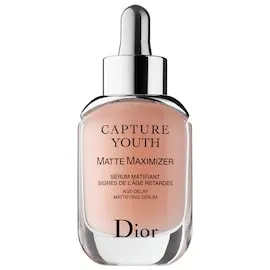
Dior Capture Youth Matte Maximizer Age-Delay Mattifying Serum

Dior Capture Youth Matte Maximizer Age-Delay Mattifying Serum

Efficacy50/100IrritancyMedium

Works for

Evens skin tone
Lactic acid, Zinc gluconate
Works well
What the product description says
“93% of women saw more even skin after 4 weeks”
Source: Sephora CA

This product can help reduce hypepigmentation and even out the skin tone because it contains the following effective ingredients: lactic acid

Keep in mind that you would need to apply any topical skincare targetted at hypigmentation consistently for a couple of months to get a result. No topical skincare product can help get rid of hyperpigmentation (including post-acne marks and age spots) instantly.

Lactic acidKey activeEffect: HighAn exfoliating and moisturizing alpha-hydroxy acid (AHA). Typically causes less irritation than other AHAs, for example, glycolic acid. At high concentrations (about 15%), lactic acid can help reduce lines and wrinkles. Recent studies show that lactic acid can support the "good" bacteria living on skin's surface (healthy skin microbiome)~1.8–2.2%
Zinc gluconateEffect: Low, below effective doseTypically used to stabilize the product formulations. It is a salt of a polyhydroxy acid (PHA) and in larger concentrations, can help shed the dead cells from the skin surface revealing smoother skin. It can help attract water to the upper layer of the skin. Might to be helpful against acne and clogged pores. Could be helpful in neutralizing free radicals, but solid research is missing. Due to the zinc content, might help calm down inflammation in skin~0.4–0.65%
Anti-blemish
Kaolin, Zinc gluconate
Not delivered
What the product description says
“Pores .”
Source: Sephora CA

Effective ingredients missing or their concentration is too low.

KaolinEffect: LowA type of clay that consists mainly of aluminum silicate. Helps absorb oil and creates a thicker product consistency. Can be used to add a white color~0.35–0.6%
Zinc gluconateEffect: Low, below effective doseTypically used to stabilize the product formulations. It is a salt of a polyhydroxy acid (PHA) and in larger concentrations, can help shed the dead cells from the skin surface revealing smoother skin. It can help attract water to the upper layer of the skin. Might to be helpful against acne and clogged pores. Could be helpful in neutralizing free radicals, but solid research is missing. Due to the zinc content, might help calm down inflammation in skin~0.4–0.65%
Anti-aging
Side benefit · Lactic acid, Adenosine + 2 more
Works well

This product can help reduce and prevent fine lines and wrinkles, improve skin elasticity and firmness because it contains adenosine.

These ingredients in the product can also be helpful, even though there is less evidence for their effectiveness: lactic acid.

Keep in mind that it typically takes at least 6 weeks to notice any results because the changes that are needed to improve fine lines and elasticity happen in the deeper layers of the skin. No topical anti-aging product can “erase” wrinkles or fully reverse signs of aging.

Lactic acidKey activeEffect: MediumAn exfoliating and moisturizing alpha-hydroxy acid (AHA). Typically causes less irritation than other AHAs, for example, glycolic acid. At high concentrations (about 15%), lactic acid can help reduce lines and wrinkles. Recent studies show that lactic acid can support the "good" bacteria living on skin's surface (healthy skin microbiome)~1.8–2.2%
AdenosineKey activeEffect: HighMight help improve cell turnover and reduce inflammation in skin. One study shows that the ingredients might be able to help reduce dynamic wrinkles (for example, in the corners of the eyes or on the forehead)~0.2–0.4%
Zinc gluconateEffect: Low, below effective doseTypically used to stabilize the product formulations. It is a salt of a polyhydroxy acid (PHA) and in larger concentrations, can help shed the dead cells from the skin surface revealing smoother skin. It can help attract water to the upper layer of the skin. Might to be helpful against acne and clogged pores. Could be helpful in neutralizing free radicals, but solid research is missing. Due to the zinc content, might help calm down inflammation in skin~0.4–0.65%
TocopherolEffect: Low, below effective dosePure form of vitamin E. Can help moisturise and protect the skin from free radicals. Often used to help stabilise other ingredients or the formula itself~0.15–0.3%
Exfoliation
Side benefit · Lactic acid, Zinc gluconate
Works well

This product can help exfoliate the skin. In other words, it helps break down the bonds between dead cells on the surface of the skin and speed up the skin turnover. Skin often appears softer and brighter after exfoliation, but overdoing it can result in disrupted skin barrier. The following ingredient is doing the exfoliating job in this product: lactic acid.

Lactic acidKey activeEffect: HighAn exfoliating and moisturizing alpha-hydroxy acid (AHA). Typically causes less irritation than other AHAs, for example, glycolic acid. At high concentrations (about 15%), lactic acid can help reduce lines and wrinkles. Recent studies show that lactic acid can support the "good" bacteria living on skin's surface (healthy skin microbiome)~1.8–2.2%
Zinc gluconateEffect: Low, below effective doseTypically used to stabilize the product formulations. It is a salt of a polyhydroxy acid (PHA) and in larger concentrations, can help shed the dead cells from the skin surface revealing smoother skin. It can help attract water to the upper layer of the skin. Might to be helpful against acne and clogged pores. Could be helpful in neutralizing free radicals, but solid research is missing. Due to the zinc content, might help calm down inflammation in skin~0.4–0.65%
Moisturizing
Side benefit · Glycerin, Lactic acid + 6 more
Works

This product can help improve hydration of the skin with the two types of ingredients.

The first type is called “humectants”:
these ingredients help attract water. When humectants are on the surface of the skin, they “pull in” the moisture from the outside environment, or from within deeper layers of the skin. The following ingredients in this product do the job: alcaligenes polysaccharides, betaine.

This product also contains ingredients called “occlusives”. They help reduce the speed with which our skin loses moisture to the outside environment. These ingredients also help soften the upper layer of the skin, so it feels less tight and nicer to the touch. The following ingredients in this product do the job: alcaligenes polysaccharides.

GlycerinKey active· HumectantEffect: HighOne of the best moisturizing ingredients. Naturally present in skin. It attracts water to the upper layer of the skin working as a humectant~3–3.7%
Lactic acidKey active· HumectantEffect: HighAn exfoliating and moisturizing alpha-hydroxy acid (AHA). Typically causes less irritation than other AHAs, for example, glycolic acid. At high concentrations (about 15%), lactic acid can help reduce lines and wrinkles. Recent studies show that lactic acid can support the "good" bacteria living on skin's surface (healthy skin microbiome)~1.8–2.2%
BetaineKey active· HumectantEffect: HighHelps attract water to the upper layer of the skin and improves the product texture~1.3–1.6%
Alcaligenes polysaccharidesKey active· Humectant, EmollientEffect: HighHelp attract water to the upper layer of the skin~0.4–0.6%
AdenosineKey activeEffect: MediumMight help improve cell turnover and reduce inflammation in skin. One study shows that the ingredients might be able to help reduce dynamic wrinkles (for example, in the corners of the eyes or on the forehead)~0.2–0.4%
Propylene glycol· HumectantEffect: LowHelps oil and water mix together and can enhance the penetration of other ingredients into the skin. It can be irritating~2.2–2.7%
TocopherolEffect: Low, below effective dosePure form of vitamin E. Can help moisturise and protect the skin from free radicals. Often used to help stabilise other ingredients or the formula itself~0.15–0.3%
Zinc gluconateUnder-dosedTypically used to stabilize the product formulations. It is a salt of a polyhydroxy acid (PHA) and in larger concentrations, can help shed the dead cells from the skin surface revealing smoother skin. It can help attract water to the upper layer of the skin. Might to be helpful against acne and clogged pores. Could be helpful in neutralizing free radicals, but solid research is missing. Due to the zinc content, might help calm down inflammation in skin~0.4–0.65%

Can it cause trouble?

Irritancy
2 strong irritants: Alcohol, Parfum
Medium risk
We flagged 14 ingredients with irritancy potential. Severity depends on your sensitivity threshold; the table lists the worst offenders first.
IngredientFunctionIrritationEst. amount
AlcoholCan be drying and contribute to skin irritation. Used in formulars to dissolve other ingredients, create a thinner product consistency or for its antibacterial propertiesHigh~8.1–9.9%est.
Propylene glycolHelps oil and water mix together and can enhance the penetration of other ingredients into the skin. It can be irritatingHigh~2.2–2.7%est.
ParfumAn aromatic blend of unspecified and possibly irritating ingredientsHigh~0.35–0.6%est.
Ci 19140A yellow dyeHigh~0.05–0.15%est.
Lactic acidAn exfoliating and moisturizing alpha-hydroxy acid (AHA). Typically causes less irritation than other AHAs, for example, glycolic acid. At high concentrations (about 15%), lactic acid can help reduce lines and wrinkles. Recent studies show that lactic acid can support the "good" bacteria living on skin's surface (healthy skin microbiome)Medium~1.8–2.2%est.
Hydroxyethyl acrylate/sodium acryloyldimethyl taurate copolymerA gelling agent that thickens the product consistency and leaves the skin with a velvety finishMedium~1.5–1.9%est.
Peg-60 hydrogenated castor oilHelps oil and water mix togetherMedium~0.5–0.75%est.
Zinc gluconateTypically used to stabilize the product formulations. It is a salt of a polyhydroxy acid (PHA) and in larger concentrations, can help shed the dead cells from the skin surface revealing smoother skin. It can help attract water to the upper layer of the skin. Might to be helpful against acne and clogged pores. Could be helpful in neutralizing free radicals, but solid research is missing. Due to the zinc content, might help calm down inflammation in skinMedium~0.4–0.65%est.
Sodium citrateHelps to control the skin's pH level. Maintains the skin's natural film of amino-lactic acids and oils. Helps to preserve productsMedium~0.3–0.55%est.
Polysorbate 60Helps oil and water mix togetherMedium~0.3–0.55%est.
Peg-7 glyceryl cocoateHelps oils and water mix together and works as a cleansing agentMedium~0.25–0.45%est.
Sodium metabisulfiteA preservativeMedium~0.1–0.2%est.
BhtA preservativeMedium~0.15–0.3%est.
Ci 14700A colorantMedium~0.1–0.2%est.
Comedogenic
Clean of flagged comedogenic ingredients
None flagged

User reviews

Would you recommend?
No community reviews yet.

Be the first — your take helps the next person decide.

Ingredients

Filter by role to see what each ingredient is doing.

Water~45–55%
Formula
Irritation risk
Low

Plain old water

More about Water
Alcohol~8.1–9.9%
Irritant · high
Irritation risk
High
Works for
Antibacterial

Can be drying and contribute to skin irritation. Used in formulars to dissolve other ingredients, create a thinner product consistency or for its antibacterial properties

More about Alcohol
Dipropylene glycol~4.2–5.2%
Formula
Irritation risk
Low

Helps to dissolve other ingredients in a formulation. Slows down the rate of product drying

More about Dipropylene glycol
Glycerin~3–3.7%
Key active
Irritation risk
Low
Works for
Moisturizing

One of the best moisturizing ingredients. Naturally present in skin. It attracts water to the upper layer of the skin working as a humectant

More about Glycerin
Propylene glycol~2.2–2.7%
Irritant · high
Irritation risk
High
Works for
Moisturizing

Helps oil and water mix together and can enhance the penetration of other ingredients into the skin. It can be irritating

More about Propylene glycol
Lactic acid~1.8–2.2%
Key activeIrritant · medium
Irritation risk
Medium
Works for
Evens skin toneMoisturizingExfoliationAnti-aging

An exfoliating and moisturizing alpha-hydroxy acid (AHA). Typically causes less irritation than other AHAs, for example, glycolic acid. At high concentrations (about 15%), lactic acid can help reduce lines and wrinkles. Recent studies show that lactic acid can support the "good" bacteria living on skin's surface (healthy skin microbiome)

More about Lactic acid
Hydroxyethyl acrylate/sodium acryloyldimethyl taurate copolymer~1.5–1.9%
Irritant · medium
Irritation risk
Medium

A gelling agent that thickens the product consistency and leaves the skin with a velvety finish

More about Hydroxyethyl acrylate/sodium acryloyldimethyl taurate copolymer
Betaine~1.3–1.6%
Key active
Irritation risk
Low
Works for
Moisturizing

Helps attract water to the upper layer of the skin and improves the product texture

More about Betaine
Cellulose~1.2–1.5%
Formula
Irritation risk
Low
Works for
Mattifying

Can be used to help absorb oil as well as add volume and imporve texture of products.

More about Cellulose
Vinyl dimethicone/methicone silsesquioxane crosspolymer~0.8–1.15%
Formula
Irritation risk
Low

A type of silicone that create a smooth product finish and can create an optical soft-focus effect on the skin. Helps to thicken the product consistency

More about Vinyl dimethicone/methicone silsesquioxane crosspolymer
Phenoxyethanol~0.6–0.95%
Formula
Irritation risk
Low

A preservative. It helps prevent bacterial growth in cosmetic products

More about Phenoxyethanol
Sodium hydroxide~0.55–0.8%
Formula
Irritation risk
Low

Used to adjust the product's pH

More about Sodium hydroxide
Peg-60 hydrogenated castor oil~0.5–0.75%
Irritant · medium
Irritation risk
Medium
Works for
Cleansing

Helps oil and water mix together

More about Peg-60 hydrogenated castor oil
Zinc gluconate~0.4–0.65%
Under-dosedIrritant · medium
Irritation risk
Medium
Works for
MoisturizingExfoliationAnti-inflammatoryEvens skin toneAnti-agingAnti-blemishAnti-oxidation

Typically used to stabilize the product formulations. It is a salt of a polyhydroxy acid (PHA) and in larger concentrations, can help shed the dead cells from the skin surface revealing smoother skin. It can help attract water to the upper layer of the skin. Might to be helpful against acne and clogged pores. Could be helpful in neutralizing free radicals, but solid research is missing. Due to the zinc content, might help calm down inflammation in skin

More about Zinc gluconate
Parfum~0.35–0.6%
Irritant · high
Irritation risk
High

An aromatic blend of unspecified and possibly irritating ingredients

More about Parfum
Alcaligenes polysaccharides~0.4–0.6%
Key active
Irritation risk
Low
Works for
Moisturizing

Help attract water to the upper layer of the skin

More about Alcaligenes polysaccharides
Xanthan gum~0.35–0.65%
Formula
Irritation risk
Low
Works for
Cleansing

Used to create a thicker product consistency

More about Xanthan gum
Sodium citrate~0.3–0.55%
Irritant · medium
Irritation risk
Medium

Helps to control the skin's pH level. Maintains the skin's natural film of amino-lactic acids and oils. Helps to preserve products

More about Sodium citrate
Polysorbate 60~0.3–0.55%
Irritant · medium
Irritation risk
Medium
Works for
Cleansing

Helps oil and water mix together

More about Polysorbate 60
Sorbitan isostearate~0.25–0.5%
Formula
Irritation risk
Low
Works for
Cleansing

Helps oil and water mix together

More about Sorbitan isostearate
Kaolin~0.35–0.6%
Formula
Irritation risk
Low
Works for
MattifyingAnti-blemish

A type of clay that consists mainly of aluminum silicate. Helps absorb oil and creates a thicker product consistency. Can be used to add a white color

More about Kaolin
Adenosine~0.2–0.4%
Key active
Irritation risk
Low
Works for
Anti-agingMoisturizingAnti-oxidation

Might help improve cell turnover and reduce inflammation in skin. One study shows that the ingredients might be able to help reduce dynamic wrinkles (for example, in the corners of the eyes or on the forehead)

More about Adenosine
Sodium tocopheryl phosphate~0.2–0.4%
Formula
Irritation risk
Low
Works for
Cleansing
More about Sodium tocopheryl phosphate
Peg-7 glyceryl cocoate~0.25–0.45%
Irritant · medium
Irritation risk
Medium
Works for
Cleansing

Helps oils and water mix together and works as a cleansing agent

More about Peg-7 glyceryl cocoate
Illite~0.3–0.55%
Formula
Irritation risk
Low
More about Illite
Sodium metabisulfite~0.1–0.2%
Irritant · medium
Irritation risk
Medium

A preservative

More about Sodium metabisulfite
Ci 77491~0.2–0.4%
Formula
Irritation risk
Low

A red colorant made of iron oxide. Typically is not irritating

More about Ci 77491
Synthetic fluorphlogopite~0.25–0.45%
Formula
Irritation risk
Low

A mineral that is used as an optical filter (makes the skin looks nicer through light reflection) and to improve the texture of cosmetic products

More about Synthetic fluorphlogopite
Polyquaternium-7~0.25–0.45%
Formula
Irritation risk
Low

Helps soften the upper layer of the skin and create a nice product finish

More about Polyquaternium-7
Iris florentina root extract~0.2–0.35%
Formula
Bht~0.15–0.3%
Irritant · medium
Irritation risk
Medium

A preservative

More about Bht
Methylsilanol tri-peg-8 glyceryl cocoate~0.15–0.3%
Formula
Irritation risk
Low
Works for
Cleansing
More about Methylsilanol tri-peg-8 glyceryl cocoate
Tocopherol~0.15–0.3%
Formula
Irritation risk
Low
Works for
Anti-oxidationAnti-inflammatoryAnti-agingMoisturizing

Pure form of vitamin E. Can help moisturise and protect the skin from free radicals. Often used to help stabilise other ingredients or the formula itself

More about Tocopherol
Ci 14700~0.1–0.2%
Irritant · medium
Irritation risk
Medium

A colorant

More about Ci 14700
Ci 60730~0.1–0.2%
Formula
Irritation risk
Low
More about Ci 60730
Ci 19140~0.05–0.15%
Irritant · high
Irritation risk
High

A yellow dye

More about Ci 19140
Ingredient list view

Water, Alcohol, Dipropylene glycol, Glycerin, Propylene glycol, Lactic acid, Hydroxyethyl acrylate/sodium acryloyldimethyl taurate copolymer, Betaine, Cellulose, Vinyl dimethicone/methicone silsesquioxane crosspolymer, Phenoxyethanol, Sodium hydroxide, Peg-60 hydrogenated castor oil, Zinc gluconate, Parfum, Alcaligenes polysaccharides, Xanthan gum, Sodium citrate, Polysorbate 60, Sorbitan isostearate, Kaolin, Adenosine, Sodium tocopheryl phosphate, Peg-7 glyceryl cocoate, Illite, Sodium metabisulfite, Ci 77491, Synthetic fluorphlogopite, Polyquaternium-7, Iris florentina root extract, Bht, Methylsilanol tri-peg-8 glyceryl cocoate, Tocopherol, Ci 14700, Ci 60730, Ci 19140

Compare prices

Retailers ranked by price — lowest first.

Sephora
$95.00
Buy
Amazon US
Price unavailable Out of stock
Check

Affiliate links · As an Amazon Associate, WIMJ earns from qualifying purchases.

Cheaper alternatives? See how this stacks up against similar formulas.
We compare ingredient profiles across our catalog — pick the closest match for your budget.
Open dupe finder

Sources cited in this review

Every concentration estimate and effectiveness label is anchored to one of these 17 studies and safety reviews.

  1. 1
  2. 2
  3. 3
    Propylene Glycolpubmed.ncbi.nlm.nih.gov
  4. 4
  5. 5
  6. 6
Dior Capture Youth Matte Maximizer Age-Delay Mattifying Serum
DiorCapture Youth Matte Maximizer Age-Delay Mattifying Serum

Affiliate links · As an Amazon Associate, WIMJ earns from qualifying purchases.

As an Amazon Associate, WIMJ earns from qualifying purchases.