Works for
2 of 2 advertised claims delivered
Moisturizing31 ingredients credited for this claimStrong support
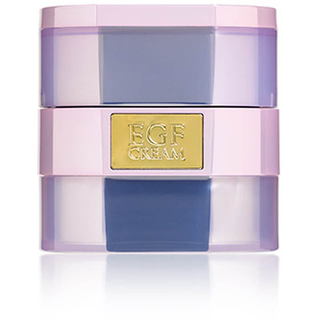
“Revitalize your skin with DHC EGF Cream, an intensive moisturiser that will restore radiance and fight signs of ageing.”
This product can help improve hydration of the skin with the two types of ingredients.
The first type is called “humectants”:
these ingredients help attract water.
When humectants are on the surface of the skin, they “pull in” the moisture from the outside environment, or from
within deeper layers of the skin. The following ingredients in this product do the job:
arginine, glycerin.
This product also contains ingredients called “occlusives”. They help reduce the speed with which our skin loses moisture to the outside environment. These ingredients also help soften the upper layer of the skin, so it feels less tight and nicer to the touch. The following ingredients in this product do the job: arginine, butyrospermum parkii butter.
The following ingredients in this product are especially good for supporting the skin barrier and helping with the hydration level: oligopeptide-1, palmitoyl oligopeptide, palmitoyl tetrapeptide-7
Anti-aging11 ingredients credited for this claimModerate support
“Revitalize your skin with DHC EGF Cream, an intensive moisturiser that will restore radiance and fight signs of ageing.”
This product contains oligopeptide-1, palmitoyl oligopeptide, palmitoyl tetrapeptide-7, retinyl palmitate, serine, tocotrienols. These ingredients might be able to help reduce and prevent fine lines and wrinkles, improve skin elasticity and firmness, but there is not enough evidence that it actually works.
Anti-oxidationNot advertised by the brand · 10 ingredients credited for this claimStrong support
This product contains antioxidants (tocotrienols, ubiquinone) that can help neutralize free radicals in skin. By doing so, they can lessen the damage the skin gets from the UV light (sun).
Evens skin toneNot advertised by the brand · 2 ingredients credited for this claimModerate support
The following ingredient (ingredients) in this product might be helpful, but there is no evidence to confirm that it actually works: retinyl palmitate.
Can it cause trouble?
Irritancy1 strong irritant: Retinyl palmitateMedium risk
Comedogenic2 ingredients rated 2 or more on the 0–5 pore-clogging scale2 flagged
User reviews
Be the first — your take helps the next person decide.
Ingredients
Filter by role to see what each ingredient is doing.
Water~45–55%
Caprylic/capric triglyceride~5.5–6.7%
- Irritation risk
- Medium
A good mix of fatty acids that forms a protective layer on the skin. Improves the shelf life of products. Derived from coconut and glycerin
More about Caprylic/capric triglycerideButylene glycol~4.3–5.3%
- Irritation risk
- Low
Used to create a nice product texture and help delivery of other ingredients. Might be somewhat helpful in attracting water to the upper layer of the skin
More about Butylene glycolGlucose~3.2–3.9%
- Irritation risk
- Low
Helps attract water to the upper layer of the skin. Could be helpful in restoring the skin barrier function
More about GlucoseOlea europaea fruit oil~2.4–2.9%
- Irritation risk
- Medium
An emollient that helps soften the skin but is not effective for restoring its barrier function. Might be helpful to calm down inflammation
More about Olea europaea fruit oilStearic acid~2.2–2.6%
- Irritation risk
- Low
Helps oil and water mix together and works as an emollient
More about Stearic acidHydrogenated palm oil~1.8–2.2%
- Irritation risk
- Low
Helps soften the upper layer of the skin
More about Hydrogenated palm oilPentylene glycol~1.5–1.9%
- Irritation risk
- Medium
Used to preserve products, dissolve other ingredients and create a nice product texture
More about Pentylene glycolCrambe abyssinica seed oil~1.2–1.5%
- Irritation risk
- Medium
Helps soften the upper layer of the skin
More about Crambe abyssinica seed oilButyrospermum parkii butter~1.1–1.3%
- Irritation risk
- Low
- Comedogenicity
- 3/5
A great moisturising ingredient that softens the skin and reduces water loss from its upper layer. It also can be helpful in protecting skin from free radicals
More about Butyrospermum parkii butterTheobroma grandiflorum seed butter~0.7–1.05%
- Irritation risk
- Medium
Helps soften the upper layer of the skin and might as well help to attract moisture to its upper layer
More about Theobroma grandiflorum seed butterDipalmitoyl hydroxyproline~0.6–0.85%
- Irritation risk
- Low
Is claimed to stimulate collagen and elastin production, as well as work as an anti-oxidant. There is however not enough evidence for its effectiveness
More about Dipalmitoyl hydroxyprolineGlyceryl stearate se~0.55–0.85%
- Irritation risk
- Low
- Comedogenicity
- 2/5
Used to stabilize the product formulations and works as an emollient
More about Glyceryl stearate seGlycerin~0.55–0.8%
- Irritation risk
- Low
One of the best moisturizing ingredients. Naturally present in skin. It attracts water to the upper layer of the skin working as a humectant
More about GlycerinBatyl alcohol~0.5–0.75%
- Irritation risk
- Low
Non-drying alcohol. Used to stabilize other ingredients and is an emollient
More about Batyl alcoholGlyceryl stearate~0.5–0.75%
- Irritation risk
- Low
An emollient that softens the skin and forms a protective layer on its surface. Helps water and oil mix together
More about Glyceryl stearatePhenoxyethanol~0.45–0.7%
- Irritation risk
- Low
A preservative. It helps prevent bacterial growth in cosmetic products
More about PhenoxyethanolBehenyl alcohol~0.5–0.7%
- Irritation risk
- Low
Non-drying alcohol that helps water and oil mix together. Also serves as an emollient
More about Behenyl alcoholTocopherol~0.35–0.65%
- Irritation risk
- Low
Pure form of vitamin E. Can help moisturise and protect the skin from free radicals. Often used to help stabilise other ingredients or the formula itself
More about TocopherolArginine~0.3–0.55%
- Irritation risk
- Low
An amino acid that is naturally present in skin and helps keep it hydrated. When used together with AHAs, it can reduce their irritating effect on the skin
More about ArginineSerine~0.3–0.55%
- Irritation risk
- Low
An amino-acid that helps to attract water to the upper layer of the skin. In combination with other amino-acids, might help to reduce fine lines and wrinkles
More about SerineTocotrienols~0.3–0.55%
- Irritation risk
- Low
A type of vitamin E that is more powerful in neutralizing free radicals compared to its other forms
More about TocotrienolsRetinyl palmitate~0.25–0.5%
- Irritation risk
- High
Three steps removed from the active form of vitamin A - retinoic acid. To have an effect in the skin, it first needs to be converted twice to become the retinoic acid. This means it is less potent than retinol, but could also be less irritating. Once converted to the retinoic acid in the skin, it helps against all signs of aging, improves skin cell turnover and helps fight blemishes and clogged pores. However, in many cosmetic formulations, it is used in a concentration that is too low to have the full effect
More about Retinyl palmitateGlucosyl hesperidin~0.25–0.5%
- Irritation risk
- Low
Might be able to neutralize free radicals in skin. Also works as a humectant
More about Glucosyl hesperidinPyridoxine hcl~0.25–0.5%
- Irritation risk
- Medium
Might help neutralize free radicals in skin
More about Pyridoxine hclSalix alba bark extract~0.25–0.45%
- Irritation risk
- High
A plant extract that can help neutralize free radicals in skin. It contains a compound salicin that can theoretically be converted into salicylic acid that, in turn, helps reduce inflammation in skin, but the evidence of effectiveness in skin is lacking and the extract is usually not used in a concentration that would enable an exfoliating effect
More about Salix alba bark extractArachis hypogaea oil~0.25–0.5%
- Irritation risk
- Low
Ascorbyl tetraisopalmitate~0.3–0.55%
- Irritation risk
- Medium
A vitamin C derivative. Studies show that is might be effective in reducing hyperpigmentation, but there are no studies confirming that it is effectively converted into the bioavailable form of Vitamin C in skin. It is not clear how this derivative compares in effectiveness to the topical application of bioavailable form of vitamin C (L-ascorbic acid)
More about Ascorbyl tetraisopalmitateHydrolyzed collagen~0.3–0.55%
- Irritation risk
- Low
A typically plant-derived compound that is supposed mimic human collagen. Cannot penetrate the skin barrier so is not particularly useful in skincare products beyond attracting water to the upper layer of the skin
More about Hydrolyzed collagenMagnesium sulfate~0.3–0.55%
Sodium chloride~0.3–0.55%
- Irritation risk
- Low
Used to stabilize mixtures of oil and water, and create thicker, gel-like product textures
More about Sodium chloridePotassium hydroxide~0.3–0.55%
Ubiquinone~0.3–0.5%
- Irritation risk
- Low
Coenzyme Q10. It helps neutralize free radicals in skin, improves skin hydration and might be helpful agains fine lines and wrinkles. It can be an allergen
More about UbiquinoneSodium dilauramidoglutamide lysine~0.25–0.5%
- Irritation risk
- Low
Peucedanum ostruthium leaf extract~0.25–0.5%
- Irritation risk
- Low
Sodium hyaluronate~0.3–0.5%
- Irritation risk
- Low
One of the best moisturizing ingredients. Attracts water into the upper layer of the skin
More about Sodium hyaluronateElaeis guineensis oil~0.3–0.55%
- Irritation risk
- Low
Helps soften the upper layer of the skin
More about Elaeis guineensis oilCarbomer~0.25–0.5%
- Irritation risk
- Low
Helps create a thicker or gel-like product texture. It is not a surfactant but can be used in gentle cleansing formulations
More about CarbomerMannitol~0.25–0.45%
- Irritation risk
- Low
Helps to attract water to the upper layer of the skin
More about MannitolOlea europaea leaf extract~0.2–0.4%
- Irritation risk
- Medium
A plant extract that might have some anti-oxidant and anti-inflammatory properties but evidence for effectiveness in skin is missing
More about Olea europaea leaf extractSodium polygamma-glutamate~0.25–0.45%
- Irritation risk
- Low
Placental protein~0.25–0.45%
Polysorbate 20~0.25–0.45%
Pyrus malus fruit water~0.2–0.35%
- Irritation risk
- Low
Soluble collagen~0.2–0.35%
- Irritation risk
- Low
A typically plant-derived compound that is supposed mimic human collagen. Cannot penetrate the skin barrier so is not particularly useful in skincare products beyond attracting water to the upper layer of the skin
More about Soluble collagenPalmitoyl oligopeptide~0.3–0.55%
- Irritation risk
- Low
A type of peptide. Peptides are excellent moisturizers and might be able support collagen production reducing fine lines and wrinkles
More about Palmitoyl oligopeptideCitric acid~0.15–0.3%
- Irritation risk
- Medium
Can work as an exfoliant but is typically used to adjust the product pH
More about Citric acidOligopeptide-1~0.15–0.25%
- Irritation risk
- Low
A type of peptide. Peptides are excellent moisturizers and might be able support collagen production reducing fine lines and wrinkles
More about Oligopeptide-1Palmitoyl tetrapeptide-7~0.15–0.3%
- Irritation risk
- Low
A type of peptide. Peptides are excellent moisturizers and might be able support collagen production reducing fine lines and wrinkles
More about Palmitoyl tetrapeptide-7Ingredient list view
Water, Caprylic/capric triglyceride, Butylene glycol, Glucose, Olea europaea fruit oil, Stearic acid, Hydrogenated palm oil, Pentylene glycol, Crambe abyssinica seed oil, Butyrospermum parkii butter, Theobroma grandiflorum seed butter, Dipalmitoyl hydroxyproline, Glyceryl stearate se, Glycerin, Batyl alcohol, Glyceryl stearate, Phenoxyethanol, Behenyl alcohol, Tocopherol, Arginine, Serine, Tocotrienols, Retinyl palmitate, Glucosyl hesperidin, Pyridoxine hcl, Salix alba bark extract, Arachis hypogaea oil, Ascorbyl tetraisopalmitate, Hydrolyzed collagen, Magnesium sulfate, Sodium chloride, Potassium hydroxide, Ubiquinone, Sodium dilauramidoglutamide lysine, Peucedanum ostruthium leaf extract, Sodium hyaluronate, Elaeis guineensis oil, Carbomer, Mannitol, Olea europaea leaf extract, Sodium polygamma-glutamate, Placental protein, Polysorbate 20, Pyrus malus fruit water, Soluble collagen, Palmitoyl oligopeptide, Citric acid, Oligopeptide-1, Palmitoyl tetrapeptide-7
Compare prices
Retailers ranked by price — lowest first.

Product summary
Based on the ingredients included, "DHC - EGF Cream" works well for moisturizing the skin. To work well, any moisturizer needs to include a combination of water-binding and emollient ingredients. DHC - EGF Cream ticks this box. Arginine, glycerin, hydrolyzed collagen, mannitol and sodium hyaluronate in this product (humectants) attract water molecules to the upper layer of the skin (the water comes from the outside air or from the deeper layers of the skin if the air is dry). Emollients in this formulation (palmitoyl tetrapeptide-7, hydrolyzed collagen, arginine, butyrospermum parkii butter and caprylic/capric triglyceride) help to reduce the moisture loss from the skin. They also soften the skin surface and relieve the feeling of dryness and tightness.
Ingredient callouts
- this moisturizer includes a form of retinoids (vitamin A) - retinyl palmitate 0.25% - 0.50%, but this type of vitamin A is not very effective. It could in theory help with fine lines and wrinkles, but the effect is most likely minimal.
- We like that this moisturizer contains peptides (palmitoyl tetrapeptide-7 0.15% - 0.30%, palmitoyl oligopeptide 0.30% - 0.50% and oligopeptide-1 0.15% - 0.25%). There are many different kind of peptides and they are naturally present in our skin. They all are a combination of amino-acids. Some of them work as natural anti-biotics, promote wound-healing and production of collagen. The science is still not settled on how effective peptides in skincare are, but it is very likely that they have a benefit. Peptides might help restore the skin barrier and fight the signs of aging. At the very least, peptides work as humectants: they attract water to the upper layer of the skin and improve its hydration.
Irritation risk
This moisturizer contains actives that can be irritating. We assess the overall irritancy of this moisturizer to be medium. For a detailed overview of all potential irritants: click here
You can see the detailed formula review with the breakdown of all actives in the product and the full ingredient list with estimated concentrations in the tables below.
Price
The product retails for 92.00$ in the United States, from 59.98£ up to 80.00£ in the United Kingdom and for 95.70CA$ in Canada.
For a detailed price comparison: click here.
Sources cited in this review
Every concentration estimate and effectiveness label is anchored to one of these 24 studies and safety reviews.
- 1
- 2Use of “natural” oils for moisturization: Review of olive, coconut, and sunflower seed oilonlinelibrary.wiley.com
- 3Advanced Skin Care – A Novel Ingredientncbi.nlm.nih.gov
- 4
- 5Vitamin E in dermatologyncbi.nlm.nih.gov
- 6Vitamin E and Skin Healthlpi.oregonstate.edu

Affiliate links · As an Amazon Associate, WIMJ earns from qualifying purchases.