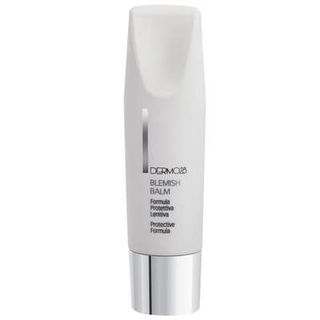
DERMO28 Aqua Blemish Balm; Protective Formula
Works for
1 of 2 advertised claims delivered
MoisturizingPanthenol, Cera alba + 10 moreStrong evidence
“-Aqua System (Vitamin C – Hydraterm – Hyaluronic Acid) – a synergy of active ingredients helps to maintain an optimal hydration -Zinc Oxide – protective and anti-irritation -Shea Butter – soothing and moisturising -Bisabololo – soothing and anti-redness -Sweet Almond Oil – soothing and antioxidant -Lecithin – toning and firming -Panthenol (Provitamin B5) – soothing and moisturising”
This product can help improve hydration of the skin with the two types of ingredients.
The first type is called “humectants”:
these ingredients help attract water.
When humectants are on the surface of the skin, they “pull in” the moisture from the outside environment, or from
within deeper layers of the skin. The following ingredients in this product do the job:
glycerin, sodium hyaluronate.
This product also contains ingredients called “occlusives”. They help reduce the speed with which our skin loses moisture to the outside environment. These ingredients also help soften the upper layer of the skin, so it feels less tight and nicer to the touch. The following ingredients in this product do the job: beeswax, caprylic/capric triglyceride.
The following ingredients in this product are especially good for supporting the skin barrier and helping with the hydration level: panthenol
Evens skin toneNo ingredient credited for this claimNo evidence
“-It soothes inflammations -It evens out your skin tone -It protects from UVA/UVB To use.”
Effective ingredients missing or their concentration is too low
Can it cause trouble?
Irritancy2 strong irritants: Sorbitan sesquioleate, ParfumMedium risk
Comedogenic1 ingredient rated 2 or more on the 0–5 pore-clogging scale1 flagged


User reviews
Be the first — your take helps the next person decide.
Ingredients
Filter by role to see what each ingredient is doing.
Water~45–55%
Caprylic/capric triglyceride~7–8.6%
- Irritation risk
- Medium
A good mix of fatty acids that forms a protective layer on the skin. Improves the shelf life of products. Derived from coconut and glycerin
More about Caprylic/capric triglycerideOctyldodecanol~4.5–5.5%
- Irritation risk
- Low
An emollient that helps to soften the skin and create a pleasant product texture and stabilize the formulation
More about OctyldodecanolTitanium dioxide~3.9–4.7%
- Irritation risk
- Low
Works as a UV filter when used in high concentrations. It is photostable and is effective mostly against the UVB light, with some protection in the UVA range. In small concentrations, used for its ability to improve the color of cosmetic products. Is usually well tolerated by the skin
More about Titanium dioxideGlycerin~2.6–3.2%
- Irritation risk
- Low
One of the best moisturizing ingredients. Naturally present in skin. It attracts water to the upper layer of the skin working as a humectant
More about GlycerinPeg-22/dodecyl glycol copolymer~2.1–2.6%
Sorbitan sesquioleate~1.8–2.2%
- Irritation risk
- High
Used to help oil and water mix together. Can be irritating
More about Sorbitan sesquioleateTalc~1.8–2.1%
Cera alba~1.6–1.9%
- Irritation risk
- Medium
Forms a protective barrier that holds water and keeps dry skin hydrated. Keeps an emulsion from separating into its oil and liquid components, and increases the thickness of a product. Can be an allergen
More about Cera albaBeeswax~1–1.3%
- Irritation risk
- Low
Forms a protective barrier that holds water and keeps dry skin hydrated. Keeps an emulsion from separating into its oil and liquid components, and increases the thickness of a product. Can be an allergen
More about BeeswaxButyrospermum parkii butter~0.75–1.1%
- Irritation risk
- Low
- Comedogenicity
- 3/5
A great moisturising ingredient that softens the skin and reduces water loss from its upper layer. It also can be helpful in protecting skin from free radicals
More about Butyrospermum parkii butterPeg-30 dipolyhydroxystearate~0.6–0.9%
- Irritation risk
- Medium
Helps oil and water mix together
More about Peg-30 dipolyhydroxystearateZinc oxide~0.95–1.15%
- Irritation risk
- Low
A broad spectrum sunblock (protects from both UVA and UVB rays). Is suitable for most sensitive skins. In small concentrations, can be used as a colorant
More about Zinc oxideLecithin~0.55–0.8%
- Irritation risk
- Low
Used mostly for creating emulsions - helping oil and water mix together. Helps soften the upper layer of the skin
More about LecithinSodium hyaluronate~0.45–0.7%
- Irritation risk
- Low
One of the best moisturizing ingredients. Attracts water into the upper layer of the skin
More about Sodium hyaluronateTocopherol~0.45–0.7%
- Irritation risk
- Low
Pure form of vitamin E. Can help moisturise and protect the skin from free radicals. Often used to help stabilise other ingredients or the formula itself
More about TocopherolAscorbyl palmitate~0.45–0.65%
- Irritation risk
- Medium
Being a lipid soluble form of vitamin C, it is more stable and can penetrate the skin better than L-Ascorbic acid. It is effective in protecting the skin from free radicals, as well as evening the skin tone, but is less effective in stimulating collagen production compared to L-Ascorbic acid.
More about Ascorbyl palmitatePanthenol~0.4–0.6%
- Irritation risk
- Low
Helps attract water to the upper layer of the skin and can help improve skin barrier function
More about PanthenolBisabolol~0.3–0.55%
- Irritation risk
- Low
An active component of chamomile plant that historically has been used to calm down irritated skin. A recent study shows that bisabolol indeed can have some anti-inflammatory effect on skin, even though conclusive data is lacking. Bisabolol has a sweet floral scent and can be added to products for its aromatic properties
More about BisabololCitric acid~0.3–0.6%
- Irritation risk
- Medium
Can work as an exfoliant but is typically used to adjust the product pH
More about Citric acidPrunus amygdalus dulcis oil~0.35–0.65%
- Irritation risk
- Low
An emollient that softens the skin
More about Prunus amygdalus dulcis oilGlyceryl dibehenate~0.35–0.65%
- Irritation risk
- Low
Iron oxides~0.25–0.5%
- Irritation risk
- Low
An umbrella term for the following three colorants: CI 77491, CI 77492, CI 77499. They might be able to offer some protection against visible light, but the degree of the protection is not clear
More about Iron oxidesMagnesium sulfate~0.3–0.55%
Parfum~0.25–0.45%
- Irritation risk
- High
An aromatic blend of unspecified and possibly irritating ingredients
More about ParfumTribehenin~0.3–0.55%
- Irritation risk
- Low
Used to create a thicker product consistency and soften the upper layer of the skin
More about TribeheninPhenoxyethanol~0.25–0.45%
- Irritation risk
- Low
A preservative. It helps prevent bacterial growth in cosmetic products
More about PhenoxyethanolGlyceryl behenate~0.3–0.55%
- Irritation risk
- Medium
Used to create a thicker product consistency and help soften the upper layer of the skin
More about Glyceryl behenateChlorphenesin~0.15–0.3%
Methylparaben~0.15–0.25%
Butylparaben~0.15–0.25%
Propylene glycol~0.15–0.25%
- Irritation risk
- High
Helps oil and water mix together and can enhance the penetration of other ingredients into the skin. It can be irritating
More about Propylene glycolEthylparaben~0.1–0.2%
Propylparaben~0.1–0.2%
Ingredient list view
Water, Caprylic/capric triglyceride, Octyldodecanol, Titanium dioxide, Glycerin, Peg-22/dodecyl glycol copolymer, Sorbitan sesquioleate, Talc, Cera alba, Beeswax, Butyrospermum parkii butter, Peg-30 dipolyhydroxystearate, Zinc oxide, Lecithin, Sodium hyaluronate, Tocopherol, Ascorbyl palmitate, Panthenol, Bisabolol, Citric acid, Prunus amygdalus dulcis oil, Glyceryl dibehenate, Unknown, Iron oxides, Magnesium sulfate, Parfum, Tribehenin, Phenoxyethanol, Glyceryl behenate, Chlorphenesin, Methylparaben, Butylparaben, Propylene glycol, Ethylparaben, Propylparaben
Compare prices
Retailers ranked by price — lowest first.

Affiliate links · prices updated regularly
Worth comparing, line by line.
Match % combines shared ingredients, the first five ingredients, shared actives and hero ingredients, irritancy (lower counts in the alternative's favour), texture and body area. Only products in the same routine step are compared.
| DERMO28Aqua Blemish Balm; Protective FormulaYOUR PRODUCT | CetaphilRedness Relieving Night Moisturizer | THE FACE SHOPDr.Belmeur Daily Repair Moisturizer | BANOBAGIMilk Thistle Repair Lotion | |
|---|---|---|---|---|
| Match | — | 56% | 56% | 56% |
| Price | $42.83 | $9.51−$33.32 | $21.70−$21.13 | $21.42−$21.41 |
| Shared key ingredients | — | 5 of 11 | 5 of 11 | 6 of 11 |
| Key difference | — | Niacinamide | Niacinamide | Niacinamide |
| Irritancy | Medium | Low | Low | Low |
| Drying alcohol | — | — | — | — |
| View product | Shop | Shop | Shop |


Product summary
Judging from the ingredient list, "DERMO28 - Aqua Blemish Balm; Protective Formula" works well for improving skin hydration The formulation is based on a combination of good humectants and emollients. Both are needed to increase the skin hydration level. Panthenol, glycerin and sodium hyaluronate in this product (humectants) attract water molecules to the upper layer of the skin (the water comes from the outside air or from the deeper layers of the skin if the air is dry). Emollients in this formulation (beeswax, caprylic/capric triglyceride, cera alba, prunus amygdalus dulcis oil and octyldodecanol) help to reduce the moisture loss from the skin. They also soften the skin surface and relieve the feeling of dryness and tightness.
Irritation risk
This moisturizer contains some common irritants, including those without a benefit for the skin. We assess the overall irritancy of this moisturizer to be medium. For a detailed overview of all potential irritants: click here
You can see the detailed formula review with the breakdown of all actives in the product and the full ingredient list with estimated concentrations in the tables below.
Price
The product retails for 32.40£ in the United Kingdom.
For a detailed price comparison: click here.
Sources cited in this review
Every concentration estimate and effectiveness label is anchored to one of these 20 studies and safety reviews.
- 1
- 2
- 3
- 4A review of inorganic UV filters zinc oxide and titanium dioxideonlinelibrary.wiley.com
- 5
- 6

Affiliate links · As an Amazon Associate, WIMJ earns from qualifying purchases.