Works for
2 of 2 advertised claims delivered
Moisturizing8 ingredients credited for this claimStrong support
“hydrate and seal in moistureAntioxidants.”
This product can help improve hydration of the skin with the two types of ingredients.
The first type is called “humectants”:
these ingredients help attract water.
When humectants are on the surface of the skin, they “pull in” the moisture from the outside environment, or from
within deeper layers of the skin. The following ingredients in this product do the job:
sodium hyaluronate.
This product also contains ingredients called “occlusives”. They help reduce the speed with which our skin loses moisture to the outside environment. These ingredients also help soften the upper layer of the skin, so it feels less tight and nicer to the touch. The following ingredients in this product do the job: paraffinum liquidum, diisostearyl malate.
The following ingredients in this product are especially good for supporting the skin barrier and helping with the hydration level: paraffinum liquidum, trifluoroacetyl tripeptide-2
Anti-aging3 ingredients credited for this claimModerate support
“fills in fine lines and smooths rough textureHyaluronic Acid.”
This product contains trifluoroacetyl tripeptide-2. This ingredient might be able to help reduce and prevent fine lines and wrinkles, improve skin elasticity and firmness, but there is not enough evidence that it actually works.
Anti-oxidationNot advertised by the brand · 4 ingredients credited for this claimModerate support
This product contains antioxidants (punica granatum extract) that might be able to help neutralize free radicals in skin to lessen the damage it gets from the UV light (sun). There is not enough evidence to confirm their effectiveness in skin though.
Can it cause trouble?
Irritancy1 strong irritant: Retinyl palmitateMedium risk
ComedogenicClean of flagged comedogenic ingredientsNone flagged

User reviews
Be the first — your take helps the next person decide.
Ingredients
Filter by role to see what each ingredient is doing.
Paraffinum liquidum~23–35%
- Irritation risk
- Low
Mineral oil. One of the most effective and well studied occlusive and emollient moisturizing ingredients. Helps reduce moisture loss in skin and repair skin barrier function
More about Paraffinum liquidumPolybutene~5.1–7.7%
Pentaerythrityl tetraisostearate~3.2–4.8%
- Irritation risk
- Medium
Used to create a thicker product consistency
More about Pentaerythrityl tetraisostearateC18-38 alkyl hydroxystearoyl stearate~3.7–5.6%
- Irritation risk
- Low
Hydrogenated polydecene~2.7–4.1%
- Irritation risk
- Low
Helps to soften the upper layer of the skin and create a nice product texture
More about Hydrogenated polydeceneHydrogenated styrene/isoprene copolymer~1.9–2.9%
- Irritation risk
- Medium
Helps to create a thicker product consistency
More about Hydrogenated styrene/isoprene copolymerDiisostearyl malate~1.6–2.4%
- Irritation risk
- Medium
Helps to soften the upper layer of the skin
More about Diisostearyl malatePolyglyceryl-2 triisostearate~1.3–1.9%
- Irritation risk
- Low
Helps to soften the upper layer of the skin and create a nice product texture
More about Polyglyceryl-2 triisostearateSilica dimethyl silylate~1.1–1.7%
Sodium hyaluronate~0.85–1.25%
- Irritation risk
- Low
One of the best moisturizing ingredients. Attracts water into the upper layer of the skin
More about Sodium hyaluronateTrifluoroacetyl tripeptide-2~0.55–1.25%
- Irritation risk
- Low
A type of peptide. Peptides are excellent moisturizers and might be able support collagen production reducing fine lines and wrinkles
More about Trifluoroacetyl tripeptide-2Tocopheryl acetate~0.45–1.05%
- Irritation risk
- Medium
A more stable but less bio-available form of vitamin E compared to Tocopherol. Might help moisturize and protect the skin from free radicals, but mostly used in low concentrations to stabilize other ingredients.
More about Tocopheryl acetateRetinyl palmitate~0.4–0.95%
- Irritation risk
- High
Three steps removed from the active form of vitamin A - retinoic acid. To have an effect in the skin, it first needs to be converted twice to become the retinoic acid. This means it is less potent than retinol, but could also be less irritating. Once converted to the retinoic acid in the skin, it helps against all signs of aging, improves skin cell turnover and helps fight blemishes and clogged pores. However, in many cosmetic formulations, it is used in a concentration that is too low to have the full effect
More about Retinyl palmitateAscorbyl palmitate~0.4–0.9%
- Irritation risk
- Medium
Being a lipid soluble form of vitamin C, it is more stable and can penetrate the skin better than L-Ascorbic acid. It is effective in protecting the skin from free radicals, as well as evening the skin tone, but is less effective in stimulating collagen production compared to L-Ascorbic acid.
More about Ascorbyl palmitateAloe barbadensis leaf extract~0.45–1%
- Irritation risk
- Medium
Traditionally used to treat sunburns, dermatitis and inflammation, but evidence for its effectiveness is lacking. The extract can contain humectants that help attract water into the skin
More about Aloe barbadensis leaf extractPhenoxyethanol~0.35–0.8%
- Irritation risk
- Low
A preservative. It helps prevent bacterial growth in cosmetic products
More about PhenoxyethanolArgania spinosa kernel oil~0.4–0.9%
- Irritation risk
- Medium
An emollient that helps soften the upper layer of the skin. Might have some weak anti-oxidant properties
More about Argania spinosa kernel oilPunica granatum extract~0.2–0.75%
- Irritation risk
- Medium
A plant extract that can help neutralize free radicals in skin and even out the skin tone, but is typically used in products in a concentration that is too low to be effective
More about Punica granatum extractVanillyl butyl ether~0.15–0.65%
- Irritation risk
- Low
Mica~0.2–0.75%
- Irritation risk
- Low
Creates an illusion of smoother and more radiant skin tone. Adds shimmer to the skin by reflecting light
More about MicaTitanium dioxide~0.3–0.7%
- Irritation risk
- Low
Works as a UV filter when used in high concentrations. It is photostable and is effective mostly against the UVB light, with some protection in the UVA range. In small concentrations, used for its ability to improve the color of cosmetic products. Is usually well tolerated by the skin
More about Titanium dioxideCi 77491~0.1–0.4%
- Irritation risk
- Low
A red colorant made of iron oxide. Typically is not irritating
More about Ci 77491Ci 77492~0.05–0.3%
Ci 15850~0.05–0.15%
Ingredient list view
Paraffinum liquidum, Polybutene, Pentaerythrityl tetraisostearate, C18-38 alkyl hydroxystearoyl stearate, Hydrogenated polydecene, Hydrogenated styrene/isoprene copolymer, Diisostearyl malate, Polyglyceryl-2 triisostearate, Silica dimethyl silylate, Sodium hyaluronate, Trifluoroacetyl tripeptide-2, Tocopheryl acetate, Retinyl palmitate, Ascorbyl palmitate, Aloe barbadensis leaf extract, Phenoxyethanol, Argania spinosa kernel oil, Punica granatum extract, Vanillyl butyl ether, Mica, Titanium dioxide, Unknown, Ci 77491, Unknown, Ci 77492, Unknown, Ci 15850, Unknown
Compare prices
Retailers ranked by price — lowest first.

Worth comparing, line by line.
Match % combines shared ingredients, the first five ingredients, shared actives and hero ingredients, irritancy (lower counts in the alternative's favour), texture and body area. Only products in the same routine step are compared.
| DermelectSmooth Lip VolumizerYOUR PRODUCT | Dermelect CosmeceuticalsDermelect Smooth Lip Volumizer | |
|---|---|---|
| Match | — | 65% |
| Price | $45.00 | $45.00 |
| Shared key ingredients | — | 7 of 7 |
| Key difference | — | — |
| Irritancy | Medium | Medium |
| Drying alcohol | — | — |
| View product | Shop |

Product summary
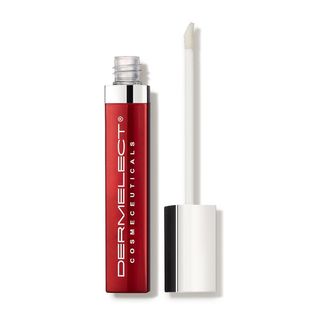
"Dermelect - Smooth Lip Volumizer" is effective for: Moisturizing
This lip product could be helpful for: Anti-aging, but its actives are not the most effective or are not well-studied.
Ingredient callouts
- this lip product includes a form of Retinoids (vitamin A) - retinyl palmitate 0.40% - 0.95%, but this type of vitamin A is not very effective. It could in theory help with fine lines and wrinkles, but the effect is most likely minimal.
- We like that this moisturizer contains peptides (trifluoroacetyl tripeptide-2 0.55% - 1.25%). There are many different kind of Peptides and they are naturally present in our skin. They all are a combination of aminoacids. Some of them work as natural antibiotics, promote wound-healing and production of collagen. The science is still not settled on how effective Peptides are in skincare, but it is very likely that they have a benefit. Peptides might help restore the skin barrier and fight the signs of aging. At the very least, Peptides work as humectants: they attract water to the upper layer of the skin and improve its hydration.
Price
The product retails for 45.00$ in the United States.
For a detailed price comparison: click here.
Sources cited in this review
Every concentration estimate and effectiveness label is anchored to one of these 11 studies and safety reviews.
- 1A review on the extensive skin benefits of mineral oilncbi.nlm.nih.gov
- 2
- 3
- 4Safety Assessment of Polyene Group as Used in Cosmeticscir-safety.org
- 5
- 6Hyaluronic acid: A key molecule in skin agingncbi.nlm.nih.gov

Affiliate links · As an Amazon Associate, WIMJ earns from qualifying purchases.