Works for:
based on ingredients and %- Cleansing
Can it cause trouble?
- Irritation risk: high
- Comedogenic risk ingredients: 1
Key actives

Works for
Cleansing
What does the product description say?
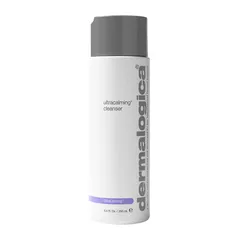
Ultra Calming Cleanser
Source: Dermalogica
This product works by removing dirt and oil from the surface of the skin. It uses a combination of mild cleansing agents (cetearyl alcohol, cetrimonium chloride, disodium lauryl sulfosuccinate, glyceryl caprylate) and should be able to cleanse the skin gently. Still keep in mind that any cleansing can disrupt the skin barrier, and most people do not need to cleanse their skin more than once per day.
Even though this formulation is mild, the following cleansing agents could trigger an irritation or allergy for some people: cetrimonium chloride
A non-drying alcohol. Works as an emollient. Helps water and oil mix together and creates a nice product texture
Used as a cleansing agent. Helps water and oil mix together
An emollient that can also help water and oil mix together, as well as prevent bacteria growth in products
How honest is this product?
| Promise | Can it deliver? |
|---|---|
| Cleansing |
Total Promises Fulfilled score: 100/100.
We receive a small commission for purchases made through these links at no cost for you. Thank you for your support! Learn more
Potential irritants
Comedogenic ingredients
User reviews (1)
Averages from community submissions.
How stripping does it feel?
How well does it remove makeup?
How would you describe the foam?
How would you describe the smell?
Tried this product?
Help capture what the ingredient list can't—texture, finish, pilling, scent, and more. Answer what you can, skip the rest.
Takes ~30 seconds.
Reviews are shown in aggregate. No personal details.
Key Actives
Helps attract water to the upper layer of the skin and can help improve skin barrier function
Can be helpful in reducing inflammation in skin, including inflamed acne. It can be irritating
A non-drying alcohol. Works as an emollient. Helps water and oil mix together and creates a nice product texture
An emollient that can also help water and oil mix together, as well as prevent bacteria growth in products
One of the best moisturizing ingredients. Naturally present in skin. It attracts water to the upper layer of the skin working as a humectant
Used as a cleansing agent. Helps water and oil mix together
Potential irritants
Plant extract that might have some anti-oxidant properties. Can be irritating
Can be helpful in reducing inflammation in skin, including inflamed acne. It can be irritating
Used as a fragrance. Can be irritating and cause photosensitivity
A plant extract that can contain an irritating essential oil. Might have some anti-oxidant effect, but evidence is lacking
Helps oil and water mix together and can enhance the penetration of other ingredients into the skin. It can be irritating
Being a lipid soluble form of vitamin C, it is more stable and can penetrate the skin better than L-Ascorbic acid. It is effective in protecting the skin from free radicals, as well as evening the skin tone, but is less effective in stimulating collagen production compared to L-Ascorbic acid.
Might be somewhat helpful in reducing hyperpigmentation and neutralizing free radicals but its typical concentration in a product is too low for having an effect
A fruit extract that might have some anti-oxidant properties but evidence of effectiveness in skin is lacking
A preservative that comes from radishes fermented by a bacteria. New research suggests that the preservation properties in the ingredient come from an ammonium salt that is not present naturally in radish root but used in its cultivation. Is problematic because the exact amount of the preservative agents is difficult to determine
Maintains the texture of skincare products. Allows the product to spread evenly. Helps oil and water mix together
Used as a cleansing agent. Helps water and oil mix together
Helps evenly disperse other ingredients in a formulation and create an even layer on the surface of the skin
Used to preserve products, dissolve other ingredients and create a nice product texture
Can work as an exfoliant but is typically used to adjust the product pH
Comedogenic ingredients
A non-drying alcohol. Works as an emollient. Helps water and oil mix together and creates a nice product texture
All ingredients
A non-drying alcohol. Works as an emollient. Helps water and oil mix together and creates a nice product texture
Helps attract water to the upper layer of the skin and can help improve skin barrier function
Might help to reduce inflammation in skin, but solid research is lacking
Being a lipid soluble form of vitamin C, it is more stable and can penetrate the skin better than L-Ascorbic acid. It is effective in protecting the skin from free radicals, as well as evening the skin tone, but is less effective in stimulating collagen production compared to L-Ascorbic acid.
Might be somewhat helpful in reducing hyperpigmentation and neutralizing free radicals but its typical concentration in a product is too low for having an effect
Plant extract that might have some anti-oxidant properties. Can be irritating
Can be helpful in reducing inflammation in skin, including inflamed acne. It can be irritating
A fruit extract that might have some anti-oxidant properties but evidence of effectiveness in skin is lacking
An effective moisturizing and skin barrier repair ingredient. Helps calm down inflammation and has some anti-oxidant properties
A preservative that comes from radishes fermented by a bacteria. New research suggests that the preservation properties in the ingredient come from an ammonium salt that is not present naturally in radish root but used in its cultivation. Is problematic because the exact amount of the preservative agents is difficult to determine
Used as a fragrance. Can be irritating and cause photosensitivity
A plant extract that can contain an irritating essential oil. Might have some anti-oxidant effect, but evidence is lacking
One of the best moisturizing ingredients. Naturally present in skin. It attracts water to the upper layer of the skin working as a humectant
Used to create a nice product texture and help delivery of other ingredients. Might be somewhat helpful in attracting water to the upper layer of the skin
Maintains the texture of skincare products. Allows the product to spread evenly. Helps oil and water mix together
Used as a cleansing agent. Helps water and oil mix together
Helps oil and water mix together and can enhance the penetration of other ingredients into the skin. It can be irritating
An active component of chamomile plant that historically has been used to calm down irritated skin. A recent study shows that bisabolol indeed can have some anti-inflammatory effect on skin, even though conclusive data is lacking. Bisabolol has a sweet floral scent and can be added to products for its aromatic properties
Helps evenly disperse other ingredients in a formulation and create an even layer on the surface of the skin
Used to preserve products, dissolve other ingredients and create a nice product texture
An emollient that can also help water and oil mix together, as well as prevent bacteria growth in products
Can work as an exfoliant but is typically used to adjust the product pH
Ingredient list view
Water, Cetearyl alcohol, Panthenol, Hydroxyphenyl propamidobenzoic acid, Ascorbyl palmitate, Lavandula angustifolia flower/leaf/stem extract, Cucumis sativus fruit extract, Echinacea purpurea extract, Rosmarinus officinalis leaf extract, Rubus idaeus fruit extract, Usnea barbata extract, Fumaria officinalis flower/leaf/stem extract, Avena sativa kernel extract, Leuconostoc/radish root ferment filtrate, Citrus limon fruit extract, Zingiber officinale root extract, Glycerin, Fumaric acid, Cocamidopropyl pg-dimonium chloride phosphate, Butylene glycol, Acrylates/c10-30 alkyl acrylate crosspolymer, Disodium lauryl sulfosuccinate, Propylene glycol, Bisabolol, Pvp, Pentylene glycol, Cetrimonium chloride, Glyceryl caprylate, Aminomethyl propanol, Citric acid, Disodium edta, Potassium sorbate, Sodium benzoate
- Skin moisturizing effects of panthenol-based formulations
- Safety Assessment of Panthenol, Pantothenic Acid, and Derivatives as Used in Cosmetics
- Contact dermatitis as an adverse reaction to some topically used European herbal medicinal products – Part 2: Echinacea purpurea–Lavandula angustifolia
- Allergic contact dermatitis induced by rosemary leaf extract in a cleansing gel
- Safety Assessment of Rosmarinus officinalis (Rosemary)-Derived Ingredients as Used in Cosmetics
- Rosmarinus officinalis Extract Suppresses Propionibacterium acnes–Induced Inflammatory Responses
- Safety Assessment of Citrus-Derived Peel Oils as Used in Cosmetics
- Some phytochemical, pharmacological and toxicological properties of ginger (Zingiber officinale Roscoe): A review of recent research
- Glycerol and the skin: holistic approach to its origin and functions
- Surfactants and experimental irritant contact dermatitis
- Propylene Glycol
- Skin-sensitizing and irritant properties of propylene glycol
- α-(-)-Bisabolol Reduces Pro-Inflammatory Cytokine Production and Ameliorates Skin Inflammation