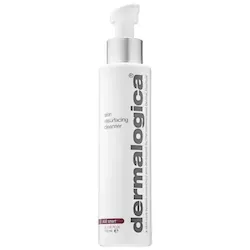
Dermalogica Skin Resurfacing Lactic Acid Cleanser
Works for
ExfoliationLactic acid, Salicylic acidWorks well
“Ce nettoyant visage quotidien exfolie et restructure la peau du visage.”
This product can help exfoliate the skin. In other words, it helps break down the bonds between dead cells on the surface of the skin and speed up the skin turnover. Skin often appears softer and brighter after exfoliation, but overdoing it can result in disrupted skin barrier. The following ingredient is doing the exfoliating job in this product: lactic acid, salicylic acid.
CleansingSodium laureth sulfate, Ppg-2 hydroxyethyl cocamide + 3 moreCan be harsh
“Skin Resurfacing Lactic Acid Cleanser”
This product works by removing dirt and oil from the surface of the skin.
It contains the following cleansing agents that tend to be harsh on the skin: sodium laureth sulfate.
The following cleansing agents are typically mild, but still can cause an irritation or allergy for some people cocamidopropyl betaine.
Keep in mind that cleansing can disrupt the skin barrier, and most people do not need to cleanse their skin more than once per day.
Anti-blemishSide benefit · Salicylic acidWorks well
This product can help reduce breakouts and clogged pores because it contains the following ingredient: salicylic acid. This ingredient is used for treating acne and can have a noticeable effect.
Can it cause trouble?
Irritancy11 strong irritants: Citronellol, Eugenol + 9 more — patch-test recommendedHigh risk
Comedogenic1 ingredient rated 2 or more on the 0–5 pore-clogging scale1 flagged
User reviews
Be the first — your take helps the next person decide.
Ingredients
Filter by role to see what each ingredient is doing.
Salicylic acid0.5%
- Irritation risk
- High
Used for skin exfoliation. It has an anti-inflammatory and anti-bacterial effect, helps to unclog pores, prevent blemishes and speed up healing of the existing ones. Sometimes referred to as a BHA (beta-hydroxy acid)
More about Salicylic acidWater~45–55%
Sodium laureth sulfate~9.9–12.1%
- Irritation risk
- High
- Comedogenicity
- 2/5
Works as a foaming cleansing agent
More about Sodium laureth sulfateLactic acid~5.2–6.4%
- Irritation risk
- Medium
An exfoliating and moisturizing alpha-hydroxy acid (AHA). Typically causes less irritation than other AHAs, for example, glycolic acid. At high concentrations (about 15%), lactic acid can help reduce lines and wrinkles. Recent studies show that lactic acid can support the "good" bacteria living on skin's surface (healthy skin microbiome)
More about Lactic acidPpg-2 hydroxyethyl cocamide~3.4–4.1%
Cocamidopropyl betaine~3.3–4.1%
- Irritation risk
- High
Helps water and oil mix together. Used as a cleansing ingredient. Could be an allergen
More about Cocamidopropyl betainePolyacrylate-1 crosspolymer~2.4–2.9%
- Irritation risk
- Low
Glycol distearate~1.8–2.2%
- Irritation risk
- Medium
Helps water and oil mix together
More about Glycol distearateCaprylic/capric triglyceride~1.7–2.1%
- Irritation risk
- Medium
A good mix of fatty acids that forms a protective layer on the skin. Improves the shelf life of products. Derived from coconut and glycerin
More about Caprylic/capric triglycerideTocopheryl acetate~1.2–1.5%
- Irritation risk
- Medium
A more stable but less bio-available form of vitamin E compared to Tocopherol. Might help moisturize and protect the skin from free radicals, but mostly used in low concentrations to stabilize other ingredients.
More about Tocopheryl acetateSodium hydroxide~1.1–1.3%
Disodium edta~0.5–1%
Phenoxyethanol~0.65–0.95%
- Irritation risk
- Low
A preservative. It helps prevent bacterial growth in cosmetic products
More about PhenoxyethanolCaprylyl glycol~0.6–0.9%
- Irritation risk
- Medium
Helps preserve products and creates a nice product texture
More about Caprylyl glycolEthylhexylglycerin~0.55–0.8%
Hexylene glycol~0.5–0.7%
- Irritation risk
- Medium
Helps create a more spreadable product texture
More about Hexylene glycolTitanium dioxide~0.6–0.9%
- Irritation risk
- Low
Works as a UV filter when used in high concentrations. It is photostable and is effective mostly against the UVB light, with some protection in the UVA range. In small concentrations, used for its ability to improve the color of cosmetic products. Is usually well tolerated by the skin
More about Titanium dioxideCitronellol~0.45–0.65%
Eugenol~0.35–0.6%
Geraniol~0.25–0.5%
Limonene~0.25–0.45%
- Irritation risk
- High
A common frangrance that can easily irritate skin, especially if exposed to air, light or heat
More about LimoneneLinalool~0.2–0.4%
Citrus limon peel extract~0.2–0.35%
Helianthus annuus seed oil~0.2–0.4%
- Irritation risk
- Low
A great emollient due to its high linoleic acid content. One of the most effective plant oils in helping skin hydration and repairing skin barrier function
More about Helianthus annuus seed oilRosa damascena flower oil~0.15–0.3%
- Irritation risk
- High
Used as a fragrance. Can be irritating
More about Rosa damascena flower oilEugenia caryophyllus flower oil~0.1–0.25%
Aniba rosaeodora wood oil~0.1–0.15%
- Irritation risk
- High
Citrus limon peel oil~0.05–0.1%
Pelargonium graveolens oil~0.05–0.1%
Ingredient list view
Salicylic acid, Water, Sodium laureth sulfate, Lactic acid, Ppg-2 hydroxyethyl cocamide, Cocamidopropyl betaine, Polyacrylate-1 crosspolymer, Glycol distearate, Caprylic/capric triglyceride, Tocopheryl acetate, Sodium hydroxide, Disodium edta, Phenoxyethanol, Caprylyl glycol, Ethylhexylglycerin, Hexylene glycol, Titanium dioxide, Citronellol, Eugenol, Geraniol, Limonene, Linalool, Citrus limon peel extract, Helianthus annuus seed oil, Rosa damascena flower oil, Eugenia caryophyllus flower oil, Aniba rosaeodora wood oil, Citrus limon peel oil, Pelargonium graveolens oil
Compare prices
Retailers ranked by price — lowest first.


Worth comparing, line by line.
Match % combines shared ingredients, the first five ingredients, shared actives and hero ingredients, irritancy (lower counts in the alternative's favour), texture and body area. Only products in the same routine step are compared.
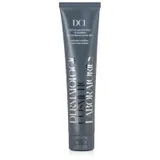
| DermalogicaSkin Resurfacing Lactic Acid CleanserYOUR PRODUCT | DCLActive Mattifying Cleanser | CliniqueClarifying Do-Over Peel | Revision SkincarePurifying Cleansing Gel oil-control cleanser for fresh, refined skin | |
|---|---|---|---|---|
| Match | — | 85% | 81% | 80% |
| Price | $49.00 | $32.00−$17.00 | $21.00−$28.00 | — |
| Shared key ingredients | — | 4 of 10 | 2 of 10 | 3 of 10 |
| Key difference | — | Panthenol | Lactobionic Acid | Peg-120 Methyl Glucose Dioleate |
| Irritancy | High | Medium | Medium | Medium |
| Drying alcohol | — | — | Contains drying alcohol | — |
| View product | Shop | Shop | Shop |


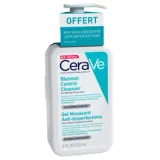
More alternatives: Tiege Hanley GLYCOLIC PADS Pore Cleansing & Oil RemovingCeraVe Gel Moussant Anti-Imperfections
Sources cited in this review
Every concentration estimate and effectiveness label is anchored to one of these 15 studies and safety reviews.
- 1Salicylic acid as a peeling agent: a comprehensive reviewncbi.nlm.nih.gov
- 2Beta Hydroxy Acidsfda.gov
- 3A review of toxicity from topical salicylic acid preparationssciencedirect.com
- 4
- 5
- 6

Affiliate links · As an Amazon Associate, WIMJ earns from qualifying purchases.