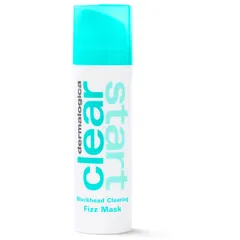
Works for:
based on ingredients and %- Anti-blemish
- Moisturizing
Can it cause trouble?
- Irritation risk: high
- Comedogenic risk ingredients: 0
Key actives


Works for
Anti-blemish
What does the product description say?
Clears pores and blackheads.
Source: Dermalogica
This product can help reduce breakouts and clogged pores because it contains the following ingredient: sulfur. This ingredient is used for treating acne and can have a noticeable effect.
Moisturizing
What does the product description say?
Made with sulfur, kaolin clay, and apple fruit extract, this anti-bacterial mask clears pores and absorbs excess oils while hydrating the skin.
Source: Ulta
This product contains good ingredients to attract water to the upper layer of the skin. These ingredients are called "humectants": glycerin, butylene glycol.
When humectants are on the surface of the skin, they “pull in” the moisture from the outside environment, or from within deeper layers of the skin. If the air is dry, humectants can speed up the moisture loss from the skin. This is why it is a good idea to use another product on top of this one to help "seal in" the moisture (look for ingredients like dimethicone, squalane, oils and butters).
One of the best moisturizing ingredients. Naturally present in skin. It attracts water to the upper layer of the skin working as a humectant
Can have some moisturizing properties due to its sugar content
Used to preserve products, dissolve other ingredients and create a nice product texture
Used to create a nice product texture and help delivery of other ingredients. Might be somewhat helpful in attracting water to the upper layer of the skin
Helps preserve products and creates a nice product texture
A good mix of fatty acids that forms a protective layer on the skin. Improves the shelf life of products. Derived from coconut and glycerin
Used mostly for creating emulsions - helping oil and water mix together. Helps soften the upper layer of the skin
Pure form of vitamin E. Can help moisturise and protect the skin from free radicals. Often used to help stabilise other ingredients or the formula itself
How honest is this product?
| Promise | Can it deliver? |
|---|---|
| Anti-blemish | |
| Moisturizing |
Total Promises Fulfilled score: 87/100.
We receive a small commission for purchases made through these links at no cost for you. Thank you for your support! Learn more
Potential irritants
Comedogenic ingredients
No comedogenic ingredients detected
User reviews (0)
Averages from community submissions.
No reviews yet for this product.
Be the first to share your experience!
Tried this product?
Help capture what the ingredient list can't—texture, finish, pilling, scent, and more. Answer what you can, skip the rest.
Takes ~30 seconds.
Reviews are shown in aggregate. No personal details.
| Product | Similarity | Price | Irritancy |
|---|---|---|---|
 Dermalogica Blackhead Clearing Fizz Mask | Current | ≈ $26.67 | |
 Control Corrective SULFUR CALMING MASK | 60% | $52.00 | |
 ZitSticka Pore Vac Clearing Clay Mask | 59% | ≈ $40.01 | |
 Glo Skin Beauty Clear Refining Mask | 58% | - | |
 Peter Thomas Roth Therapeutic Sulfur Mask | 58% | $53.00 | |
 DermaTopix Clay Mint Mask | 58% | - |
Key Actives
Pure form of vitamin E. Can help moisturise and protect the skin from free radicals. Often used to help stabilise other ingredients or the formula itself
A type of clay that consists mainly of aluminum silicate. Helps absorb oil and creates a thicker product consistency. Can be used to add a white color
One of the best moisturizing ingredients. Naturally present in skin. It attracts water to the upper layer of the skin working as a humectant
A good mix of fatty acids that forms a protective layer on the skin. Improves the shelf life of products. Derived from coconut and glycerin
Potential irritants
Helps water and oil mix together. Used as a cleansing ingredient. Could be an allergen
An essential oil that is likely to be irritating and can cause photosensitivity
A plant oil with high content of volatile compounds that can irritate the skin. Can be used as a fragrance. Has anti-bacterial properties and might help neutralize free radicals on the surface of the skin
A plant extract that can contain an active compound curcumin, that may have some anti-inflammatory properties when applied to the skin, but solid research is lacking and the typical concentration used in skincare products is too low. Can be an irritant
An essential oil that can be very irritating. Has some anti-bacterial properties
An essential oil. Potential allergen and can be irritating. It has some anti-bacterial properties
An essential oil that can be irritating. Has some anti-bacterial properties
Can have some moisturizing properties due to its sugar content
Helps water and oil mix together and works as a cleansing agent
Helps mask the small of other ingredients and improve the product texture
A good mix of fatty acids that forms a protective layer on the skin. Improves the shelf life of products. Derived from coconut and glycerin
Helps to control the skin's pH level. Maintains the skin's natural film of amino-lactic acids and oils. Helps to preserve products
Used to preserve products, dissolve other ingredients and create a nice product texture
Helps preserve products and creates a nice product texture
Comedogenic ingredients
We couldn't find any comedogenic ingredients in this product
All ingredients
Helps water and oil mix together. Used as a cleansing ingredient. Could be an allergen
A type of clay that consists mainly of aluminum silicate. Helps absorb oil and creates a thicker product consistency. Can be used to add a white color
One of the best moisturizing ingredients. Naturally present in skin. It attracts water to the upper layer of the skin working as a humectant
Can have some moisturizing properties due to its sugar content
Helps water and oil mix together and works as a cleansing agent
Helps mask the small of other ingredients and improve the product texture
Used to create a nice product texture and help delivery of other ingredients. Might be somewhat helpful in attracting water to the upper layer of the skin
An essential oil that is likely to be irritating and can cause photosensitivity
Used mostly for creating emulsions - helping oil and water mix together. Helps soften the upper layer of the skin
A good mix of fatty acids that forms a protective layer on the skin. Improves the shelf life of products. Derived from coconut and glycerin
Pure form of vitamin E. Can help moisturise and protect the skin from free radicals. Often used to help stabilise other ingredients or the formula itself
A plant oil with high content of volatile compounds that can irritate the skin. Can be used as a fragrance. Has anti-bacterial properties and might help neutralize free radicals on the surface of the skin
A plant extract that can contain an active compound curcumin, that may have some anti-inflammatory properties when applied to the skin, but solid research is lacking and the typical concentration used in skincare products is too low. Can be an irritant
An essential oil that can be very irritating. Has some anti-bacterial properties
An essential oil. Potential allergen and can be irritating. It has some anti-bacterial properties
An essential oil that can be irritating. Has some anti-bacterial properties
Helps to control the skin's pH level. Maintains the skin's natural film of amino-lactic acids and oils. Helps to preserve products
Used to preserve products, dissolve other ingredients and create a nice product texture
Helps preserve products and creates a nice product texture
A preservative. It helps prevent bacterial growth in cosmetic products
Ingredient list view
Water, Disiloxane, Sulfur, Cocamidopropyl betaine, Kaolin, Glycerin, Pyrus malus fruit extract, Disodium cocoyl glutamate, Acacia senegal gum, Polyacrylate-33, Hectorite, Butylene glycol, Zingiber officinale root oil, Quartz, Lecithin, Caprylic/capric triglyceride, Tocopherol, Rosmarinus officinalis leaf oil, Curcuma longa root extract, Eucalyptus globulus leaf oil, Citrus reticulata leaf oil, Thymus vulgaris flower/leaf oil, Salvia sclarea oil, Mentha viridis leaf oil, Mentha piperita oil, Lavandula angustifolia oil, Abies sibirica oil, Aniba rosaeodora wood oil, Cymbopogon nardus oil, Melaleuca alternifolia leaf oil, Sodium cocoyl threoninate, Xanthan gum, Microcrystalline cellulose, Sodium cocoyl glutamate, Sodium citrate, Pentylene glycol, Sodium hydroxide, Ethylhexylglycerin, Caprylyl glycol, Tetrasodium glutamate diacetate, Phenoxyethanol
- Glycerol and the skin: holistic approach to its origin and functions
- Zingiber officinale Rosc. essential oil, a review on its composition and bioactivity
- Vitamin E in dermatology
- Vitamin E and Skin Health
- Assessment report on Rosmarinus officinalis L., aetheroleum and Rosmarinus officinalis L., folium
- Screening of plant extracts for antimicrobial activity against bacteria and yeasts with dermatological relevance
- Occupational contact dermatitis due to essential oils
- The in vitro antimicrobial activity and chemometric modelling of 59 commercial essential oils against pathogens of dermatological relevance
- Antimicrobial and Antioxidant Properties of Rosemary and Sage (Rosmarinus officinalis L. and Salvia officinalis L., Lamiaceae) Essential Oils
- Chemical Composition, Plant Genetic Differences, Antimicrobial and Antifungal Activity Investigation of the Essential Oil of Rosmarinus officinalis L.
- Vaughn, A. R., Branum, A., & Sivamani, R. K. (2016). Effects of Turmeric (Curcuma longa) on Skin Health: A Systematic Review of the Clinical Evidence. Phytotherapy Research, 30(8), 1243–1264. doi:10.1002/ptr.5640
- Safety Assessment of Amino Acid Alkyl Amides as Used in Cosmetics
- Irritant and sensitizing potential of eight surfactants commonly used in skin cleansers: an evaluation of 105 patients