Works for:
based on ingredients and %- Exfoliation
- Cleansing
Can it cause trouble?
- Irritation risk: high
- Comedogenic risk ingredients: 2
Key actives
Works for
Exfoliation
What does the product description say?
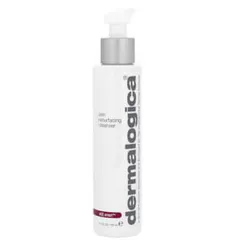
Dermalogica AGE SmartTM Skin Resurfacing Cleanser is a dual-action exfoliating cleanser for mature and prematurely-ageing skin containing lactic acid that smoothes, re-texturises and delivers ultra-clean skin.
Source: Lookfantastic
This product can help exfoliate the skin. In other words, it helps break down the bonds between dead cells on the surface of the skin and speed up the skin turnover. Skin often appears softer and brighter after exfoliation, but overdoing it can result in disrupted skin barrier. The following ingredient is doing the exfoliating job in this product: lactic acid.
An exfoliating and moisturizing alpha-hydroxy acid (AHA). Typically causes less irritation than other AHAs, for example, glycolic acid. At high concentrations (about 15%), lactic acid can help reduce lines and wrinkles. Recent studies show that lactic acid can support the "good" bacteria living on skin's surface (healthy skin microbiome)
Cleansing
What does the product description say?
Age Smart Skin Resurfacing Cleanser
Source: Lookfantastic
This product works by removing dirt and oil from the surface of the skin.
It contains the following cleansing agents that tend to be harsh on the skin: sodium laureth sulfate.
The following cleansing agents are typically mild, but still can cause an irritation or allergy for some people cocamidopropyl betaine.
Keep in mind that cleansing can disrupt the skin barrier, and most people do not need to cleanse their skin more than once per day.
Helps water and oil mix together. Used as a cleansing ingredient. Could be an allergen
Helps water and oil mix together
Helps create a more spreadable product texture
Works as a foaming cleansing agent
How honest is this product?
| Promise | Can it deliver? |
|---|---|
| Exfoliation | |
| Cleansing |
Total Promises Fulfilled score: 87/100.
We receive a small commission for purchases made through these links at no cost for you. Thank you for your support! Learn more
Affiliate link · supports WIMJ at no cost to you
Potential irritants
Comedogenic ingredients
User reviews (0)
Averages from community submissions.
No reviews yet for this product.
Be the first to share your experience!
Tried this product?
Help capture what the ingredient list can't—texture, finish, pilling, scent, and more. Answer what you can, skip the rest.
Takes ~30 seconds.
Reviews are shown in aggregate. No personal details.
| Product | Similarity | Price | Irritancy |
|---|---|---|---|
 Dermalogica Age Smart Skin Resurfacing Cleanser | Current | ≈ $38.71 | |
DCL Active Mattifying Cleanser | 52% | $32.00 | |
PCA SKIN Facial Wash | 52% | $42.00 | |
 Sanex Zero % Sensitive Skin Shower Gel | 51% | ≈ $1.52 | |
 Simple Smoothing Gel Cleanser with 5% AHA and Hyaluronic Acid | 51% | ≈ $10.70 | |
 Revision Skincare Purifying Cleansing Gel | 51% | $44.00 |
Key Actives
An exfoliating and moisturizing alpha-hydroxy acid (AHA). Typically causes less irritation than other AHAs, for example, glycolic acid. At high concentrations (about 15%), lactic acid can help reduce lines and wrinkles. Recent studies show that lactic acid can support the "good" bacteria living on skin's surface (healthy skin microbiome)
An exfoliating and moisturizing alpha-hydroxy acid (AHA). Typically causes less irritation than other AHAs, for example, glycolic acid. At high concentrations (about 15%), lactic acid can help reduce lines and wrinkles. Recent studies show that lactic acid can support the "good" bacteria living on skin's surface (healthy skin microbiome)
Works as a foaming cleansing agent
Helps water and oil mix together. Used as a cleansing ingredient. Could be an allergen
A good mix of fatty acids that forms a protective layer on the skin. Improves the shelf life of products. Derived from coconut and glycerin
A great emollient due to its high linoleic acid content. One of the most effective plant oils in helping skin hydration and repairing skin barrier function
Helps create a more spreadable product texture
Works as a UV filter when used in high concentrations. It is photostable and is effective mostly against the UVB light, with some protection in the UVA range. In small concentrations, used for its ability to improve the color of cosmetic products. Is usually well tolerated by the skin
Works as a foaming cleansing agent
Helps water and oil mix together. Used as a cleansing ingredient. Could be an allergen
A good mix of fatty acids that forms a protective layer on the skin. Improves the shelf life of products. Derived from coconut and glycerin
Helps create a more spreadable product texture
Works as a UV filter when used in high concentrations. It is photostable and is effective mostly against the UVB light, with some protection in the UVA range. In small concentrations, used for its ability to improve the color of cosmetic products. Is usually well tolerated by the skin
A great emollient due to its high linoleic acid content. One of the most effective plant oils in helping skin hydration and repairing skin barrier function
Potential irritants
Works as a foaming cleansing agent
Helps water and oil mix together. Used as a cleansing ingredient. Could be an allergen
A common frangrance that can easily irritate skin, especially if exposed to air, light or heat
An exfoliating and moisturizing alpha-hydroxy acid (AHA). Typically causes less irritation than other AHAs, for example, glycolic acid. At high concentrations (about 15%), lactic acid can help reduce lines and wrinkles. Recent studies show that lactic acid can support the "good" bacteria living on skin's surface (healthy skin microbiome)
A good mix of fatty acids that forms a protective layer on the skin. Improves the shelf life of products. Derived from coconut and glycerin
A more stable but less bio-available form of vitamin E compared to Tocopherol. Might help moisturize and protect the skin from free radicals, but mostly used in low concentrations to stabilize other ingredients.
Helps preserve products and creates a nice product texture
Comedogenic ingredients
Works as a foaming cleansing agent
Works as a foaming cleansing agent
All ingredients
Works as a foaming cleansing agent
An exfoliating and moisturizing alpha-hydroxy acid (AHA). Typically causes less irritation than other AHAs, for example, glycolic acid. At high concentrations (about 15%), lactic acid can help reduce lines and wrinkles. Recent studies show that lactic acid can support the "good" bacteria living on skin's surface (healthy skin microbiome)
Helps water and oil mix together. Used as a cleansing ingredient. Could be an allergen
A good mix of fatty acids that forms a protective layer on the skin. Improves the shelf life of products. Derived from coconut and glycerin
A more stable but less bio-available form of vitamin E compared to Tocopherol. Might help moisturize and protect the skin from free radicals, but mostly used in low concentrations to stabilize other ingredients.
A great emollient due to its high linoleic acid content. One of the most effective plant oils in helping skin hydration and repairing skin barrier function
Helps preserve products and creates a nice product texture
A common frangrance that can easily irritate skin, especially if exposed to air, light or heat
A preservative. It helps prevent bacterial growth in cosmetic products
Works as a UV filter when used in high concentrations. It is photostable and is effective mostly against the UVB light, with some protection in the UVA range. In small concentrations, used for its ability to improve the color of cosmetic products. Is usually well tolerated by the skin
Works as a foaming cleansing agent
An exfoliating and moisturizing alpha-hydroxy acid (AHA). Typically causes less irritation than other AHAs, for example, glycolic acid. At high concentrations (about 15%), lactic acid can help reduce lines and wrinkles. Recent studies show that lactic acid can support the "good" bacteria living on skin's surface (healthy skin microbiome)
Helps water and oil mix together. Used as a cleansing ingredient. Could be an allergen
A good mix of fatty acids that forms a protective layer on the skin. Improves the shelf life of products. Derived from coconut and glycerin
A more stable but less bio-available form of vitamin E compared to Tocopherol. Might help moisturize and protect the skin from free radicals, but mostly used in low concentrations to stabilize other ingredients.
A preservative. It helps prevent bacterial growth in cosmetic products
Helps preserve products and creates a nice product texture
Works as a UV filter when used in high concentrations. It is photostable and is effective mostly against the UVB light, with some protection in the UVA range. In small concentrations, used for its ability to improve the color of cosmetic products. Is usually well tolerated by the skin
A common frangrance that can easily irritate skin, especially if exposed to air, light or heat
A great emollient due to its high linoleic acid content. One of the most effective plant oils in helping skin hydration and repairing skin barrier function
Ingredient list view
Water, Sodium laureth sulfate, Lactic acid, Ppg-2 hydroxyethyl cocamide, Cocamidopropyl betaine, Polyacrylate-1 crosspolymer, Glycol distearate, Caprylic/capric triglyceride, Tocopheryl acetate, Helianthus annuus seed oil, Rosa damascena flower oil, Eugenia caryophyllus flower oil, Aniba rosaeodora wood oil, Citrus limon peel oil, Pelargonium graveolens oil, Caprylyl glycol, Ethylhexylglycerin, Hexylene glycol, Citronellol, Eugenol, Geraniol, Limonene, Linalool, Citrus limon peel extract, Disodium edta, Phenoxyethanol, Sodium hydroxide, Titanium dioxide, Water, Sodium laureth sulfate, Lactic acid, Ppg-2 hydroxyethyl cocamide, Cocamidopropyl betaine, Polyacrylate-1 crosspolymer, Glycol distearate, Caprylic/capric triglyceride, Tocopheryl acetate, Sodium hydroxide, Disodium edta, Phenoxyethanol, Caprylyl glycol, Ethylhexylglycerin, Hexylene glycol, Titanium dioxide, Citronellol, Eugenol, Geraniol, Limonene, Linalool, Citrus limon peel extract, Helianthus annuus seed oil, Rosa damascena flower oil, Eugenia caryophyllus flower oil, Aniba rosaeodora wood oil, Citrus limon peel oil, Pelargonium graveolens oil
- Surfactants and experimental irritant contact dermatitis
- Epidermal and dermal effects of topical lactic acid
- Dual Effects of Alpha-Hydroxy Acids on the Skin
- Effect of Olive and Sunflower Seed Oil on the Adult Skin Barrier: Implications for Neonatal Skin Care
- Topically Applied Sunflower Seed Oil Prevents Invasive Bacterial Infections in Preterm Infants in Egypt
- Effect of topically applied lipids on surfactant-irritated skin
- Impact of topical oils on the skin barrier: possible implications for neonatal health in developing countries
- Annex I: Clinical evidence regarding sensitisation to individual fragrance chemicals and to natural extracts