Works for
MoisturizingPanthenol, Caprylic/capric triglyceride + 9 moreWorks well
“Delarom Tinted Care Cream 30ml with creamy texture combines the efficiency of a moisturizing cream to the magic color of a foundation.”
This product can help improve hydration of the skin with the two types of ingredients.
The first type is called “humectants”:
these ingredients help attract water.
When humectants are on the surface of the skin, they “pull in” the moisture from the outside environment, or from
within deeper layers of the skin. The following ingredients in this product do the job:
diglycerin, glycerin.
This product also contains ingredients called “occlusives”. They help reduce the speed with which our skin loses moisture to the outside environment. These ingredients also help soften the upper layer of the skin, so it feels less tight and nicer to the touch. The following ingredients in this product do the job: caprylic/capric triglyceride, hexyldecanol.
The following ingredients in this product are especially good for supporting the skin barrier and helping with the hydration level: panthenol
Anti-agingMagnesium aluminum silicateNot delivered
“Thanks to the hyaluronic acid and the provitamin B5 it intensively moisturizes, it offers an anti-aging action thanks to the extract of argan fruit and the vitamin E, it protects from UV rays thanks to mineral sun filters.”
This product does not contain ingredients that are able to reduce fine lines and wrinkles or help with skin elasticity, but it can improve the look of the skin temporarily through moisturization. Well-moisturized skin might also be able to repair the sun damage better.This ingredient - magnesium aluminum silicate - could be helpful for preventing or repairing signs of aging in theory, but there is no evidence that it actually works.
Can it cause trouble?
Irritancy7 strong irritants: Parfum, Imidazolidinyl urea + 5 more — patch-test recommendedHigh risk
ComedogenicClean of flagged comedogenic ingredientsNone flagged

User reviews
Be the first — your take helps the next person decide.
Ingredients
Filter by role to see what each ingredient is doing.
Water~45–55%
Caprylic/capric triglyceride~6.2–7.6%
- Irritation risk
- Medium
A good mix of fatty acids that forms a protective layer on the skin. Improves the shelf life of products. Derived from coconut and glycerin
More about Caprylic/capric triglyceridePropanediol~4.9–6%
- Irritation risk
- Low
Acts as a solvent for other ingredients. Speeds up the absorption of other ingredients into the skin
More about PropanediolGlycerin~3.6–4.4%
- Irritation risk
- Low
One of the best moisturizing ingredients. Naturally present in skin. It attracts water to the upper layer of the skin working as a humectant
More about GlycerinCi 77891~3.1–3.7%
- Irritation risk
- Low
Titanium dioxide~2.9–3.5%
- Irritation risk
- Low
Works as a UV filter when used in high concentrations. It is photostable and is effective mostly against the UVB light, with some protection in the UVA range. In small concentrations, used for its ability to improve the color of cosmetic products. Is usually well tolerated by the skin
More about Titanium dioxideButylene glycol~2.2–2.6%
- Irritation risk
- Low
Used to create a nice product texture and help delivery of other ingredients. Might be somewhat helpful in attracting water to the upper layer of the skin
More about Butylene glycolHexyldecanol~2–2.4%
- Irritation risk
- Low
Helps soften the upper layer of the skin
More about HexyldecanolTitanium dioxide~2–2.5%
- Irritation risk
- Low
Works as a UV filter when used in high concentrations. It is photostable and is effective mostly against the UVB light, with some protection in the UVA range. In small concentrations, used for its ability to improve the color of cosmetic products. Is usually well tolerated by the skin
More about Titanium dioxideGlyceryl stearate~1.5–1.8%
- Irritation risk
- Low
An emollient that softens the skin and forms a protective layer on its surface. Helps water and oil mix together
More about Glyceryl stearateStearic acid~1–1.2%
- Irritation risk
- Low
Helps oil and water mix together and works as an emollient
More about Stearic acidPalmitic acid~0.75–1.1%
- Irritation risk
- Low
An emollient that is naturally present in skin and helps soften it
More about Palmitic acidDiglycerin~0.55–0.8%
- Irritation risk
- Low
Helps attract water to the upper layer of the skin
More about DiglycerinDiisostearyl dimer dilinoleate~0.55–0.8%
- Irritation risk
- Low
Polysorbate 20~0.5–0.75%
Sodium hyaluronate~0.45–0.7%
- Irritation risk
- Low
One of the best moisturizing ingredients. Attracts water into the upper layer of the skin
More about Sodium hyaluronateMagnesium aluminum silicate~0.5–0.75%
- Irritation risk
- Low
Might be helpful in restoring skin barrier function and, when combined with zinc carbonate and malonic acid, reducing fine lines and wrinkles by stimulating elastin production. Also helps stabilize the product formulation
More about Magnesium aluminum silicateSorbitan stearate~0.45–0.65%
Argania spinosa kernel extract~0.35–0.65%
- Irritation risk
- Low
Ci 77492~0.35–0.6%
Potassium oxide~0.35–0.6%
- Irritation risk
- Low
Cellulose gum~0.35–0.6%
- Irritation risk
- Low
Used to create thicker product consistency and stabilize emulsions
More about Cellulose gumPolysorbate 60~0.3–0.6%
Benzyl alcohol~0.25–0.5%
- Irritation risk
- High
A preservative. Can be used to mask unpleasant smell. Can be irritating
More about Benzyl alcoholPolyhydroxystearic acid~0.3–0.6%
- Irritation risk
- Medium
Used to create a thicker product consistency and stabilize the formulation
More about Polyhydroxystearic acidParfum~0.25–0.5%
- Irritation risk
- High
An aromatic blend of unspecified and possibly irritating ingredients
More about ParfumTocopheryl acetate~0.3–0.55%
- Irritation risk
- Medium
A more stable but less bio-available form of vitamin E compared to Tocopherol. Might help moisturize and protect the skin from free radicals, but mostly used in low concentrations to stabilize other ingredients.
More about Tocopheryl acetateXanthan gum~0.3–0.55%
- Irritation risk
- Low
Used to create a thicker product consistency
More about Xanthan gumCaprylyl glycol~0.3–0.6%
- Irritation risk
- Medium
Helps preserve products and creates a nice product texture
More about Caprylyl glycolCyclodextrin~0.3–0.55%
- Irritation risk
- Low
A type of sugar that is used to support delivery of active ingredients and can enhance their penetration into the skin without disrupting the skin's barrier
More about CyclodextrinPisum sativum extract~0.3–0.55%
- Irritation risk
- Medium
Might be helpful in protecting skin collagen and elastin from breaking down but solid research is lacking
More about Pisum sativum extractAlumina~0.45–0.7%
- Irritation risk
- Low
The same compound that is used safely in dental implants and bone cements. In cosmetics, it is used to improve the consistency of products
More about AluminaCi 77491~0.3–0.55%
- Irritation risk
- Low
A red colorant made of iron oxide. Typically is not irritating
More about Ci 77491Potassium oxide~0.3–0.55%
- Irritation risk
- Low
Sodium cocoyl glutamate~0.4–0.6%
- Irritation risk
- Medium
Helps oil and water mix together
More about Sodium cocoyl glutamateBisabolol~0.25–0.5%
- Irritation risk
- Low
An active component of chamomile plant that historically has been used to calm down irritated skin. A recent study shows that bisabolol indeed can have some anti-inflammatory effect on skin, even though conclusive data is lacking. Bisabolol has a sweet floral scent and can be added to products for its aromatic properties
More about BisabololImidazolidinyl urea~0.3–0.55%
- Irritation risk
- High
A preservative. Is more irritating than many other preservatives available
More about Imidazolidinyl ureaPanthenol~0.3–0.55%
- Irritation risk
- Low
Helps attract water to the upper layer of the skin and can help improve skin barrier function
More about PanthenolSodium hydroxide~0.3–0.55%
Alcohol~0.3–0.55%
- Irritation risk
- High
Can be drying and contribute to skin irritation. Used in formulars to dissolve other ingredients, create a thinner product consistency or for its antibacterial properties
More about AlcoholPotassium sorbate~0.3–0.55%
Sodium benzoate~0.25–0.5%
Ci 77499~0.3–0.55%
Potassium oxide~0.3–0.55%
- Irritation risk
- Low
Dehydroacetic acid~0.25–0.5%
Sodium phytate~0.25–0.5%
Sodium dehydroacetate~0.25–0.45%
Linalool~0.2–0.4%
Citronellol~0.2–0.35%
Alpha-isomethyl ionone~0.15–0.3%
- Irritation risk
- High
A fragrance. Potential allergen and can be irritating
More about Alpha-isomethyl iononeLimonene~0.2–0.35%
- Irritation risk
- High
A common frangrance that can easily irritate skin, especially if exposed to air, light or heat
More about LimoneneRna~0.1–0.25%
- Irritation risk
- Low
Ingredient list view
Water, Caprylic/capric triglyceride, Propanediol, Glycerin, Ci 77891, Titanium dioxide, Butylene glycol, Hexyldecanol, Titanium dioxide, Glyceryl stearate, Stearic acid, Palmitic acid, Diglycerin, Diisostearyl dimer dilinoleate, Polysorbate 20, Sodium hyaluronate, Magnesium aluminum silicate, Sorbitan stearate, Argania spinosa kernel extract, Ci 77492, Unknown, Potassium oxide, Cellulose gum, Polysorbate 60, Benzyl alcohol, Polyhydroxystearic acid, Parfum, Tocopheryl acetate, Xanthan gum, Caprylyl glycol, Cyclodextrin, Pisum sativum extract, Alumina, Ci 77491, Unknown, Potassium oxide, Sodium cocoyl glutamate, Bisabolol, Imidazolidinyl urea, Panthenol, Sodium hydroxide, Alcohol, Potassium sorbate, Sodium benzoate, Ci 77499, Unknown, Potassium oxide, Dehydroacetic acid, Sodium phytate, Sodium dehydroacetate, Linalool, Citronellol, Alpha-isomethyl ionone, Limonene, Rna
Compare prices
Retailers ranked by price — lowest first.
Affiliate links · As an Amazon Associate, WIMJ earns from qualifying purchases.
Worth comparing, line by line.
Match % combines shared ingredients, the first five ingredients, shared actives and hero ingredients, irritancy (lower counts in the alternative's favour), texture and body area. Only products in the same routine step are compared.
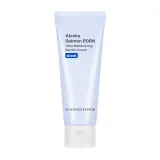
| DelaromTinted Care CreamYOUR PRODUCT | SUNGBOON EDITORAlaska Salmon PDRN Ultra Moisturizing Barrier Cream | BotanicsHydration Burst Hydrating Day Cream | COSRXThe Retinol 0.1 Cream | |
|---|---|---|---|---|
| Match | — | 66% | 66% | 65% |
| Price | — | $19.60 | — | $15.63 |
| Shared key ingredients | — | 5 of 7 | 4 of 7 | 4 of 7 |
| Key difference | — | Niacinamide | Betaine | Retinol |
| Irritancy | High | Medium | Medium | Medium |
| Drying alcohol | Contains drying alcohol | — | — | — |
| View product | Shop | Shop | Shop |


More alternatives: celimax Dual Barrier Skin Wearable CreamDr. Jart+ Power Derma Barrier Cream
Product summary
"Delarom - Tinted Care Cream" is effective for: Moisturizing
Price
The product retails for 133.14A$ in Australia, for 92.89$ in the United States and for 20.79£ in the United Kingdom.
For a detailed price comparison: click here.
Sources cited in this review
Every concentration estimate and effectiveness label is anchored to one of these 13 studies and safety reviews.
- 1
- 2Hyaluronic acid: A key molecule in skin agingncbi.nlm.nih.gov
- 3
- 4
- 5
- 6

Affiliate links · As an Amazon Associate, WIMJ earns from qualifying purchases.