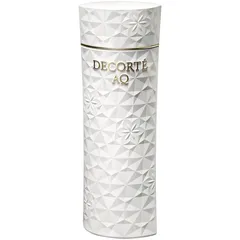
Works for:
based on ingredients and %- Moisturizing
- Anti-aging
- Anti-oxidation
Can it cause trouble?
- Irritation risk: high
- Comedogenic risk ingredients: 2
Key actives

Product Summary
Judging from the ingredient list, "Decorté - AQ Lotion ER" works well for improving skin hydration The formulation is based on a combination of good humectants and emollients. Both are needed to increase the skin hydration level. Glycerin, hydrolyzed collagen and butylene glycol in this product (humectants) attract water molecules to the upper layer of the skin (the water comes from the outside air or from the deeper layers of the skin if the air is dry). Hydrolyzed collagen, oryza sativa bran oil, elaeis guineensis oil, ethyl oleate and pentylene glycol in this product help decrease the water evoporation from the skin, so that it stays hydrated for longer. These ingredients also soften the skin and take away the feeling of tightness and dryness.
Ingredient callouts
- We like that this moisturizer contains peptides (palmitoyl pentapeptide-4 0.10% - 0.50%). There are many different kind of peptides and they are naturally present in our skin. They all are a combination of amino-acids. Some of them work as natural anti-biotics, promote wound-healing and production of collagen. The science is still not settled on how effective peptides in skincare are, but it is very likely that they have a benefit. Peptides might help restore the skin barrier and fight the signs of aging. At the very least, peptides work as humectants: they attract water to the upper layer of the skin and improve its hydration.
- Adenosine 1.10% - 1.70% in this product adds an anti-aging property to it. Adenosine is a chemical present inside our skin cells. A clinical trial confirmed that topical application of adenosine in a low concentration reduce dynamic wrinkles (these are the wrinkles that appear with age in a places where we our mimic is the most active, for example, in the corners of the eyes or on the forehead).
Irritation risk
We assess the overall irritancy of this moisturizer to be high. For a detailed overview of all potential irritants: click here
You can see the detailed formula review with the breakdown of all actives in the product and the full ingredient list with estimated concentrations in the tables below.
Price
The product retails from 76.00$ up to 95.00$ in the United States and for 133.00CA$ in Canada.
For a detailed price comparison: click here.
Works for
Anti-aging
This product can help reduce and prevent fine lines and wrinkles, improve skin elasticity and firmness because it contains adenosine.
These ingredients in the product can also be helpful, even though there is less evidence for their effectiveness: palmitoyl pentapeptide-4, tocotrienols.
Keep in mind that it typically takes at least 6 weeks to notice any results because the changes that are needed to improve fine lines and elasticity happen in the deeper layers of the skin. No topical anti-aging product can “erase” wrinkles or fully reverse signs of aging.
Might help improve cell turnover and reduce inflammation in skin. One study shows that the ingredients might be able to help reduce dynamic wrinkles (for example, in the corners of the eyes or on the forehead)
A type of peptide. Peptides are excellent moisturizers and might be able support collagen production reducing fine lines and wrinkles
A type of vitamin E that is more powerful in neutralizing free radicals compared to its other forms
A plant extract that might have some anti-oxidant properties and is claimed by its manufacturer to be able to decrease lines and wrinkles but evidence is lacking
Pure form of vitamin E. Can help moisturise and protect the skin from free radicals. Often used to help stabilise other ingredients or the formula itself
Anti-oxidation
This product contains antioxidants (tocotrienols) that can help neutralize free radicals in skin. By doing so, they can lessen the damage the skin gets from the UV light (sun).
A type of vitamin E that is more powerful in neutralizing free radicals compared to its other forms
Plant extract that can help neutralize free radicals in skin. Can be used as a fragrance. Can be irritating
Might help improve cell turnover and reduce inflammation in skin. One study shows that the ingredients might be able to help reduce dynamic wrinkles (for example, in the corners of the eyes or on the forehead)
A plant extract that might have some anti-oxidant properties and is claimed by its manufacturer to be able to decrease lines and wrinkles but evidence is lacking
Pure form of vitamin E. Can help moisturise and protect the skin from free radicals. Often used to help stabilise other ingredients or the formula itself
Moisturizing
What does the product description say?
Essential to the Japanese layering-technique, this fast-absorbing watery-treatment "extra rich" lotion instantly helps circulate moisture and create an optimal skin-elastic condition.
Source: Skinstore
This product can help improve hydration of the skin with the two types of ingredients.
The first type is called “humectants”:
these ingredients help attract water.
When humectants are on the surface of the skin, they “pull in” the moisture from the outside environment, or from
within deeper layers of the skin. The following ingredients in this product do the job:
glycerin, hydrolyzed collagen.
This product also contains ingredients called “occlusives”. They help reduce the speed with which our skin loses moisture to the outside environment. These ingredients also help soften the upper layer of the skin, so it feels less tight and nicer to the touch. The following ingredients in this product do the job: hydrolyzed collagen, oryza sativa bran oil.
The following ingredients in this product are especially good for supporting the skin barrier and helping with the hydration level: palmitoyl pentapeptide-4
A type of peptide. Peptides are excellent moisturizers and might be able support collagen production reducing fine lines and wrinkles
One of the best moisturizing ingredients. Naturally present in skin. It attracts water to the upper layer of the skin working as a humectant
A typically plant-derived compound that is supposed mimic human collagen. Cannot penetrate the skin barrier so is not particularly useful in skincare products beyond attracting water to the upper layer of the skin
Helps soften the upper layer of the skin and might have some anti-oxidant properties
Might help improve cell turnover and reduce inflammation in skin. One study shows that the ingredients might be able to help reduce dynamic wrinkles (for example, in the corners of the eyes or on the forehead)
Helps soften the upper layer of the skin
Used to preserve products, dissolve other ingredients and create a nice product texture
Used to create a nice product texture and help delivery of other ingredients. Might be somewhat helpful in attracting water to the upper layer of the skin
Used to thicken product formulation. Can help attract water to the upper layer of the skin
Ethyl oleate is a long-chain fatty acid ethyl ester resulting from the formal condensation of the carboxy group of oleic acid with the hydroxy group of ethanol. It derives from an oleic acid. In skincare, it is used to soften the upper layer of the skin, improve the product texture and smell
Helps attract water to the upper layer of the skin. Is often used to adjust the pH level of the product
An emollient that is naturally found in skin
Used mostly for creating emulsions - helping oil and water mix together. Helps soften the upper layer of the skin
Pure form of vitamin E. Can help moisturise and protect the skin from free radicals. Often used to help stabilise other ingredients or the formula itself
How honest is this product?
| Promise | Can it deliver? |
|---|---|
| Moisturizing |
Total Promises Fulfilled score: 100/100.
We receive a small commission for purchases made through these links at no cost for you. Thank you for your support! Learn more
Potential irritants
Comedogenic ingredients
User reviews (0)
Averages from community submissions.
No reviews yet for this product.
Be the first to share your experience!
Tried this product?
Help capture what the ingredient list can't—texture, finish, pilling, scent, and more. Answer what you can, skip the rest.
Takes ~30 seconds.
Reviews are shown in aggregate. No personal details.
Key Actives
Might help improve cell turnover and reduce inflammation in skin. One study shows that the ingredients might be able to help reduce dynamic wrinkles (for example, in the corners of the eyes or on the forehead)
A type of peptide. Peptides are excellent moisturizers and might be able support collagen production reducing fine lines and wrinkles
A type of vitamin E that is more powerful in neutralizing free radicals compared to its other forms
An emollient that is naturally found in skin
One of the best moisturizing ingredients. Naturally present in skin. It attracts water to the upper layer of the skin working as a humectant
A typically plant-derived compound that is supposed mimic human collagen. Cannot penetrate the skin barrier so is not particularly useful in skincare products beyond attracting water to the upper layer of the skin
Helps soften the upper layer of the skin and might have some anti-oxidant properties
Potential irritants
Can be drying and contribute to skin irritation. Used in formulars to dissolve other ingredients, create a thinner product consistency or for its antibacterial properties
Plant extract that can help neutralize free radicals in skin. Can be used as a fragrance. Can be irritating
Used to help oil and water mix together. Can be irritating
An aromatic blend of unspecified and possibly irritating ingredients
A plant extract that might have some anti-oxidant properties and is claimed by its manufacturer to be able to decrease lines and wrinkles but evidence is lacking
Ethyl oleate is a long-chain fatty acid ethyl ester resulting from the formal condensation of the carboxy group of oleic acid with the hydroxy group of ethanol. It derives from an oleic acid. In skincare, it is used to soften the upper layer of the skin, improve the product texture and smell
Used to preserve products, dissolve other ingredients and create a nice product texture
Helps attract water to the upper layer of the skin. Is often used to adjust the pH level of the product
Comedogenic ingredients
Used to thicken product formulation. Can help attract water to the upper layer of the skin
All ingredients
Used to create a nice product texture and help delivery of other ingredients. Might be somewhat helpful in attracting water to the upper layer of the skin
One of the best moisturizing ingredients. Naturally present in skin. It attracts water to the upper layer of the skin working as a humectant
Can be drying and contribute to skin irritation. Used in formulars to dissolve other ingredients, create a thinner product consistency or for its antibacterial properties
Plant extract that can help neutralize free radicals in skin. Can be used as a fragrance. Can be irritating
Might help improve cell turnover and reduce inflammation in skin. One study shows that the ingredients might be able to help reduce dynamic wrinkles (for example, in the corners of the eyes or on the forehead)
A typically plant-derived compound that is supposed mimic human collagen. Cannot penetrate the skin barrier so is not particularly useful in skincare products beyond attracting water to the upper layer of the skin
A type of peptide. Peptides are excellent moisturizers and might be able support collagen production reducing fine lines and wrinkles
A plant extract that might have some anti-oxidant properties and is claimed by its manufacturer to be able to decrease lines and wrinkles but evidence is lacking
Pure form of vitamin E. Can help moisturise and protect the skin from free radicals. Often used to help stabilise other ingredients or the formula itself
A type of vitamin E that is more powerful in neutralizing free radicals compared to its other forms
Used to thicken product formulation. Can help attract water to the upper layer of the skin
Helps create a thicker or gel-like product texture. It is not a surfactant but can be used in gentle cleansing formulations
Ethyl oleate is a long-chain fatty acid ethyl ester resulting from the formal condensation of the carboxy group of oleic acid with the hydroxy group of ethanol. It derives from an oleic acid. In skincare, it is used to soften the upper layer of the skin, improve the product texture and smell
Helps to retain moisture by creating a protective barrier on the skin. Rich in fatty acids. Improves product texture and helps with the penetration of other ingredients.
Used mostly for creating emulsions - helping oil and water mix together. Helps soften the upper layer of the skin
Helps soften the upper layer of the skin and might have some anti-oxidant properties
Used to preserve products, dissolve other ingredients and create a nice product texture
Helps attract water to the upper layer of the skin. Is often used to adjust the pH level of the product
Used to help oil and water mix together. Can be irritating
A preservative. It helps prevent bacterial growth in cosmetic products
An aromatic blend of unspecified and possibly irritating ingredients
Ingredient list view
Water, Butylene glycol, Glycerin, Alcohol, Achillea millefolium extract, Adenosine, Betula platyphylla japonica bark extract, Betula platyphylla japonica juice, Hydrolyzed collagen, Jania rubens extract, Mucuna birdwoodiana stem extract, Palmitoyl pentapeptide-4, Polygonum bistorta root extract, Poria cocos extract, Santalum album wood extract, Soluble proteoglycan, Theanine, Tocopherol, Tocotrienols, Algin, Carbomer, Cholesterol, Choleth-10, Disodium edta, Disodium succinate, Elaeis guineensis oil, Ethyl oleate, Glycereth-26, Hydrogenated lecithin, Lecithin, Oleyl alcohol, Oryza sativa bran oil, Peg-50 hydrogenated castor oil isostearate, Pentylene glycol, Polysorbate 20, Sodium lactate, Sorbitan sesquioleate, Succinic acid, Xanthan gum, Phenoxyethanol, Parfum
- Glycerol and the skin: holistic approach to its origin and functions
- Contact dermatitis as an adverse reaction to some topically used European herbal medicinal products – part 1: Achillea millefolium–Curcuma longa
- Evaluation of anti-wrinkle efficacy of adenosine-containing products using the FOITS technique
- Cosmetic or dermatological use of a polygonum bistorta extract
- See all › 15 References See all › 31 Figures Download citation Share Download full-text PDF Restoration of Both Epithelial and Endothelial Perlecan / Dystroglycan Expressions by Polygonum bistorta induces Skin Rejuvenation
- Vitamin E in dermatology
- Vitamin E and Skin Health
- Safety Assessment of Tocopherols and Tocotrienols as Used in Cosmetics
- Tocotrienol‐rich fraction attenuates UV‐induced inflammaging: A bench to bedside study
- Tocotrienols: Vitamin E beyond tocopherols
- Clinical evaluation of photoprotective effect by a topical antioxidants combination (tocopherols and tocotrienols)
- Tocotrienols: the unsaturated sidekick shifting new paradigms in vitamin E therapeutics
- Genetic Architecture of Palm Oil Fatty Acid Composition in Cultivated Oil Palm (Elaeis guineensis Jacq.) Compared to Its Wild Relative E. oleifera (H.B.K) Cortés
- Nutrient composition of Nigerian palm kernel from the dura and tenera varieties of the oil palm (Elaeis guineensis)
- Safety Assessment of Glycerin Ethoxylates as Used in Cosmetics
- Study on the Composition of Rice Bran Oil and Its Higher Free Fatty Acids Value
- Sorbitan sesquioleate, a common emulsifier in topical corticosteroids, is an important contact allergen