Works for
1 of 1 advertised claim delivered
MoisturizingMadecassoside, Arginine + 9 moreStrong evidence
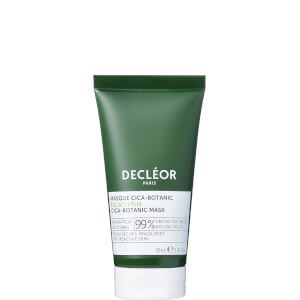
“Featuring oil-in-water innovation, the face mask offers the soothing richness of almond oil and shea butter while 23% natural-origin glycerin works to hydrate.”
This product can help improve hydration of the skin with the two types of ingredients.
The first type is called “humectants”:
these ingredients help attract water.
When humectants are on the surface of the skin, they “pull in” the moisture from the outside environment, or from
within deeper layers of the skin. The following ingredients in this product do the job:
arginine, glycerin.
This product also contains ingredients called “occlusives”. They help reduce the speed with which our skin loses moisture to the outside environment. These ingredients also help soften the upper layer of the skin, so it feels less tight and nicer to the touch. The following ingredients in this product do the job: arginine, cetearyl alcohol.
The following ingredients in this product are especially good for supporting the skin barrier and helping with the hydration level: madecassoside
Anti-oxidationNot advertised by the brand · Madecassoside, Centella asiatica extract + 3 moreStrong evidence
This product contains antioxidants (madecassoside) that can help neutralize free radicals in skin. By doing so, they can lessen the damage the skin gets from the UV light (sun).
The following ingredients - centella asiatica extract also can have an antioxidant effect, but there is less evidence to confirm their effectiveness in skin.
Anti-agingNot advertised by the brand · Centella asiatica extract, Madecassoside + 1 moreModerate evidence
This product contains centella asiatica extract, madecassoside. These ingredients might be able to help reduce and prevent fine lines and wrinkles, improve skin elasticity and firmness, but there is not enough evidence that it actually works.
Can it cause trouble?
Irritancy11 strong irritants: Eucalyptus globulus leaf oil, Melaleuca viridiflora leaf oil + 9 more — patch-test recommendedHigh risk
Comedogenic3 ingredients rated 2 or more on the 0–5 pore-clogging scale3 flagged


User reviews
Be the first — your take helps the next person decide.
Ingredients
Filter by role to see what each ingredient is doing.
Water~40–60%
Glycerin~3.8–5.7%
- Irritation risk
- Low
One of the best moisturizing ingredients. Naturally present in skin. It attracts water to the upper layer of the skin working as a humectant
More about GlycerinCetearyl alcohol~3.3–4.9%
- Irritation risk
- Low
- Comedogenicity
- 2/5
A non-drying alcohol. Works as an emollient. Helps water and oil mix together and creates a nice product texture
More about Cetearyl alcoholPropanediol~2.7–4%
- Irritation risk
- Low
Acts as a solvent for other ingredients. Speeds up the absorption of other ingredients into the skin
More about PropanediolHydrogenated coco-glycerides~2.1–3.1%
- Irritation risk
- Medium
Helps oil and water mix together while creating a nice finish on the skin
More about Hydrogenated coco-glyceridesGlyceryl stearate~1.7–2.5%
- Irritation risk
- Low
An emollient that softens the skin and forms a protective layer on its surface. Helps water and oil mix together
More about Glyceryl stearateOctyldodecanol~1.3–2%
- Irritation risk
- Low
An emollient that helps to soften the skin and create a pleasant product texture and stabilize the formulation
More about OctyldodecanolGlyceryl stearate citrate~1.3–1.9%
- Irritation risk
- Low
Helps oil and water mix together while softening the upper layer of the skin
More about Glyceryl stearate citratePrunus amygdalus dulcis seed~1–1.45%
- Irritation risk
- Low
Helps soften the upper layer of the skin
More about Prunus amygdalus dulcis seedGlyceryl stearate se~0.6–1.4%
- Irritation risk
- Low
- Comedogenicity
- 2/5
Used to stabilize the product formulations and works as an emollient
More about Glyceryl stearate seEucalyptus globulus leaf oil~0.45–1.05%
- Irritation risk
- High
An essential oil that can be very irritating. Has some anti-bacterial properties
More about Eucalyptus globulus leaf oilMelaleuca viridiflora leaf oil~0.4–0.9%
- Irritation risk
- High
Pelargonium graveolens flower oil~0.35–0.85%
- Irritation risk
- High
An essential oil. Can be irritating. Can become an allergen with oxidation
More about Pelargonium graveolens flower oilPiper nigrum fruit oil~0.3–0.75%
- Irritation risk
- Low
Rosmarinus officinalis leaf oil~0.2–0.75%
- Irritation risk
- High
A plant oil with high content of volatile compounds that can irritate the skin. Can be used as a fragrance. Has anti-bacterial properties and might help neutralize free radicals on the surface of the skin
More about Rosmarinus officinalis leaf oilCupressus sempervirens leaf/nut/stem oil~0.3–0.75%
- Irritation risk
- Low
Centella asiatica extract~0.35–0.8%
- Irritation risk
- Medium
A plant extract that has been shown to be able to reduce inflammation in skin, support restoration of skin barrier function, as well as support collagen production. Contains active compounds called centelloids: asiaticoside, madecasosside, asiatic acid and madecassic acid. Might be helpful in preventing stretch marks. It can be itself be irritating though.
More about Centella asiatica extractMentha piperita oil~0.15–0.6%
Butyrospermum parkii butter~0.2–0.7%
- Irritation risk
- Low
- Comedogenicity
- 3/5
A great moisturising ingredient that softens the skin and reduces water loss from its upper layer. It also can be helpful in protecting skin from free radicals
More about Butyrospermum parkii butterMadecassoside~0.15–0.6%
- Irritation risk
- Medium
An antioxidant that is typically derived from plant Centella Asiatica. It can help neutralize free radicals in skin and support skin barrier function. It could, however, itself be irritating. It is often unstable in formulations
More about MadecassosideSodium phytate~0.15–0.5%
Arginine~0.1–0.45%
- Irritation risk
- Low
An amino acid that is naturally present in skin and helps keep it hydrated. When used together with AHAs, it can reduce their irritating effect on the skin
More about ArginineAlcohol~0.1–0.45%
- Irritation risk
- High
Can be drying and contribute to skin irritation. Used in formulars to dissolve other ingredients, create a thinner product consistency or for its antibacterial properties
More about AlcoholCitric acid~0.1–0.4%
- Irritation risk
- Medium
Can work as an exfoliant but is typically used to adjust the product pH
More about Citric acidSalicylic acid~0.1–0.3%
- Irritation risk
- High
Used for skin exfoliation. It has an anti-inflammatory and anti-bacterial effect, helps to unclog pores, prevent blemishes and speed up healing of the existing ones. Sometimes referred to as a BHA (beta-hydroxy acid)
More about Salicylic acidLinalool~0.05–0.3%
Geraniol~0.05–0.25%
Limonene~0.05–0.2%
- Irritation risk
- High
A common frangrance that can easily irritate skin, especially if exposed to air, light or heat
More about LimoneneCitral~0.05–0.15%
Citronellol~0.05–0.1%
Ingredient list view
Water, Glycerin, Cetearyl alcohol, Propanediol, Hydrogenated coco-glycerides, Glyceryl stearate, Octyldodecanol, Glyceryl stearate citrate, Prunus amygdalus dulcis seed, Glyceryl stearate se, Eucalyptus globulus leaf oil, Melaleuca viridiflora leaf oil, Pelargonium graveolens flower oil, Piper nigrum fruit oil, Unknown, Rosmarinus officinalis leaf oil, Cupressus sempervirens leaf/nut/stem oil, Centella asiatica extract, Mentha piperita oil, Butyrospermum parkii butter, Madecassoside, Sodium phytate, Arginine, Alcohol, Citric acid, Salicylic acid, Linalool, Geraniol, Limonene, Citral, Citronellol
Compare prices
Retailers ranked by price — lowest first.

Worth comparing, line by line.
Match % combines shared ingredients, the first five ingredients, shared actives and hero ingredients, irritancy (lower counts in the alternative's favour), texture and body area. Only products in the same routine step are compared.
| DECLEORCica-Botanic MaskYOUR PRODUCT | SCINICHyaluronic Acid Soothing Stick | LancômeHydra Zen Anti-Stress Gel Moisturizer | PlenaireSkin Frosting Hydrating Mask | |
|---|---|---|---|---|
| Match | — | 84% | 77% | 77% |
| Price | $29.46 | $14.72−$14.74 | — | $26.00−$3.46 |
| Shared key ingredients | — | 4 of 7 | 3 of 7 | 3 of 7 |
| Key difference | — | Niacinamide | Dimethicone | Cocos Nucifera Oil |
| Irritancy | High | Medium | High | Medium |
| Drying alcohol | Contains drying alcohol | — | Contains drying alcohol | — |
| View product | Shop | Shop | Shop |

Product summary
Based on the ingredients included, "DECLEOR - Cica-Botanic Mask" works well for moisturizing the skin. As we expect from a proper moisturizer, the formula includes a combo of effective humectants and emollients. These are the two different types of ingredients that are essential for improving the skin hydration and supporting a healthy skin barrier. Humectants in this product (arginine and glycerin) help to increase the water content in the upper layer of the skin. (These ingredients do so by "capturing" water molecules from the outside air or from within the deeper layers of the skin). Arginine, cetearyl alcohol, glyceryl stearate, glyceryl stearate citrate and octyldodecanol in this product help decrease the water evoporation from the skin, so that it stays hydrated for longer. These ingredients also soften the skin and take away the feeling of tightness and dryness.
Ingredient callouts
- this moisturizer contains actives derived from an extract of the Centella Asiatica plant (also known as Gotu Kola) - madecassoside 0.15% - 0.60% The Centella Asiatica actives, even in low concentration, can help reduce inflammation in skin, strengthen the skin barrier and reduce photodamage. They can also help to decrease scarring.
Irritation risk
This moisturizer contains a bunch of common irritants, including ingredients that do not provide any known benefit for the skin. It might not be the best choice if your skin is sensitive. We assess the overall irritancy of this moisturizer to be high. For a detailed overview of all potential irritants: click here
You can see the detailed formula review with the breakdown of all actives in the product and the full ingredient list with estimated concentrations in the tables below.
Price
The product retails for 51.45A$ in Australia and for 37.00£ in the United Kingdom.
For a detailed price comparison: click here.
Sources cited in this review
Every concentration estimate and effectiveness label is anchored to one of these 26 studies and safety reviews.
- 1
- 2
- 3
- 4
- 5Occupational contact dermatitis due to essential oilsonlinelibrary.wiley.com
- 6

Affiliate links · As an Amazon Associate, WIMJ earns from qualifying purchases.