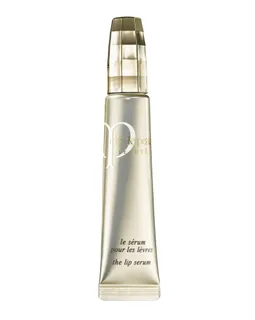
Works for
MoisturizingCyclopentasiloxane, Glycerin + 19 moreWorks
“Deeply hydrating, it encourages strong, healthy, shapely lip contours for a youthful, plump, pillowy look.”
This product can help improve hydration of the skin with the two types of ingredients.
The first type is called “humectants”:
these ingredients help attract water.
When humectants are on the surface of the skin, they “pull in” the moisture from the outside environment, or from
within deeper layers of the skin. The following ingredients in this product do the job:
glycerin, sodium acetylated hyaluronate.
This product also contains ingredients called “occlusives”. They help reduce the speed with which our skin loses moisture to the outside environment. These ingredients also help soften the upper layer of the skin, so it feels less tight and nicer to the touch. The following ingredients in this product do the job: helianthus annuus seed oil, methicone.
Anti-agingTocopherolNot delivered
“Deeply hydrating, it encourages strong, healthy, shapely lip contours for a youthful, plump, pillowy look.”
This product does not contain ingredients that are able to reduce fine lines and wrinkles or help with skin elasticity, but it can improve the look of the skin temporarily through moisturization. Well-moisturized skin might also be able to repair the sun damage better.
This ingredient vaccinium macrocarpon seed oil might be able to help neutralize free radicals in skin and help it fight off some of the sun damage.
Anti-oxidationSide benefit · Vaccinium macrocarpon seed oil, Vitis vinifera seed oil + 6 moreMay help
This product contains antioxidants (vaccinium macrocarpon seed oil) that can help neutralize free radicals in skin to lessen the damage it gets from the UV light (sun). There is some human evidence for this effect in skin, though it is smaller or less consistent than the evidence for the best antioxidants.
Can it cause trouble?
Irritancy8 strong irritants: Menthol, Camphor + 6 more — patch-test recommendedHigh risk
ComedogenicClean of flagged comedogenic ingredientsNone flagged
User reviews
Be the first — your take helps the next person decide.
Ingredients
Filter by role to see what each ingredient is doing.
Water~45–55%
Cyclopentasiloxane~6.3–7.7%
- Irritation risk
- Low
A silicone that helps improve the product texture and spreadability. Can absorb oil creating a short-term mattifying effect on the skin
More about CyclopentasiloxaneGlycerin~4.2–5.2%
- Irritation risk
- Low
One of the best moisturizing ingredients. Naturally present in skin. It attracts water to the upper layer of the skin working as a humectant
More about GlycerinHydrogenated polyisobutene~3.3–4.1%
- Irritation risk
- Low
Used to improve the product consistency and soften the upper layer of the skin
More about Hydrogenated polyisobuteneDipropylene glycol~2.3–2.8%
- Irritation risk
- Low
Helps to dissolve other ingredients in a formulation. Slows down the rate of product drying
More about Dipropylene glycolEthylhexyl methoxycinnamate~2.6–3.2%
- Irritation risk
- High
Octinoxate. When used in higher concentrations, works as a sunscreen protecting the skin from UVB rays. When used in lower concentration, helps to preserve the product formulation. Is shown to be harmful to coral reefs - consider avoiding bathing in coral reef areas when wearing a product with this ingredient. It can be irritating
More about Ethylhexyl methoxycinnamateVinyl dimethicone/methicone silsesquioxane crosspolymer~1.7–2.1%
- Irritation risk
- Low
A type of silicone that create a smooth product finish and can create an optical soft-focus effect on the skin. Helps to thicken the product consistency
More about Vinyl dimethicone/methicone silsesquioxane crosspolymerDiphenylsiloxy phenyl trimethicone~1.5–1.8%
- Irritation risk
- Low
Help improve the product's texture
More about Diphenylsiloxy phenyl trimethiconeDipentaerythrityl hexahydroxystearate~1.2–1.5%
Microcrystalline wax~1.1–1.3%
Peg-9 polydimethylsiloxyethyl dimethicone~0.7–1.1%
- Irritation risk
- Medium
A type of silicone that helps water and oil mix together
More about Peg-9 polydimethylsiloxyethyl dimethiconeCetyl peg/ppg-10/1 dimethicone~0.6–0.9%
- Irritation risk
- Low
A type of silicone that helps water and oil mix together. Can help to soften upper layer of the skin
More about Cetyl peg/ppg-10/1 dimethiconePeg-150~0.55–0.85%
- Irritation risk
- Low
Triethylhexanoin~0.5–0.7%
- Irritation risk
- Medium
Helps soften the upper layer of the skin
More about TriethylhexanoinDisteardimonium hectorite~0.5–0.75%
- Irritation risk
- Low
A type of clay that is used to thicken the product consistency
More about Disteardimonium hectoriteMenthol~0.45–0.7%
- Irritation risk
- High
Phenoxyethanol~0.5–0.7%
- Irritation risk
- Low
A preservative. It helps prevent bacterial growth in cosmetic products
More about PhenoxyethanolCamphor~0.45–0.65%
- Irritation risk
- High
Parfum~0.3–0.55%
- Irritation risk
- High
An aromatic blend of unspecified and possibly irritating ingredients
More about ParfumTrisodium edta~0.3–0.55%
Butylene glycol~0.3–0.55%
- Irritation risk
- Low
Used to create a nice product texture and help delivery of other ingredients. Might be somewhat helpful in attracting water to the upper layer of the skin
More about Butylene glycolCitric acid~0.3–0.5%
- Irritation risk
- Medium
Can work as an exfoliant but is typically used to adjust the product pH
More about Citric acidSodium citrate~0.25–0.5%
- Irritation risk
- Medium
Helps to control the skin's pH level. Maintains the skin's natural film of amino-lactic acids and oils. Helps to preserve products
More about Sodium citrateSodium hyaluronate~0.25–0.5%
- Irritation risk
- Low
One of the best moisturizing ingredients. Attracts water into the upper layer of the skin
More about Sodium hyaluronateCitronellol~0.25–0.45%
Linalool~0.25–0.45%
Geraniol~0.25–0.45%
Stearyl glycyrrhetinate~0.25–0.45%
- Irritation risk
- Medium
A fatty acid derived from licorice. Works as an emollient and can help calm down inflammation
More about Stearyl glycyrrhetinateTocopheryl acetate~0.3–0.5%
- Irritation risk
- Medium
A more stable but less bio-available form of vitamin E compared to Tocopherol. Might help moisturize and protect the skin from free radicals, but mostly used in low concentrations to stabilize other ingredients.
More about Tocopheryl acetateIron oxides~0.25–0.45%
- Irritation risk
- Low
An umbrella term for the following three colorants: CI 77491, CI 77492, CI 77499. They might be able to offer some protection against visible light, but the degree of the protection is not clear
More about Iron oxidesBht~0.25–0.5%
Triisostearin~0.25–0.45%
- Irritation risk
- Low
Vitis vinifera seed oil~0.3–0.55%
- Irritation risk
- Medium
A great emollient that can also have anti-oxidant properties
More about Vitis vinifera seed oilArgania spinosa kernel oil~0.3–0.55%
- Irritation risk
- Medium
An emollient that helps soften the upper layer of the skin. Might have some weak anti-oxidant properties
More about Argania spinosa kernel oilSodium acetylated hyaluronate~0.25–0.5%
- Irritation risk
- Low
A type of hyaluronic acid that works as an excellent moisturizer by attracting water into the upper layer of the skin. Is typically feels less sticky on the skin compared to the usual hyaluronic acid
More about Sodium acetylated hyaluronateGarcinia mangostana bark extract~0.25–0.45%
- Irritation risk
- Low
Oryza sativa germ oil~0.3–0.55%
Rosa canina fruit oil~0.3–0.55%
- Irritation risk
- Medium
A great emollient. Contains vitamin E (tocopherol) which may give it some anti-oxidant properties. Can contain volatile compounds and can be irritating
More about Rosa canina fruit oilVaccinium macrocarpon seed oil~0.3–0.55%
- Irritation risk
- Medium
A plant oil that can help neutralize free radicals, soften the upper layer of the skin, and support skin's barrier function
More about Vaccinium macrocarpon seed oilTrimethylolpropane triethylhexanoate~0.3–0.55%
- Irritation risk
- Low
Prunus armeniaca juice~0.25–0.5%
- Irritation risk
- Low
Alcohol~0.25–0.5%
- Irritation risk
- High
Can be drying and contribute to skin irritation. Used in formulars to dissolve other ingredients, create a thinner product consistency or for its antibacterial properties
More about AlcoholMethicone~0.25–0.5%
- Irritation risk
- Low
A type of silicone that helps soften the upper layer of the skin and reduces the water loss from the skin surface
More about MethiconeTetradecene~0.3–0.55%
- Irritation risk
- Low
Tocopherol~0.25–0.45%
- Irritation risk
- Low
Pure form of vitamin E. Can help moisturise and protect the skin from free radicals. Often used to help stabilise other ingredients or the formula itself
More about TocopherolRubus suavissimus leaf extract~0.25–0.45%
- Irritation risk
- Low
Crataegus monogyna flower extract~0.25–0.45%
- Irritation risk
- Low
Zingiber officinale rhizome extract~0.2–0.4%
- Irritation risk
- Low
Rubus idaeus fruit extract~0.2–0.4%
- Irritation risk
- Medium
A fruit extract that might have some anti-oxidant properties but evidence of effectiveness in skin is lacking
More about Rubus idaeus fruit extractSaccharomyces ferment lysate filtrate~0.2–0.35%
- Irritation risk
- Low
Helps attract water to the upper layer of the skin
More about Saccharomyces ferment lysate filtrateHelianthus annuus seed oil~0.2–0.35%
- Irritation risk
- Low
A great emollient due to its high linoleic acid content. One of the most effective plant oils in helping skin hydration and repairing skin barrier function
More about Helianthus annuus seed oilHydrolyzed conchiolin protein~0.15–0.3%
Rosmarinus officinalis leaf extract~0.15–0.25%
- Irritation risk
- High
Can be helpful in reducing inflammation in skin, including inflamed acne. It can be irritating
More about Rosmarinus officinalis leaf extractHydrolyzed silk~0.1–0.2%
- Irritation risk
- Medium
Can help attract water to the upper layer of the skin
More about Hydrolyzed silkAscorbyl dipalmitate~0.1–0.2%
- Irritation risk
- Low
Ingredient list view
Water, Cyclopentasiloxane, Glycerin, Hydrogenated polyisobutene, Dipropylene glycol, Ethylhexyl methoxycinnamate, Vinyl dimethicone/methicone silsesquioxane crosspolymer, Diphenylsiloxy phenyl trimethicone, Dipentaerythrityl hexahydroxystearate, Microcrystalline wax, Peg-9 polydimethylsiloxyethyl dimethicone, Cetyl peg/ppg-10/1 dimethicone, Peg-150, Triethylhexanoin, Disteardimonium hectorite, Menthol, Phenoxyethanol, Camphor, Parfum, Trisodium edta, Butylene glycol, Citric acid, Sodium citrate, Sodium hyaluronate, Citronellol, Linalool, Geraniol, Stearyl glycyrrhetinate, Tocopheryl acetate, Iron oxides, Bht, Triisostearin, Vitis vinifera seed oil, Argania spinosa kernel oil, Sodium acetylated hyaluronate, Garcinia mangostana bark extract, Oryza sativa germ oil, Rosa canina fruit oil, Vaccinium macrocarpon seed oil, Trimethylolpropane triethylhexanoate, Prunus armeniaca juice, Alcohol, Methicone, Tetradecene, Tocopherol, Rubus suavissimus leaf extract, Crataegus monogyna flower extract, Zingiber officinale rhizome extract, Rubus idaeus fruit extract, Saccharomyces ferment lysate filtrate, Helianthus annuus seed oil, Hydrolyzed conchiolin protein, Rosmarinus officinalis leaf extract, Hydrolyzed silk, Ascorbyl dipalmitate
Compare prices
Retailers ranked by price — lowest first.
Affiliate links · As an Amazon Associate, WIMJ earns from qualifying purchases.
Worth comparing, line by line.
Match % combines shared ingredients, the first five ingredients, shared actives and hero ingredients, irritancy (lower counts in the alternative's favour), texture and body area. Only products in the same routine step are compared.
| Clé de Peau BeautéLip SerumYOUR PRODUCT | Cl de Peau BeautLip Serum | Kanebo DEWLip Zone Serum | Kahina Giving BeautyEye Serum | |
|---|---|---|---|---|
| Match | — | 47% | 37% | 32% |
| Price | $115.00 | $98.19−$16.81 | $25.10−$89.90 | $65.00−$50.00 |
| Shared key ingredients | — | 14 of 16 | 4 of 16 | 4 of 16 |
| Key difference | — | Cyclomethicone | Acetyl Glucosamine | Hexapeptide-11 |
| Irritancy | High | High | Medium | Medium |
| Drying alcohol | Contains drying alcohol | Contains drying alcohol | — | — |
| View product | Shop | Shop | Shop |


More alternatives: Green People Skin Age Defy+ Line Eraser Serum111SKIN Celestial Black Diamond Contour Gel
Product summary
"Clé de Peau Beauté - Lip Serum" could be helpful for: Moisturizing and Anti-oxidation, but its actives are not the most effective or are not well-studied.
Ingredient callouts
- Humectants (glycerin 4.20% - 5.20%, sodium hyaluronate 0.25% - 0.50% and sodium acetylated hyaluronate 0.25% - 0.50%). These ingredients help attract water to the upper layer of the skin and improve the skin hydration.
Price
The product retails for 95.00$ in the United States and for 68.00£ in the United Kingdom.
For a detailed price comparison: click here.
Sources cited in this review
Every concentration estimate and effectiveness label is anchored to one of these 21 studies and safety reviews.
- 1
- 2
- 3
- 4
- 5Hyaluronic acid: A key molecule in skin agingncbi.nlm.nih.gov
- 6

Affiliate links · As an Amazon Associate, WIMJ earns from qualifying purchases.