
Works for:
based on ingredients and %- Moisturizing
- Anti-aging
Can it cause trouble?
- Irritation risk: medium
- Comedogenic risk ingredients: 3
Key actives


Product Summary
Judging from the ingredient list, "Clarins - Super Restorative Day Cream - All Skin Types" works well for improving skin hydration As we expect from a proper moisturizer, the formula includes a combo of effective humectants and emollients. These are the two different types of ingredients that are essential for improving the skin hydration and supporting a healthy skin barrier. Dextran, glycerin, sodium hyaluronate, thermus thermophillus ferment and butylene glycol in this product (humectants) attract water molecules to the upper layer of the skin (the water comes from the outside air or from the deeper layers of the skin if the air is dry). Caprylic/capric triglyceride, cetearyl alcohol, coco-caprylate/caprate, caprylyl glycol and glyceryl stearate in this product help decrease the water evoporation from the skin, so that it stays hydrated for longer. These ingredients also soften the skin and take away the feeling of tightness and dryness.
Ingredient callouts
- This moistruizer also contains peptides (acetyl tetrapeptide-2 0.10% - 0.20%). Peptides is a very big group of ingredients. They all consist of a different combination of amino-acids. Our skin produces peptides naturally. Some of them work as natural anti-biotics, promote wound-healing and production of collagen. The scientists are still studying how effective the topical application of peptides is, but it is very likely that peptides in skincare are helpful. They might be able to support skin barrier restoration and even have an anti-aging benefit. At the very least, they certainly help attract water to the skin and support the hydration in this way.
Irritation risk
There are some common irritants in this product, including ingredients that do not have benefits for the skin. We assess the overall irritancy of this moisturizer to be medium. For a detailed overview of all potential irritants: click here
You can see the detailed formula review with the breakdown of all actives in the product and the full ingredient list with estimated concentrations in the tables below.
Price
The product retails for 200.00CA$ in Canada, for 206.81A$ in Australia and from 72.08£ up to 73.12£ in the United Kingdom.
For a detailed price comparison: click here.
Works for
Moisturizing
What does the product description say?
Super Restorative Day Cream .
Source: From product name
This product can help improve hydration of the skin with the two types of ingredients.
The first type is called “humectants”:
these ingredients help attract water.
When humectants are on the surface of the skin, they “pull in” the moisture from the outside environment, or from
within deeper layers of the skin. The following ingredients in this product do the job:
dextran, glycerin.
This product also contains ingredients called “occlusives”. They help reduce the speed with which our skin loses moisture to the outside environment. These ingredients also help soften the upper layer of the skin, so it feels less tight and nicer to the touch. The following ingredients in this product do the job: caprylic/capric triglyceride, cetearyl alcohol.
The following ingredients in this product are especially good for supporting the skin barrier and helping with the hydration level: acetyl tetrapeptide-2
A type of peptide. Peptides are excellent moisturizers and might be able support collagen production reducing fine lines and wrinkles
A good mix of fatty acids that forms a protective layer on the skin. Improves the shelf life of products. Derived from coconut and glycerin
Helps attract water to the most upper layer of the skin. Derived from sugar
One of the best moisturizing ingredients. Naturally present in skin. It attracts water to the upper layer of the skin working as a humectant
One of the best moisturizing ingredients. Attracts water into the upper layer of the skin
Might be helpful in neutralising free radicals in skin and have some hydration properties
A non-drying alcohol. Works as an emollient. Helps water and oil mix together and creates a nice product texture
Helps to soften the upper layer of the skin without creating a greasy texture
An emollient that softens the skin and forms a protective layer on its surface. Helps water and oil mix together
Helps preserve products and creates a nice product texture
Used to preserve products, dissolve other ingredients and create a nice product texture
An emollient that helps soften the skin but is not effective for restoring its barrier function. Might be helpful to calm down inflammation
Used to create a nice product texture and help delivery of other ingredients. Might be somewhat helpful in attracting water to the upper layer of the skin
Used to create a nice product consistency while softening the upper layer of the skin
Used for its fragrance. Can be irritating
A great moisturising ingredient that softens the skin and reduces water loss from its upper layer. It also can be helpful in protecting skin from free radicals
Pure form of vitamin E. Can help moisturise and protect the skin from free radicals. Often used to help stabilise other ingredients or the formula itself
Can contain potent anti-oxidant compounds (abbreviated ECG, GCG, EGC, and EGCG) that might help protect the skin from free radicals. Can help calm down inflammation and has some anti-bacterial properties. Unfortunately, these antioxidants are unstable and lose their effectiveness very quickly in products. The concentration of the antioxidant compounds in the extract also tends to be low to be effective in topical formulation
Anti-aging
What does the product description say?
Fines Lines and Wrinkles, Dullness, and Loss of Firmness and Elasticity Highlighted Ingredients. . Harungana.
Source: Sephora CA
This product contains acetyl tetrapeptide-2. This ingredient might be able to help reduce and prevent fine lines and wrinkles, improve skin elasticity and firmness, but there is not enough evidence that it actually works.
A type of peptide. Peptides are excellent moisturizers and might be able support collagen production reducing fine lines and wrinkles
Might be helpful in neutralising free radicals in skin and have some hydration properties
A vitamin C derivative that is more stable but less potent than pure form of vitamin C. Has a potential to boost collagen production, nutralise free radicals and reduce hyperpigmentation, but the required concentration is likely to be much higher than for the pure form of vitamin C, limiting the ingredient's effectiveness in products
A great moisturising ingredient that softens the skin and reduces water loss from its upper layer. It also can be helpful in protecting skin from free radicals
Can contain potent anti-oxidant compounds (abbreviated ECG, GCG, EGC, and EGCG) that might help protect the skin from free radicals. Can help calm down inflammation and has some anti-bacterial properties. Unfortunately, these antioxidants are unstable and lose their effectiveness very quickly in products. The concentration of the antioxidant compounds in the extract also tends to be low to be effective in topical formulation
Pure form of vitamin E. Can help moisturise and protect the skin from free radicals. Often used to help stabilise other ingredients or the formula itself
How honest is this product?
| Promise | Can it deliver? |
|---|---|
| Moisturizing | |
| Anti-aging |
Total Promises Fulfilled score: 87/100.
We receive a small commission for purchases made through these links at no cost for you. Thank you for your support! Learn more
Potential irritants
Comedogenic ingredients
User reviews (0)
Averages from community submissions.
No reviews yet for this product.
Be the first to share your experience!
Tried this product?
Help capture what the ingredient list can't—texture, finish, pilling, scent, and more. Answer what you can, skip the rest.
Takes ~30 seconds.
Reviews are shown in aggregate. No personal details.
| Product | Similarity | Price | Irritancy |
|---|---|---|---|
 Clarins Super Restorative Day Cream - All Skin Types | Current | $140.00 | |
Rhode Barrier Restore Cream | 55% | - | |
Mesoestetic Age Element Anti-wrinkle Night Cream | 55% | $67.09 | |
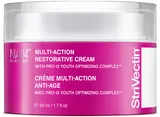 StriVectin Multi-Action Restorative Cream | 55% | ≈ $59.61 | |
 3LAB Anti-Aging Cream | 55% | $750.00 | |
 Collistar Ultra-Lifting Face and Neck Cream | 54% | ≈ $74.18 |
Key Actives
Can contain potent anti-oxidant compounds (abbreviated ECG, GCG, EGC, and EGCG) that might help protect the skin from free radicals. Can help calm down inflammation and has some anti-bacterial properties. Unfortunately, these antioxidants are unstable and lose their effectiveness very quickly in products. The concentration of the antioxidant compounds in the extract also tends to be low to be effective in topical formulation
Pure form of vitamin E. Can help moisturise and protect the skin from free radicals. Often used to help stabilise other ingredients or the formula itself
A vitamin C derivative that is more stable but less potent than pure form of vitamin C. Has a potential to boost collagen production, nutralise free radicals and reduce hyperpigmentation, but the required concentration is likely to be much higher than for the pure form of vitamin C, limiting the ingredient's effectiveness in products
A great moisturising ingredient that softens the skin and reduces water loss from its upper layer. It also can be helpful in protecting skin from free radicals
Might be helpful in neutralising free radicals in skin and have some hydration properties
A type of peptide. Peptides are excellent moisturizers and might be able support collagen production reducing fine lines and wrinkles
A good mix of fatty acids that forms a protective layer on the skin. Improves the shelf life of products. Derived from coconut and glycerin
One of the best moisturizing ingredients. Naturally present in skin. It attracts water to the upper layer of the skin working as a humectant
One of the best moisturizing ingredients. Attracts water into the upper layer of the skin
Works as a UV filter when used in high concentrations. It is photostable and is effective mostly against the UVB light, with some protection in the UVA range. In small concentrations, used for its ability to improve the color of cosmetic products. Is usually well tolerated by the skin
Helps attract water to the most upper layer of the skin. Derived from sugar
Potential irritants
An aromatic blend of unspecified and possibly irritating ingredients
Used for its fragrance. Can be irritating
A cleansing agent (SLS). It can be irritating
A good mix of fatty acids that forms a protective layer on the skin. Improves the shelf life of products. Derived from coconut and glycerin
Used to preserve products, dissolve other ingredients and create a nice product texture
A gelling agent that thickens the product consistency and leaves the skin with a velvety finish
Helps water and oil in the product mix well together and improves product texture
A vitamin C derivative that is more stable but less potent than pure form of vitamin C. Has a potential to boost collagen production, nutralise free radicals and reduce hyperpigmentation, but the required concentration is likely to be much higher than for the pure form of vitamin C, limiting the ingredient's effectiveness in products
Helps preserve products and creates a nice product texture
A more stable but less bio-available form of vitamin E compared to Tocopherol. Might help moisturize and protect the skin from free radicals, but mostly used in low concentrations to stabilize other ingredients.
Might be helpful in neutralising free radicals in skin and have some hydration properties
Can work as an exfoliant but is typically used to adjust the product pH
Comedogenic ingredients
A non-drying alcohol. Works as an emollient. Helps water and oil mix together and creates a nice product texture
A great moisturising ingredient that softens the skin and reduces water loss from its upper layer. It also can be helpful in protecting skin from free radicals
A cleansing agent (SLS). It can be irritating
All ingredients
A good mix of fatty acids that forms a protective layer on the skin. Improves the shelf life of products. Derived from coconut and glycerin
Helps to soften the upper layer of the skin without creating a greasy texture
Used to create a nice product consistency while softening the upper layer of the skin
One of the best moisturizing ingredients. Naturally present in skin. It attracts water to the upper layer of the skin working as a humectant
Used to preserve products, dissolve other ingredients and create a nice product texture
A non-drying alcohol. Works as an emollient. Helps water and oil mix together and creates a nice product texture
An emollient that softens the skin and forms a protective layer on its surface. Helps water and oil mix together
Helps oil and water mix togehter and creates a nice product texture
A gelling agent that thickens the product consistency and leaves the skin with a velvety finish
Helps water and oil in the product mix well together and improves product texture
A vitamin C derivative that is more stable but less potent than pure form of vitamin C. Has a potential to boost collagen production, nutralise free radicals and reduce hyperpigmentation, but the required concentration is likely to be much higher than for the pure form of vitamin C, limiting the ingredient's effectiveness in products
A great moisturising ingredient that softens the skin and reduces water loss from its upper layer. It also can be helpful in protecting skin from free radicals
An aromatic blend of unspecified and possibly irritating ingredients
Helps preserve products and creates a nice product texture
A more stable but less bio-available form of vitamin E compared to Tocopherol. Might help moisturize and protect the skin from free radicals, but mostly used in low concentrations to stabilize other ingredients.
Used to create a nice product texture and help delivery of other ingredients. Might be somewhat helpful in attracting water to the upper layer of the skin
One of the best moisturizing ingredients. Attracts water into the upper layer of the skin
Creates an illusion of smoother and more radiant skin tone. Adds shimmer to the skin by reflecting light
Works as a UV filter when used in high concentrations. It is photostable and is effective mostly against the UVB light, with some protection in the UVA range. In small concentrations, used for its ability to improve the color of cosmetic products. Is usually well tolerated by the skin
Pure form of vitamin E. Can help moisturise and protect the skin from free radicals. Often used to help stabilise other ingredients or the formula itself
An emollient that helps soften the skin but is not effective for restoring its barrier function. Might be helpful to calm down inflammation
Might be helpful in neutralising free radicals in skin and have some hydration properties
A preservative. It helps prevent bacterial growth in cosmetic products
Can work as an exfoliant but is typically used to adjust the product pH
Acts as a solvent for other ingredients. Speeds up the absorption of other ingredients into the skin
Used for its fragrance. Can be irritating
Helps water and oil mix together and create a nice product texture
Can contain potent anti-oxidant compounds (abbreviated ECG, GCG, EGC, and EGCG) that might help protect the skin from free radicals. Can help calm down inflammation and has some anti-bacterial properties. Unfortunately, these antioxidants are unstable and lose their effectiveness very quickly in products. The concentration of the antioxidant compounds in the extract also tends to be low to be effective in topical formulation
A cleansing agent (SLS). It can be irritating
A type of peptide. Peptides are excellent moisturizers and might be able support collagen production reducing fine lines and wrinkles
Helps attract water to the most upper layer of the skin. Derived from sugar
Ingredient list view
Water, Caprylic/capric triglyceride, Coco-caprylate/caprate, Pentaerythrityl tetraethylhexanoate, Glycerin, Pentylene glycol, Cetearyl alcohol, Mangifera indica seed oil, Glyceryl stearate, Peg-100 stearate, Hydroxyethyl acrylate/sodium acryloyldimethyl taurate copolymer, Pentaerythrityl distearate, Cetearyl glucoside, Ascorbyl glucoside, Butyrospermum parkii butter, Parfum, Caprylyl glycol, Tocopheryl acetate, Disodium edta, Tromethamine, Sucrose palmitate, Butylene glycol, Sodium hyaluronate, Mica, Glyceryl linoleate, Ci 77120, Barium sulfate, Ci 77891, Titanium dioxide, Harungana madagascariensis extract, Tocopherol, Olea europaea fruit extract, Thermus thermophillus ferment, Phenoxyethanol, Citric acid, Potassium sorbate, Propanediol, Lapsana communis flower/leaf/stem extract, Pectin, Guar hydroxypropyltrimonium chloride, Camellia sinensis leaf extract, Rhodiola rosea root extract, Sodium lauryl sulfate, Ci 14700, Acetyl tetrapeptide-2, Dextran
- Safety Assessment of Alkyl Esters as Used in Cosmetics
- Safety Assessment of Pentaerythrityl Tetraesters as Used in Cosmetics
- Glycerol and the skin: holistic approach to its origin and functions
- The Roles of Vitamin C in Skin Health
- Stability, transdermal penetration, and cutaneous effects of ascorbic acid and its derivatives
- Safety Assessment of Tromethamine as Used in Cosmetics