Works for
2 of 2 advertised claims delivered
MoisturizingCaprooyl tetrapeptide-3, Ceramide 2 + 20 moreStrong evidence
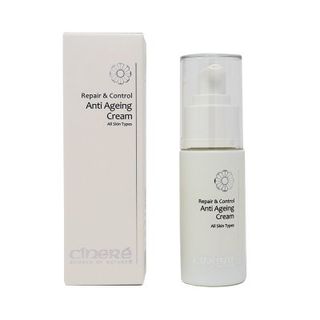
“Repair Control Anti Ageing Cream”
This product can help improve hydration of the skin with the two types of ingredients.
The first type is called “humectants”:
these ingredients help attract water.
When humectants are on the surface of the skin, they “pull in” the moisture from the outside environment, or from
within deeper layers of the skin. The following ingredients in this product do the job:
cyclomethicone, dextran.
This product also contains ingredients called “occlusives”. They help reduce the speed with which our skin loses moisture to the outside environment. These ingredients also help soften the upper layer of the skin, so it feels less tight and nicer to the touch. The following ingredients in this product do the job: butyrospermum parkii butter, plukenetia volubilis seed oil.
The following ingredients in this product are especially good for supporting the skin barrier and helping with the hydration level: caprooyl tetrapeptide-3, ceramide 2
Anti-agingCaprooyl tetrapeptide-3, Butyrospermum parkii butter + 2 moreModerate evidence
“Repair Control Anti Ageing Cream”
This product contains caprooyl tetrapeptide-3. This ingredient might be able to help reduce and prevent fine lines and wrinkles, improve skin elasticity and firmness, but there is not enough evidence that it actually works.
Can it cause trouble?
Irritancy3 strong irritants: Oenothera biennis flower extract, Alcohol + 1 more — patch-test recommendedHigh risk
Comedogenic2 ingredients rated 2 or more on the 0–5 pore-clogging scale2 flagged
User reviews
Be the first — your take helps the next person decide.
Ingredients
Filter by role to see what each ingredient is doing.
Water~45–55%
Glycol~6.3–7.7%
- Irritation risk
- Low
Hydrolyzed soy protein~3.9–4.7%
- Irritation risk
- Low
Helps attract water to the upper layer of the skin. Might have some anti-aging, anti-oxidant, and skin lightening properties, but solid evidence is missing
More about Hydrolyzed soy proteinButylene glycol~3–3.7%
- Irritation risk
- Low
Used to create a nice product texture and help delivery of other ingredients. Might be somewhat helpful in attracting water to the upper layer of the skin
More about Butylene glycolButyrospermum parkii butter~2.4–2.9%
- Irritation risk
- Low
- Comedogenicity
- 3/5
A great moisturising ingredient that softens the skin and reduces water loss from its upper layer. It also can be helpful in protecting skin from free radicals
More about Butyrospermum parkii butterCarthamus tinctorius flower extract~1.9–2.3%
- Irritation risk
- Low
Cyclomethicone~1.6–1.9%
- Irritation risk
- Low
A type of silicone that leaves a nice silky finish on the skin and can help soften its upper layer
More about CyclomethiconePersea gratissima oil~1.5–1.8%
- Irritation risk
- Medium
An emollient that helps soften the skin and could be helpful in repairing its barrier function
More about Persea gratissima oilSaccharide isomerate~1.2–1.4%
- Irritation risk
- Low
Helps attract water to the upper layer of the skin
More about Saccharide isomerateTriticum vulgare germ oil~1–1.2%
- Irritation risk
- Low
- Comedogenicity
- 3/5
A good emoillient. Contains vitamin E which can help neutralise free radicals, however the oil is unstable. Avoid if you have gluten or wheat sensitivity (including food allergies).
More about Triticum vulgare germ oilHydroxyethyl acrylate/sodium acryloyldimethyl taurate copolymer~0.7–1%
- Irritation risk
- Medium
A gelling agent that thickens the product consistency and leaves the skin with a velvety finish
More about Hydroxyethyl acrylate/sodium acryloyldimethyl taurate copolymerMyristyl alcohol~0.6–0.9%
- Irritation risk
- High
Helps to stabilize the product formulation while softening the upper layer of the skin. Can be irritating
More about Myristyl alcoholPlukenetia volubilis seed oil~0.55–0.8%
- Irritation risk
- Low
A plant oil that works as a good moisturizer by softening the upper layer of the skin. Might be helpful in reducing inflammation in skin and reducing blemishes due to the large content of linoleic acid
More about Plukenetia volubilis seed oilC12-15 alkyl benzoate~0.5–0.7%
- Irritation risk
- Low
Enhances the product texture and makes it more spreadable. Helps reduce water loss from the outer layer of skin. Extands the shelf life by preventing bacteria growth
More about C12-15 alkyl benzoateGlycerin~0.45–0.7%
- Irritation risk
- Low
One of the best moisturizing ingredients. Naturally present in skin. It attracts water to the upper layer of the skin working as a humectant
More about GlycerinMacadamia ternifolia seed oil~0.45–0.7%
- Irritation risk
- Medium
Plant oil from nuts that helps soften the upper layer of the skin. Contains a high concentration of oleic acid that can weaken skin's barrier function and increase water-loss while enhancing penetration of other ingredients
More about Macadamia ternifolia seed oilOenothera biennis flower extract~0.35–0.65%
Alcohol~0.3–0.6%
- Irritation risk
- High
Can be drying and contribute to skin irritation. Used in formulars to dissolve other ingredients, create a thinner product consistency or for its antibacterial properties
More about AlcoholSodium benzoate~0.25–0.5%
Potassium sorbate~0.3–0.5%
Pentaerythrityl tetraisostearate~0.3–0.55%
- Irritation risk
- Medium
Used to create a thicker product consistency
More about Pentaerythrityl tetraisostearateMyristyl glucoside~0.3–0.55%
- Irritation risk
- Low
Behenyl alcohol~0.25–0.5%
- Irritation risk
- Low
Non-drying alcohol that helps water and oil mix together. Also serves as an emollient
More about Behenyl alcoholTribehenin~0.25–0.4%
- Irritation risk
- Low
Used to create a thicker product consistency and soften the upper layer of the skin
More about TribeheninArachidyl glucoside~0.25–0.4%
Dextran~0.2–0.35%
- Irritation risk
- Low
Helps attract water to the most upper layer of the skin. Derived from sugar
More about DextranParfum~0.2–0.35%
- Irritation risk
- High
An aromatic blend of unspecified and possibly irritating ingredients
More about ParfumMagnesium pca~0.2–0.35%
- Irritation risk
- Low
Helps attract water to the upper layer of the skin
More about Magnesium pcaSodium pca~0.2–0.35%
- Irritation risk
- Low
Naturally present in skin and helps to attract water to its upper layer
More about Sodium pcaDisodium edta~0.2–0.35%
Ceramide 2~0.2–0.4%
- Irritation risk
- Low
A type of lipid similar to ceramides naturally present in skin. Helps to soften the upper layer of the skin and supports the skin barrier function to keep it hydrated. Can help to prevent inflammation in skin
More about Ceramide 2Bht~0.15–0.3%
Caprooyl tetrapeptide-3~0.2–0.35%
- Irritation risk
- Low
A type of peptide. Peptides are excellent moisturizers and might be able support collagen production reducing fine lines and wrinkles
More about Caprooyl tetrapeptide-3Peg-10 rapeseed sterol~0.25–0.45%
Zinc pca~0.1–0.25%
- Irritation risk
- Low
A compound that combines zinc with a hydrating ingredient PCA. Might to be helpful against acne and clogged pores. Can help calm down inflammation in skin. Could be helpful in reducing the formation of free radicals in skin. Might help to reduce fine lines in wrinkles, but solid evidence is missing
More about Zinc pcaGlucose~0.1–0.15%
- Irritation risk
- Low
Helps attract water to the upper layer of the skin. Could be helpful in restoring the skin barrier function
More about GlucosePalmitoyl hexapeptide-12~0.05–0.1%
- Irritation risk
- Low
A type of peptide. Peptides are excellent moisturizers and might be able support collagen production reducing fine lines and wrinkles
More about Palmitoyl hexapeptide-12Ingredient list view
Water, Glycol, Hydrolyzed soy protein, Butylene glycol, Butyrospermum parkii butter, Carthamus tinctorius flower extract, Cyclomethicone, Persea gratissima oil, Saccharide isomerate, Triticum vulgare germ oil, Hydroxyethyl acrylate/sodium acryloyldimethyl taurate copolymer, Myristyl alcohol, Plukenetia volubilis seed oil, C12-15 alkyl benzoate, Glycerin, Macadamia ternifolia seed oil, Oenothera biennis flower extract, Alcohol, Sodium benzoate, Potassium sorbate, Pentaerythrityl tetraisostearate, Myristyl glucoside, Behenyl alcohol, Tribehenin, Arachidyl glucoside, Dextran, Parfum, Magnesium pca, Sodium pca, Disodium edta, Ceramide 2, Bht, Caprooyl tetrapeptide-3, Peg-10 rapeseed sterol, Zinc pca, Unknown, Glucose, Palmitoyl hexapeptide-12
Compare prices
Retailers ranked by price — lowest first.
Product summary
"Cinere - Repair Control Anti Ageing Cream" has a good moisturizing formula. To work well, any moisturizer needs to include a combination of water-binding and emollient ingredients. Cinere - Repair Control Anti Ageing Cream ticks this box. Cyclomethicone, dextran, glycerin, magnesium pca and saccharide isomerate in this product (humectants) attract water molecules to the upper layer of the skin (the water comes from the outside air or from the deeper layers of the skin if the air is dry). Caprooyl tetrapeptide-3, ceramide 2, cyclomethicone, persea gratissima oil and triticum vulgare germ oil in this product help decrease the water evoporation from the skin, so that it stays hydrated for longer. These ingredients also soften the skin and take away the feeling of tightness and dryness.
Ingredient callouts
- Another benefit is that this moisturizer contain ceramides (ceramide 2 0.20% - 0.40%). Ceramides are an important part of our natural skin barrier. The Ceramides used in skincare are synthetic or come from plants. They help soften the skin and can help "fill the gaps" in the skin barrier, keeping the skin hydrated and resilient for longer.
- We like that this moisturizer contains peptides (palmitoyl hexapeptide-12 0.05% - 0.10% and caprooyl tetrapeptide-3 0.20% - 0.35%). There are many different kind of Peptides and they are naturally present in our skin. They all are a combination of aminoacids. Some of them work as natural antibiotics, promote wound-healing and production of collagen. The science is still not settled on how effective Peptides are in skincare, but it is very likely that they have a benefit. Peptides might help restore the skin barrier and fight the signs of aging. At the very least, Peptides work as humectants: they attract water to the upper layer of the skin and improve its hydration.
Irritation risk
We assess the overall irritancy of this moisturizer to be high. For a detailed overview of all potential irritants: click here
You can see the detailed formula review with the breakdown of all actives in the product and the full ingredient list with estimated concentrations in the tables below.
Price
The product retails for 40.00£ in the United Kingdom.
For a detailed price comparison: click here.
Sources cited in this review
Every concentration estimate and effectiveness label is anchored to one of these 14 studies and safety reviews.
- 1Extracts from Glycine max (soybean) induce elastin synthesis and inhibit elastase activityonlinelibrary.wiley.com
- 2
- 3Safety Assessment of Soy Peptides as Used in Cosmeticscir-safety.org
- 4Cosmetic allergy from myristyl alcoholncbi.nlm.nih.gov
- 5
- 6Patch testing with myristyl alcoholresearchgate.net

Affiliate links · As an Amazon Associate, WIMJ earns from qualifying purchases.