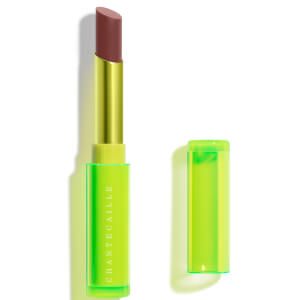
Chantecaille Sunflower Lip Tint Hydrating Balm
Works for
1 of 1 advertised claim delivered
Moisturizing6 ingredients credited for this claimGood support
“Sunflower Lip Tint Hydrating Balm”
This product can help soften the skin and reduce its moisture loss with emollients and occlusives: cera microcristallina, carthamus tinctorius seed oil.
Keep in mind that this product does not contain effective ingredients to attract water to the upper layer of the skin. This is why an additional product with humectants like glycerin or hyaluronic acid can be helpful (apply it before this product for the best results).
Can it cause trouble?
Irritancy1 strong irritant: Rosa damascena extractMedium risk
ComedogenicClean of flagged comedogenic ingredientsNone flagged
User reviews
Be the first — your take helps the next person decide.
Ingredients
Filter by role to see what each ingredient is doing.
Diisostearyl malate~22–34%
- Irritation risk
- Medium
Helps to soften the upper layer of the skin
More about Diisostearyl malateOctyldodecanol~4.7–7.1%
- Irritation risk
- Low
An emollient that helps to soften the skin and create a pleasant product texture and stabilize the formulation
More about OctyldodecanolPolybutene~4.4–6.6%
Tridecyl trimellitate~3.7–5.6%
- Irritation risk
- Medium
Used to create a thicker product consistency and soften the upper layer of the skin
More about Tridecyl trimellitatePolyethylene~2.8–4.2%
Microcrystalline wax~2–3%
Cera microcristallina~1.7–2.5%
- Irritation risk
- Low
Helps to soften the upper layer of the skin, reduce water loss from its surface and create a thicker product consistency
More about Cera microcristallinaHydrogenated microcrystalline wax~1.2–1.8%
- Irritation risk
- Low
Synthetic wax~1–1.5%
- Irritation risk
- Low
Used to stabilize product formulations and thicken product consistency
More about Synthetic waxDicalcium phosphate~1.1–1.7%
- Irritation risk
- Low
Rosa damascena extract~0.5–1.1%
- Irritation risk
- High
Oil of a very fragrant pink rose used as fragrance in cosmetics. Extensive research has shown it has mixed benefits. In the pro column, inhaling this flower’s scent seems to have relaxing properties and the plant’s petals contain skin-soothing and antioxidant compounds that can benefit skin. On the flipside, the numerous chemicals that create this rose’s distinctive fragrance pose a risk of causing skin aggravation.
More about Rosa damascena extractCarthamus tinctorius seed oil~0.45–1.1%
- Irritation risk
- Low
An emollient that helps soften the skin and might help calm down inflammation
More about Carthamus tinctorius seed oilPrunus avium fruit extract~0.35–0.85%
- Irritation risk
- Low
Rosa damascena extract~0.35–0.8%
- Irritation risk
- High
Oil of a very fragrant pink rose used as fragrance in cosmetics. Extensive research has shown it has mixed benefits. In the pro column, inhaling this flower’s scent seems to have relaxing properties and the plant’s petals contain skin-soothing and antioxidant compounds that can benefit skin. On the flipside, the numerous chemicals that create this rose’s distinctive fragrance pose a risk of causing skin aggravation.
More about Rosa damascena extractTocopherol~0.4–0.9%
- Irritation risk
- Low
Pure form of vitamin E. Can help moisturise and protect the skin from free radicals. Often used to help stabilise other ingredients or the formula itself
More about TocopherolCalcium aluminum borosilicate~0.35–0.8%
Aluminum calcium sodium silicate~0.35–0.75%
- Irritation risk
- Low
Calcium titanium borosilicate~0.35–0.85%
- Irritation risk
- Low
Alumina~0.35–0.85%
- Irritation risk
- Low
The same compound that is used safely in dental implants and bone cements. In cosmetics, it is used to improve the consistency of products
More about AluminaCalcium sodium borosilicate~0.2–0.7%
Silica~0.35–0.75%
Synthetic fluorphlogopite~0.3–0.7%
- Irritation risk
- Low
A mineral that is used as an optical filter (makes the skin looks nicer through light reflection) and to improve the texture of cosmetic products
More about Synthetic fluorphlogopiteTin oxide~0.35–0.85%
- Irritation risk
- Low
A colorant that can add a pearl-like appearance to the formulation
More about Tin oxideMica~0.3–0.75%
- Irritation risk
- Low
Creates an illusion of smoother and more radiant skin tone. Adds shimmer to the skin by reflecting light
More about MicaCi 19140~0.15–0.6%
Iron oxides~0.15–0.55%
- Irritation risk
- Low
An umbrella term for the following three colorants: CI 77491, CI 77492, CI 77499. They might be able to offer some protection against visible light, but the degree of the protection is not clear
More about Iron oxidesCi 77491~0.15–0.5%
- Irritation risk
- Low
A red colorant made of iron oxide. Typically is not irritating
More about Ci 77491Ci 77492~0.1–0.45%
Ci 15850~0.1–0.4%
Titanium dioxide~0.15–0.65%
- Irritation risk
- Low
Works as a UV filter when used in high concentrations. It is photostable and is effective mostly against the UVB light, with some protection in the UVA range. In small concentrations, used for its ability to improve the color of cosmetic products. Is usually well tolerated by the skin
More about Titanium dioxideCi 77891~0.05–0.25%
- Irritation risk
- Low
Blue 1 lake~0.05–0.25%
Ci 42090~0.05–0.2%
Ingredient list view
Diisostearyl malate, Octyldodecanol, Polybutene, Tridecyl trimellitate, Polyethylene, Microcrystalline wax, Cera microcristallina, Hydrogenated microcrystalline wax, Synthetic wax, Dicalcium phosphate, Rosa damascena extract, Carthamus tinctorius seed oil, Unknown, Prunus avium fruit extract, Rosa damascena extract, Tocopherol, Calcium aluminum borosilicate, Aluminum calcium sodium silicate, Calcium titanium borosilicate, Alumina, Calcium sodium borosilicate, Silica, Synthetic fluorphlogopite, Tin oxide, Mica, Ci 19140, Iron oxides, Ci 77491, Ci 77492, Ci 15850, Titanium dioxide, Ci 77891, Blue 1 lake, Ci 42090
Compare prices
Retailers ranked by price — lowest first.

Affiliate links · prices updated regularly
Sources cited in this review
Every concentration estimate and effectiveness label is anchored to one of these 7 studies and safety reviews.
- 1
- 2Vitamin E in dermatologyncbi.nlm.nih.gov
- 3Vitamin E and Skin Healthlpi.oregonstate.edu
- 4
- 5
- 6Safety Assessment of Tin(IV) Oxide as Used in Cosmeticscir-safety.org

Affiliate links · As an Amazon Associate, WIMJ earns from qualifying purchases.