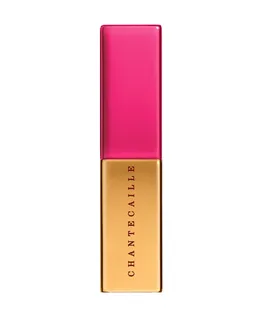
Chantecaille Lip Chic India's Vanishing Species Damask
Works for
MoisturizingHydrogenated castor oil, Ricinus communis seed oil + 3 moreWorks
“Its infused with hyaluronic acid to moisturise and gently plump the look of your lips, for a youthful and full finish that feels incredibly comfortable.”
This product can help improve hydration of the skin with the two types of ingredients.
The first type is called “humectants”:
these ingredients help attract water.
When humectants are on the surface of the skin, they “pull in” the moisture from the outside environment, or from
within deeper layers of the skin. The following ingredients in this product do the job:
sodium hyaluronate.
This product also contains ingredients called “occlusives”. They help reduce the speed with which our skin loses moisture to the outside environment. These ingredients also help soften the upper layer of the skin, so it feels less tight and nicer to the touch. The following ingredients in this product do the job: ricinus communis seed oil, diisostearyl malate.
Can it cause trouble?
Irritancy4 strong irritants: Ethyl vanillin, Aroma + 2 more — patch-test recommendedHigh risk
Comedogenic2 ingredients rated 2 or more on the 0–5 pore-clogging scale2 flagged
User reviews
Be the first — your take helps the next person decide.
Ingredients
Filter by role to see what each ingredient is doing.
Polybutene~26–31%
Diisostearyl malate~5.9–7.2%
- Irritation risk
- Medium
Helps to soften the upper layer of the skin
More about Diisostearyl malateHydrogenated polyisobutene~6.1–7.4%
- Irritation risk
- Low
Used to improve the product consistency and soften the upper layer of the skin
More about Hydrogenated polyisobutenePolyethylene~4.4–5.3%
Vp/hexadecene copolymer~3.1–3.8%
- Irritation risk
- Low
Creates a nice product texture and can support water-resistance of sunscreens
More about Vp/hexadecene copolymerMicrocrystalline wax~2.3–2.8%
Dicalcium phosphate~2–2.4%
- Irritation risk
- Low
Ricinus communis seed oil~1.7–2.1%
- Irritation risk
- Medium
A plant oil that can help soften the skin. It might be helpful in calming down inflammation, but solid research is lacking. Is often used in lip products to create the needed product consistency
More about Ricinus communis seed oilEthyl vanillin~1.2–1.4%
Pentaerythrityl tetra-di-t-butyl hydroxyhydrocinnamate~0.95–1.15%
- Irritation risk
- Low
Used to increase stability of product formulations
More about Pentaerythrityl tetra-di-t-butyl hydroxyhydrocinnamateSodium hyaluronate~0.65–0.95%
- Irritation risk
- Low
One of the best moisturizing ingredients. Attracts water into the upper layer of the skin
More about Sodium hyaluronateAroma~0.55–0.8%
Hydrogenated castor oil~0.55–0.8%
- Irritation risk
- Medium
A plant oil that can help soften the skin. It might be helpful in calming down inflammation, but solid research is lacking. Is often used in lip products to create the needed product consistency
More about Hydrogenated castor oilMica~0.55–0.85%
- Irritation risk
- Low
Creates an illusion of smoother and more radiant skin tone. Adds shimmer to the skin by reflecting light
More about MicaTin oxide~0.6–0.9%
- Irritation risk
- Low
A colorant that can add a pearl-like appearance to the formulation
More about Tin oxideLimonene~0.3–0.6%
- Irritation risk
- High
A common frangrance that can easily irritate skin, especially if exposed to air, light or heat
More about LimoneneCitral~0.3–0.55%
Titanium dioxide~0.45–0.65%
- Irritation risk
- Low
Works as a UV filter when used in high concentrations. It is photostable and is effective mostly against the UVB light, with some protection in the UVA range. In small concentrations, used for its ability to improve the color of cosmetic products. Is usually well tolerated by the skin
More about Titanium dioxideIron oxides~0.3–0.6%
- Irritation risk
- Low
An umbrella term for the following three colorants: CI 77491, CI 77492, CI 77499. They might be able to offer some protection against visible light, but the degree of the protection is not clear
More about Iron oxidesCi 15850~0.25–0.5%
Ci 42090~0.25–0.45%
Polybutene~0.25–0.45%
Diisostearyl malate~0.3–0.5%
- Irritation risk
- Medium
Helps to soften the upper layer of the skin
More about Diisostearyl malateHydrogenated polyisobutene~0.25–0.5%
- Irritation risk
- Low
Used to improve the product consistency and soften the upper layer of the skin
More about Hydrogenated polyisobutenePolyethylene~0.5–0.75%
Vp/hexadecene copolymer~0.35–0.6%
- Irritation risk
- Low
Creates a nice product texture and can support water-resistance of sunscreens
More about Vp/hexadecene copolymerMicrocrystalline wax~0.25–0.45%
Mica~0.25–0.5%
- Irritation risk
- Low
Creates an illusion of smoother and more radiant skin tone. Adds shimmer to the skin by reflecting light
More about MicaRicinus communis seed oil~0.25–0.5%
- Irritation risk
- Medium
A plant oil that can help soften the skin. It might be helpful in calming down inflammation, but solid research is lacking. Is often used in lip products to create the needed product consistency
More about Ricinus communis seed oilEthyl vanillin~0.2–0.35%
Pentaerythrityl tetra-di-t-butyl hydroxyhydrocinnamate~0.25–0.45%
- Irritation risk
- Low
Used to increase stability of product formulations
More about Pentaerythrityl tetra-di-t-butyl hydroxyhydrocinnamateSodium hyaluronate~0.2–0.4%
- Irritation risk
- Low
One of the best moisturizing ingredients. Attracts water into the upper layer of the skin
More about Sodium hyaluronateAroma~0.2–0.4%
Hydrogenated castor oil~0.3–0.55%
- Irritation risk
- Medium
A plant oil that can help soften the skin. It might be helpful in calming down inflammation, but solid research is lacking. Is often used in lip products to create the needed product consistency
More about Hydrogenated castor oilDicalcium phosphate~0.4–0.65%
- Irritation risk
- Low
Tin oxide~0.35–0.6%
- Irritation risk
- Low
A colorant that can add a pearl-like appearance to the formulation
More about Tin oxideLimonene~0.2–0.35%
- Irritation risk
- High
A common frangrance that can easily irritate skin, especially if exposed to air, light or heat
More about LimoneneCitral~0.2–0.35%
Titanium dioxide~0.3–0.55%
- Irritation risk
- Low
Works as a UV filter when used in high concentrations. It is photostable and is effective mostly against the UVB light, with some protection in the UVA range. In small concentrations, used for its ability to improve the color of cosmetic products. Is usually well tolerated by the skin
More about Titanium dioxideIron oxides~0.2–0.35%
- Irritation risk
- Low
An umbrella term for the following three colorants: CI 77491, CI 77492, CI 77499. They might be able to offer some protection against visible light, but the degree of the protection is not clear
More about Iron oxidesCi 15850~0.2–0.4%
Ci 15850~0.2–0.4%
Ci 45410~0.2–0.4%
Ci 15985~0.2–0.4%
Polybutene~0.25–0.4%
Diisostearyl malate~0.3–0.5%
- Irritation risk
- Medium
Helps to soften the upper layer of the skin
More about Diisostearyl malateHydrogenated polyisobutene~0.25–0.5%
- Irritation risk
- Low
Used to improve the product consistency and soften the upper layer of the skin
More about Hydrogenated polyisobutenePolyethylene~0.5–0.75%
Vp/hexadecene copolymer~0.35–0.6%
- Irritation risk
- Low
Creates a nice product texture and can support water-resistance of sunscreens
More about Vp/hexadecene copolymerMicrocrystalline wax~0.25–0.45%
Mica~0.25–0.5%
- Irritation risk
- Low
Creates an illusion of smoother and more radiant skin tone. Adds shimmer to the skin by reflecting light
More about MicaRicinus communis seed oil~0.25–0.5%
- Irritation risk
- Medium
A plant oil that can help soften the skin. It might be helpful in calming down inflammation, but solid research is lacking. Is often used in lip products to create the needed product consistency
More about Ricinus communis seed oilEthyl vanillin~0.2–0.35%
Pentaerythrityl tetra-di-t-butyl hydroxyhydrocinnamate~0.25–0.45%
- Irritation risk
- Low
Used to increase stability of product formulations
More about Pentaerythrityl tetra-di-t-butyl hydroxyhydrocinnamateSodium hyaluronate~0.2–0.4%
- Irritation risk
- Low
One of the best moisturizing ingredients. Attracts water into the upper layer of the skin
More about Sodium hyaluronateAroma~0.2–0.4%
Hydrogenated castor oil~0.3–0.55%
- Irritation risk
- Medium
A plant oil that can help soften the skin. It might be helpful in calming down inflammation, but solid research is lacking. Is often used in lip products to create the needed product consistency
More about Hydrogenated castor oilDicalcium phosphate~0.4–0.65%
- Irritation risk
- Low
Tin oxide~0.35–0.6%
- Irritation risk
- Low
A colorant that can add a pearl-like appearance to the formulation
More about Tin oxideLimonene~0.2–0.35%
- Irritation risk
- High
A common frangrance that can easily irritate skin, especially if exposed to air, light or heat
More about LimoneneCitral~0.2–0.35%
Titanium dioxide~0.3–0.55%
- Irritation risk
- Low
Works as a UV filter when used in high concentrations. It is photostable and is effective mostly against the UVB light, with some protection in the UVA range. In small concentrations, used for its ability to improve the color of cosmetic products. Is usually well tolerated by the skin
More about Titanium dioxideIron oxides~0.2–0.35%
- Irritation risk
- Low
An umbrella term for the following three colorants: CI 77491, CI 77492, CI 77499. They might be able to offer some protection against visible light, but the degree of the protection is not clear
More about Iron oxidesCi 15850~0.2–0.4%
Ci 42090~0.2–0.4%
Ci 19140~0.2–0.4%
Polybutene~0.25–0.4%
Diisostearyl malate~0.3–0.5%
- Irritation risk
- Medium
Helps to soften the upper layer of the skin
More about Diisostearyl malateHydrogenated polyisobutene~0.25–0.5%
- Irritation risk
- Low
Used to improve the product consistency and soften the upper layer of the skin
More about Hydrogenated polyisobutenePolyethylene~0.5–0.75%
Vp/hexadecene copolymer~0.35–0.6%
- Irritation risk
- Low
Creates a nice product texture and can support water-resistance of sunscreens
More about Vp/hexadecene copolymerMicrocrystalline wax~0.25–0.45%
Calcium aluminum borosilicate~0.25–0.45%
Silica~0.35–0.65%
Ricinus communis seed oil~0.3–0.55%
- Irritation risk
- Medium
A plant oil that can help soften the skin. It might be helpful in calming down inflammation, but solid research is lacking. Is often used in lip products to create the needed product consistency
More about Ricinus communis seed oilEthyl vanillin~0.2–0.4%
Pentaerythrityl tetra-di-t-butyl hydroxyhydrocinnamate~0.25–0.45%
- Irritation risk
- Low
Used to increase stability of product formulations
More about Pentaerythrityl tetra-di-t-butyl hydroxyhydrocinnamateMica~0.25–0.5%
- Irritation risk
- Low
Creates an illusion of smoother and more radiant skin tone. Adds shimmer to the skin by reflecting light
More about MicaSodium hyaluronate~0.2–0.4%
- Irritation risk
- Low
One of the best moisturizing ingredients. Attracts water into the upper layer of the skin
More about Sodium hyaluronateDicalcium phosphate~0.45–0.65%
- Irritation risk
- Low
Aroma~0.25–0.45%
Hydrogenated castor oil~0.3–0.55%
- Irritation risk
- Medium
A plant oil that can help soften the skin. It might be helpful in calming down inflammation, but solid research is lacking. Is often used in lip products to create the needed product consistency
More about Hydrogenated castor oilTin oxide~0.35–0.65%
- Irritation risk
- Low
A colorant that can add a pearl-like appearance to the formulation
More about Tin oxideLimonene~0.2–0.4%
- Irritation risk
- High
A common frangrance that can easily irritate skin, especially if exposed to air, light or heat
More about LimoneneCitral~0.2–0.4%
Titanium dioxide~0.3–0.6%
- Irritation risk
- Low
Works as a UV filter when used in high concentrations. It is photostable and is effective mostly against the UVB light, with some protection in the UVA range. In small concentrations, used for its ability to improve the color of cosmetic products. Is usually well tolerated by the skin
More about Titanium dioxideIron oxides~0.2–0.4%
- Irritation risk
- Low
An umbrella term for the following three colorants: CI 77491, CI 77492, CI 77499. They might be able to offer some protection against visible light, but the degree of the protection is not clear
More about Iron oxidesCi 15850~0.25–0.45%
Ci 42090~0.25–0.45%
Ci 19140~0.25–0.45%
Polybutene~0.25–0.45%
Diisostearyl malate~0.3–0.55%
- Irritation risk
- Medium
Helps to soften the upper layer of the skin
More about Diisostearyl malateHydrogenated polyisobutene~0.3–0.55%
- Irritation risk
- Low
Used to improve the product consistency and soften the upper layer of the skin
More about Hydrogenated polyisobutenePolyethylene~0.5–0.75%
Vp/hexadecene copolymer~0.35–0.65%
- Irritation risk
- Low
Creates a nice product texture and can support water-resistance of sunscreens
More about Vp/hexadecene copolymerMicrocrystalline wax~0.25–0.45%
Calcium aluminum borosilicate~0.25–0.45%
Silica~0.35–0.6%
Ricinus communis seed oil~0.3–0.5%
- Irritation risk
- Medium
A plant oil that can help soften the skin. It might be helpful in calming down inflammation, but solid research is lacking. Is often used in lip products to create the needed product consistency
More about Ricinus communis seed oilEthyl vanillin~0.2–0.4%
Pentaerythrityl tetra-di-t-butyl hydroxyhydrocinnamate~0.25–0.45%
- Irritation risk
- Low
Used to increase stability of product formulations
More about Pentaerythrityl tetra-di-t-butyl hydroxyhydrocinnamateMica~0.25–0.5%
- Irritation risk
- Low
Creates an illusion of smoother and more radiant skin tone. Adds shimmer to the skin by reflecting light
More about MicaSodium hyaluronate~0.2–0.4%
- Irritation risk
- Low
One of the best moisturizing ingredients. Attracts water into the upper layer of the skin
More about Sodium hyaluronateDicalcium phosphate~0.45–0.65%
- Irritation risk
- Low
Aroma~0.25–0.4%
Hydrogenated castor oil~0.35–0.65%
- Irritation risk
- Medium
A plant oil that can help soften the skin. It might be helpful in calming down inflammation, but solid research is lacking. Is often used in lip products to create the needed product consistency
More about Hydrogenated castor oilTin oxide~0.4–0.6%
- Irritation risk
- Low
A colorant that can add a pearl-like appearance to the formulation
More about Tin oxideLimonene~0.2–0.35%
- Irritation risk
- High
A common frangrance that can easily irritate skin, especially if exposed to air, light or heat
More about LimoneneCitral~0.2–0.35%
Titanium dioxide~0.3–0.55%
- Irritation risk
- Low
Works as a UV filter when used in high concentrations. It is photostable and is effective mostly against the UVB light, with some protection in the UVA range. In small concentrations, used for its ability to improve the color of cosmetic products. Is usually well tolerated by the skin
More about Titanium dioxideIron oxides~0.15–0.25%
- Irritation risk
- Low
An umbrella term for the following three colorants: CI 77491, CI 77492, CI 77499. They might be able to offer some protection against visible light, but the degree of the protection is not clear
More about Iron oxidesCi 15850~0.15–0.3%
Ci 45410~0.15–0.25%
Ci 42090~0.1–0.15%
Ci 15985~0.1–0.15%
Ingredient list view
Polybutene, Diisostearyl malate, Hydrogenated polyisobutene, Polyethylene, Vp/hexadecene copolymer, Microcrystalline wax, Dicalcium phosphate, Ricinus communis seed oil, Ethyl vanillin, Pentaerythrityl tetra-di-t-butyl hydroxyhydrocinnamate, Sodium hyaluronate, Aroma, Hydrogenated castor oil, Mica, Tin oxide, Limonene, Citral, Titanium dioxide, Iron oxides, Ci 15850, Ci 42090, Polybutene, Diisostearyl malate, Hydrogenated polyisobutene, Polyethylene, Vp/hexadecene copolymer, Microcrystalline wax, Mica, Ricinus communis seed oil, Ethyl vanillin, Pentaerythrityl tetra-di-t-butyl hydroxyhydrocinnamate, Sodium hyaluronate, Aroma, Hydrogenated castor oil, Dicalcium phosphate, Tin oxide, Limonene, Citral, Titanium dioxide, Iron oxides, Ci 15850, Ci 15850, Ci 45410, Ci 15985, Polybutene, Diisostearyl malate, Hydrogenated polyisobutene, Polyethylene, Vp/hexadecene copolymer, Microcrystalline wax, Mica, Ricinus communis seed oil, Ethyl vanillin, Pentaerythrityl tetra-di-t-butyl hydroxyhydrocinnamate, Sodium hyaluronate, Aroma, Hydrogenated castor oil, Dicalcium phosphate, Tin oxide, Limonene, Citral, Titanium dioxide, Iron oxides, Ci 15850, Ci 42090, Ci 19140, Polybutene, Diisostearyl malate, Hydrogenated polyisobutene, Polyethylene, Vp/hexadecene copolymer, Microcrystalline wax, Calcium aluminum borosilicate, Silica, Ricinus communis seed oil, Ethyl vanillin, Pentaerythrityl tetra-di-t-butyl hydroxyhydrocinnamate, Mica, Sodium hyaluronate, Dicalcium phosphate, Aroma, Hydrogenated castor oil, Tin oxide, Limonene, Citral, Titanium dioxide, Iron oxides, Ci 15850, Ci 42090, Ci 19140, Polybutene, Diisostearyl malate, Hydrogenated polyisobutene, Polyethylene, Vp/hexadecene copolymer, Microcrystalline wax, Calcium aluminum borosilicate, Silica, Ricinus communis seed oil, Ethyl vanillin, Pentaerythrityl tetra-di-t-butyl hydroxyhydrocinnamate, Mica, Sodium hyaluronate, Dicalcium phosphate, Aroma, Hydrogenated castor oil, Tin oxide, Limonene, Citral, Titanium dioxide, Iron oxides, Ci 15850, Ci 45410, Ci 42090, Ci 15985
Compare prices
Retailers ranked by price — lowest first.

Worth comparing, line by line.
Match % combines shared ingredients, the first five ingredients, shared actives and hero ingredients, irritancy (lower counts in the alternative's favour), texture and body area. Only products in the same routine step are compared.
| ChantecailleLip Chic India's Vanishing Species DamaskYOUR PRODUCT | CoverGirlClean Fresh Tinted Lip Balm | Tom FordSoleil Lip Balm for Glowing Hydration | NaturiumPhyto-Glow Lip Balm Shimmer Stardust | |
|---|---|---|---|---|
| Match | — | 40% | 39% | 39% |
| Price | — | $6.99 | $40.75 | $9.89 |
| Shared key ingredients | — | 3 of 3 | 2 of 3 | 2 of 3 |
| Key difference | — | Caprylic/Capric Triglyceride | Butyrospermum Parkii Butter | Butyrospermum Parkii Butter |
| Irritancy | High | Medium | High | Medium |
| Drying alcohol | — | — | — | — |
| View product | Shop | Shop | Shop |


More alternatives: RéVive Renewal Rescue Lip MaskMilani Rose Transforming Lip Balm
Sources cited in this review
Every concentration estimate and effectiveness label is anchored to one of these 12 studies and safety reviews.
- 1
- 2
- 3
- 4
- 5
- 6

Affiliate links · As an Amazon Associate, WIMJ earns from qualifying purchases.