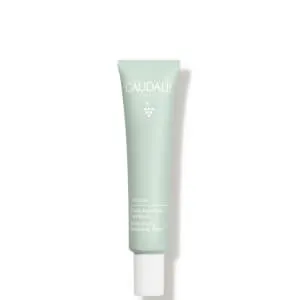
Caudalie Vinopure Oil-Control Moisturizer for Acne Prone Skin
Works for
MoisturizingCoco-caprylate/caprate, Squalane + 8 moreWorks
“Vinopure Oil-Control Moisturizer for Acne Prone Skin”
This product can help improve hydration of the skin with the two types of ingredients.
The first type is called “humectants”:
these ingredients help attract water.
When humectants are on the surface of the skin, they “pull in” the moisture from the outside environment, or from
within deeper layers of the skin. The following ingredients in this product do the job:
glycerin, butylene glycol.
This product also contains ingredients called “occlusives”. They help reduce the speed with which our skin loses moisture to the outside environment. These ingredients also help soften the upper layer of the skin, so it feels less tight and nicer to the touch. The following ingredients in this product do the job: helianthus annuus seed oil, squalane.
Anti-blemishOleanolic acid ~0.1–0.25%, below the ~1% it needsUnder-dosed
“What it is: A lightweight mattifying moisturizer to hydrate, absorb excess oil, and reduce the appearance of imperfections and blackheads.”
Effective ingredients missing or their concentration is too low.
Can it cause trouble?
Irritancy12 strong irritants: Alcohol denat., Citral + 10 more — patch-test recommendedHigh risk
Comedogenic1 ingredient rated 2 or more on the 0–5 pore-clogging scale1 flagged
User reviews
Be the first — your take helps the next person decide.
Ingredients
Filter by role to see what each ingredient is doing.
Water~45–55%
Butylene glycol~5.5–6.8%
- Irritation risk
- Low
Used to create a nice product texture and help delivery of other ingredients. Might be somewhat helpful in attracting water to the upper layer of the skin
More about Butylene glycolCoco-caprylate/caprate~4.4–5.4%
- Irritation risk
- Low
Helps to soften the upper layer of the skin without creating a greasy texture
More about Coco-caprylate/caprateVitis vinifera fruit water~3.2–3.9%
- Irritation risk
- Low
Silica~2.5–3.1%
Squalane~2.1–2.6%
- Irritation risk
- Low
An oil naturally present in skin. Works as an emollient to soften the skin and form a protective layer on its surface without a greasy feeling.
More about SqualaneGlycerin~1.7–2%
- Irritation risk
- Low
One of the best moisturizing ingredients. Naturally present in skin. It attracts water to the upper layer of the skin working as a humectant
More about GlycerinTapioca starch~1.3–1.5%
Glyceryl stearate~1.1–1.3%
- Irritation risk
- Low
An emollient that softens the skin and forms a protective layer on its surface. Helps water and oil mix together
More about Glyceryl stearateIsostearyl isostearate~0.7–1.1%
- Irritation risk
- Medium
- Comedogenicity
- 3/5
Helps soften the upper layer of the skin and improve the product texture. It can be comedogenic
More about Isostearyl isostearatePalmitoyl grape seed extract~0.5–0.8%
- Irritation risk
- Low
Alcohol denat.~0.5–0.7%
- Irritation risk
- High
Produces temporary toning effect. Can help dissolve other ingredients or preserve products
More about Alcohol denat.Acrylates/c10-30 alkyl acrylate crosspolymer~0.45–0.7%
- Irritation risk
- Medium
Maintains the texture of skincare products. Allows the product to spread evenly. Helps oil and water mix together
More about Acrylates/c10-30 alkyl acrylate crosspolymerCaprylyl glycol~0.4–0.65%
- Irritation risk
- Medium
Helps preserve products and creates a nice product texture
More about Caprylyl glycolXanthan gum~0.3–0.6%
- Irritation risk
- Low
Used to create a thicker product consistency
More about Xanthan gumEnantia chlorantha bark extract~0.3–0.6%
- Irritation risk
- High
A bark extract that might help clam down inflammation and neutralize free radicals , but evidence of effectiveness in skin is lacking
More about Enantia chlorantha bark extractPentylene glycol~0.4–0.6%
- Irritation risk
- Medium
Used to preserve products, dissolve other ingredients and create a nice product texture
More about Pentylene glycolPotassium cetyl phosphate~0.3–0.55%
- Irritation risk
- Medium
Helps oil and water mix together
More about Potassium cetyl phosphateVitis vinifera juice~0.25–0.45%
- Irritation risk
- Medium
Helianthus annuus seed oil~0.25–0.5%
- Irritation risk
- Low
A great emollient due to its high linoleic acid content. One of the most effective plant oils in helping skin hydration and repairing skin barrier function
More about Helianthus annuus seed oilSodium phytate~0.25–0.45%
Tocopherol~0.25–0.45%
- Irritation risk
- Low
Pure form of vitamin E. Can help moisturise and protect the skin from free radicals. Often used to help stabilise other ingredients or the formula itself
More about TocopherolCitral~0.2–0.35%
Pelargonium graveolens flower oil~0.2–0.4%
- Irritation risk
- High
An essential oil. Can be irritating. Can become an allergen with oxidation
More about Pelargonium graveolens flower oilSodium hydroxide~0.2–0.4%
Citric acid~0.2–0.4%
- Irritation risk
- Medium
Can work as an exfoliant but is typically used to adjust the product pH
More about Citric acidSodium carboxymethyl beta-glucan~0.55–0.85%
- Irritation risk
- Low
Helps thicken the product formulation and create a gel-like texture
More about Sodium carboxymethyl beta-glucanMentha piperita oil~0.2–0.35%
Cymbopogon citratus leaf oil~0.2–0.35%
- Irritation risk
- High
Sodium benzoate~0.2–0.4%
Rosmarinus officinalis leaf oil~0.25–0.4%
- Irritation risk
- High
A plant oil with high content of volatile compounds that can irritate the skin. Can be used as a fragrance. Has anti-bacterial properties and might help neutralize free radicals on the surface of the skin
More about Rosmarinus officinalis leaf oilCitronellol~0.2–0.35%
Maltodextrin~0.25–0.4%
- Irritation risk
- Low
Used to stabilize the product formulation and can help absorb oil
More about MaltodextrinOrthosiphon stamineus extract~0.2–0.4%
- Irritation risk
- Low
Potassium sorbate~0.2–0.35%
Lavandula hybrida oil~0.2–0.35%
- Irritation risk
- High
Plant extract that can be irritating and is a known allergen
More about Lavandula hybrida oilMelissa officinalis leaf oil~0.1–0.2%
- Irritation risk
- High
Oleanolic acid~0.1–0.25%
- Irritation risk
- Low
Might be helpful against blemishes, work as an anti-oxidant, reduce inflammation and improve skin's ability to hold on to moisture, but more research is needed to confirm its effectiveness when applied topically to human skin
More about Oleanolic acidGeraniol~0.05–0.15%
Linalool~0.05–0.1%
Limonene~0.05–0.15%
- Irritation risk
- High
A common frangrance that can easily irritate skin, especially if exposed to air, light or heat
More about LimoneneIngredient list view
Water, Butylene glycol, Coco-caprylate/caprate, Vitis vinifera fruit water, Silica, Squalane, Glycerin, Tapioca starch, Glyceryl stearate, Isostearyl isostearate, Palmitoyl grape seed extract, Alcohol denat., Acrylates/c10-30 alkyl acrylate crosspolymer, Caprylyl glycol, Xanthan gum, Enantia chlorantha bark extract, Pentylene glycol, Potassium cetyl phosphate, Vitis vinifera juice, Helianthus annuus seed oil, Sodium phytate, Tocopherol, Citral, Pelargonium graveolens flower oil, Sodium hydroxide, Citric acid, Sodium carboxymethyl beta-glucan, Mentha piperita oil, Cymbopogon citratus leaf oil, Sodium benzoate, Rosmarinus officinalis leaf oil, Citronellol, Maltodextrin, Orthosiphon stamineus extract, Potassium sorbate, Lavandula hybrida oil, Melissa officinalis leaf oil, Oleanolic acid, Geraniol, Linalool, Limonene
Compare prices
Retailers ranked by price — lowest first.

Worth comparing, line by line.
Match % combines shared ingredients, the first five ingredients, shared actives and hero ingredients, irritancy (lower counts in the alternative's favour), texture and body area. Only products in the same routine step are compared.
| CaudalieVinopure Oil-Control Moisturizer for Acne Prone SkinYOUR PRODUCT | Le DomaineThe Cream | Augustinus BaderThe Hydration Heroes with The Rich Cream | Eau de JonzacSublimactive Mature Skin Silky Replenishing Cream Organic | |
|---|---|---|---|---|
| Match | — | 43% | 42% | 41% |
| Price | $38.00 | — | $325.00+$287.00 | $30.94−$7.06 |
| Shared key ingredients | — | 3 of 4 | 4 of 4 | 3 of 4 |
| Key difference | — | Butyrospermum Parkii Butter | Niacinamide | Arginine Pca |
| Irritancy | High | Medium | Medium | Medium |
| Drying alcohol | Contains drying alcohol | — | — | — |
| View product | Shop | Shop | Shop |


More alternatives: Oceanly™ Pro-age Face CreamAndalou Naturals Quenching Coconut Water Visibly Firm Day Cream
Sources cited in this review
Every concentration estimate and effectiveness label is anchored to one of these 19 studies and safety reviews.
- 1Safety Assessment of Alkyl Esters as Used in Cosmeticscir-safety.org
- 2
- 3
- 4
- 5
- 6Effect of topically applied lipids on surfactant-irritated skinonlinelibrary.wiley.com

Affiliate links · As an Amazon Associate, WIMJ earns from qualifying purchases.