Works for
1 of 2 advertised claims delivered
MoisturizingCaprylic/capric triglyceride, Glycine soja oil + 8 moreGood evidence
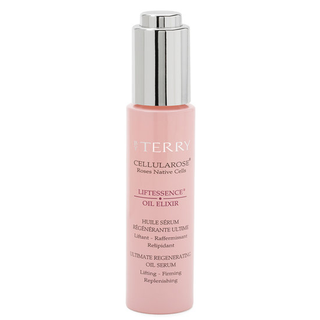
“Formulated with real rose extracts, Cellularose Liftessence Oil Elixir envelops skin in a silky-smooth layer of intense hydration.”
This product can help soften the skin and reduce its moisture loss with emollients and occlusives: caprylic/capric triglyceride, helianthus annuus seed oil.
Keep in mind that this product does not contain effective ingredients to attract water to the upper layer of the skin. This is why an additional product with humectants like glycerin or hyaluronic acid can be helpful (apply it before this product for the best results).
Anti-agingTocopherol, Ascorbyl palmitateWeak evidence
“'Lifting' and nurturing, it will leave even dry skin feeling replenished, soothed and youthful-looking.”
Effective ingredients missing or their concentration is too low.
Can it cause trouble?
Irritancy13 strong irritants: Parfum, Geraniol + 11 more — patch-test recommendedHigh risk
Comedogenic2 ingredients rated 2 or more on the 0–5 pore-clogging scale2 flagged
User reviews
Be the first — your take helps the next person decide.
Ingredients
Filter by role to see what each ingredient is doing.
Isopropyl isostearate~22–33%
- Irritation risk
- Low
- Comedogenicity
- 3/5
An emollient that helps soften the skin
More about Isopropyl isostearateRosa canina fruit oil~5.8–8.6%
- Irritation risk
- Medium
A great emollient. Contains vitamin E (tocopherol) which may give it some anti-oxidant properties. Can contain volatile compounds and can be irritating
More about Rosa canina fruit oilCetearyl isononanoate~4.9–7.3%
- Irritation risk
- Low
An emollient that softens the skin and helps prevent moisture loss.
More about Cetearyl isononanoatePropylheptyl caprylate~3.7–5.6%
- Irritation risk
- Low
Helps soften the upper layer of the skin
More about Propylheptyl caprylateCocoglycerides~2.8–4.3%
- Irritation risk
- High
Help soften the upper layer of the skin and make it easier for oil and water mix together. Recently, a rising number of allergic reactions to cocoglycerides and other coconut-derived surfactants has been reported. As there is a significant overlap between frequent irritants and allergens, we flag this ingredient for attention of those with very sensitive, reactive skin
More about CocoglyceridesParfum~1.8–2.8%
- Irritation risk
- High
An aromatic blend of unspecified and possibly irritating ingredients
More about ParfumHelianthus annuus seed oil~1.8–2.7%
- Irritation risk
- Low
A great emollient due to its high linoleic acid content. One of the most effective plant oils in helping skin hydration and repairing skin barrier function
More about Helianthus annuus seed oilCaprylic/capric triglyceride~1.5–2.3%
- Irritation risk
- Medium
A good mix of fatty acids that forms a protective layer on the skin. Improves the shelf life of products. Derived from coconut and glycerin
More about Caprylic/capric triglycerideGeraniol~1–1.5%
Rosa damascena leaf cell extract~0.85–1.25%
- Irritation risk
- High
Tocopherol~0.55–1.25%
- Irritation risk
- Low
Pure form of vitamin E. Can help moisturise and protect the skin from free radicals. Often used to help stabilise other ingredients or the formula itself
More about TocopherolCitronellol~0.45–1%
Lecithin~0.5–1.1%
- Irritation risk
- Low
Used mostly for creating emulsions - helping oil and water mix together. Helps soften the upper layer of the skin
More about LecithinAscorbyl palmitate~0.4–0.9%
- Irritation risk
- Medium
Being a lipid soluble form of vitamin C, it is more stable and can penetrate the skin better than L-Ascorbic acid. It is effective in protecting the skin from free radicals, as well as evening the skin tone, but is less effective in stimulating collagen production compared to L-Ascorbic acid.
More about Ascorbyl palmitateEugenol~0.35–0.85%
Glyceryl stearate~0.4–1%
- Irritation risk
- Low
An emollient that softens the skin and forms a protective layer on its surface. Helps water and oil mix together
More about Glyceryl stearateRosa centifolia flower extract~0.35–0.8%
- Irritation risk
- High
Contains essential oil. Can be irritating
More about Rosa centifolia flower extractRosa gallica flower extract~0.35–0.75%
- Irritation risk
- High
Glyceryl oleate~0.3–0.75%
- Irritation risk
- High
Helps oil and water mix together. Can be irritating
More about Glyceryl oleateLimonene~0.15–0.6%
- Irritation risk
- High
A common frangrance that can easily irritate skin, especially if exposed to air, light or heat
More about LimoneneLinalool~0.15–0.55%
Citral~0.1–0.5%
Citric acid~0.1–0.45%
- Irritation risk
- Medium
Can work as an exfoliant but is typically used to adjust the product pH
More about Citric acidGlycine soja oil~0.15–0.55%
- Irritation risk
- Medium
- Comedogenicity
- 2/5
A good emollient that helps soften the skin and helps repair its barrier function. It can clog pores if used in high concentrations.
More about Glycine soja oilRosa alba flower extract~0.15–0.55%
- Irritation risk
- High
Rosa canina flower extract~0.1–0.3%
- Irritation risk
- High
Rosa hybrid flower extract~0.1–0.35%
- Irritation risk
- High
Ingredient list view
Isopropyl isostearate, Rosa canina fruit oil, Cetearyl isononanoate, Propylheptyl caprylate, Cocoglycerides, Parfum, Helianthus annuus seed oil, Caprylic/capric triglyceride, Geraniol, Rosa damascena leaf cell extract, Tocopherol, Citronellol, Lecithin, Ascorbyl palmitate, Eugenol, Glyceryl stearate, Rosa centifolia flower extract, Rosa gallica flower extract, Glyceryl oleate, Limonene, Linalool, Citral, Citric acid, Glycine soja oil, Rosa alba flower extract, Rosa canina flower extract, Rosa hybrid flower extract
Compare prices
Retailers ranked by price — lowest first.


Sources cited in this review
Every concentration estimate and effectiveness label is anchored to one of these 8 studies and safety reviews.
- 1
- 2
- 3Effect of topically applied lipids on surfactant-irritated skinonlinelibrary.wiley.com
- 4
- 5
- 6Vitamin E in dermatologyncbi.nlm.nih.gov

Affiliate links · As an Amazon Associate, WIMJ earns from qualifying purchases.