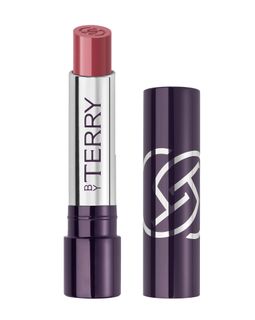
BY TERRY Hyaluronic Hydra-Balm Sexy Nude
Works for
1 of 1 advertised claim delivered
Moisturizing9 ingredients credited for this claimGood evidence
“Hyaluronic Hydra-Balm Sexy Nude”
This product can help improve hydration of the skin with the two types of ingredients.
The first type is called “humectants”:
these ingredients help attract water.
When humectants are on the surface of the skin, they “pull in” the moisture from the outside environment, or from
within deeper layers of the skin. The following ingredients in this product do the job:
sodium hyaluronate, butylene glycol.
This product also contains ingredients called “occlusives”. They help reduce the speed with which our skin loses moisture to the outside environment. These ingredients also help soften the upper layer of the skin, so it feels less tight and nicer to the touch. The following ingredients in this product do the job: cera microcristallina, diisostearyl malate.
Can it cause trouble?
Irritancy5 strong irritants: Parfum, Aroma + 3 more — patch-test recommendedHigh risk
Comedogenic12 ingredients rated 2 or more on the 0–5 pore-clogging scale12 flagged
User reviews
Be the first — your take helps the next person decide.
Ingredients
Filter by role to see what each ingredient is doing.
Pentaerythrityl tetraisostearate~22–34%
- Irritation risk
- Medium
Used to create a thicker product consistency
More about Pentaerythrityl tetraisostearateIsostearyl isostearate~4–6%
- Irritation risk
- Medium
- Comedogenicity
- 3/5
Helps soften the upper layer of the skin and improve the product texture. It can be comedogenic
More about Isostearyl isostearateDiisostearyl malate~4.6–7%
- Irritation risk
- Medium
Helps to soften the upper layer of the skin
More about Diisostearyl malatePolybutene~3.6–5.4%
Octyldodecanol~2.7–4.1%
- Irritation risk
- Low
An emollient that helps to soften the skin and create a pleasant product texture and stabilize the formulation
More about OctyldodecanolEthylhexyl methoxycinnamate~2.5–3.7%
- Irritation risk
- High
Octinoxate. When used in higher concentrations, works as a sunscreen protecting the skin from UVB rays. When used in lower concentration, helps to preserve the product formulation. Is shown to be harmful to coral reefs - consider avoiding bathing in coral reef areas when wearing a product with this ingredient. It can be irritating
More about Ethylhexyl methoxycinnamateSynthetic wax~1.5–2.3%
- Irritation risk
- Low
Used to stabilize product formulations and thicken product consistency
More about Synthetic waxVp/hexadecene copolymer~1.4–2.1%
- Irritation risk
- Low
Creates a nice product texture and can support water-resistance of sunscreens
More about Vp/hexadecene copolymerEuphorbia cerifera wax~1.4–2.1%
- Irritation risk
- Low
Ci 77891~0.85–1.25%
- Irritation risk
- Low
Titanium dioxide~0.95–1.4%
- Irritation risk
- Low
Works as a UV filter when used in high concentrations. It is photostable and is effective mostly against the UVB light, with some protection in the UVA range. In small concentrations, used for its ability to improve the color of cosmetic products. Is usually well tolerated by the skin
More about Titanium dioxideButyl methoxydibenzoylmethane~0.55–1.35%
- Irritation risk
- Medium
Avobenzone. An organic, or so-called "chemical" UV filter. Protects against both UVA and UVB rays. Needs to be combined with other filters in a formulation to be stable.
More about Butyl methoxydibenzoylmethaneCera microcristallina~0.5–1.15%
- Irritation risk
- Low
Helps to soften the upper layer of the skin, reduce water loss from its surface and create a thicker product consistency
More about Cera microcristallinaMicrocrystalline wax~0.4–0.9%
Cera microcristallina~0.4–0.9%
- Irritation risk
- Low
Helps to soften the upper layer of the skin, reduce water loss from its surface and create a thicker product consistency
More about Cera microcristallinaOzokerite~0.3–0.75%
Ethylhexyl palmitate~0.35–0.8%
- Irritation risk
- Low
- Comedogenicity
- 3/5
An emollient that helps soften the skin and create a nice product texture
More about Ethylhexyl palmitateMica~0.3–0.7%
- Irritation risk
- Low
Creates an illusion of smoother and more radiant skin tone. Adds shimmer to the skin by reflecting light
More about MicaParfum~0.15–0.6%
- Irritation risk
- High
An aromatic blend of unspecified and possibly irritating ingredients
More about ParfumCi 77491~0.15–0.6%
- Irritation risk
- Low
A red colorant made of iron oxide. Typically is not irritating
More about Ci 77491Iron oxides~0.15–0.65%
- Irritation risk
- Low
An umbrella term for the following three colorants: CI 77491, CI 77492, CI 77499. They might be able to offer some protection against visible light, but the degree of the protection is not clear
More about Iron oxidesAroma~0.15–0.55%
Parfum~0.1–0.45%
- Irritation risk
- High
An aromatic blend of unspecified and possibly irritating ingredients
More about ParfumCi 77492~0.15–0.5%
Iron oxides~0.1–0.45%
- Irritation risk
- Low
An umbrella term for the following three colorants: CI 77491, CI 77492, CI 77499. They might be able to offer some protection against visible light, but the degree of the protection is not clear
More about Iron oxidesPhenoxyethanol~0.15–0.55%
- Irritation risk
- Low
A preservative. It helps prevent bacterial growth in cosmetic products
More about PhenoxyethanolCi 77499~0.15–0.5%
Iron oxides~0.1–0.45%
- Irritation risk
- Low
An umbrella term for the following three colorants: CI 77491, CI 77492, CI 77499. They might be able to offer some protection against visible light, but the degree of the protection is not clear
More about Iron oxidesTocopheryl acetate~0.15–0.55%
- Irritation risk
- Medium
A more stable but less bio-available form of vitamin E compared to Tocopherol. Might help moisturize and protect the skin from free radicals, but mostly used in low concentrations to stabilize other ingredients.
More about Tocopheryl acetateAlpha-isomethyl ionone~0.1–0.45%
- Irritation risk
- High
A fragrance. Potential allergen and can be irritating
More about Alpha-isomethyl iononeLecithin~0.15–0.7%
- Irritation risk
- Low
Used mostly for creating emulsions - helping oil and water mix together. Helps soften the upper layer of the skin
More about LecithinSilica dimethyl silylate~0.15–0.65%
Citronellol~0.1–0.45%
Geraniol~0.1–0.45%
Butylene glycol~0.1–0.5%
- Irritation risk
- Low
Used to create a nice product texture and help delivery of other ingredients. Might be somewhat helpful in attracting water to the upper layer of the skin
More about Butylene glycolBht~0.1–0.5%
Tocopherol~0.15–0.5%
- Irritation risk
- Low
Pure form of vitamin E. Can help moisturise and protect the skin from free radicals. Often used to help stabilise other ingredients or the formula itself
More about TocopherolCaprylyl glycol~0.15–0.6%
- Irritation risk
- Medium
Helps preserve products and creates a nice product texture
More about Caprylyl glycolAscorbyl palmitate~0.1–0.5%
- Irritation risk
- Medium
Being a lipid soluble form of vitamin C, it is more stable and can penetrate the skin better than L-Ascorbic acid. It is effective in protecting the skin from free radicals, as well as evening the skin tone, but is less effective in stimulating collagen production compared to L-Ascorbic acid.
More about Ascorbyl palmitateSodium hyaluronate~0.1–0.5%
- Irritation risk
- Low
One of the best moisturizing ingredients. Attracts water into the upper layer of the skin
More about Sodium hyaluronateHexylene glycol~0.1–0.5%
- Irritation risk
- Medium
Helps create a more spreadable product texture
More about Hexylene glycolSilica~0.2–0.75%
Citric acid~0.1–0.5%
- Irritation risk
- Medium
Can work as an exfoliant but is typically used to adjust the product pH
More about Citric acidTin oxide~0.2–0.75%
- Irritation risk
- Low
A colorant that can add a pearl-like appearance to the formulation
More about Tin oxidePentaerythrityl tetraisostearate~0.2–0.7%
- Irritation risk
- Medium
Used to create a thicker product consistency
More about Pentaerythrityl tetraisostearateIsostearyl isostearate~0.15–0.65%
- Irritation risk
- Medium
- Comedogenicity
- 3/5
Helps soften the upper layer of the skin and improve the product texture. It can be comedogenic
More about Isostearyl isostearateDiisostearyl malate~0.15–0.65%
- Irritation risk
- Medium
Helps to soften the upper layer of the skin
More about Diisostearyl malatePolybutene~0.15–0.55%
Octyldodecanol~0.15–0.6%
- Irritation risk
- Low
An emollient that helps to soften the skin and create a pleasant product texture and stabilize the formulation
More about OctyldodecanolEthylhexyl methoxycinnamate~0.3–0.75%
- Irritation risk
- High
Octinoxate. When used in higher concentrations, works as a sunscreen protecting the skin from UVB rays. When used in lower concentration, helps to preserve the product formulation. Is shown to be harmful to coral reefs - consider avoiding bathing in coral reef areas when wearing a product with this ingredient. It can be irritating
More about Ethylhexyl methoxycinnamateSynthetic wax~0.15–0.65%
- Irritation risk
- Low
Used to stabilize product formulations and thicken product consistency
More about Synthetic waxVp/hexadecene copolymer~0.2–0.75%
- Irritation risk
- Low
Creates a nice product texture and can support water-resistance of sunscreens
More about Vp/hexadecene copolymerCi 77891~0.1–0.45%
- Irritation risk
- Low
Titanium dioxide~0.2–0.7%
- Irritation risk
- Low
Works as a UV filter when used in high concentrations. It is photostable and is effective mostly against the UVB light, with some protection in the UVA range. In small concentrations, used for its ability to improve the color of cosmetic products. Is usually well tolerated by the skin
More about Titanium dioxideEuphorbia cerifera wax~0.2–0.75%
- Irritation risk
- Low
Mica~0.15–0.65%
- Irritation risk
- Low
Creates an illusion of smoother and more radiant skin tone. Adds shimmer to the skin by reflecting light
More about MicaButyl methoxydibenzoylmethane~0.3–0.75%
- Irritation risk
- Medium
Avobenzone. An organic, or so-called "chemical" UV filter. Protects against both UVA and UVB rays. Needs to be combined with other filters in a formulation to be stable.
More about Butyl methoxydibenzoylmethaneCera microcristallina~0.2–0.7%
- Irritation risk
- Low
Helps to soften the upper layer of the skin, reduce water loss from its surface and create a thicker product consistency
More about Cera microcristallinaMicrocrystalline wax~0.15–0.6%
Cera microcristallina~0.2–0.7%
- Irritation risk
- Low
Helps to soften the upper layer of the skin, reduce water loss from its surface and create a thicker product consistency
More about Cera microcristallinaOzokerite~0.15–0.55%
Ethylhexyl palmitate~0.15–0.65%
- Irritation risk
- Low
- Comedogenicity
- 3/5
An emollient that helps soften the skin and create a nice product texture
More about Ethylhexyl palmitateCi 77492~0.15–0.5%
Iron oxides~0.1–0.45%
- Irritation risk
- Low
An umbrella term for the following three colorants: CI 77491, CI 77492, CI 77499. They might be able to offer some protection against visible light, but the degree of the protection is not clear
More about Iron oxidesParfum~0.1–0.45%
- Irritation risk
- High
An aromatic blend of unspecified and possibly irritating ingredients
More about ParfumAroma~0.15–0.5%
Parfum~0.1–0.45%
- Irritation risk
- High
An aromatic blend of unspecified and possibly irritating ingredients
More about ParfumCi 15850~0.15–0.5%
Phenoxyethanol~0.15–0.55%
- Irritation risk
- Low
A preservative. It helps prevent bacterial growth in cosmetic products
More about PhenoxyethanolTocopheryl acetate~0.15–0.55%
- Irritation risk
- Medium
A more stable but less bio-available form of vitamin E compared to Tocopherol. Might help moisturize and protect the skin from free radicals, but mostly used in low concentrations to stabilize other ingredients.
More about Tocopheryl acetateAlpha-isomethyl ionone~0.1–0.45%
- Irritation risk
- High
A fragrance. Potential allergen and can be irritating
More about Alpha-isomethyl iononeCi 77491~0.15–0.5%
- Irritation risk
- Low
A red colorant made of iron oxide. Typically is not irritating
More about Ci 77491Iron oxides~0.1–0.45%
- Irritation risk
- Low
An umbrella term for the following three colorants: CI 77491, CI 77492, CI 77499. They might be able to offer some protection against visible light, but the degree of the protection is not clear
More about Iron oxidesCi 77499~0.15–0.5%
Iron oxides~0.1–0.45%
- Irritation risk
- Low
An umbrella term for the following three colorants: CI 77491, CI 77492, CI 77499. They might be able to offer some protection against visible light, but the degree of the protection is not clear
More about Iron oxidesLecithin~0.15–0.7%
- Irritation risk
- Low
Used mostly for creating emulsions - helping oil and water mix together. Helps soften the upper layer of the skin
More about LecithinSilica dimethyl silylate~0.15–0.65%
Tin oxide~0.2–0.75%
- Irritation risk
- Low
A colorant that can add a pearl-like appearance to the formulation
More about Tin oxideCitronellol~0.1–0.45%
Geraniol~0.1–0.45%
Butylene glycol~0.1–0.5%
- Irritation risk
- Low
Used to create a nice product texture and help delivery of other ingredients. Might be somewhat helpful in attracting water to the upper layer of the skin
More about Butylene glycolBht~0.1–0.5%
Tocopherol~0.15–0.5%
- Irritation risk
- Low
Pure form of vitamin E. Can help moisturise and protect the skin from free radicals. Often used to help stabilise other ingredients or the formula itself
More about TocopherolCaprylyl glycol~0.15–0.6%
- Irritation risk
- Medium
Helps preserve products and creates a nice product texture
More about Caprylyl glycolAscorbyl palmitate~0.1–0.5%
- Irritation risk
- Medium
Being a lipid soluble form of vitamin C, it is more stable and can penetrate the skin better than L-Ascorbic acid. It is effective in protecting the skin from free radicals, as well as evening the skin tone, but is less effective in stimulating collagen production compared to L-Ascorbic acid.
More about Ascorbyl palmitateSodium hyaluronate~0.1–0.5%
- Irritation risk
- Low
One of the best moisturizing ingredients. Attracts water into the upper layer of the skin
More about Sodium hyaluronateHexylene glycol~0.1–0.5%
- Irritation risk
- Medium
Helps create a more spreadable product texture
More about Hexylene glycolCitric acid~0.1–0.5%
- Irritation risk
- Medium
Can work as an exfoliant but is typically used to adjust the product pH
More about Citric acidSilica~0.2–0.75%
Pentaerythrityl tetraisostearate~0.2–0.7%
- Irritation risk
- Medium
Used to create a thicker product consistency
More about Pentaerythrityl tetraisostearateIsostearyl isostearate~0.15–0.65%
- Irritation risk
- Medium
- Comedogenicity
- 3/5
Helps soften the upper layer of the skin and improve the product texture. It can be comedogenic
More about Isostearyl isostearateDiisostearyl malate~0.15–0.65%
- Irritation risk
- Medium
Helps to soften the upper layer of the skin
More about Diisostearyl malatePolybutene~0.15–0.55%
Octyldodecanol~0.15–0.6%
- Irritation risk
- Low
An emollient that helps to soften the skin and create a pleasant product texture and stabilize the formulation
More about OctyldodecanolEthylhexyl methoxycinnamate~0.3–0.75%
- Irritation risk
- High
Octinoxate. When used in higher concentrations, works as a sunscreen protecting the skin from UVB rays. When used in lower concentration, helps to preserve the product formulation. Is shown to be harmful to coral reefs - consider avoiding bathing in coral reef areas when wearing a product with this ingredient. It can be irritating
More about Ethylhexyl methoxycinnamateSynthetic wax~0.15–0.65%
- Irritation risk
- Low
Used to stabilize product formulations and thicken product consistency
More about Synthetic waxVp/hexadecene copolymer~0.2–0.75%
- Irritation risk
- Low
Creates a nice product texture and can support water-resistance of sunscreens
More about Vp/hexadecene copolymerEuphorbia cerifera wax~0.2–0.75%
- Irritation risk
- Low
Ci 77891~0.1–0.45%
- Irritation risk
- Low
Titanium dioxide~0.2–0.7%
- Irritation risk
- Low
Works as a UV filter when used in high concentrations. It is photostable and is effective mostly against the UVB light, with some protection in the UVA range. In small concentrations, used for its ability to improve the color of cosmetic products. Is usually well tolerated by the skin
More about Titanium dioxideButyl methoxydibenzoylmethane~0.3–0.75%
- Irritation risk
- Medium
Avobenzone. An organic, or so-called "chemical" UV filter. Protects against both UVA and UVB rays. Needs to be combined with other filters in a formulation to be stable.
More about Butyl methoxydibenzoylmethaneCera microcristallina~0.2–0.7%
- Irritation risk
- Low
Helps to soften the upper layer of the skin, reduce water loss from its surface and create a thicker product consistency
More about Cera microcristallinaMicrocrystalline wax~0.15–0.6%
Cera microcristallina~0.2–0.7%
- Irritation risk
- Low
Helps to soften the upper layer of the skin, reduce water loss from its surface and create a thicker product consistency
More about Cera microcristallinaOzokerite~0.15–0.55%
Ethylhexyl palmitate~0.15–0.65%
- Irritation risk
- Low
- Comedogenicity
- 3/5
An emollient that helps soften the skin and create a nice product texture
More about Ethylhexyl palmitateCi 15985~0.15–0.5%
Ci 19140~0.15–0.5%
Ci 77492~0.15–0.5%
Iron oxides~0.1–0.45%
- Irritation risk
- Low
An umbrella term for the following three colorants: CI 77491, CI 77492, CI 77499. They might be able to offer some protection against visible light, but the degree of the protection is not clear
More about Iron oxidesParfum~0.1–0.45%
- Irritation risk
- High
An aromatic blend of unspecified and possibly irritating ingredients
More about ParfumCi 77491~0.15–0.5%
- Irritation risk
- Low
A red colorant made of iron oxide. Typically is not irritating
More about Ci 77491Iron oxides~0.1–0.45%
- Irritation risk
- Low
An umbrella term for the following three colorants: CI 77491, CI 77492, CI 77499. They might be able to offer some protection against visible light, but the degree of the protection is not clear
More about Iron oxidesCi 77499~0.15–0.5%
Iron oxides~0.1–0.45%
- Irritation risk
- Low
An umbrella term for the following three colorants: CI 77491, CI 77492, CI 77499. They might be able to offer some protection against visible light, but the degree of the protection is not clear
More about Iron oxidesAroma~0.15–0.5%
Parfum~0.1–0.45%
- Irritation risk
- High
An aromatic blend of unspecified and possibly irritating ingredients
More about ParfumPhenoxyethanol~0.15–0.55%
- Irritation risk
- Low
A preservative. It helps prevent bacterial growth in cosmetic products
More about PhenoxyethanolCi 15850~0.15–0.5%
Tocopheryl acetate~0.15–0.55%
- Irritation risk
- Medium
A more stable but less bio-available form of vitamin E compared to Tocopherol. Might help moisturize and protect the skin from free radicals, but mostly used in low concentrations to stabilize other ingredients.
More about Tocopheryl acetateAlpha-isomethyl ionone~0.1–0.45%
- Irritation risk
- High
A fragrance. Potential allergen and can be irritating
More about Alpha-isomethyl iononeLecithin~0.15–0.7%
- Irritation risk
- Low
Used mostly for creating emulsions - helping oil and water mix together. Helps soften the upper layer of the skin
More about LecithinSilica dimethyl silylate~0.15–0.65%
Citronellol~0.1–0.45%
Geraniol~0.1–0.45%
Butylene glycol~0.1–0.5%
- Irritation risk
- Low
Used to create a nice product texture and help delivery of other ingredients. Might be somewhat helpful in attracting water to the upper layer of the skin
More about Butylene glycolBht~0.1–0.5%
Tocopherol~0.15–0.5%
- Irritation risk
- Low
Pure form of vitamin E. Can help moisturise and protect the skin from free radicals. Often used to help stabilise other ingredients or the formula itself
More about TocopherolCaprylyl glycol~0.15–0.6%
- Irritation risk
- Medium
Helps preserve products and creates a nice product texture
More about Caprylyl glycolAscorbyl palmitate~0.1–0.5%
- Irritation risk
- Medium
Being a lipid soluble form of vitamin C, it is more stable and can penetrate the skin better than L-Ascorbic acid. It is effective in protecting the skin from free radicals, as well as evening the skin tone, but is less effective in stimulating collagen production compared to L-Ascorbic acid.
More about Ascorbyl palmitateSodium hyaluronate~0.1–0.5%
- Irritation risk
- Low
One of the best moisturizing ingredients. Attracts water into the upper layer of the skin
More about Sodium hyaluronateHexylene glycol~0.1–0.5%
- Irritation risk
- Medium
Helps create a more spreadable product texture
More about Hexylene glycolSilica~0.2–0.75%
Mica~0.15–0.65%
- Irritation risk
- Low
Creates an illusion of smoother and more radiant skin tone. Adds shimmer to the skin by reflecting light
More about MicaCitric acid~0.1–0.5%
- Irritation risk
- Medium
Can work as an exfoliant but is typically used to adjust the product pH
More about Citric acidTin oxide~0.2–0.75%
- Irritation risk
- Low
A colorant that can add a pearl-like appearance to the formulation
More about Tin oxidePentaerythrityl tetraisostearate~0.2–0.7%
- Irritation risk
- Medium
Used to create a thicker product consistency
More about Pentaerythrityl tetraisostearateIsostearyl isostearate~0.15–0.65%
- Irritation risk
- Medium
- Comedogenicity
- 3/5
Helps soften the upper layer of the skin and improve the product texture. It can be comedogenic
More about Isostearyl isostearateDiisostearyl malate~0.15–0.65%
- Irritation risk
- Medium
Helps to soften the upper layer of the skin
More about Diisostearyl malatePolybutene~0.15–0.55%
Octyldodecanol~0.15–0.6%
- Irritation risk
- Low
An emollient that helps to soften the skin and create a pleasant product texture and stabilize the formulation
More about OctyldodecanolEthylhexyl methoxycinnamate~0.3–0.75%
- Irritation risk
- High
Octinoxate. When used in higher concentrations, works as a sunscreen protecting the skin from UVB rays. When used in lower concentration, helps to preserve the product formulation. Is shown to be harmful to coral reefs - consider avoiding bathing in coral reef areas when wearing a product with this ingredient. It can be irritating
More about Ethylhexyl methoxycinnamateSynthetic wax~0.15–0.65%
- Irritation risk
- Low
Used to stabilize product formulations and thicken product consistency
More about Synthetic waxVp/hexadecene copolymer~0.2–0.75%
- Irritation risk
- Low
Creates a nice product texture and can support water-resistance of sunscreens
More about Vp/hexadecene copolymerEuphorbia cerifera wax~0.2–0.75%
- Irritation risk
- Low
Ci 77891~0.1–0.45%
- Irritation risk
- Low
Titanium dioxide~0.2–0.7%
- Irritation risk
- Low
Works as a UV filter when used in high concentrations. It is photostable and is effective mostly against the UVB light, with some protection in the UVA range. In small concentrations, used for its ability to improve the color of cosmetic products. Is usually well tolerated by the skin
More about Titanium dioxideButyl methoxydibenzoylmethane~0.3–0.75%
- Irritation risk
- Medium
Avobenzone. An organic, or so-called "chemical" UV filter. Protects against both UVA and UVB rays. Needs to be combined with other filters in a formulation to be stable.
More about Butyl methoxydibenzoylmethaneCera microcristallina~0.2–0.7%
- Irritation risk
- Low
Helps to soften the upper layer of the skin, reduce water loss from its surface and create a thicker product consistency
More about Cera microcristallinaMicrocrystalline wax~0.15–0.6%
Cera microcristallina~0.2–0.7%
- Irritation risk
- Low
Helps to soften the upper layer of the skin, reduce water loss from its surface and create a thicker product consistency
More about Cera microcristallinaOzokerite~0.15–0.55%
Ci 77491~0.15–0.5%
- Irritation risk
- Low
A red colorant made of iron oxide. Typically is not irritating
More about Ci 77491Iron oxides~0.1–0.45%
- Irritation risk
- Low
An umbrella term for the following three colorants: CI 77491, CI 77492, CI 77499. They might be able to offer some protection against visible light, but the degree of the protection is not clear
More about Iron oxidesEthylhexyl palmitate~0.15–0.65%
- Irritation risk
- Low
- Comedogenicity
- 3/5
An emollient that helps soften the skin and create a nice product texture
More about Ethylhexyl palmitateParfum~0.1–0.45%
- Irritation risk
- High
An aromatic blend of unspecified and possibly irritating ingredients
More about ParfumCi 77492~0.15–0.5%
Iron oxides~0.1–0.45%
- Irritation risk
- Low
An umbrella term for the following three colorants: CI 77491, CI 77492, CI 77499. They might be able to offer some protection against visible light, but the degree of the protection is not clear
More about Iron oxidesCi 15850~0.15–0.5%
Aroma~0.15–0.5%
Parfum~0.1–0.45%
- Irritation risk
- High
An aromatic blend of unspecified and possibly irritating ingredients
More about ParfumPhenoxyethanol~0.15–0.55%
- Irritation risk
- Low
A preservative. It helps prevent bacterial growth in cosmetic products
More about PhenoxyethanolCi 77499~0.15–0.5%
Iron oxides~0.1–0.45%
- Irritation risk
- Low
An umbrella term for the following three colorants: CI 77491, CI 77492, CI 77499. They might be able to offer some protection against visible light, but the degree of the protection is not clear
More about Iron oxidesTocopheryl acetate~0.15–0.55%
- Irritation risk
- Medium
A more stable but less bio-available form of vitamin E compared to Tocopherol. Might help moisturize and protect the skin from free radicals, but mostly used in low concentrations to stabilize other ingredients.
More about Tocopheryl acetateAlpha-isomethyl ionone~0.1–0.45%
- Irritation risk
- High
A fragrance. Potential allergen and can be irritating
More about Alpha-isomethyl iononeLecithin~0.15–0.7%
- Irritation risk
- Low
Used mostly for creating emulsions - helping oil and water mix together. Helps soften the upper layer of the skin
More about LecithinSilica dimethyl silylate~0.15–0.65%
Citronellol~0.1–0.45%
Geraniol~0.1–0.45%
Butylene glycol~0.1–0.5%
- Irritation risk
- Low
Used to create a nice product texture and help delivery of other ingredients. Might be somewhat helpful in attracting water to the upper layer of the skin
More about Butylene glycolBht~0.1–0.5%
Tocopherol~0.15–0.5%
- Irritation risk
- Low
Pure form of vitamin E. Can help moisturise and protect the skin from free radicals. Often used to help stabilise other ingredients or the formula itself
More about TocopherolCaprylyl glycol~0.15–0.6%
- Irritation risk
- Medium
Helps preserve products and creates a nice product texture
More about Caprylyl glycolAscorbyl palmitate~0.1–0.5%
- Irritation risk
- Medium
Being a lipid soluble form of vitamin C, it is more stable and can penetrate the skin better than L-Ascorbic acid. It is effective in protecting the skin from free radicals, as well as evening the skin tone, but is less effective in stimulating collagen production compared to L-Ascorbic acid.
More about Ascorbyl palmitateSodium hyaluronate~0.1–0.5%
- Irritation risk
- Low
One of the best moisturizing ingredients. Attracts water into the upper layer of the skin
More about Sodium hyaluronateHexylene glycol~0.1–0.5%
- Irritation risk
- Medium
Helps create a more spreadable product texture
More about Hexylene glycolCitric acid~0.1–0.5%
- Irritation risk
- Medium
Can work as an exfoliant but is typically used to adjust the product pH
More about Citric acidSilica~0.2–0.75%
Mica~0.15–0.65%
- Irritation risk
- Low
Creates an illusion of smoother and more radiant skin tone. Adds shimmer to the skin by reflecting light
More about MicaTin oxide~0.2–0.75%
- Irritation risk
- Low
A colorant that can add a pearl-like appearance to the formulation
More about Tin oxidePentaerythrityl tetraisostearate~0.2–0.7%
- Irritation risk
- Medium
Used to create a thicker product consistency
More about Pentaerythrityl tetraisostearateIsostearyl isostearate~0.15–0.65%
- Irritation risk
- Medium
- Comedogenicity
- 3/5
Helps soften the upper layer of the skin and improve the product texture. It can be comedogenic
More about Isostearyl isostearateDiisostearyl malate~0.15–0.65%
- Irritation risk
- Medium
Helps to soften the upper layer of the skin
More about Diisostearyl malatePolybutene~0.15–0.55%
Octyldodecanol~0.15–0.6%
- Irritation risk
- Low
An emollient that helps to soften the skin and create a pleasant product texture and stabilize the formulation
More about OctyldodecanolEthylhexyl methoxycinnamate~0.3–0.75%
- Irritation risk
- High
Octinoxate. When used in higher concentrations, works as a sunscreen protecting the skin from UVB rays. When used in lower concentration, helps to preserve the product formulation. Is shown to be harmful to coral reefs - consider avoiding bathing in coral reef areas when wearing a product with this ingredient. It can be irritating
More about Ethylhexyl methoxycinnamateSynthetic wax~0.15–0.65%
- Irritation risk
- Low
Used to stabilize product formulations and thicken product consistency
More about Synthetic waxVp/hexadecene copolymer~0.2–0.75%
- Irritation risk
- Low
Creates a nice product texture and can support water-resistance of sunscreens
More about Vp/hexadecene copolymerEuphorbia cerifera wax~0.2–0.75%
- Irritation risk
- Low
Ci 77891~0.1–0.45%
- Irritation risk
- Low
Titanium dioxide~0.2–0.7%
- Irritation risk
- Low
Works as a UV filter when used in high concentrations. It is photostable and is effective mostly against the UVB light, with some protection in the UVA range. In small concentrations, used for its ability to improve the color of cosmetic products. Is usually well tolerated by the skin
More about Titanium dioxideButyl methoxydibenzoylmethane~0.3–0.75%
- Irritation risk
- Medium
Avobenzone. An organic, or so-called "chemical" UV filter. Protects against both UVA and UVB rays. Needs to be combined with other filters in a formulation to be stable.
More about Butyl methoxydibenzoylmethaneCi 77491~0.15–0.5%
- Irritation risk
- Low
A red colorant made of iron oxide. Typically is not irritating
More about Ci 77491Iron oxides~0.1–0.45%
- Irritation risk
- Low
An umbrella term for the following three colorants: CI 77491, CI 77492, CI 77499. They might be able to offer some protection against visible light, but the degree of the protection is not clear
More about Iron oxidesCi 77492~0.15–0.5%
Iron oxides~0.1–0.45%
- Irritation risk
- Low
An umbrella term for the following three colorants: CI 77491, CI 77492, CI 77499. They might be able to offer some protection against visible light, but the degree of the protection is not clear
More about Iron oxidesCera microcristallina~0.2–0.7%
- Irritation risk
- Low
Helps to soften the upper layer of the skin, reduce water loss from its surface and create a thicker product consistency
More about Cera microcristallinaMicrocrystalline wax~0.15–0.6%
Cera microcristallina~0.2–0.7%
- Irritation risk
- Low
Helps to soften the upper layer of the skin, reduce water loss from its surface and create a thicker product consistency
More about Cera microcristallinaOzokerite~0.15–0.55%
Ethylhexyl palmitate~0.15–0.65%
- Irritation risk
- Low
- Comedogenicity
- 3/5
An emollient that helps soften the skin and create a nice product texture
More about Ethylhexyl palmitateParfum~0.1–0.45%
- Irritation risk
- High
An aromatic blend of unspecified and possibly irritating ingredients
More about ParfumCi 15850~0.15–0.5%
Aroma~0.15–0.5%
Parfum~0.1–0.45%
- Irritation risk
- High
An aromatic blend of unspecified and possibly irritating ingredients
More about ParfumCi 77499~0.15–0.5%
Iron oxides~0.1–0.45%
- Irritation risk
- Low
An umbrella term for the following three colorants: CI 77491, CI 77492, CI 77499. They might be able to offer some protection against visible light, but the degree of the protection is not clear
More about Iron oxidesPhenoxyethanol~0.15–0.55%
- Irritation risk
- Low
A preservative. It helps prevent bacterial growth in cosmetic products
More about PhenoxyethanolTocopheryl acetate~0.15–0.55%
- Irritation risk
- Medium
A more stable but less bio-available form of vitamin E compared to Tocopherol. Might help moisturize and protect the skin from free radicals, but mostly used in low concentrations to stabilize other ingredients.
More about Tocopheryl acetateAlpha-isomethyl ionone~0.1–0.45%
- Irritation risk
- High
A fragrance. Potential allergen and can be irritating
More about Alpha-isomethyl iononeLecithin~0.15–0.7%
- Irritation risk
- Low
Used mostly for creating emulsions - helping oil and water mix together. Helps soften the upper layer of the skin
More about LecithinSilica dimethyl silylate~0.15–0.65%
Citronellol~0.1–0.45%
Geraniol~0.1–0.45%
Butylene glycol~0.1–0.5%
- Irritation risk
- Low
Used to create a nice product texture and help delivery of other ingredients. Might be somewhat helpful in attracting water to the upper layer of the skin
More about Butylene glycolBht~0.1–0.5%
Tocopherol~0.15–0.5%
- Irritation risk
- Low
Pure form of vitamin E. Can help moisturise and protect the skin from free radicals. Often used to help stabilise other ingredients or the formula itself
More about TocopherolCaprylyl glycol~0.15–0.6%
- Irritation risk
- Medium
Helps preserve products and creates a nice product texture
More about Caprylyl glycolAscorbyl palmitate~0.1–0.5%
- Irritation risk
- Medium
Being a lipid soluble form of vitamin C, it is more stable and can penetrate the skin better than L-Ascorbic acid. It is effective in protecting the skin from free radicals, as well as evening the skin tone, but is less effective in stimulating collagen production compared to L-Ascorbic acid.
More about Ascorbyl palmitateSodium hyaluronate~0.1–0.5%
- Irritation risk
- Low
One of the best moisturizing ingredients. Attracts water into the upper layer of the skin
More about Sodium hyaluronateHexylene glycol~0.1–0.5%
- Irritation risk
- Medium
Helps create a more spreadable product texture
More about Hexylene glycolSilica~0.2–0.75%
Mica~0.15–0.65%
- Irritation risk
- Low
Creates an illusion of smoother and more radiant skin tone. Adds shimmer to the skin by reflecting light
More about MicaCitric acid~0.1–0.5%
- Irritation risk
- Medium
Can work as an exfoliant but is typically used to adjust the product pH
More about Citric acidTin oxide~0.2–0.75%
- Irritation risk
- Low
A colorant that can add a pearl-like appearance to the formulation
More about Tin oxidePentaerythrityl tetraisostearate~0.2–0.7%
- Irritation risk
- Medium
Used to create a thicker product consistency
More about Pentaerythrityl tetraisostearateIsostearyl isostearate~0.15–0.65%
- Irritation risk
- Medium
- Comedogenicity
- 3/5
Helps soften the upper layer of the skin and improve the product texture. It can be comedogenic
More about Isostearyl isostearateDiisostearyl malate~0.15–0.65%
- Irritation risk
- Medium
Helps to soften the upper layer of the skin
More about Diisostearyl malatePolybutene~0.15–0.55%
Octyldodecanol~0.15–0.6%
- Irritation risk
- Low
An emollient that helps to soften the skin and create a pleasant product texture and stabilize the formulation
More about OctyldodecanolEthylhexyl methoxycinnamate~0.3–0.75%
- Irritation risk
- High
Octinoxate. When used in higher concentrations, works as a sunscreen protecting the skin from UVB rays. When used in lower concentration, helps to preserve the product formulation. Is shown to be harmful to coral reefs - consider avoiding bathing in coral reef areas when wearing a product with this ingredient. It can be irritating
More about Ethylhexyl methoxycinnamateSynthetic wax~0.15–0.65%
- Irritation risk
- Low
Used to stabilize product formulations and thicken product consistency
More about Synthetic waxVp/hexadecene copolymer~0.2–0.75%
- Irritation risk
- Low
Creates a nice product texture and can support water-resistance of sunscreens
More about Vp/hexadecene copolymerEuphorbia cerifera wax~0.2–0.75%
- Irritation risk
- Low
Ci 77491~0.15–0.5%
- Irritation risk
- Low
A red colorant made of iron oxide. Typically is not irritating
More about Ci 77491Iron oxides~0.1–0.45%
- Irritation risk
- Low
An umbrella term for the following three colorants: CI 77491, CI 77492, CI 77499. They might be able to offer some protection against visible light, but the degree of the protection is not clear
More about Iron oxidesCi 77891~0.1–0.45%
- Irritation risk
- Low
Titanium dioxide~0.2–0.7%
- Irritation risk
- Low
Works as a UV filter when used in high concentrations. It is photostable and is effective mostly against the UVB light, with some protection in the UVA range. In small concentrations, used for its ability to improve the color of cosmetic products. Is usually well tolerated by the skin
More about Titanium dioxideButyl methoxydibenzoylmethane~0.3–0.75%
- Irritation risk
- Medium
Avobenzone. An organic, or so-called "chemical" UV filter. Protects against both UVA and UVB rays. Needs to be combined with other filters in a formulation to be stable.
More about Butyl methoxydibenzoylmethaneCera microcristallina~0.2–0.7%
- Irritation risk
- Low
Helps to soften the upper layer of the skin, reduce water loss from its surface and create a thicker product consistency
More about Cera microcristallinaMicrocrystalline wax~0.15–0.6%
Cera microcristallina~0.2–0.7%
- Irritation risk
- Low
Helps to soften the upper layer of the skin, reduce water loss from its surface and create a thicker product consistency
More about Cera microcristallinaOzokerite~0.15–0.55%
Ethylhexyl palmitate~0.15–0.65%
- Irritation risk
- Low
- Comedogenicity
- 3/5
An emollient that helps soften the skin and create a nice product texture
More about Ethylhexyl palmitateParfum~0.1–0.45%
- Irritation risk
- High
An aromatic blend of unspecified and possibly irritating ingredients
More about ParfumCi 15850~0.15–0.5%
Aroma~0.15–0.5%
Parfum~0.1–0.45%
- Irritation risk
- High
An aromatic blend of unspecified and possibly irritating ingredients
More about ParfumPhenoxyethanol~0.15–0.5%
- Irritation risk
- Low
A preservative. It helps prevent bacterial growth in cosmetic products
More about PhenoxyethanolTocopheryl acetate~0.15–0.55%
- Irritation risk
- Medium
A more stable but less bio-available form of vitamin E compared to Tocopherol. Might help moisturize and protect the skin from free radicals, but mostly used in low concentrations to stabilize other ingredients.
More about Tocopheryl acetateAlpha-isomethyl ionone~0.1–0.45%
- Irritation risk
- High
A fragrance. Potential allergen and can be irritating
More about Alpha-isomethyl iononeLecithin~0.15–0.7%
- Irritation risk
- Low
Used mostly for creating emulsions - helping oil and water mix together. Helps soften the upper layer of the skin
More about LecithinSilica dimethyl silylate~0.15–0.65%
Citronellol~0.1–0.4%
Geraniol~0.1–0.45%
Butylene glycol~0.1–0.45%
- Irritation risk
- Low
Used to create a nice product texture and help delivery of other ingredients. Might be somewhat helpful in attracting water to the upper layer of the skin
More about Butylene glycolBht~0.1–0.45%
Tocopherol~0.1–0.45%
- Irritation risk
- Low
Pure form of vitamin E. Can help moisturise and protect the skin from free radicals. Often used to help stabilise other ingredients or the formula itself
More about TocopherolCaprylyl glycol~0.15–0.6%
- Irritation risk
- Medium
Helps preserve products and creates a nice product texture
More about Caprylyl glycolAscorbyl palmitate~0.1–0.4%
- Irritation risk
- Medium
Being a lipid soluble form of vitamin C, it is more stable and can penetrate the skin better than L-Ascorbic acid. It is effective in protecting the skin from free radicals, as well as evening the skin tone, but is less effective in stimulating collagen production compared to L-Ascorbic acid.
More about Ascorbyl palmitateSodium hyaluronate~0.1–0.35%
- Irritation risk
- Low
One of the best moisturizing ingredients. Attracts water into the upper layer of the skin
More about Sodium hyaluronateHexylene glycol~0.05–0.25%
- Irritation risk
- Medium
Helps create a more spreadable product texture
More about Hexylene glycolSilica~0.15–0.65%
Mica~0.1–0.4%
- Irritation risk
- Low
Creates an illusion of smoother and more radiant skin tone. Adds shimmer to the skin by reflecting light
More about MicaCitric acid~0.05–0.1%
- Irritation risk
- Medium
Can work as an exfoliant but is typically used to adjust the product pH
More about Citric acidTin oxide~0.1–0.45%
- Irritation risk
- Low
A colorant that can add a pearl-like appearance to the formulation
More about Tin oxideIngredient list view
Pentaerythrityl tetraisostearate, Isostearyl isostearate, Diisostearyl malate, Polybutene, Octyldodecanol, Ethylhexyl methoxycinnamate, Synthetic wax, Vp/hexadecene copolymer, Euphorbia cerifera wax, Ci 77891, Titanium dioxide, Butyl methoxydibenzoylmethane, Cera microcristallina, Microcrystalline wax, Cera microcristallina, Ozokerite, Ethylhexyl palmitate, Mica, Parfum, Ci 77491, Iron oxides, Aroma, Parfum, Ci 77492, Iron oxides, Phenoxyethanol, Ci 77499, Iron oxides, Tocopheryl acetate, Alpha-isomethyl ionone, Lecithin, Silica dimethyl silylate, Citronellol, Geraniol, Butylene glycol, Bht, Tocopherol, Caprylyl glycol, Ascorbyl palmitate, Sodium hyaluronate, Hexylene glycol, Silica, Citric acid, Tin oxide, Pentaerythrityl tetraisostearate, Isostearyl isostearate, Diisostearyl malate, Polybutene, Octyldodecanol, Ethylhexyl methoxycinnamate, Synthetic wax, Vp/hexadecene copolymer, Ci 77891, Titanium dioxide, Euphorbia cerifera wax, Mica, Butyl methoxydibenzoylmethane, Cera microcristallina, Microcrystalline wax, Cera microcristallina, Ozokerite, Ethylhexyl palmitate, Ci 77492, Iron oxides, Parfum, Aroma, Parfum, Ci 15850, Phenoxyethanol, Tocopheryl acetate, Alpha-isomethyl ionone, Ci 77491, Iron oxides, Ci 77499, Iron oxides, Lecithin, Silica dimethyl silylate, Tin oxide, Citronellol, Geraniol, Butylene glycol, Bht, Tocopherol, Caprylyl glycol, Ascorbyl palmitate, Sodium hyaluronate, Hexylene glycol, Citric acid, Silica, Pentaerythrityl tetraisostearate, Isostearyl isostearate, Diisostearyl malate, Polybutene, Octyldodecanol, Ethylhexyl methoxycinnamate, Synthetic wax, Vp/hexadecene copolymer, Euphorbia cerifera wax, Ci 77891, Titanium dioxide, Butyl methoxydibenzoylmethane, Cera microcristallina, Microcrystalline wax, Cera microcristallina, Ozokerite, Ethylhexyl palmitate, Ci 15985, Ci 19140, Ci 77492, Iron oxides, Parfum, Ci 77491, Iron oxides, Ci 77499, Iron oxides, Aroma, Parfum, Phenoxyethanol, Ci 15850, Tocopheryl acetate, Alpha-isomethyl ionone, Lecithin, Silica dimethyl silylate, Citronellol, Geraniol, Butylene glycol, Bht, Tocopherol, Caprylyl glycol, Ascorbyl palmitate, Sodium hyaluronate, Hexylene glycol, Silica, Mica, Citric acid, Tin oxide, Pentaerythrityl tetraisostearate, Isostearyl isostearate, Diisostearyl malate, Polybutene, Octyldodecanol, Ethylhexyl methoxycinnamate, Synthetic wax, Vp/hexadecene copolymer, Euphorbia cerifera wax, Ci 77891, Titanium dioxide, Butyl methoxydibenzoylmethane, Cera microcristallina, Microcrystalline wax, Cera microcristallina, Ozokerite, Ci 77491, Iron oxides, Ethylhexyl palmitate, Parfum, Ci 77492, Iron oxides, Ci 15850, Aroma, Parfum, Phenoxyethanol, Ci 77499, Iron oxides, Tocopheryl acetate, Alpha-isomethyl ionone, Lecithin, Silica dimethyl silylate, Citronellol, Geraniol, Butylene glycol, Bht, Tocopherol, Caprylyl glycol, Ascorbyl palmitate, Sodium hyaluronate, Hexylene glycol, Citric acid, Silica, Mica, Tin oxide, Pentaerythrityl tetraisostearate, Isostearyl isostearate, Diisostearyl malate, Polybutene, Octyldodecanol, Ethylhexyl methoxycinnamate, Synthetic wax, Vp/hexadecene copolymer, Euphorbia cerifera wax, Ci 77891, Titanium dioxide, Butyl methoxydibenzoylmethane, Ci 77491, Iron oxides, Ci 77492, Iron oxides, Cera microcristallina, Microcrystalline wax, Cera microcristallina, Ozokerite, Ethylhexyl palmitate, Parfum, Ci 15850, Aroma, Parfum, Ci 77499, Iron oxides, Phenoxyethanol, Tocopheryl acetate, Alpha-isomethyl ionone, Lecithin, Silica dimethyl silylate, Citronellol, Geraniol, Butylene glycol, Bht, Tocopherol, Caprylyl glycol, Ascorbyl palmitate, Sodium hyaluronate, Hexylene glycol, Silica, Mica, Citric acid, Tin oxide, Pentaerythrityl tetraisostearate, Isostearyl isostearate, Diisostearyl malate, Polybutene, Octyldodecanol, Ethylhexyl methoxycinnamate, Synthetic wax, Vp/hexadecene copolymer, Euphorbia cerifera wax, Ci 77491, Iron oxides, Ci 77891, Titanium dioxide, Butyl methoxydibenzoylmethane, Cera microcristallina, Microcrystalline wax, Cera microcristallina, Ozokerite, Ethylhexyl palmitate, Parfum, Ci 15850, Aroma, Parfum, Phenoxyethanol, Tocopheryl acetate, Alpha-isomethyl ionone, Lecithin, Silica dimethyl silylate, Citronellol, Geraniol, Butylene glycol, Bht, Tocopherol, Caprylyl glycol, Ascorbyl palmitate, Sodium hyaluronate, Hexylene glycol, Silica, Mica, Citric acid, Tin oxide
Compare prices
Retailers ranked by price — lowest first.
Affiliate links · prices updated regularly · As an Amazon Associate, WIMJ earns from qualifying purchases.
Sources cited in this review
Every concentration estimate and effectiveness label is anchored to one of these 9 studies and safety reviews.
- 1
- 2
- 3
- 4Vitamin E in dermatologyncbi.nlm.nih.gov
- 5Vitamin E and Skin Healthlpi.oregonstate.edu
- 6Hyaluronic acid: A key molecule in skin agingncbi.nlm.nih.gov

Affiliate links · As an Amazon Associate, WIMJ earns from qualifying purchases.