Works for:
based on ingredients and %- Moisturizing
Can it cause trouble?
- Irritation risk: high
- Comedogenic risk ingredients: 4
Key actives

Works for
Moisturizing
What does the product description say?
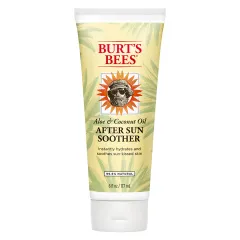
Instantly hydrates and soothes sun-kissed skin 99.6% natural This intensely hydrating, quick-absorbing lotion is specifically formulated to naturally replenish skin after a long day in the sun.
Source: Walgreens
This product can help improve hydration of the skin with the two types of ingredients.
The first type is called “humectants”:
these ingredients help attract water.
When humectants are on the surface of the skin, they “pull in” the moisture from the outside environment, or from
within deeper layers of the skin. The following ingredients in this product do the job:
glycerin, glucose.
This product also contains ingredients called “occlusives”. They help reduce the speed with which our skin loses moisture to the outside environment. These ingredients also help soften the upper layer of the skin, so it feels less tight and nicer to the touch. The following ingredients in this product do the job: beeswax, cocos nucifera oil.
Helps attract water to the upper layer of the skin. In theory, could support healthy skin's microbiome, but evidence of effectiveness in skin is lacking
An emollient. Can be helpful for restoring skin barrier function.
Forms a protective barrier that holds water and keeps dry skin hydrated. Keeps an emulsion from separating into its oil and liquid components, and increases the thickness of a product. Can be an allergen
Helps soften the upper layer of the skin and can be helpful in restoring the skin barrier function. Might have some anti-oxidant effect
A good emollient that helps soften the skin and helps repair its barrier function. It can clog pores if used in high concentrations.
A great emollient due to its high linoleic acid content. One of the most effective plant oils in helping skin hydration and repairing skin barrier function
A plant oil that can help soften the skin. It might be helpful in calming down inflammation, but solid research is lacking. Is often used in lip products to create the needed product consistency
An emollient. Found to be as effective as a moisturizer for dry skin as mineral oil. Could be comedogenic
Helps to soften the upper layer of the skin and create a nice product consistency
Helps soften the upper layer of the skin
Helps attract water to the upper layer of the skin
One of the best moisturizing ingredients. Naturally present in skin. It attracts water to the upper layer of the skin working as a humectant
A plant oil that can help soften the upper layer of the skin
Helps attract water to the skin and might have some anti-bacterial properties. Can be an allergen
Helps attract water to the upper layer of the skin. Could be helpful in restoring the skin barrier function
Traditionally used to treat sunburns, dermatitis and inflammation, but evidence for its effectiveness is lacking. The extract can contain humectants that help attract water into the skin
Traditionally used to treat sunburns, dermatitis and inflammation, but evidence for its effectiveness is lacking. The extract can contain humectants that help attract water into the skin
Helps oil and water mix together and works as an emollient
Sebum of wool-bearing animals (most commonly sheep). Helps soften the upper layer of the skin and reduce the skin water loss. In rare cases could be an allergen. Not suitable for vegans
A great moisturising ingredient that softens the skin and reduces water loss from its upper layer. It also can be helpful in protecting skin from free radicals
An emollient that helps soften the skin
Used mostly for creating emulsions - helping oil and water mix together. Helps soften the upper layer of the skin
Pure form of vitamin E. Can help moisturise and protect the skin from free radicals. Often used to help stabilise other ingredients or the formula itself
How honest is this product?
| Promise | Can it deliver? |
|---|---|
| Moisturizing |
Total Promises Fulfilled score: 75/100.
We receive a small commission for purchases made through these links at no cost for you. Thank you for your support! Learn more
Potential irritants
Comedogenic ingredients
User reviews (0)
Averages from community submissions.
No reviews yet for this product.
Be the first to share your experience!
Tried this product?
Help capture what the ingredient list can't—texture, finish, pilling, scent, and more. Answer what you can, skip the rest.
Takes ~30 seconds.
Reviews are shown in aggregate. No personal details.
Key Actives
Pure form of vitamin E. Can help moisturise and protect the skin from free radicals. Often used to help stabilise other ingredients or the formula itself
An active component of chamomile plant that historically has been used to calm down irritated skin. A recent study shows that bisabolol indeed can have some anti-inflammatory effect on skin, even though conclusive data is lacking. Bisabolol has a sweet floral scent and can be added to products for its aromatic properties
Helps soften the upper layer of the skin and can be helpful in restoring the skin barrier function. Might have some anti-oxidant effect
A great moisturising ingredient that softens the skin and reduces water loss from its upper layer. It also can be helpful in protecting skin from free radicals
Can be helpful in reducing inflammation in skin, including inflamed acne. It can be irritating
A type of clay that consists mainly of aluminum silicate. Helps absorb oil and creates a thicker product consistency. Can be used to add a white color
A plant oil that can help soften the skin. It might be helpful in calming down inflammation, but solid research is lacking. Is often used in lip products to create the needed product consistency
Sebum of wool-bearing animals (most commonly sheep). Helps soften the upper layer of the skin and reduce the skin water loss. In rare cases could be an allergen. Not suitable for vegans
An emollient that helps soften the skin
An emollient. Can be helpful for restoring skin barrier function.
An emollient. Found to be as effective as a moisturizer for dry skin as mineral oil. Could be comedogenic
One of the best moisturizing ingredients. Naturally present in skin. It attracts water to the upper layer of the skin working as a humectant
Helps attract water to the upper layer of the skin. In theory, could support healthy skin's microbiome, but evidence of effectiveness in skin is lacking
Helps attract water to the upper layer of the skin
A great emollient due to its high linoleic acid content. One of the most effective plant oils in helping skin hydration and repairing skin barrier function
Forms a protective barrier that holds water and keeps dry skin hydrated. Keeps an emulsion from separating into its oil and liquid components, and increases the thickness of a product. Can be an allergen
Helps to soften the upper layer of the skin and create a nice product consistency
Helps soften the upper layer of the skin
A good emollient that helps soften the skin and helps repair its barrier function. It can clog pores if used in high concentrations.
Potential irritants
A plant extract that has an anti-bacterial effect
An aromatic blend of unspecified and possibly irritating ingredients
A common frangrance that can easily irritate skin, especially if exposed to air, light or heat
A fragrance. Potential allergen and can be irritating
Can be helpful in reducing inflammation in skin, including inflamed acne. It can be irritating
Traditionally used to treat sunburns, dermatitis and inflammation, but evidence for its effectiveness is lacking. The extract can contain humectants that help attract water into the skin
Traditionally used to treat sunburns, dermatitis and inflammation, but evidence for its effectiveness is lacking. The extract can contain humectants that help attract water into the skin
Can work as an exfoliant but is typically used to adjust the product pH
A plant oil that can help soften the skin. It might be helpful in calming down inflammation, but solid research is lacking. Is often used in lip products to create the needed product consistency
An emollient. Can be helpful for restoring skin barrier function.
A good emollient that helps soften the skin and helps repair its barrier function. It can clog pores if used in high concentrations.
Comedogenic ingredients
An emollient. Found to be as effective as a moisturizer for dry skin as mineral oil. Could be comedogenic
Helps soften the upper layer of the skin and can be helpful in restoring the skin barrier function. Might have some anti-oxidant effect
A great moisturising ingredient that softens the skin and reduces water loss from its upper layer. It also can be helpful in protecting skin from free radicals
A good emollient that helps soften the skin and helps repair its barrier function. It can clog pores if used in high concentrations.
All ingredients
An emollient. Found to be as effective as a moisturizer for dry skin as mineral oil. Could be comedogenic
One of the best moisturizing ingredients. Naturally present in skin. It attracts water to the upper layer of the skin working as a humectant
Traditionally used to treat sunburns, dermatitis and inflammation, but evidence for its effectiveness is lacking. The extract can contain humectants that help attract water into the skin
Traditionally used to treat sunburns, dermatitis and inflammation, but evidence for its effectiveness is lacking. The extract can contain humectants that help attract water into the skin
Helps attract water to the skin and might have some anti-bacterial properties. Can be an allergen
A plant extract that has an anti-bacterial effect
An active component of chamomile plant that historically has been used to calm down irritated skin. A recent study shows that bisabolol indeed can have some anti-inflammatory effect on skin, even though conclusive data is lacking. Bisabolol has a sweet floral scent and can be added to products for its aromatic properties
A type of clay that consists mainly of aluminum silicate. Helps absorb oil and creates a thicker product consistency. Can be used to add a white color
Can work as an exfoliant but is typically used to adjust the product pH
Used to stabilize mixtures of oil and water, and create thicker, gel-like product textures
Helps attract water to the upper layer of the skin. Could be helpful in restoring the skin barrier function
Used mostly for creating emulsions - helping oil and water mix together. Helps soften the upper layer of the skin
Used to stabilize the product formulation and can help absorb oil
Helps attract water to the upper layer of the skin. In theory, could support healthy skin's microbiome, but evidence of effectiveness in skin is lacking
An aromatic blend of unspecified and possibly irritating ingredients
A preservative. It helps prevent bacterial growth in cosmetic products
A common frangrance that can easily irritate skin, especially if exposed to air, light or heat
A fragrance. Potential allergen and can be irritating
A plant oil that can help soften the skin. It might be helpful in calming down inflammation, but solid research is lacking. Is often used in lip products to create the needed product consistency
A great emollient due to its high linoleic acid content. One of the most effective plant oils in helping skin hydration and repairing skin barrier function
Forms a protective barrier that holds water and keeps dry skin hydrated. Keeps an emulsion from separating into its oil and liquid components, and increases the thickness of a product. Can be an allergen
Sebum of wool-bearing animals (most commonly sheep). Helps soften the upper layer of the skin and reduce the skin water loss. In rare cases could be an allergen. Not suitable for vegans
Helps soften the upper layer of the skin and can be helpful in restoring the skin barrier function. Might have some anti-oxidant effect
Helps to soften the upper layer of the skin and create a nice product consistency
A great moisturising ingredient that softens the skin and reduces water loss from its upper layer. It also can be helpful in protecting skin from free radicals
An emollient. Can be helpful for restoring skin barrier function.
Can be helpful in reducing inflammation in skin, including inflamed acne. It can be irritating
Pure form of vitamin E. Can help moisturise and protect the skin from free radicals. Often used to help stabilise other ingredients or the formula itself
A good emollient that helps soften the skin and helps repair its barrier function. It can clog pores if used in high concentrations.
Creates an illusion of smoother and more radiant skin tone. Adds shimmer to the skin by reflecting light
An umbrella term for the following three colorants: CI 77491, CI 77492, CI 77499. They might be able to offer some protection against visible light, but the degree of the protection is not clear
The same compound that is used safely in dental implants and bone cements. In cosmetics, it is used to improve the consistency of products
Works as a UV filter when used in high concentrations. It is photostable and is effective mostly against the UVB light, with some protection in the UVA range. In small concentrations, used for its ability to improve the color of cosmetic products. Is usually well tolerated by the skin
Ingredient list view
Water, Cocos nucifera oil, Glycerin, Aloe barbadensis leaf juice, Stearic acid, Aloe barbadensis leaf extract, Honey, Symphytum officinale leaf extract, Tilia cordata flower extract, Citrus limon peel extract, Citrus limon peel oil, Pollen extract, Bisabolol, Kaolin, Citric acid, Sodium chloride, Xanthan gum, Sucrose distearate, Sucrose stearate, Glucose, Sodium borate, Lecithin, Maltodextrin, Lactoperoxidase, Glucose oxidase, Potassium iodide, Potassium thiocyanate, Potassium sorbate, Sodium benzoate, Parfum, Phenoxyethanol, Limonene, Linalool, Citronellol, Hexyl cinnamal, Citral, Geraniol, Alpha-isomethyl ionone, Coumarin, Eugenol, Ricinus communis seed oil, Helianthus annuus seed oil, Beeswax, Euphorbia cerifera wax, Mentha piperita oil, Lanolin, Theobroma cacao seed butter, Copernicia cerifera wax, Butyrospermum parkii butter, Fragaria ananassa seed oil, Prunus armeniaca kernel oil, Ribes nigrum, Ribes nigrum seed oil, Rosmarinus officinalis leaf extract, Sambucus nigra seed oil, Tocopherol, Canola oil, Glycine soja oil, Mica, Iron oxides, Ci 75470, Alumina, Titanium dioxide
- Glycerol and the skin: holistic approach to its origin and functions
- Symphytum Species: A Comprehensive Review on Chemical Composition, Food Applications and Phytopharmacology
- α-(-)-Bisabolol Reduces Pro-Inflammatory Cytokine Production and Ameliorates Skin Inflammation
- Topical Glucose Induces Claudin-1 and Filaggrin Expression in a Mouse Model of Atopic Dermatitis and in Keratinocyte Culture, Exerting Anti-inflammatory Effects by Repairing Skin Barrier Function
- Annex I: Clinical evidence regarding sensitisation to individual fragrance chemicals and to natural extracts
- Final report on the safety assessment of Ricinus Communis (Castor) Seed Oil, Hydrogenated Castor Oil, Glyceryl Ricinoleate, Glyceryl Ricinoleate SE, Ricinoleic Acid, Potassium Ricinoleate, Sodium Ricinoleate, Zinc Ricinoleate, Cetyl Ricinoleate, Ethyl Ricinoleate, Glycol Ricinoleate, Isopropyl Ricinoleate, Methyl Ricinoleate, and Octyldodecyl Ricinoleate
- Castor Oil: Properties, Uses, and Optimization of Processing Parameters in Commercial Production
- Effect of ricinoleic acid in acute and subchronic experimental models of inflammation
- Effect of Olive and Sunflower Seed Oil on the Adult Skin Barrier: Implications for Neonatal Skin Care
- Topically Applied Sunflower Seed Oil Prevents Invasive Bacterial Infections in Preterm Infants in Egypt
- Effect of topically applied lipids on surfactant-irritated skin
- Impact of topical oils on the skin barrier: possible implications for neonatal health in developing countries
- The lanolin paradox revisited Matiz, Catalina et al. Journal of the American Academy of Dermatology, Volume 64, Issue 1, 197
- Cocoa polyphenols and their influence on parameters involved in ex vivo skin restructuring
- Allergic contact dermatitis induced by rosemary leaf extract in a cleansing gel
- Safety Assessment of Rosmarinus officinalis (Rosemary)-Derived Ingredients as Used in Cosmetics
- Rosmarinus officinalis Extract Suppresses Propionibacterium acnes–Induced Inflammatory Responses
- Vitamin E in dermatology
- Vitamin E and Skin Health
- Canola Oil
- Safety Assessment of Alumina and Aluminum Hydroxide as Used in Cosmetics