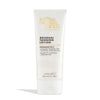
Bondi Sands Gradual Tan Lotion Illuminator
Works for
0 of 1 advertised claim delivered
MoisturizingCoco-caprylate/caprate, Aloe barbadensis leaf juice powder + 3 moreLimited evidence
“This nourishing moisturiser will give you a gradual, natural-looking tan that’s suitable for all skin tones.”
Does not contain the most effective ingredients for moisturization. The emollients (coco-caprylate/caprate, c13-14 isoparaffin) can help soften the upper layer of the skin. Keep in mind though that this product lacks humectants that attract water. You might want to use a separate product with ingredients like hyaluronic acid or glycerin in addition (use before this product for the best results).
Can it cause trouble?
Irritancy2 strong irritants: Parfum, AlcoholMedium risk
Comedogenic1 ingredient rated 2 or more on the 0–5 pore-clogging scale1 flagged
User reviews
Be the first — your take helps the next person decide.
Ingredients
Filter by role to see what each ingredient is doing.
Water~45–55%
Coco-caprylate/caprate~5.1–6.2%
- Irritation risk
- Low
Helps to soften the upper layer of the skin without creating a greasy texture
More about Coco-caprylate/caprateCi 77891~5–6.1%
- Irritation risk
- Low
Titanium dioxide~4–4.9%
- Irritation risk
- Low
Works as a UV filter when used in high concentrations. It is photostable and is effective mostly against the UVB light, with some protection in the UVA range. In small concentrations, used for its ability to improve the color of cosmetic products. Is usually well tolerated by the skin
More about Titanium dioxideDihydroxyacetone~2.9–3.5%
Mica~2.5–3%
- Irritation risk
- Low
Creates an illusion of smoother and more radiant skin tone. Adds shimmer to the skin by reflecting light
More about MicaGlyceryl stearate~2–2.4%
- Irritation risk
- Low
An emollient that softens the skin and forms a protective layer on its surface. Helps water and oil mix together
More about Glyceryl stearatePolyacrylamide~1.6–2%
- Irritation risk
- Medium
Used to improve product texture and help oil and water mix together
More about PolyacrylamidePhenoxyethanol~0.5–1%
- Irritation risk
- Low
A preservative. It helps prevent bacterial growth in cosmetic products
More about PhenoxyethanolParfum~0.95–1.15%
- Irritation risk
- High
An aromatic blend of unspecified and possibly irritating ingredients
More about ParfumC13-14 isoparaffin~0.75–1.1%
- Irritation risk
- Low
Helps soften the upper layer of the skin, dissolve other ingredients and create a thicker product consistency
More about C13-14 isoparaffinBenzyl alcohol~0.55–0.85%
- Irritation risk
- High
A preservative. Can be used to mask unpleasant smell. Can be irritating
More about Benzyl alcoholDimethyl isosorbide~0.6–0.85%
- Irritation risk
- Low
Used to dissolve other ingredients in a product and can enhance their ability to penetrate the skin
More about Dimethyl isosorbideErythrulose~0.55–0.8%
- Irritation risk
- Low
Laureth-7~0.5–0.8%
Potassium cetyl phosphate~0.45–0.65%
- Irritation risk
- Medium
Helps oil and water mix together
More about Potassium cetyl phosphateTin oxide~0.5–0.8%
- Irritation risk
- Low
A colorant that can add a pearl-like appearance to the formulation
More about Tin oxideButyrospermum parkii butter~0.35–0.6%
- Irritation risk
- Low
- Comedogenicity
- 3/5
A great moisturising ingredient that softens the skin and reduces water loss from its upper layer. It also can be helpful in protecting skin from free radicals
More about Butyrospermum parkii butterAloe barbadensis leaf juice powder~0.25–0.45%
- Irritation risk
- Medium
Traditionally used to treat sunburns, dermatitis and inflammation, but evidence for its effectiveness is lacking. The extract can contain humectants that help attract water into the skin
More about Aloe barbadensis leaf juice powderTocopheryl acetate~0.2–0.35%
- Irritation risk
- Medium
A more stable but less bio-available form of vitamin E compared to Tocopherol. Might help moisturize and protect the skin from free radicals, but mostly used in low concentrations to stabilize other ingredients.
More about Tocopheryl acetateCitric acid~0.15–0.3%
- Irritation risk
- Medium
Can work as an exfoliant but is typically used to adjust the product pH
More about Citric acidSodium citrate~0.15–0.25%
- Irritation risk
- Medium
Helps to control the skin's pH level. Maintains the skin's natural film of amino-lactic acids and oils. Helps to preserve products
More about Sodium citrateIsobutyl acetate~0.1–0.15%
- Irritation risk
- Low
Alcohol~0.05–0.1%
- Irritation risk
- High
Can be drying and contribute to skin irritation. Used in formulars to dissolve other ingredients, create a thinner product consistency or for its antibacterial properties
More about AlcoholIngredient list view
Water, Coco-caprylate/caprate, Ci 77891, Titanium dioxide, Dihydroxyacetone, Mica, Glyceryl stearate, Polyacrylamide, Phenoxyethanol, Parfum, C13-14 isoparaffin, Benzyl alcohol, Dimethyl isosorbide, Erythrulose, Laureth-7, Potassium cetyl phosphate, Tin oxide, Butyrospermum parkii butter, Aloe barbadensis leaf juice powder, Tocopheryl acetate, Citric acid, Sodium citrate, Isobutyl acetate, Unknown, Alcohol
Compare prices
Retailers ranked by price — lowest first.
Affiliate links · prices updated regularly · As an Amazon Associate, WIMJ earns from qualifying purchases.
Sources cited in this review
Every concentration estimate and effectiveness label is anchored to one of these 4 studies and safety reviews.
- 1Safety Assessment of Alkyl Esters as Used in Cosmeticscir-safety.org
- 2Safety Assessment of Isoparaffins as Used in Cosmeticsjournals.sagepub.com
- 3
- 4Safety Assessment of Tin(IV) Oxide as Used in Cosmeticscir-safety.org

Affiliate links · As an Amazon Associate, WIMJ earns from qualifying purchases.