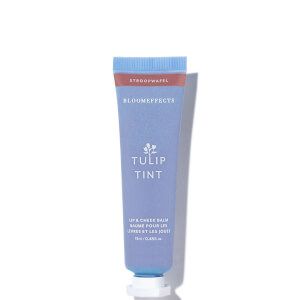
Bloomeffects Tulip Tint Lip and Cheek Balm
Works for
1 of 1 advertised claim delivered
Moisturizing20 ingredients credited for this claimStrong support
“A hydrating blend of Jojoba oil and Shea butter provide deep moisture and nourishment while peptides, a collagen-boosting complex and our signature Proprietary Dutch Tulip Complex help to smooth and plump skin for added radiance.”
This product can help improve hydration of the skin with the two types of ingredients.
The first type is called “humectants”:
these ingredients help attract water.
When humectants are on the surface of the skin, they “pull in” the moisture from the outside environment, or from
within deeper layers of the skin. The following ingredients in this product do the job:
glycerin, polyglycerin-3.
This product also contains ingredients called “occlusives”. They help reduce the speed with which our skin loses moisture to the outside environment. These ingredients also help soften the upper layer of the skin, so it feels less tight and nicer to the touch. The following ingredients in this product do the job: helianthus annuus seed wax, c12-15 alkyl benzoate.
The following ingredients in this product are especially good for supporting the skin barrier and helping with the hydration level: n-prolyl palmitoyl tripeptide-56 acetate, palmitoyl tripeptide-38
Anti-agingNot advertised by the brand · 5 ingredients credited for this claimModerate support
This product contains n-prolyl palmitoyl tripeptide-56 acetate, palmitoyl tripeptide-38. These ingredients might be able to help reduce and prevent fine lines and wrinkles, improve skin elasticity and firmness, but there is not enough evidence that it actually works.
Can it cause trouble?
Irritancy3 strong irritants: Rosmarinus officinalis extract, Hamamelis virginiana water + 1 more — patch-test recommendedHigh risk
Comedogenic2 ingredients rated 2 or more on the 0–5 pore-clogging scale2 flagged
User reviews
Be the first — your take helps the next person decide.
Ingredients
Filter by role to see what each ingredient is doing.
Jojoba oil/caprylic/capric triglyceride esters~22–33%
- Irritation risk
- Low
Prunus amygdalus dulcis seed~3.1–4.6%
- Irritation risk
- Low
Helps soften the upper layer of the skin
More about Prunus amygdalus dulcis seedSilica~4.5–6.8%
Helianthus annuus seed wax~3.8–5.7%
- Irritation risk
- Low
Helps soften the upper layer of the skin and support skin's barrier function while creating a thicker product consistency
More about Helianthus annuus seed waxCanola oil~2.9–4.3%
- Irritation risk
- Medium
A plant oil that can help soften the upper layer of the skin
More about Canola oilOctyldodecanol~2–3%
- Irritation risk
- Low
An emollient that helps to soften the skin and create a pleasant product texture and stabilize the formulation
More about OctyldodecanolC12-15 alkyl benzoate~1.6–2.5%
- Irritation risk
- Low
Enhances the product texture and makes it more spreadable. Helps reduce water loss from the outer layer of skin. Extands the shelf life by preventing bacteria growth
More about C12-15 alkyl benzoateGlyceryl behenate~1.4–2.1%
- Irritation risk
- Medium
Used to create a thicker product consistency and help soften the upper layer of the skin
More about Glyceryl behenateGlyceryl stearate~1.1–1.7%
- Irritation risk
- Low
An emollient that softens the skin and forms a protective layer on its surface. Helps water and oil mix together
More about Glyceryl stearateZea mays starch~0.9–1.35%
- Irritation risk
- Medium
- Comedogenicity
- 3/5
Used to thicken the product's consistency
More about Zea mays starchTulipa gesneriana/kaurmanniana meristem cell lysate filtrate extract~0.6–1.4%
Butyrospermum parkii butter~0.55–1.3%
- Irritation risk
- Low
- Comedogenicity
- 3/5
A great moisturising ingredient that softens the skin and reduces water loss from its upper layer. It also can be helpful in protecting skin from free radicals
More about Butyrospermum parkii butterHydrolyzed sodium hyaluronate~0.45–1.05%
- Irritation risk
- Low
Attracts water into the upper layer of the skin
More about Hydrolyzed sodium hyaluronateSodium hyaluronate~0.4–0.95%
- Irritation risk
- Low
One of the best moisturizing ingredients. Attracts water into the upper layer of the skin
More about Sodium hyaluronateSodium lactate~0.4–0.9%
- Irritation risk
- Medium
Helps attract water to the upper layer of the skin. Is often used to adjust the pH level of the product
More about Sodium lactateN-prolyl palmitoyl tripeptide-56 acetate~0.4–0.9%
- Irritation risk
- Low
A type of peptide. Peptides are excellent moisturizers and might be able support collagen production reducing fine lines and wrinkles
More about N-prolyl palmitoyl tripeptide-56 acetatePalmitoyl tripeptide-38~0.35–0.85%
- Irritation risk
- Low
A type of peptide. Peptides are excellent moisturizers and might be able support collagen production reducing fine lines and wrinkles
More about Palmitoyl tripeptide-38Ascorbyl palmitate~0.35–0.8%
- Irritation risk
- Medium
Being a lipid soluble form of vitamin C, it is more stable and can penetrate the skin better than L-Ascorbic acid. It is effective in protecting the skin from free radicals, as well as evening the skin tone, but is less effective in stimulating collagen production compared to L-Ascorbic acid.
More about Ascorbyl palmitateTocopherol~0.35–0.8%
- Irritation risk
- Low
Pure form of vitamin E. Can help moisturise and protect the skin from free radicals. Often used to help stabilise other ingredients or the formula itself
More about TocopherolTocopheryl acetate~0.3–0.75%
- Irritation risk
- Medium
A more stable but less bio-available form of vitamin E compared to Tocopherol. Might help moisturize and protect the skin from free radicals, but mostly used in low concentrations to stabilize other ingredients.
More about Tocopheryl acetateGlycerin~0.3–0.75%
- Irritation risk
- Low
One of the best moisturizing ingredients. Naturally present in skin. It attracts water to the upper layer of the skin working as a humectant
More about GlycerinMoringa oleifera seed oil~0.35–0.8%
- Irritation risk
- Medium
A plant oil that helps soften the upper layer of the skin. Is unlikely to be helpful in restoring skin barrier function due to the low content of linoleic acid
More about Moringa oleifera seed oilMaltodextrin~0.35–0.85%
- Irritation risk
- Low
Used to stabilize the product formulation and can help absorb oil
More about MaltodextrinRosmarinus officinalis extract~0.15–0.65%
- Irritation risk
- High
Eclipta prostrata extract~0.15–0.7%
- Irritation risk
- High
A plant extract that might help neutralize free radicals in skin. It can be irritating
More about Eclipta prostrata extractAcacia decurrens flower wax~0.2–0.8%
Melia azadirachta leaf extract~0.15–0.7%
- Irritation risk
- High
A plant extract that has anti-bacterial properties. Can be used to preserve the product. Can be irritating
More about Melia azadirachta leaf extractMethylglucoside phosphate~0.15–0.7%
- Irritation risk
- Low
Copper lysinate/prolinate~0.15–0.7%
- Irritation risk
- Low
Wine~0.15–0.7%
- Irritation risk
- Low
Hydroxypropyl cyclodextrin~0.3–0.75%
- Irritation risk
- Medium
Used to stabilize product formulations and help soften the upper layer of the skin
More about Hydroxypropyl cyclodextrinWater~0.15–0.7%
Caesalpinia spinosa gum~0.4–1%
Leuconostoc/radish root ferment filtrate~0.15–0.65%
- Irritation risk
- Medium
A preservative that comes from radishes fermented by a bacteria. New research suggests that the preservation properties in the ingredient come from an ammonium salt that is not present naturally in radish root but used in its cultivation. Is problematic because the exact amount of the preservative agents is difficult to determine
More about Leuconostoc/radish root ferment filtrateSodium gluconate~0.15–0.65%
Polyglycerin-3~0.15–0.65%
- Irritation risk
- Low
Helps to attract water to the upper layer of the skin
More about Polyglycerin-3Sodium hydroxide~0.15–0.6%
Pentylene glycol~0.2–0.75%
- Irritation risk
- Medium
Used to preserve products, dissolve other ingredients and create a nice product texture
More about Pentylene glycolPotassium sorbate~0.15–0.5%
Hamamelis virginiana water~0.1–0.45%
- Irritation risk
- High
A plant extract that can help calm down inflammation in skin. Can, however, itself be irritating
More about Hamamelis virginiana waterCitric acid~0.1–0.45%
- Irritation risk
- Medium
Can work as an exfoliant but is typically used to adjust the product pH
More about Citric acidPhenethyl alcohol~0.1–0.45%
Benzoic acid~0.15–0.5%
Ethylhexylglycerin~0.1–0.4%
Alcohol~0.05–0.3%
- Irritation risk
- High
Can be drying and contribute to skin irritation. Used in formulars to dissolve other ingredients, create a thinner product consistency or for its antibacterial properties
More about AlcoholCaprylyl glycol~0.15–0.55%
- Irritation risk
- Medium
Helps preserve products and creates a nice product texture
More about Caprylyl glycolIngredient list view
Unknown, Jojoba oil/caprylic/capric triglyceride esters, Prunus amygdalus dulcis seed, Silica, Helianthus annuus seed wax, Unknown, Canola oil, Unknown, Octyldodecanol, C12-15 alkyl benzoate, Glyceryl behenate, Glyceryl stearate, Zea mays starch, Tulipa gesneriana/kaurmanniana meristem cell lysate filtrate extract, Butyrospermum parkii butter, Hydrolyzed sodium hyaluronate, Sodium hyaluronate, Sodium lactate, N-prolyl palmitoyl tripeptide-56 acetate, Palmitoyl tripeptide-38, Ascorbyl palmitate, Tocopherol, Tocopheryl acetate, Glycerin, Moringa oleifera seed oil, Maltodextrin, Rosmarinus officinalis extract, Eclipta prostrata extract, Acacia decurrens flower wax, Melia azadirachta leaf extract, Methylglucoside phosphate, Copper lysinate/prolinate, Wine, Hydroxypropyl cyclodextrin, Water, Caesalpinia spinosa gum, Leuconostoc/radish root ferment filtrate, Sodium gluconate, Polyglycerin-3, Sodium hydroxide, Pentylene glycol, Potassium sorbate, Hamamelis virginiana water, Citric acid, Phenethyl alcohol, Benzoic acid, Ethylhexylglycerin, Alcohol, Caprylyl glycol
Compare prices
Retailers ranked by price — lowest first.

Product summary
Based on the ingredients included, "Bloomeffects - Tulip Tint Lip and Cheek Balm" works well for moisturizing the skin. This moisturizer uses a good combo of humectants and emollients. These both types of ingredients are essentials for improving the skin hydration and keeping the skin barrier healthy. Humectants in this product (glycerin, polyglycerin-3, sodium hyaluronate, sodium lactate and caprylyl glycol) help to increase the water content in the upper layer of the skin. (These ingredients do so by "capturing" water molecules from the outside air or from within the deeper layers of the skin). Emollients in this formulation (helianthus annuus seed wax, c12-15 alkyl benzoate, canola oil, caesalpinia spinosa gum and caprylyl glycol) help to reduce the moisture loss from the skin. They also soften the skin surface and relieve the feeling of dryness and tightness.
Ingredient callouts
- We like that this moisturizer contains peptides (n-prolyl palmitoyl tripeptide-56 acetate 0.40% - 0.90% and palmitoyl tripeptide-38 0.35% - 0.85%). There are many different kind of peptides and they are naturally present in our skin. They all are a combination of amino-acids. Some of them work as natural anti-biotics, promote wound-healing and production of collagen. The science is still not settled on how effective peptides in skincare are, but it is very likely that they have a benefit. Peptides might help restore the skin barrier and fight the signs of aging. At the very least, peptides work as humectants: they attract water to the upper layer of the skin and improve its hydration.
Irritation risk
We assess the overall irritancy of this lip product to be high. For a detailed overview of all potential irritants: click here
You can see the detailed formula review with the breakdown of all actives in the product and the full ingredient list with estimated concentrations in the tables below.
Price
The product retails for 29.00$ in the United States and for 39.10CA$ in Canada.
For a detailed price comparison: click here.
Sources cited in this review
Every concentration estimate and effectiveness label is anchored to one of these 15 studies and safety reviews.
- 1
- 2Canola Oilsciencedirect.com
- 3Hyaluronic acid: A key molecule in skin agingncbi.nlm.nih.gov
- 4
- 5Vitamin E in dermatologyncbi.nlm.nih.gov
- 6Vitamin E and Skin Healthlpi.oregonstate.edu

Affiliate links · As an Amazon Associate, WIMJ earns from qualifying purchases.