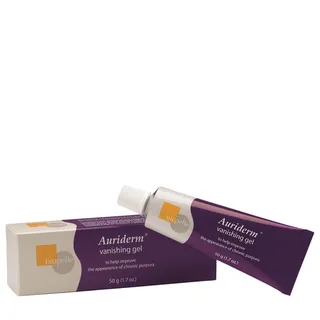
Works for
MoisturizingCaprylic/capric triglyceride, Propylene glycol + 2 moreWorks
“By increasing moisture levels, skin will be healthier and more resilient to future damage.”
This product can help soften the skin and reduce its moisture loss with emollients and occlusives: caprylic/capric triglyceride.
Keep in mind that this product does not contain effective ingredients to attract water to the upper layer of the skin. This is why an additional product with humectants like glycerin or hyaluronic acid can be helpful (apply it before this product for the best results).
Can it cause trouble?
Irritancy8 flagged ingredientsLow risk
ComedogenicClean of flagged comedogenic ingredientsNone flagged
User reviews
Be the first — your take helps the next person decide.
Ingredients
Filter by role to see what each ingredient is doing.
Water~40–60%
Sd alcohol 39-d~9–13.5%
- Irritation risk
- Low
Ethoxydiglycol~3.6–5.4%
Caprylic/capric triglyceride~2.8–4.2%
- Irritation risk
- Medium
A good mix of fatty acids that forms a protective layer on the skin. Improves the shelf life of products. Derived from coconut and glycerin
More about Caprylic/capric triglyceridePropylene glycol~2–3%
- Irritation risk
- High
Helps oil and water mix together and can enhance the penetration of other ingredients into the skin. It can be irritating
More about Propylene glycolPhytonadione epoxide~1.6–2.4%
- Irritation risk
- Low
Sodium acrylate/sodium acryloyldimethyl taurate/acrylamide copolymer~1.3–2%
Polyisobutene~1.1–1.6%
Caprylyl/capryl glucoside~0.95–1.4%
- Irritation risk
- Medium
Helps oil and water mix together. Can be used as a cleansing agent
More about Caprylyl/capryl glucosideStyrene/acrylates copolymer~0.55–1.25%
- Irritation risk
- Low
Used to create an even product consistency. Can help boost efficiency of sunscreen filters
More about Styrene/acrylates copolymerCarbomer~0.4–0.95%
- Irritation risk
- Low
Helps create a thicker or gel-like product texture. It is not a surfactant but can be used in gentle cleansing formulations
More about CarbomerTriethanolamine~0.3–0.7%
- Irritation risk
- Medium
Used to adjust pH of the product and can help improve the product's smell
More about TriethanolamineLecithin~0.2–0.7%
- Irritation risk
- Low
Used mostly for creating emulsions - helping oil and water mix together. Helps soften the upper layer of the skin
More about LecithinTocopherol~0.1–0.45%
- Irritation risk
- Low
Pure form of vitamin E. Can help moisturise and protect the skin from free radicals. Often used to help stabilise other ingredients or the formula itself
More about TocopherolTocopheryl acetate~0.05–0.25%
- Irritation risk
- Medium
A more stable but less bio-available form of vitamin E compared to Tocopherol. Might help moisturize and protect the skin from free radicals, but mostly used in low concentrations to stabilize other ingredients.
More about Tocopheryl acetateAscorbyl palmitate~0.01–0.1%
- Irritation risk
- Medium
Being a lipid soluble form of vitamin C, it is more stable and can penetrate the skin better than L-Ascorbic acid. It is effective in protecting the skin from free radicals, as well as evening the skin tone, but is less effective in stimulating collagen production compared to L-Ascorbic acid.
More about Ascorbyl palmitateDisodium edta~0.01–0.05%
Ingredient list view
Water, Sd alcohol 39-d, Ethoxydiglycol, Caprylic/capric triglyceride, Propylene glycol, Phytonadione epoxide, Sodium acrylate/sodium acryloyldimethyl taurate/acrylamide copolymer, Polyisobutene, Caprylyl/capryl glucoside, Styrene/acrylates copolymer, Carbomer, Triethanolamine, Lecithin, Tocopherol, Tocopheryl acetate, Ascorbyl palmitate, Disodium edta
Worth comparing, line by line.
Match % combines shared ingredients, the first five ingredients, shared actives and hero ingredients, irritancy (lower counts in the alternative's favour), texture and body area. Only products in the same routine step are compared.
| BiopelleAuriderm Vanishing GelYOUR PRODUCT | 111SKINTreatment The Hydration Concentrate | NeovaSerious Clarity | OurselfDaily Dark Spot Intercept | |
|---|---|---|---|---|
| Match | — | 33% | 31% | 31% |
| Price | — | $49.88 | $85.00 | — |
| Shared key ingredients | — | 1 of 1 | 1 of 1 | 1 of 1 |
| Key difference | — | Urea | Cyclopentasiloxane | Niacinamide |
| Irritancy | Low | Low | Low | Low |
| Drying alcohol | — | — | — | — |
| View product | Shop | Shop | Shop |



More alternatives: Me Bakuchiol BoosterKate Somerville D-Scar Scar Diminishing Serum
Sources cited in this review
Every concentration estimate and effectiveness label is anchored to one of these 7 studies and safety reviews.
- 1Surfactants and experimental irritant contact dermatitisncbi.nlm.nih.gov
- 2Propylene Glycolpubmed.ncbi.nlm.nih.gov
- 3Skin-sensitizing and irritant properties of propylene glycolonlinelibrary.wiley.com
- 4
- 5
- 6Vitamin E in dermatologyncbi.nlm.nih.gov
