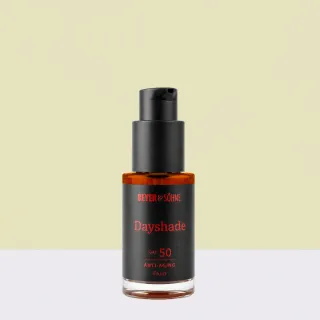
Beyer & Söhne Dayshade SPF 50+ Fluid
Works for
Sun protectionSPF 50 · 4 UV filtersBroad spectrum
This product offers a good level of protection against both UVB and UVA rays.
This sunscreen uses organic (so-called "chemical") sunscreen filters. Organic, or "chemical" filters usually provide reliable sun protection and rarely leave a white cast. Sunscreens with organic filters can sting eyes.
This product can be considered "reef safe" because it does not contain the UV filters (oxybenzone and octinoxate) that can be harmful to coral reefs when present in the water in high concentrations.
MoisturizingCeramide np, C12-15 alkyl benzoate + 10 moreWorks well
“Sie helfen dabei, Feuchtigkeit in der Haut zu bewahren und unterstützen die Widerstandsfähigkeit der Haut gegenüber äußeren Einflüssen.”
This product can help soften the skin and reduce its moisture loss with emollients and occlusives: caprylic/capric triglyceride, helianthus annuus seed oil.
Keep in mind that this product does not contain effective ingredients to attract water to the upper layer of the skin. This is why an additional product with humectants like glycerin or hyaluronic acid can be helpful (apply it before this product for the best results).
The following ingredients in this product are especially good for supporting the skin barrier and helping with the hydration level: ceramide np
Evens skin toneSide benefit · Tetrahexyldecyl ascorbateWorks well
This product offers broad spectrum sun protection. It means that it can prevent hyperpigmentation and help keep the skin tone even (sun damage is the main factor causing age spots, darkening of post-acne marks and other discolorations).
Anti-oxidationSide benefit · Tocotrienols, Ubiquinone + 4 moreWorks well
This product contains antioxidants (astaxanthin, tocotrienols, ubiquinone) that can help neutralize free radicals in skin. By doing so, they can lessen the damage the skin gets from the UV light (sun).
The following ingredients - haematococcus pluvialis extract also can have an antioxidant effect, but there is less evidence to confirm their effectiveness in skin.
Anti-agingSide benefit the brand mentions · Tocotrienols, Astaxanthin + 3 moreWorks well
“Red active ingredients from nature provide additional protection and a natural anti-aging effect.”
This product can help prevent early signs of skin aging because it offers a good level of broad spectrum sun protection. Sun damage is the main cause of premature skin aging, and protecting your skin from the sun is the best anti-aging strategy.
These ingredients in the product can also help reduce and prevent fine lines and wrinkles and improve skin elasticity. There is some human evidence for them, though it is smaller or less consistent than the evidence for the best anti-aging ingredients: astaxanthin, tocotrienols.
Can it cause trouble?
Irritancy8 flagged ingredientsLow risk
ComedogenicClean of flagged comedogenic ingredientsNone flagged
User reviews
Be the first — your take helps the next person decide.
Ingredients
Filter by role to see what each ingredient is doing.
C12-15 alkyl benzoate~23–34%
- Irritation risk
- Low
Enhances the product texture and makes it more spreadable. Helps reduce water loss from the outer layer of skin. Extands the shelf life by preventing bacteria growth
More about C12-15 alkyl benzoateDibutyl adipate~5.9–8.9%
- Irritation risk
- Low
Helps soften the upper layer of the skin and create a nice product consistency
More about Dibutyl adipateDicaprylyl carbonate~4.6–6.9%
- Irritation risk
- Low
Helps products spread more easily and works as an emollient to soften skin
More about Dicaprylyl carbonateBis-ethylhexyloxyphenol methoxyphenyl triazine~4–6.1%
- Irritation risk
- Medium
Tinosorb S. One of the most effective broad spectrum sunscreen ingredients. Protects from both UVA and UVB rays. It is photostable. Approved by the US FDA in 2026 (listed as bemotrizinol on US labels).
More about Bis-ethylhexyloxyphenol methoxyphenyl triazineDiethylamino hydroxybenzoyl hexyl benzoate~3.4–5.1%
- Irritation risk
- Medium
Uvinul A Plus. A new generation broad spectrum sunscreen that offers an effective protection especially in the UVA range. It is stable in formulations. Unfortunately, is not approved by the FDA (US) yet
More about Diethylamino hydroxybenzoyl hexyl benzoateDicaprylyl ether~2.1–3.2%
- Irritation risk
- Low
Helps soften the upper layer of the skin while creating a non-greasy feel on the skin. Helps to dissolve other ingredients
More about Dicaprylyl etherEthylhexyl triazone~2–3%
- Irritation risk
- Medium
Uvinul T. A UV filter. Effective against UVB rays. It is photostable. Can increase water resistance properties of the sunscreen. Unfortunately, not approved by the FDA (US) yet
More about Ethylhexyl triazoneSqualane~1.5–2.2%
- Irritation risk
- Low
An oil naturally present in skin. Works as an emollient to soften the skin and form a protective layer on its surface without a greasy feeling.
More about SqualaneTetrahexyldecyl ascorbate~1.1–1.6%
- Irritation risk
- Medium
Being a lipid soluble form of vitamin C, it is more stable than ascorbic acid, but still degrades quickly and needs to be stabilized in a formulation with another ingredient. It is claimed to penetrate skin better than pure vitamin C and have the the similar benefits, but solid studies of its effectiveness are lacking. Is likely to require a higher concentration in a product than pure vitamin C to be effective. It might be able to help reduce pore clogging.
More about Tetrahexyldecyl ascorbateSilica dimethyl silylate~0.95–1.4%
Diethylhexyl butamido triazone~1–1.5%
- Irritation risk
- Medium
Uvasorb HEB. A UV filter. Is effective against UVB and UVA II rays (but not UVA I). It is photostable. Unfortunately, is not approved by FDA (US) yet
More about Diethylhexyl butamido triazoneCaprylic/capric triglyceride~0.55–1.25%
- Irritation risk
- Medium
A good mix of fatty acids that forms a protective layer on the skin. Improves the shelf life of products. Derived from coconut and glycerin
More about Caprylic/capric triglycerideHelianthus annuus seed oil~0.45–1.05%
- Irritation risk
- Low
A great emollient due to its high linoleic acid content. One of the most effective plant oils in helping skin hydration and repairing skin barrier function
More about Helianthus annuus seed oilTocotrienols~0.4–1%
- Irritation risk
- Low
A type of vitamin E that is more powerful in neutralizing free radicals compared to its other forms
More about TocotrienolsTocopherol~0.35–0.8%
- Irritation risk
- Low
Pure form of vitamin E. Can help moisturise and protect the skin from free radicals. Often used to help stabilise other ingredients or the formula itself
More about TocopherolTocopheryl linoleate/oleate~0.3–0.7%
- Irritation risk
- Low
Oryza sativa bran oil~0.35–0.85%
- Irritation risk
- Low
Helps soften the upper layer of the skin and might have some anti-oxidant properties
More about Oryza sativa bran oilUbiquinone~0.15–0.65%
- Irritation risk
- Low
Coenzyme Q10. It helps neutralize free radicals in skin, improves skin hydration and might be helpful agains fine lines and wrinkles. It can be an allergen
More about UbiquinoneHaematococcus pluvialis extract~0.15–0.5%
- Irritation risk
- Medium
Green algae extract that might contain antioxidant astaxanthin
More about Haematococcus pluvialis extractAstaxanthin~0.1–0.5%
- Irritation risk
- Medium
Helps neutralize free radicals in skin and might help to calm down inflammation
More about AstaxanthinGlycolipids~0.1–0.45%
- Irritation risk
- Low
Ceramide np~0.15–0.55%
- Irritation risk
- Low
A type of lipid similar to ceramides naturally present in skin. Helps to soften the upper layer of the skin and supports the skin barrier function to keep it hydrated. Can help to prevent inflammation in skin
More about Ceramide npGlycosphingolipids~0.15–0.6%
- Irritation risk
- Low
A type of lipids naturally present in skin. They can be converted to ceramides in skin
More about GlycosphingolipidsIngredient list view
C12-15 alkyl benzoate, Dibutyl adipate, Dicaprylyl carbonate, Bis-ethylhexyloxyphenol methoxyphenyl triazine, Diethylamino hydroxybenzoyl hexyl benzoate, Dicaprylyl ether, Ethylhexyl triazone, Squalane, Tetrahexyldecyl ascorbate, Silica dimethyl silylate, Diethylhexyl butamido triazone, Caprylic/capric triglyceride, Helianthus annuus seed oil, Tocotrienols, Tocopherol, Tocopheryl linoleate/oleate, Oryza sativa bran oil, Ubiquinone, Haematococcus pluvialis extract, Astaxanthin, Glycolipids, Ceramide np, Glycosphingolipids
Compare prices
Retailers ranked by price — lowest first.

Worth comparing, line by line.
Match % combines shared ingredients, the first five ingredients, shared actives and hero ingredients, irritancy (lower counts in the alternative's favour), texture and body area. Only products in the same routine step are compared.
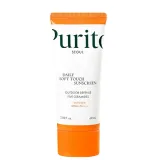
| Beyer & SöhneDayshade SPF 50+ FluidYOUR PRODUCT | Purito SEOULDaily Soft Touch Sunscreen | Beauty of JoseonRelief Sun Aqua Fresh SPF50 PA ++++ | CeraVeInvisible Hydrating Fluid Sunscreen SPF 50 | |
|---|---|---|---|---|
| Match | — | 43% | 40% | 38% |
| Price | — | $10.99 | $13.96 | $13.97 |
| Shared key ingredients | — | 5 of 16 | 6 of 16 | 5 of 16 |
| Key difference | — | Ceramide As | Ferulic Acid | Niacinamide |
| Irritancy | Low | Low | Low | Low |
| SPF | SPF 50 | SPF 50 | SPF 50 | SPF 50 |
| Drying alcohol | — | — | — | — |
| View product | Shop | Shop | Shop |

More alternatives: Barr Centella Soothing Sun EssenceObagi Vitamin C Suncare Broad Spectrum SPF 30 Sunscreen
Product summary
The ingredient list suggests that "Beyer & Sohne - Dayshade SPF 50+ Fluid" can provide reliable sun protection. It can protect from both UVA and UVB rays. This is great news because not all sunscreens with SPF ratings give UVA protection. (UVA rays do not cause sunburn, but still damage our skin and lead to early aging).
Its formula is also hydrating, so you might not need an additional moistruizer during the day. This product prevents early signs of aging by protecting against sun damage (all broad spectrum sunscreens do that).
Sunscreen filters
This sunscreen uses so-called "chemical", or organic UV filters (organic simply means that their molecules contain atoms of carbon). These filters typically give good sun protection and rarely leave a white cast, but they can be irritating for sensitive skin. These are the sun protection ingredients in this sunscreen: tinosorb s 4.20% - 6.20%, uvinul a plus 3.30% - 5.00%, uvasorb heb 1.90% - 2.90% and uvinul t 1.70% - 2.50%.
Irritation risk
This product does not contain known common irritants and is suitable for sensitive skin. We assess the overall irritancy of this moisturizer to be low. For a detailed overview of all potential irritants: click here
You can see the detailed formula review with the breakdown of all actives in the product and the full ingredient list with estimated concentrations in the tables below.
Sources cited in this review
Every concentration estimate and effectiveness label is anchored to one of these 22 studies and safety reviews.
- 1
- 2
- 3
- 4
- 5Effect of topically applied lipids on surfactant-irritated skinonlinelibrary.wiley.com
- 6

Affiliate links · As an Amazon Associate, WIMJ earns from qualifying purchases.