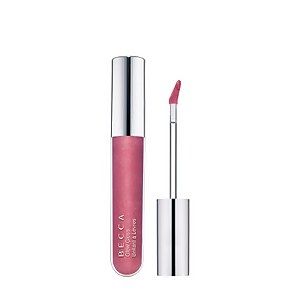
Works for
1 of 1 advertised claim delivered
Moisturizing19 ingredients credited for this claimGood support
“Shea and Muru Muru Butters offer their moisturising properties, helping to alleviate coarse texture for an even, silky surface.”
This product can help improve hydration of the skin with the two types of ingredients.
The first type is called “humectants”:
these ingredients help attract water.
When humectants are on the surface of the skin, they “pull in” the moisture from the outside environment, or from
within deeper layers of the skin. The following ingredients in this product do the job:
sodium hyaluronate, butylene glycol.
This product also contains ingredients called “occlusives”. They help reduce the speed with which our skin loses moisture to the outside environment. These ingredients also help soften the upper layer of the skin, so it feels less tight and nicer to the touch. The following ingredients in this product do the job: bis-diglyceryl polyacyladipate-2, cera microcristallina.
Can it cause trouble?
Irritancy3 strong irritants: Mentha piperita oil, Zingiber officinale root extract + 1 more — patch-test recommendedHigh risk
Comedogenic3 ingredients rated 2 or more on the 0–5 pore-clogging scale3 flagged
User reviews
Be the first — your take helps the next person decide.
Ingredients
Filter by role to see what each ingredient is doing.
Diisostearyl malate~22–34%
- Irritation risk
- Medium
Helps to soften the upper layer of the skin
More about Diisostearyl malateHydrogenated styrene/methylstyrene/indene copolymer~3.9–5.8%
- Irritation risk
- Low
Helps form a film on the skin surface
More about Hydrogenated styrene/methylstyrene/indene copolymerPentaerythrityl tetraisostearate~3.2–4.8%
- Irritation risk
- Medium
Used to create a thicker product consistency
More about Pentaerythrityl tetraisostearateNeopentyl glycol diheptanoate~3.7–5.5%
- Irritation risk
- Low
Helps soften the upper layer of the skin and create a nice product consistency
More about Neopentyl glycol diheptanoateBis-diglyceryl polyacyladipate-2~2.8–4.2%
- Irritation risk
- Low
Helps soften the upper layer of the skin and reduce water loss from its surface
More about Bis-diglyceryl polyacyladipate-2Polyethylene~2–3.1%
Microcrystalline wax~1.5–2.2%
Cera microcristallina~1.4–2.2%
- Irritation risk
- Low
Helps to soften the upper layer of the skin, reduce water loss from its surface and create a thicker product consistency
More about Cera microcristallinaSynthetic wax~1–1.5%
- Irritation risk
- Low
Used to stabilize product formulations and thicken product consistency
More about Synthetic waxHydrogenated vegetable oil~0.8–1.25%
- Irritation risk
- Low
- Comedogenicity
- 2/5
An oil from a mixture of different vegetables. Helps soften the upper layer of the skin
More about Hydrogenated vegetable oilButyrospermum parkii butter~0.5–1.15%
- Irritation risk
- Low
- Comedogenicity
- 3/5
A great moisturising ingredient that softens the skin and reduces water loss from its upper layer. It also can be helpful in protecting skin from free radicals
More about Butyrospermum parkii butterHydrogenated polyisobutene~0.4–0.9%
- Irritation risk
- Low
Used to improve the product consistency and soften the upper layer of the skin
More about Hydrogenated polyisobutenePolyglyceryl-3 diisostearate~0.3–0.7%
- Irritation risk
- Medium
- Comedogenicity
- 3/5
Helps oil and water mix together
More about Polyglyceryl-3 diisostearateIsostearyl alcohol~0.3–0.7%
- Irritation risk
- Low
Helps soften the upper layer of the skin
More about Isostearyl alcoholLecithin~0.2–0.8%
- Irritation risk
- Low
Used mostly for creating emulsions - helping oil and water mix together. Helps soften the upper layer of the skin
More about LecithinMentha piperita oil~0.15–0.55%
Caprylyl glycol~0.15–0.7%
- Irritation risk
- Medium
Helps preserve products and creates a nice product texture
More about Caprylyl glycolRicinus communis seed oil~0.15–0.65%
- Irritation risk
- Medium
A plant oil that can help soften the skin. It might be helpful in calming down inflammation, but solid research is lacking. Is often used in lip products to create the needed product consistency
More about Ricinus communis seed oilAstrocaryum murumuru seed butter~0.15–0.6%
- Irritation risk
- Medium
Helps soften the upper layer of the skin. Could be comedogenic due to the myrisic acid content
More about Astrocaryum murumuru seed butterHdi/trimethylol hexyllactone crosspolymer~0.1–0.4%
- Irritation risk
- Low
Used to create a silky product texture and add volume to products
More about Hdi/trimethylol hexyllactone crosspolymerSodium hyaluronate~0.1–0.35%
- Irritation risk
- Low
One of the best moisturizing ingredients. Attracts water into the upper layer of the skin
More about Sodium hyaluronateZingiber officinale root extract~0.05–0.2%
- Irritation risk
- High
A plant extract that can contain an irritating essential oil. Might have some anti-oxidant effect, but evidence is lacking
More about Zingiber officinale root extractHydroxystearic acid~0.1–0.45%
Ethylene/propylene/styrene copolymer~0.05–0.3%
- Irritation risk
- Low
Used to create a thicker product consistency
More about Ethylene/propylene/styrene copolymerMalic acid~0.1–0.3%
Stearic acid~0.15–0.6%
- Irritation risk
- Low
Helps oil and water mix together and works as an emollient
More about Stearic acidHydrogenated castor oil~0.1–0.5%
- Irritation risk
- Medium
A plant oil that can help soften the skin. It might be helpful in calming down inflammation, but solid research is lacking. Is often used in lip products to create the needed product consistency
More about Hydrogenated castor oilButylene/ethylene/styrene copolymer~0.1–0.3%
- Irritation risk
- Low
Used to create a gel-like product texture
More about Butylene/ethylene/styrene copolymerSilica~0.15–0.55%
Palmitic acid~0.1–0.5%
- Irritation risk
- Low
An emollient that is naturally present in skin and helps soften it
More about Palmitic acidTin oxide~0.15–0.55%
- Irritation risk
- Low
A colorant that can add a pearl-like appearance to the formulation
More about Tin oxideButylene glycol~0.05–0.3%
- Irritation risk
- Low
Used to create a nice product texture and help delivery of other ingredients. Might be somewhat helpful in attracting water to the upper layer of the skin
More about Butylene glycolWater~0.1–0.3%
Calcium sodium borosilicate~0.1–0.4%
Synthetic fluorphlogopite~0.1–0.4%
- Irritation risk
- Low
A mineral that is used as an optical filter (makes the skin looks nicer through light reflection) and to improve the texture of cosmetic products
More about Synthetic fluorphlogopiteCalcium aluminum borosilicate~0.1–0.35%
Citric acid~0.05–0.3%
- Irritation risk
- Medium
Can work as an exfoliant but is typically used to adjust the product pH
More about Citric acidPhenoxyethanol~0.1–0.35%
- Irritation risk
- Low
A preservative. It helps prevent bacterial growth in cosmetic products
More about PhenoxyethanolLimonene~0.05–0.25%
- Irritation risk
- High
A common frangrance that can easily irritate skin, especially if exposed to air, light or heat
More about LimoneneTocopheryl acetate~0.1–0.35%
- Irritation risk
- Medium
A more stable but less bio-available form of vitamin E compared to Tocopherol. Might help moisturize and protect the skin from free radicals, but mostly used in low concentrations to stabilize other ingredients.
More about Tocopheryl acetateTetrahexyldecyl ascorbate~0.1–0.3%
- Irritation risk
- Medium
Being a lipid soluble form of vitamin C, it is more stable than ascorbic acid, but still degrades quickly and needs to be stabilized in a formulation with another ingredient. It is claimed to penetrate skin better than pure vitamin C and have the the similar benefits, but solid studies of its effectiveness are lacking. Is likely to require a higher concentration in a product than pure vitamin C to be effective. It might be able to help reduce pore clogging.
More about Tetrahexyldecyl ascorbateTocopherol~0.1–0.3%
- Irritation risk
- Low
Pure form of vitamin E. Can help moisturise and protect the skin from free radicals. Often used to help stabilise other ingredients or the formula itself
More about TocopherolBht~0.1–0.3%
Mica~0.1–0.4%
- Irritation risk
- Low
Creates an illusion of smoother and more radiant skin tone. Adds shimmer to the skin by reflecting light
More about MicaTitanium dioxide~0.15–0.5%
- Irritation risk
- Low
Works as a UV filter when used in high concentrations. It is photostable and is effective mostly against the UVB light, with some protection in the UVA range. In small concentrations, used for its ability to improve the color of cosmetic products. Is usually well tolerated by the skin
More about Titanium dioxideCi 77891~0.05–0.3%
- Irritation risk
- Low
Iron oxides~0.05–0.3%
- Irritation risk
- Low
An umbrella term for the following three colorants: CI 77491, CI 77492, CI 77499. They might be able to offer some protection against visible light, but the degree of the protection is not clear
More about Iron oxidesCi 77491~0.1–0.35%
- Irritation risk
- Low
A red colorant made of iron oxide. Typically is not irritating
More about Ci 77491Ci 15850~0.1–0.35%
Iron oxides~0.05–0.3%
- Irritation risk
- Low
An umbrella term for the following three colorants: CI 77491, CI 77492, CI 77499. They might be able to offer some protection against visible light, but the degree of the protection is not clear
More about Iron oxidesCi 77492~0.1–0.3%
Ci 15850~0.05–0.3%
Iron oxides~0.05–0.25%
- Irritation risk
- Low
An umbrella term for the following three colorants: CI 77491, CI 77492, CI 77499. They might be able to offer some protection against visible light, but the degree of the protection is not clear
More about Iron oxidesCi 77499~0.05–0.25%
Ci 75470~0.05–0.15%
Ci 19140~0.05–0.15%
Ingredient list view
Diisostearyl malate, Hydrogenated styrene/methylstyrene/indene copolymer, Pentaerythrityl tetraisostearate, Neopentyl glycol diheptanoate, Bis-diglyceryl polyacyladipate-2, Polyethylene, Microcrystalline wax, Cera microcristallina, Synthetic wax, Hydrogenated vegetable oil, Butyrospermum parkii butter, Hydrogenated polyisobutene, Polyglyceryl-3 diisostearate, Isostearyl alcohol, Lecithin, Mentha piperita oil, Caprylyl glycol, Ricinus communis seed oil, Astrocaryum murumuru seed butter, Hdi/trimethylol hexyllactone crosspolymer, Sodium hyaluronate, Zingiber officinale root extract, Hydroxystearic acid, Ethylene/propylene/styrene copolymer, Malic acid, Stearic acid, Hydrogenated castor oil, Butylene/ethylene/styrene copolymer, Silica, Palmitic acid, Tin oxide, Butylene glycol, Water, Calcium sodium borosilicate, Synthetic fluorphlogopite, Calcium aluminum borosilicate, Citric acid, Phenoxyethanol, Limonene, Tocopheryl acetate, Tetrahexyldecyl ascorbate, Tocopherol, Bht, Mica, Titanium dioxide, Ci 77891, Iron oxides, Ci 77491, Ci 15850, Iron oxides, Ci 77492, Ci 15850, Iron oxides, Ci 77499, Ci 75470, Ci 19140
Compare prices
Retailers ranked by price — lowest first.
Affiliate links · prices updated regularly · As an Amazon Associate, WIMJ earns from qualifying purchases.
Sources cited in this review
Every concentration estimate and effectiveness label is anchored to one of these 19 studies and safety reviews.
- 1
- 2
- 3
- 4
- 5
- 6

Affiliate links · As an Amazon Associate, WIMJ earns from qualifying purchases.