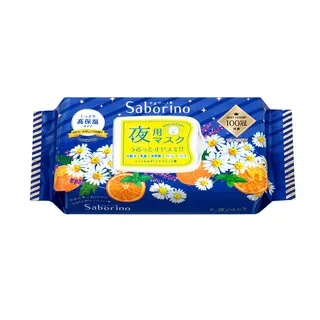
BCL Saborino Good Night Sheet Mask Chamomile Orange

BCL Saborino Good Night Sheet Mask Chamomile Orange

Efficacy75/100IrritancyHigh

Works for

Moisturizing
Glycerin, Betaine + 12 more
Works
What the product description says
“BCL Saborino Good Night All in One Sheet Mask Chamomile Orange helps to hydrate and nourish skin.”
Source: Lila Beauty

This product can help improve hydration of the skin with the two types of ingredients.

The first type is called “humectants”:
these ingredients help attract water. When humectants are on the surface of the skin, they “pull in” the moisture from the outside environment, or from within deeper layers of the skin. The following ingredients in this product do the job: betaine, glycerin.

This product also contains ingredients called “occlusives”. They help reduce the speed with which our skin loses moisture to the outside environment. These ingredients also help soften the upper layer of the skin, so it feels less tight and nicer to the touch. The following ingredients in this product do the job: squalene, persea gratissima fruit extract.

GlycerinKey active· HumectantEffect: HighOne of the best moisturizing ingredients. Naturally present in skin. It attracts water to the upper layer of the skin working as a humectant~4.3–6.4%
BetaineKey active· HumectantEffect: HighHelps attract water to the upper layer of the skin and improves the product texture~1.9–2.9%
Persea gratissima fruit extractKey active· EmollientEffect: High~1.2–1.8%
Kappaphycus alvarezii extractKey activeEffect: HighA red algae extract that can help attract water to the upper layer of the skin and might have some antioxidant properties~0.55–1.25%
Glyceryl glucosideKey active· HumectantEffect: HighCan help to restore skin barrier function and soften its upper layer~0.3–0.7%
SqualeneKey active· Emollient, OcclusiveEffect: HighAn oil that is naturally part of skin sebum that helps to soften its upper layer, reduce water loss and neutralize free radicals. It might be comedogenic. Avoid applying large concentrations (or pure oil) before sun exposure as oxidized squalene can clog pores and lead to skin irritation. Today squalene is mostly derived from vegetable oils or synthetized by yeast~0.2–0.75%
PhytosterolsKey active· EmollientEffect: HighLipids that work as an emollient and can be helpful in repairing skin barrier function~0.15–0.55%
Phytosteryl macadamiateKey active· EmollientEffect: HighHelps soften the upper layer of the skin~0.1–0.3%
Sodium hyaluronateKey active· HumectantEffect: HighOne of the best moisturizing ingredients. Attracts water into the upper layer of the skin~0.1–0.5%
Soluble collagenKey active· HumectantEffect: HighA typically plant-derived compound that is supposed mimic human collagen. Cannot penetrate the skin barrier so is not particularly useful in skincare products beyond attracting water to the upper layer of the skin~0.05–0.3%
Hyaluronic acidKey active· HumectantEffect: HighOne of the best moisturizing ingredients. Attracts water into the upper layer of the skin. Naturally present in skin. Typically has large molecule size unless advertised otherwise on the product label. Helps support skin's barrier function and may help to reduce inflammation~0.05–0.25%
Butylene glycol· HumectantEffect: LowUsed to create a nice product texture and help delivery of other ingredients. Might be somewhat helpful in attracting water to the upper layer of the skin~3.2–4.9%
Cucumis sativus fruit extractEffect: Low, below effective doseMight be somewhat helpful in reducing hyperpigmentation and neutralizing free radicals but its typical concentration in a product is too low for having an effect~0.4–0.95%
TocopherolEffect: Low, below effective dosePure form of vitamin E. Can help moisturise and protect the skin from free radicals. Often used to help stabilise other ingredients or the formula itself~0.15–0.55%
Exfoliation
Side benefit · Mandelic acid
Works well

This product can help exfoliate the skin. In other words, it helps break down the bonds between dead cells on the surface of the skin and speed up the skin turnover. Skin often appears softer and brighter after exfoliation, but overdoing it can result in disrupted skin barrier. The following ingredient is doing the exfoliating job in this product: mandelic acid.

Mandelic acidKey activeEffect: HighHelps shed the upper layer of dead cells from the surface of the skin revealing smoother, brighter skin. It can help to reduce hyperpigmentation. It has anti-bacterial properties, and might help to reduce blemishes, as well as fine lines and wrinkles. It is considered to be gentler than glycolic acid~0.1–0.35%
Evens skin tone
Side benefit · Ascorbyl glucoside, Mandelic acid + 1 more
Works well

This product can help reduce hypepigmentation and even out the skin tone because it contains the following effective ingredients: mandelic acid

The following ingredient (ingredients) in this product might be helpful, but there is no evidence to confirm that it actually can help even out the skin tone: ascorbyl glucoside.

Keep in mind that you would need to apply any topical skincare targetted at hypigmentation consistently for a couple of months to get a result. No topical skincare product can help get rid of hyperpigmentation (including post-acne marks and age spots) instantly.

Ascorbyl glucosideKey activeEffect: MediumA vitamin C derivative that is more stable but less potent than pure form of vitamin C. Has a potential to boost collagen production, nutralise free radicals and reduce hyperpigmentation, but the required concentration is likely to be much higher than for the pure form of vitamin C, limiting the ingredient's effectiveness in products~1.6–2.4%
Mandelic acidKey activeEffect: HighHelps shed the upper layer of dead cells from the surface of the skin revealing smoother, brighter skin. It can help to reduce hyperpigmentation. It has anti-bacterial properties, and might help to reduce blemishes, as well as fine lines and wrinkles. It is considered to be gentler than glycolic acid~0.1–0.35%
Tetrahexyldecyl ascorbateUnder-dosedBeing a lipid soluble form of vitamin C, it is more stable than ascorbic acid, but still degrades quickly and needs to be stabilized in a formulation with another ingredient. It is claimed to penetrate skin better than pure vitamin C and have the the similar benefits, but solid studies of its effectiveness are lacking. Is likely to require a higher concentration in a product than pure vitamin C to be effective. It might be able to help reduce pore clogging.~0.15–0.6%
Anti-oxidation
Side benefit · Ascorbyl glucoside, Squalene + 4 more
May help

This product contains antioxidants (ascorbyl glucoside, squalene) that might be able to help neutralize free radicals in skin to lessen the damage it gets from the UV light (sun). There is not enough evidence to confirm their effectiveness in skin though.

Ascorbyl glucosideKey activeEffect: MediumA vitamin C derivative that is more stable but less potent than pure form of vitamin C. Has a potential to boost collagen production, nutralise free radicals and reduce hyperpigmentation, but the required concentration is likely to be much higher than for the pure form of vitamin C, limiting the ingredient's effectiveness in products~1.6–2.4%
SqualeneKey activeEffect: MediumAn oil that is naturally part of skin sebum that helps to soften its upper layer, reduce water loss and neutralize free radicals. It might be comedogenic. Avoid applying large concentrations (or pure oil) before sun exposure as oxidized squalene can clog pores and lead to skin irritation. Today squalene is mostly derived from vegetable oils or synthetized by yeast~0.2–0.75%
Kappaphycus alvarezii extractEffect: LowA red algae extract that can help attract water to the upper layer of the skin and might have some antioxidant properties~0.55–1.25%
Cucumis sativus fruit extractEffect: Low, below effective doseMight be somewhat helpful in reducing hyperpigmentation and neutralizing free radicals but its typical concentration in a product is too low for having an effect~0.4–0.95%
Tetrahexyldecyl ascorbateUnder-dosedBeing a lipid soluble form of vitamin C, it is more stable than ascorbic acid, but still degrades quickly and needs to be stabilized in a formulation with another ingredient. It is claimed to penetrate skin better than pure vitamin C and have the the similar benefits, but solid studies of its effectiveness are lacking. Is likely to require a higher concentration in a product than pure vitamin C to be effective. It might be able to help reduce pore clogging.~0.15–0.6%
TocopherolUnder-dosedPure form of vitamin E. Can help moisturise and protect the skin from free radicals. Often used to help stabilise other ingredients or the formula itself~0.15–0.55%
Anti-aging
Side benefit · Ascorbyl glucoside, Hyaluronic acid + 2 more
May help

This product contains ascorbyl glucoside. This ingredient might be able to help reduce and prevent fine lines and wrinkles, improve skin elasticity and firmness, but there is not enough evidence that it actually works.

Ascorbyl glucosideKey activeEffect: MediumA vitamin C derivative that is more stable but less potent than pure form of vitamin C. Has a potential to boost collagen production, nutralise free radicals and reduce hyperpigmentation, but the required concentration is likely to be much higher than for the pure form of vitamin C, limiting the ingredient's effectiveness in products~1.6–2.4%
Hyaluronic acidEffect: LowOne of the best moisturizing ingredients. Attracts water into the upper layer of the skin. Naturally present in skin. Typically has large molecule size unless advertised otherwise on the product label. Helps support skin's barrier function and may help to reduce inflammation~0.05–0.25%
TocopherolEffect: Low, below effective dosePure form of vitamin E. Can help moisturise and protect the skin from free radicals. Often used to help stabilise other ingredients or the formula itself~0.15–0.55%
Tetrahexyldecyl ascorbateUnder-dosedBeing a lipid soluble form of vitamin C, it is more stable than ascorbic acid, but still degrades quickly and needs to be stabilized in a formulation with another ingredient. It is claimed to penetrate skin better than pure vitamin C and have the the similar benefits, but solid studies of its effectiveness are lacking. Is likely to require a higher concentration in a product than pure vitamin C to be effective. It might be able to help reduce pore clogging.~0.15–0.6%

Can it cause trouble?

Irritancy
7 strong irritants: Alcohol, Citrus aurantium dulcis oil + 5 more — patch-test recommended
High risk
We flagged 15 ingredients with irritancy potential. Severity depends on your sensitivity threshold; the table lists the worst offenders first.
IngredientFunctionIrritationEst. amount
AlcoholCan be drying and contribute to skin irritation. Used in formulars to dissolve other ingredients, create a thinner product consistency or for its antibacterial propertiesHigh~2.6–3.9%est.
Citrus aurantium dulcis oilUsed as a fragrance. It can be irritating and cause photosensitivityHigh~1.2–1.8%est.
Citrus paradisi peel oilUsed as a fragrance. Can be irritatingHigh~0.2–0.7%est.
Melaleuca alternifolia leaf oilAn essential oil that can be irritating. Has some anti-bacterial propertiesHigh~0.15–0.6%est.
Mandelic acidHelps shed the upper layer of dead cells from the surface of the skin revealing smoother, brighter skin. It can help to reduce hyperpigmentation. It has anti-bacterial properties, and might help to reduce blemishes, as well as fine lines and wrinkles. It is considered to be gentler than glycolic acidHigh~0.1–0.35%est.
Melissa officinalis leaf extractA plant extract that is added for its fragrance. Can be irritatingHigh~0.1–0.3%est.
Menthol—High~0.05–0.15%est.
ParfumAn aromatic blend of unspecified and possibly irritating ingredientsHigh~0.01–0.05%est.
Ascorbyl glucosideA vitamin C derivative that is more stable but less potent than pure form of vitamin C. Has a potential to boost collagen production, nutralise free radicals and reduce hyperpigmentation, but the required concentration is likely to be much higher than for the pure form of vitamin C, limiting the ingredient's effectiveness in productsMedium~1.6–2.4%est.
Cucumis sativus fruit extractMight be somewhat helpful in reducing hyperpigmentation and neutralizing free radicals but its typical concentration in a product is too low for having an effectMedium~0.4–0.95%est.
Tetrahexyldecyl ascorbateBeing a lipid soluble form of vitamin C, it is more stable than ascorbic acid, but still degrades quickly and needs to be stabilized in a formulation with another ingredient. It is claimed to penetrate skin better than pure vitamin C and have the the similar benefits, but solid studies of its effectiveness are lacking. Is likely to require a higher concentration in a product than pure vitamin C to be effective. It might be able to help reduce pore clogging.Medium~0.15–0.6%est.
PhytosterolsLipids that work as an emollient and can be helpful in repairing skin barrier functionMedium~0.15–0.55%est.
Peg-60 hydrogenated castor oilHelps oil and water mix togetherMedium~0.05–0.3%est.
Citric acidCan work as an exfoliant but is typically used to adjust the product pHMedium~0.05–0.2%est.
Sodium citrateHelps to control the skin's pH level. Maintains the skin's natural film of amino-lactic acids and oils. Helps to preserve productsMedium~0.05–0.2%est.
Comedogenic
1 ingredient rated 2 or more on the 0–5 pore-clogging scale
1 flagged
These ingredients have a comedogenic rating of 2 or more on a 0–5 scale; the table shows each one's rating. In leave-on products they can clog pores in acne-prone skin.
IngredientFunctionRatingEst. amount
SqualeneAn oil that is naturally part of skin sebum that helps to soften its upper layer, reduce water loss and neutralize free radicals. It might be comedogenic. Avoid applying large concentrations (or pure oil) before sun exposure as oxidized squalene can clog pores and lead to skin irritation. Today squalene is mostly derived from vegetable oils or synthetized by yeast2/5~0.2–0.75%est.

User reviews

Would you recommend?
No community reviews yet.

Be the first — your take helps the next person decide.

Ingredients

Filter by role to see what each ingredient is doing.

Water~40–60%
Formula
Irritation risk
Low

Plain old water

More about Water
Glycerin~4.3–6.4%
Key active
Irritation risk
Low
Works for
Moisturizing

One of the best moisturizing ingredients. Naturally present in skin. It attracts water to the upper layer of the skin working as a humectant

More about Glycerin
Butylene glycol~3.2–4.9%
Formula
Irritation risk
Low
Works for
Moisturizing

Used to create a nice product texture and help delivery of other ingredients. Might be somewhat helpful in attracting water to the upper layer of the skin

More about Butylene glycol
Alcohol~2.6–3.9%
Irritant · high
Irritation risk
High
Works for
Antibacterial

Can be drying and contribute to skin irritation. Used in formulars to dissolve other ingredients, create a thinner product consistency or for its antibacterial properties

More about Alcohol
Betaine~1.9–2.9%
Key active
Irritation risk
Low
Works for
Moisturizing

Helps attract water to the upper layer of the skin and improves the product texture

More about Betaine
Ascorbyl glucoside~1.6–2.4%
Key activeIrritant · medium
Irritation risk
Medium
Works for
Evens skin toneAnti-agingAnti-oxidation

A vitamin C derivative that is more stable but less potent than pure form of vitamin C. Has a potential to boost collagen production, nutralise free radicals and reduce hyperpigmentation, but the required concentration is likely to be much higher than for the pure form of vitamin C, limiting the ingredient's effectiveness in products

More about Ascorbyl glucoside
Persea gratissima fruit extract~1.2–1.8%
Key active
Irritation risk
Low
Works for
Moisturizing
More about Persea gratissima fruit extract
Citrus aurantium dulcis oil~1.2–1.8%
Irritant · high
Irritation risk
High

Used as a fragrance. It can be irritating and cause photosensitivity

More about Citrus aurantium dulcis oil
Prunus spinosa fruit extract~0.9–1.35%
Formula
Kappaphycus alvarezii extract~0.55–1.25%
Key active
Irritation risk
Low
Works for
MoisturizingAnti-oxidation

A red algae extract that can help attract water to the upper layer of the skin and might have some antioxidant properties

More about Kappaphycus alvarezii extract
Cucumis sativus fruit extract~0.4–0.95%
Irritant · medium
Irritation risk
Medium
Works for
Anti-oxidationMoisturizing

Might be somewhat helpful in reducing hyperpigmentation and neutralizing free radicals but its typical concentration in a product is too low for having an effect

More about Cucumis sativus fruit extract
Glyceryl glucoside~0.3–0.7%
Key active
Irritation risk
Low
Works for
Moisturizing

Can help to restore skin barrier function and soften its upper layer

More about Glyceryl glucoside
Citrus paradisi peel oil~0.2–0.7%
Irritant · high
Irritation risk
High

Used as a fragrance. Can be irritating

More about Citrus paradisi peel oil
Terocytus polysaccharide
Not recognized
Squalene~0.2–0.75%
Key activeComedogenic 2/5
Irritation risk
Low
Comedogenicity
2/5
Works for
MoisturizingAnti-oxidation

An oil that is naturally part of skin sebum that helps to soften its upper layer, reduce water loss and neutralize free radicals. It might be comedogenic. Avoid applying large concentrations (or pure oil) before sun exposure as oxidized squalene can clog pores and lead to skin irritation. Today squalene is mostly derived from vegetable oils or synthetized by yeast

More about Squalene
Seyoka. leaf extract
Not recognized
Melaleuca alternifolia leaf oil~0.15–0.6%
Irritant · high
Irritation risk
High
Works for
Antibacterial

An essential oil that can be irritating. Has some anti-bacterial properties

More about Melaleuca alternifolia leaf oil
Tetrahexyldecyl ascorbate~0.15–0.6%
Under-dosedIrritant · medium
Irritation risk
Medium
Works for
Anti-oxidationEvens skin toneAnti-aging

Being a lipid soluble form of vitamin C, it is more stable than ascorbic acid, but still degrades quickly and needs to be stabilized in a formulation with another ingredient. It is claimed to penetrate skin better than pure vitamin C and have the the similar benefits, but solid studies of its effectiveness are lacking. Is likely to require a higher concentration in a product than pure vitamin C to be effective. It might be able to help reduce pore clogging.

More about Tetrahexyldecyl ascorbate
Tocopherol~0.15–0.55%
Under-dosed
Irritation risk
Low
Works for
Anti-oxidationAnti-inflammatoryMoisturizingAnti-aging

Pure form of vitamin E. Can help moisturise and protect the skin from free radicals. Often used to help stabilise other ingredients or the formula itself

More about Tocopherol
Sodium hyaluronate~0.1–0.5%
Key active
Irritation risk
Low
Works for
Moisturizing

One of the best moisturizing ingredients. Attracts water into the upper layer of the skin

More about Sodium hyaluronate
Phytosterols~0.15–0.55%
Key activeIrritant · medium
Irritation risk
Medium
Works for
Moisturizing

Lipids that work as an emollient and can be helpful in repairing skin barrier function

More about Phytosterols
Mandelic acid~0.1–0.35%
Key activeIrritant · high
Irritation risk
High
Works for
ExfoliationEvens skin toneAnti-blemishAntibacterial

Helps shed the upper layer of dead cells from the surface of the skin revealing smoother, brighter skin. It can help to reduce hyperpigmentation. It has anti-bacterial properties, and might help to reduce blemishes, as well as fine lines and wrinkles. It is considered to be gentler than glycolic acid

More about Mandelic acid
Melissa officinalis leaf extract~0.1–0.3%
Irritant · high
Irritation risk
High

A plant extract that is added for its fragrance. Can be irritating

More about Melissa officinalis leaf extract
Malic acid~0.1–0.3%
Formula
Irritation risk
Low

Helps adjust the product pH

More about Malic acid
Hyaluronic acid~0.05–0.25%
Key active
Irritation risk
Low
Works for
MoisturizingAnti-inflammatoryAnti-aging

One of the best moisturizing ingredients. Attracts water into the upper layer of the skin. Naturally present in skin. Typically has large molecule size unless advertised otherwise on the product label. Helps support skin's barrier function and may help to reduce inflammation

More about Hyaluronic acid
Soluble collagen~0.05–0.3%
Key active
Irritation risk
Low
Works for
Moisturizing

A typically plant-derived compound that is supposed mimic human collagen. Cannot penetrate the skin barrier so is not particularly useful in skincare products beyond attracting water to the upper layer of the skin

More about Soluble collagen
Peg-60 hydrogenated castor oil~0.05–0.3%
Irritant · medium
Irritation risk
Medium
Works for
Cleansing

Helps oil and water mix together

More about Peg-60 hydrogenated castor oil
Xanthan gum~0.05–0.25%
Formula
Irritation risk
Low
Works for
Cleansing

Used to create a thicker product consistency

More about Xanthan gum
Citric acid~0.05–0.2%
Irritant · medium
Irritation risk
Medium

Can work as an exfoliant but is typically used to adjust the product pH

More about Citric acid
Sodium citrate~0.05–0.2%
Irritant · medium
Irritation risk
Medium

Helps to control the skin's pH level. Maintains the skin's natural film of amino-lactic acids and oils. Helps to preserve products

More about Sodium citrate
Jojoba oil/macadamia seed oil esters~0.05–0.25%
Formula
Phytosteryl macadamiate~0.1–0.3%
Key active
Irritation risk
Low
Works for
Moisturizing

Helps soften the upper layer of the skin

More about Phytosteryl macadamiate
Menthol~0.05–0.15%
Irritant · high
Irritation risk
High
More about Menthol
Polyglyceryl laurate
Not recognized
Phenoxyethanol~0.05–0.15%
Formula
Irritation risk
Low

A preservative. It helps prevent bacterial growth in cosmetic products

More about Phenoxyethanol
Sodium benzoate~0.05–0.2%
Formula
Irritation risk
Low

A preservative

More about Sodium benzoate
Ethylparaben~0.05–0.15%
Formula
Irritation risk
Low

A preservative

More about Ethylparaben
Methylparaben~0.05–0.15%
Formula
Irritation risk
Low

A preservative

More about Methylparaben
Parfum~0.01–0.05%
Irritant · high
Irritation risk
High

An aromatic blend of unspecified and possibly irritating ingredients

More about Parfum
Ingredient list view

Water, Glycerin, Butylene glycol, Alcohol, Betaine, Ascorbyl glucoside, Persea gratissima fruit extract, Citrus aurantium dulcis oil, Prunus spinosa fruit extract, Kappaphycus alvarezii extract, Cucumis sativus fruit extract, Glyceryl glucoside, Citrus paradisi peel oil, Unknown, Squalene, Unknown, Melaleuca alternifolia leaf oil, Tetrahexyldecyl ascorbate, Tocopherol, Sodium hyaluronate, Phytosterols, Mandelic acid, Melissa officinalis leaf extract, Malic acid, Hyaluronic acid, Soluble collagen, Peg-60 hydrogenated castor oil, Xanthan gum, Citric acid, Sodium citrate, Jojoba oil/macadamia seed oil esters, Phytosteryl macadamiate, Menthol, Unknown, Phenoxyethanol, Sodium benzoate, Ethylparaben, Methylparaben, Parfum

Compare prices

Retailers ranked by price — lowest first.

🇦🇺 Lila Beauty (AU)
≈ $15.82
Buy

Affiliate links · As an Amazon Associate, WIMJ earns from qualifying purchases.

Worth comparing, line by line.

Match % combines shared ingredients, the first five ingredients, shared actives and hero ingredients, irritancy (lower counts in the alternative's favour), texture and body area. Only products in the same routine step are compared.

Side-by-side comparison of this product against its closest alternatives
BCLSaborino Good Night Sheet Mask Chamomile OrangeYOUR PRODUCTAbibMild Acidic pH Sheet Mask Aqua FitinnisfreeGreen Tea Korean Ceramide Milk Sheet Mask 5-Pack for Hydration & Barrier RepairLululunPrecious White Sheet Face Mask Clear (32 pcs)
Match—40%39%39%
Price—$22.67$12.00$33.71
Shared key ingredients—4 of 135 of 134 of 13
Key difference—Acetyl Dipeptide-1 Cetyl EsterNiacinamideAcetyl Tetrapeptide-2
Irritancy High Medium Medium Medium
Drying alcohol Contains drying alcohol Contains drying alcohol ——
View product Shop Shop Shop

More alternatives: chulala Sheet MaskGlowiest Dream Glow Soothing Mask

Cheaper alternatives? See how this stacks up against similar formulas.
We compare ingredient profiles across our catalog — pick the closest match for your budget.
Open dupe finder

Product summary

"BCL - Saborino Good Night Sheet Mask Chamomile Orange" could be helpful for: Evens skin tone, Moisturizing and Anti-aging, but its actives are not the most effective or are not well-studied.

Ingredient callouts

  • Humectants (soluble collagen 0.20% - 0.70%, sodium hyaluronate 0.40% - 0.95%, glycerin 3.80% - 5.80%, diglycerin 2.60% - 4.00% and betaine 0.35% - 0.85%). These ingredients help attract water to the upper layer of the skin and improve the skin hydration.

Price

The product retails for 28.00A$ in Australia.

For a detailed price comparison: click here.

Sources cited in this review

Every concentration estimate and effectiveness label is anchored to one of these 22 studies and safety reviews.

  1. 1
  2. 2
  3. 3
  4. 4
  5. 5
  6. 6
BCL Saborino Good Night Sheet Mask Chamomile Orange
BCLSaborino Good Night Sheet Mask Chamomile Orange

Affiliate links · As an Amazon Associate, WIMJ earns from qualifying purchases.

As an Amazon Associate, WIMJ earns from qualifying purchases.