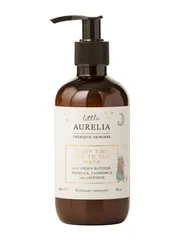
Works for:
based on ingredients and %- Cleansing
Can it cause trouble?
- Irritation risk: high
- Comedogenic risk ingredients: 0
Key actives


Works for
Cleansing
What does the product description say?
BioOrganic and sulphate-free, Little Aurelia's Sleep Time Top To Toe Wash utilities creamy coconut oil to create a gentle, foaming lather that leaves skin thoroughly cleansed and hair sumptuously soft all while respecting the balance of your little one's skin.
Source: Cultbeauty
This product works by removing dirt and oil from the surface of the skin. It uses a combination of mild cleansing agents (decyl glucoside, glyceryl caprylate/caprate, sodium cocoyl glutamate, sodium cocoyl isethionate, stearic acid, xanthan gum) and should be able to cleanse the skin gently. Still keep in mind that any cleansing can disrupt the skin barrier, and most people do not need to cleanse their skin more than once per day.
Even though this formulation is mild, the following cleansing agents could trigger an irritation or allergy for some people: decyl glucoside
Helps oil and water mix together. Can be irritating
Helps oil and water mix together
Helps water and oil mix together. Can be used as a cleansing agent
Helps oil and water mix together and works as an emollient
Used to create a thicker product consistency
How honest is this product?
| Promise | Can it deliver? |
|---|---|
| Cleansing |
Total Promises Fulfilled score: 100/100.
Potential irritants
Comedogenic ingredients
No comedogenic ingredients detected
User reviews (0)
Averages from community submissions.
No reviews yet for this product.
Be the first to share your experience!
Tried this product?
Help capture what the ingredient list can't—texture, finish, pilling, scent, and more. Answer what you can, skip the rest.
Takes ~30 seconds.
Reviews are shown in aggregate. No personal details.
| Product | Similarity | Price | Irritancy |
|---|---|---|---|
 Aurelia Little Aurelia Sleep Time Top To Toe Wash | Current | - | |
Baxter of California Invigorating Body Wash - Citrus & Herbal Musk | 77% | ≈ $13.52 | |
 Kiehl's Bath and Shower Liquid Body Cleanser Grapefruit | 77% | ≈ $34.03 | |
LOréal Paris Men Expert Cool Power Shower Gel | 76% | ≈ $5.21 | |
 Green People Body Moisturising Shower Gel | 76% | ≈ $25.36 | |
 so natural Green Clay Acne Body Wash | 75% | $48.50 |
Key Actives
Helps calm down inflammation in skin and can help reduce itching. Helps to repair the skin barrier and keep skin hydrated
An effective moisturizing and skin barrier repair ingredient. Helps calm down inflammation and has some anti-oxidant properties
Used for skin exfoliation. It has an anti-inflammatory and anti-bacterial effect, helps to unclog pores, prevent blemishes and speed up healing of the existing ones. Sometimes referred to as a BHA (beta-hydroxy acid)
A plant oil that is effective in reducing irritation in skin, restore the barrier function and support its hydration
Pure form of vitamin E. Can help moisturise and protect the skin from free radicals. Often used to help stabilise other ingredients or the formula itself
Helps oil and water mix together and works as an emollient
An emollient that helps soften the skin
Helps water and oil mix together. Can be used as a cleansing agent
One of the best moisturizing ingredients. Naturally present in skin. It attracts water to the upper layer of the skin working as a humectant
Helps oil and water mix together. Can be irritating
Helps oil and water mix together
An emollient that helps soften the skin and could be helpful in repairing its barrier function
A great emollient due to its high linoleic acid content. One of the most effective plant oils in helping skin hydration and repairing skin barrier function
Used to create a thicker product consistency
Potential irritants
A plant extract that has some anti-oxidant and anti-bacterial properties. Can be irritating
An essential oil. Potential allergen and can be irritating. It has some anti-bacterial properties
An essential oil that is used as a fragrance and can be irritating. It might have some anti-oxidant effect in skin
A plant oil that might have an antibacterial and some antioxidant effect. Is a common allergen and irritant
Plant extract. Might have some anti-oxidant properties. Can be irritating
Plant extract that can have healing and anti-inflammatory properties. It is a potential allergen and can be irritating
Used for skin exfoliation. It has an anti-inflammatory and anti-bacterial effect, helps to unclog pores, prevent blemishes and speed up healing of the existing ones. Sometimes referred to as a BHA (beta-hydroxy acid)
A preservative. Can be used to mask unpleasant smell. Can be irritating
A common frangrance that can easily irritate skin, especially if exposed to air, light or heat
Traditionally used to treat sunburns, dermatitis and inflammation, but evidence for its effectiveness is lacking. The extract can contain humectants that help attract water into the skin
Helps water and oil mix together. Can be used as a cleansing agent
An emollient that helps soften the skin and could be helpful in repairing its barrier function
An exfoliating and moisturizing alpha-hydroxy acid (AHA). Typically causes less irritation than other AHAs, for example, glycolic acid. At high concentrations (about 15%), lactic acid can help reduce lines and wrinkles. Recent studies show that lactic acid can support the "good" bacteria living on skin's surface (healthy skin microbiome)
Can work as an exfoliant but is typically used to adjust the product pH
Comedogenic ingredients
We couldn't find any comedogenic ingredients in this product
All ingredients
Traditionally used to treat sunburns, dermatitis and inflammation, but evidence for its effectiveness is lacking. The extract can contain humectants that help attract water into the skin
Helps water and oil mix together. Can be used as a cleansing agent
One of the best moisturizing ingredients. Naturally present in skin. It attracts water to the upper layer of the skin working as a humectant
An effective moisturizing and skin barrier repair ingredient. Helps calm down inflammation and has some anti-oxidant properties
A plant extract that has some anti-oxidant and anti-bacterial properties. Can be irritating
An emollient that helps soften the skin and could be helpful in repairing its barrier function
A plant oil that is effective in reducing irritation in skin, restore the barrier function and support its hydration
An essential oil. Potential allergen and can be irritating. It has some anti-bacterial properties
An essential oil that is used as a fragrance and can be irritating. It might have some anti-oxidant effect in skin
A plant oil that might have an antibacterial and some antioxidant effect. Is a common allergen and irritant
Plant extract. Might have some anti-oxidant properties. Can be irritating
Plant extract that can have healing and anti-inflammatory properties. It is a potential allergen and can be irritating
A great emollient due to its high linoleic acid content. One of the most effective plant oils in helping skin hydration and repairing skin barrier function
Helps reduce the irritating effect of surfactants
An exfoliating and moisturizing alpha-hydroxy acid (AHA). Typically causes less irritation than other AHAs, for example, glycolic acid. At high concentrations (about 15%), lactic acid can help reduce lines and wrinkles. Recent studies show that lactic acid can support the "good" bacteria living on skin's surface (healthy skin microbiome)
Used for skin exfoliation. It has an anti-inflammatory and anti-bacterial effect, helps to unclog pores, prevent blemishes and speed up healing of the existing ones. Sometimes referred to as a BHA (beta-hydroxy acid)
Can work as an exfoliant but is typically used to adjust the product pH
Helps calm down inflammation in skin and can help reduce itching. Helps to repair the skin barrier and keep skin hydrated
Pure form of vitamin E. Can help moisturise and protect the skin from free radicals. Often used to help stabilise other ingredients or the formula itself
A preservative. Can be used to mask unpleasant smell. Can be irritating
A common frangrance that can easily irritate skin, especially if exposed to air, light or heat
Ingredient list view
Water, Aloe barbadensis leaf juice, Sodium cocoyl isethionate, Stearic acid, Prunus armeniaca kernel oil, Glycerin, Decyl glucoside, Glyceryl caprylate/caprate, Sodium cocoyl glutamate, Avena sativa kernel extract, Calendula officinalis flower extract, Persea gratissima oil, Borago officinalis seed oil, Lavandula angustifolia oil, Tilia cordata oil, Angelica archangelica root oil, Anthemis nobilis flower oil, Calendula officinalis flower oil, Cananga odorata flower oil, Aesculus hippocastanum seed extract, Chamomilla recutita flower extract, Helianthus annuus seed oil, Potassium sorbate, Xanthan gum, Hydroxypropyl guar hydroxypropyltrimonium chloride, Lactic acid, Salicylic acid, Citric acid, Allantoin, Tocopherol, Sodium phytate, Benzyl alcohol, Sorbic acid, Linalool, Limonene, Geraniol
- Final Report on the Safety Assessment of Sodium Cocoyl Isethionate
- Glycerol and the skin: holistic approach to its origin and functions
- Ecofriendly surfactant is allergen of the year
- Safety Assessment of Amino Acid Alkyl Amides as Used in Cosmetics
- Irritant and sensitizing potential of eight surfactants commonly used in skin cleansers: an evaluation of 105 patients
- Topical application of Calendula officinalis (L.): Formulation and evaluation of hydrophilic cream with antioxidant activity
- The seamy side of natural medicines: contact sensitization to arnica (Arnica montana L.) and marigold (Calendula officinalis L.)
- Final report on the safety assessment of Calendula officinalis extract and Calendula officinalis
- Contact dermatitis as an adverse reaction to some topically used European herbal medicinal products – part 1: Achillea millefolium–Curcuma longa
- Dermatology News - Commentary: Borage Seed Oil
- Undershirts coated with borage oil alleviate the symptoms of atopic dermatitis in children
- Safety Assessment of Anthemis nobilis– Derived Ingredients as Used in Cosmetics
- Effect of Olive and Sunflower Seed Oil on the Adult Skin Barrier: Implications for Neonatal Skin Care
- Topically Applied Sunflower Seed Oil Prevents Invasive Bacterial Infections in Preterm Infants in Egypt
- Effect of topically applied lipids on surfactant-irritated skin
- Impact of topical oils on the skin barrier: possible implications for neonatal health in developing countries
- Epidermal and dermal effects of topical lactic acid
- Dual Effects of Alpha-Hydroxy Acids on the Skin
- Salicylic acid as a peeling agent: a comprehensive review
- Beta Hydroxy Acids
- A review of toxicity from topical salicylic acid preparations
- Glycolic Acid Peels Versus Salicylic–Mandelic Acid Peels in Active Acne Vulgaris and Post‐Acne Scarring and Hyperpigmentation: A Comparative Study
- Profile of wound healing process induced by allantoin
- Vitamin E in dermatology
- Vitamin E and Skin Health
- Annex I: Clinical evidence regarding sensitisation to individual fragrance chemicals and to natural extracts