Works for
1 of 4 advertised claims delivered
Moisturizing15 ingredients credited for this claimGood support
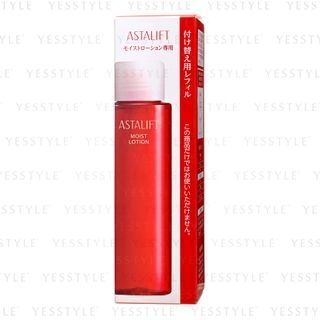
“Moist Lotion”
This product can help improve hydration of the skin with the two types of ingredients.
The first type is called “humectants”:
these ingredients help attract water.
When humectants are on the surface of the skin, they “pull in” the moisture from the outside environment, or from
within deeper layers of the skin. The following ingredients in this product do the job:
acetyl hydroxyproline, arginine.
This product also contains ingredients called “occlusives”. They help reduce the speed with which our skin loses moisture to the outside environment. These ingredients also help soften the upper layer of the skin, so it feels less tight and nicer to the touch. The following ingredients in this product do the job: arginine, acetyl hydroxyproline.
Evens skin tone2 ingredients credited for this claimWeak support
“The brand is best known for its award-winning UV Protection Brightening Set, which blocks UVA rays to minimize dark spots and create translucent skin.”
Effective ingredients missing or their concentration is too low
Anti-aging3 ingredients credited for this claimWeak support
“Using these technologies, the brand created nano-ingredients for improved absorption into skin; three types of collagen to restore moisture, elasticity and firmness; a combined antioxidant ingredient that boosts the skin's rejuvenating power; and a light-analyzing powder that makes skin look smoother and more even-toned.”
Effective ingredients missing or their concentration is too low.
Anti-blemish1 ingredient credited for this claimWeak support
“Its cosmetics range targets concerns such as signs of aging, dark spots and uneven skin tone, dry skin, loss of firmness, visible pores, and acne.”
Effective ingredients missing or their concentration is too low.
Can it cause trouble?
Irritancy3 strong irritants: Retinyl palmitate, Rosa damascena flower oil + 1 more — patch-test recommendedHigh risk
ComedogenicClean of flagged comedogenic ingredientsNone flagged
User reviews
Be the first — your take helps the next person decide.
Ingredients
Filter by role to see what each ingredient is doing.
Water~45–55%
Dipropylene glycol~7.5–9.2%
- Irritation risk
- Low
Helps to dissolve other ingredients in a formulation. Slows down the rate of product drying
More about Dipropylene glycolPeg-32~4.1–5.1%
- Irritation risk
- Low
Helps dissolve other ingredients and attract water to the upper layer of the skin
More about Peg-32Butylene glycol~3–3.7%
- Irritation risk
- Low
Used to create a nice product texture and help delivery of other ingredients. Might be somewhat helpful in attracting water to the upper layer of the skin
More about Butylene glycolPentylene glycol~2.3–2.8%
- Irritation risk
- Medium
Used to preserve products, dissolve other ingredients and create a nice product texture
More about Pentylene glycolGlycerin~1.9–2.4%
- Irritation risk
- Low
One of the best moisturizing ingredients. Naturally present in skin. It attracts water to the upper layer of the skin working as a humectant
More about GlycerinPeg-6~1.6–1.9%
- Irritation risk
- Low
Helps to dissolve other ingredients and attract water to the upper layer of the skin
More about Peg-6Magnesium ascorbyl phosphate~1.3–1.6%
- Irritation risk
- Medium
A derivative of vitamin C that is more stable, but less bioavailable than the pure form of vitamin C. It does not penetrate the skin well, but has been shown to convert to pure vitamin C once in skin. It can be helpful in stimulating collagen production and lightening the skin tone, but the required concentration is likely to be very high
More about Magnesium ascorbyl phosphateSodium hyaluronate~1.1–1.3%
- Irritation risk
- Low
One of the best moisturizing ingredients. Attracts water into the upper layer of the skin
More about Sodium hyaluronateSoluble collagen~0.95–1.15%
- Irritation risk
- Low
A typically plant-derived compound that is supposed mimic human collagen. Cannot penetrate the skin barrier so is not particularly useful in skincare products beyond attracting water to the upper layer of the skin
More about Soluble collagenHydrolyzed collagen~0.75–1.1%
- Irritation risk
- Low
A typically plant-derived compound that is supposed mimic human collagen. Cannot penetrate the skin barrier so is not particularly useful in skincare products beyond attracting water to the upper layer of the skin
More about Hydrolyzed collagenHaematococcus pluvialis oil~0.55–0.8%
- Irritation risk
- Low
Glycyrrhizic acid~0.5–0.7%
- Irritation risk
- Low
Retinyl palmitate~0.45–0.65%
- Irritation risk
- High
Three steps removed from the active form of vitamin A - retinoic acid. To have an effect in the skin, it first needs to be converted twice to become the retinoic acid. This means it is less potent than retinol, but could also be less irritating. Once converted to the retinoic acid in the skin, it helps against all signs of aging, improves skin cell turnover and helps fight blemishes and clogged pores. However, in many cosmetic formulations, it is used in a concentration that is too low to have the full effect
More about Retinyl palmitateAcetyl hydroxyproline~0.45–0.65%
- Irritation risk
- Low
An amino-acid that can support ceramides production in skin and reduce water-loss
More about Acetyl hydroxyprolineTocopherol~0.4–0.6%
- Irritation risk
- Low
Pure form of vitamin E. Can help moisturise and protect the skin from free radicals. Often used to help stabilise other ingredients or the formula itself
More about TocopherolArginine~0.35–0.6%
- Irritation risk
- Low
An amino acid that is naturally present in skin and helps keep it hydrated. When used together with AHAs, it can reduce their irritating effect on the skin
More about ArgininePeg-60 hydrogenated castor oil~0.35–0.65%
- Irritation risk
- Medium
Helps oil and water mix together
More about Peg-60 hydrogenated castor oilOctyldodecyl myristate~0.3–0.6%
- Irritation risk
- Low
Helps soften the upper layer of the skin
More about Octyldodecyl myristatePolyglyceryl-10 myristate~0.25–0.5%
- Irritation risk
- Low
Polyglyceryl-2 stearate~0.25–0.5%
- Irritation risk
- Medium
Helps water and oil mix together
More about Polyglyceryl-2 stearatePolyglyceryl-10 oleate~0.25–0.45%
- Irritation risk
- Low
Helps soften the upper layer of the skin
More about Polyglyceryl-10 oleateSucrose stearate~0.25–0.5%
Lecithin~0.25–0.45%
- Irritation risk
- Low
Used mostly for creating emulsions - helping oil and water mix together. Helps soften the upper layer of the skin
More about LecithinGlycerin~0.2–0.4%
- Irritation risk
- Low
One of the best moisturizing ingredients. Naturally present in skin. It attracts water to the upper layer of the skin working as a humectant
More about GlycerinGlucosylrutin~0.15–0.3%
- Irritation risk
- Low
Xanthan gum~0.2–0.35%
- Irritation risk
- Low
Used to create a thicker product consistency
More about Xanthan gumRosa damascena flower oil~0.15–0.25%
- Irritation risk
- High
Used as a fragrance. Can be irritating
More about Rosa damascena flower oilCitric acid~0.1–0.2%
- Irritation risk
- Medium
Can work as an exfoliant but is typically used to adjust the product pH
More about Citric acidSodium citrate~0.1–0.2%
- Irritation risk
- Medium
Helps to control the skin's pH level. Maintains the skin's natural film of amino-lactic acids and oils. Helps to preserve products
More about Sodium citrateSodium hydroxide~0.1–0.15%
Parfum~0.05%
- Irritation risk
- High
An aromatic blend of unspecified and possibly irritating ingredients
More about ParfumPhenoxyethanol~0.05–0.15%
- Irritation risk
- Low
A preservative. It helps prevent bacterial growth in cosmetic products
More about PhenoxyethanolIngredient list view
Water, Dipropylene glycol, Peg-32, Butylene glycol, Pentylene glycol, Glycerin, Peg-6, Magnesium ascorbyl phosphate, Sodium hyaluronate, Soluble collagen, Hydrolyzed collagen, Haematococcus pluvialis oil, Unknown, Glycyrrhizic acid, Retinyl palmitate, Acetyl hydroxyproline, Tocopherol, Arginine, Peg-60 hydrogenated castor oil, Octyldodecyl myristate, Polyglyceryl-10 myristate, Polyglyceryl-2 stearate, Polyglyceryl-10 oleate, Sucrose stearate, Lecithin, Unknown, Glycerin, Glucosylrutin, Xanthan gum, Rosa damascena flower oil, Citric acid, Sodium citrate, Sodium hydroxide, Parfum, Phenoxyethanol
Compare prices
Retailers ranked by price — lowest first.

Affiliate links · prices updated regularly
Sources cited in this review
Every concentration estimate and effectiveness label is anchored to one of these 11 studies and safety reviews.
- 1
- 2
- 3
- 4Topical L-ascorbic acid: percutaneous absorption studiesncbi.nlm.nih.gov
- 5Hyaluronic acid: A key molecule in skin agingncbi.nlm.nih.gov
- 6

Affiliate links · As an Amazon Associate, WIMJ earns from qualifying purchases.