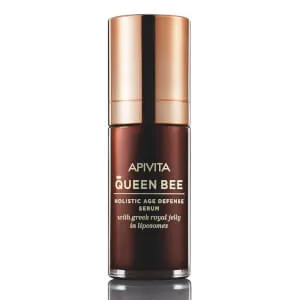
APIVITA Queen Bee Holistic Age Defense Serum

APIVITA Queen Bee Holistic Age Defense Serum

Efficacy83/100IrritancyHigh

Works for

Moisturizing
Panthenol, Glycerin + 17 more
Works well
What the product description says
“Ramping up vital moisture levels with a blend of Hyaluronic Acid and Cistus extract, the cream gets to work on addressing the look of dark spots and redness to reveal a radiant complexion with improved tone.”
Source: Mankind

This product can help improve hydration of the skin with the two types of ingredients.

The first type is called “humectants”:
these ingredients help attract water. When humectants are on the surface of the skin, they “pull in” the moisture from the outside environment, or from within deeper layers of the skin. The following ingredients in this product do the job: arginine, glycerin.

This product also contains ingredients called “occlusives”. They help reduce the speed with which our skin loses moisture to the outside environment. These ingredients also help soften the upper layer of the skin, so it feels less tight and nicer to the touch. The following ingredients in this product do the job: arginine, cera alba.

The following ingredients in this product are especially good for supporting the skin barrier and helping with the hydration level: panthenol

PanthenolHero· HumectantEffect: HighHelps attract water to the upper layer of the skin and can help improve skin barrier function~1.2–1.4%
GlycerinKey active· HumectantEffect: HighOne of the best moisturizing ingredients. Naturally present in skin. It attracts water to the upper layer of the skin working as a humectant~4.6–5.7%
Helianthus annuus seed oilKey active· Emollient, OcclusiveEffect: HighA great emollient due to its high linoleic acid content. One of the most effective plant oils in helping skin hydration and repairing skin barrier function~1.7–2.1%
Lupinus albus seed extractKey activeEffect: MediumA plant extract that helps soften the upper layer of the skin~0.75–1.1%
Cera albaKey active· Emollient, OcclusiveEffect: HighForms a protective barrier that holds water and keeps dry skin hydrated. Keeps an emulsion from separating into its oil and liquid components, and increases the thickness of a product. Can be an allergen~0.65–1%
Royal jellyKey active· HumectantEffect: MediumHelps attract water to the upper layer of the skin~0.65–1%
Triticum vulgare germ oilKey active· EmollientEffect: HighA good emoillient. Contains vitamin E which can help neutralise free radicals, however the oil is unstable. Avoid if you have gluten or wheat sensitivity (including food allergies).~0.6–0.9%
Olea europaea fruit oilKey active· EmollientEffect: MediumAn emollient that helps soften the skin but is not effective for restoring its barrier function. Might be helpful to calm down inflammation~0.5–0.75%
Sodium hyaluronateKey active· HumectantEffect: HighOne of the best moisturizing ingredients. Attracts water into the upper layer of the skin~0.45–0.7%
ArginineKey active· Humectant, OcclusiveEffect: HighAn amino acid that is naturally present in skin and helps keep it hydrated. When used together with AHAs, it can reduce their irritating effect on the skin~0.3–0.6%
Olus oil· EmollientEffect: LowAn oil from a mixture of different vegetables. Helps soften the upper layer of the skin~2.4–2.9%
Butylene glycol· HumectantEffect: LowUsed to create a nice product texture and help delivery of other ingredients. Might be somewhat helpful in attracting water to the upper layer of the skin~1.9–2.3%
Glyceryl stearate· EmollientEffect: LowAn emollient that softens the skin and forms a protective layer on its surface. Helps water and oil mix together~0.55–0.8%
Caprylyl glycol· Humectant, EmollientEffect: LowHelps preserve products and creates a nice product texture~0.5–0.75%
Rosa damascena flower oilEffect: LowUsed as a fragrance. Can be irritating~0.45–0.7%
Ascorbyl tetraisopalmitateEffect: Low, below effective doseA vitamin C derivative. Studies show that is might be effective in reducing hyperpigmentation, but there are no studies confirming that it is effectively converted into the bioavailable form of Vitamin C in skin. It is not clear how this derivative compares in effectiveness to the topical application of bioavailable form of vitamin C (L-ascorbic acid)~0.55–0.8%
TocopherolEffect: Low, below effective dosePure form of vitamin E. Can help moisturise and protect the skin from free radicals. Often used to help stabilise other ingredients or the formula itself~0.5–0.75%
LecithinEffect: Low, below effective doseUsed mostly for creating emulsions - helping oil and water mix together. Helps soften the upper layer of the skin~0.45–0.65%
Butyrospermum parkii butterUnder-dosedA great moisturising ingredient that softens the skin and reduces water loss from its upper layer. It also can be helpful in protecting skin from free radicals~0.55–0.8%
Evens skin tone
Retinyl palmitate, Ascorbyl tetraisopalmitate
May help
What the product description says
“Ramping up vital moisture levels with a blend of Hyaluronic Acid and Cistus extract, the cream gets to work on addressing the look of dark spots and redness to reveal a radiant complexion with improved tone.”
Source: Mankind

The following ingredient (ingredients) in this product might be helpful, but there is no evidence to confirm that it actually works: retinyl palmitate.

Retinyl palmitateKey activeEffect: MediumThree steps removed from the active form of vitamin A - retinoic acid. To have an effect in the skin, it first needs to be converted twice to become the retinoic acid. This means it is less potent than retinol, but could also be less irritating. Once converted to the retinoic acid in the skin, it helps against all signs of aging, improves skin cell turnover and helps fight blemishes and clogged pores. However, in many cosmetic formulations, it is used in a concentration that is too low to have the full effect~0.45–0.7%
Ascorbyl tetraisopalmitateUnder-dosedA vitamin C derivative. Studies show that is might be effective in reducing hyperpigmentation, but there are no studies confirming that it is effectively converted into the bioavailable form of Vitamin C in skin. It is not clear how this derivative compares in effectiveness to the topical application of bioavailable form of vitamin C (L-ascorbic acid)~0.55–0.8%
Anti-aging
Retinyl palmitate, Magnesium aluminum silicate + 3 more
May help
What the product description says
“Powered by Greek Royal Jelly encapsulated in liposomes, the cream works to accelerate regeneration, whilst smoothing out the appearance of wrinkles and boosting elasticity and vigour alongside Lupine extract (a legume with emollient and protecting properties).”
Source: Mankind

This product contains retinyl palmitate. This ingredient might be able to help reduce and prevent fine lines and wrinkles, improve skin elasticity and firmness, but there is not enough evidence that it actually works.

Retinyl palmitateKey activeEffect: MediumThree steps removed from the active form of vitamin A - retinoic acid. To have an effect in the skin, it first needs to be converted twice to become the retinoic acid. This means it is less potent than retinol, but could also be less irritating. Once converted to the retinoic acid in the skin, it helps against all signs of aging, improves skin cell turnover and helps fight blemishes and clogged pores. However, in many cosmetic formulations, it is used in a concentration that is too low to have the full effect~0.45–0.7%
Magnesium aluminum silicateEffect: LowMight be helpful in restoring skin barrier function and, when combined with zinc carbonate and malonic acid, reducing fine lines and wrinkles by stimulating elastin production. Also helps stabilize the product formulation~0.45–0.7%
Butyrospermum parkii butterEffect: Low, below effective doseA great moisturising ingredient that softens the skin and reduces water loss from its upper layer. It also can be helpful in protecting skin from free radicals~0.55–0.8%
TocopherolEffect: Low, below effective dosePure form of vitamin E. Can help moisturise and protect the skin from free radicals. Often used to help stabilise other ingredients or the formula itself~0.5–0.75%
Ascorbyl tetraisopalmitateUnder-dosedA vitamin C derivative. Studies show that is might be effective in reducing hyperpigmentation, but there are no studies confirming that it is effectively converted into the bioavailable form of Vitamin C in skin. It is not clear how this derivative compares in effectiveness to the topical application of bioavailable form of vitamin C (L-ascorbic acid)~0.55–0.8%

Can it cause trouble?

Irritancy
15 strong irritants: Retinyl palmitate, Boswellia carterii oil + 13 more — patch-test recommended
High risk
We flagged 32 ingredients with irritancy potential. Severity depends on your sensitivity threshold; the table lists the worst offenders first.
IngredientFunctionIrritationEst. amount
Royal jellyHelps attract water to the upper layer of the skinHigh~0.65–1%est.
Phenethyl alcoholA fragrance. Can be irritatingHigh~0.5–0.8%est.
Decyl glucosideHelps oil and water mix together. Can be irritatingHigh~0.6–0.85%est.
Retinyl palmitateThree steps removed from the active form of vitamin A - retinoic acid. To have an effect in the skin, it first needs to be converted twice to become the retinoic acid. This means it is less potent than retinol, but could also be less irritating. Once converted to the retinoic acid in the skin, it helps against all signs of aging, improves skin cell turnover and helps fight blemishes and clogged pores. However, in many cosmetic formulations, it is used in a concentration that is too low to have the full effectHigh~0.45–0.7%est.
Boswellia carterii oilUsed as a fragrance. Can be irritatingHigh~0.45–0.7%est.
Santalum spicata wood oil—High~0.45–0.65%est.
Rosa damascena flower oilUsed as a fragrance. Can be irritatingHigh~0.45–0.7%est.
Commiphora myrrha oilUsed as a fragranceHigh~0.45–0.7%est.
ParfumAn aromatic blend of unspecified and possibly irritating ingredientsHigh~0.25–0.5%est.
Benzyl salicylateA fragrance. Is a likely irritantHigh~0.25–0.45%est.
LinaloolA fragrance. Can be irritatingHigh~0.25–0.45%est.
Butylphenyl methylpropionalA fragrance. Can trigger allergic reactions and be irritatingHigh~0.2–0.4%est.
Hydroxyisohexyl 3-cyclohexene carboxaldehydeA fragrance. Can be irritatingHigh~0.15–0.3%est.
LimoneneA common frangrance that can easily irritate skin, especially if exposed to air, light or heatHigh~0.15–0.25%est.
CitronellolA fragrance. Can be irritatingHigh~0.15–0.3%est.
GeraniolA fragrance. Can be irritatingHigh~0.15–0.25%est.
Alpha-isomethyl iononeA fragrance. Potential allergen and can be irritatingHigh~0.1–0.2%est.
HydroxycitronellalA fragrance. A likely allergen and can be irritatingHigh~0.1–0.15%est.
EthoxydiglycolHelps to improve the product consistencyMedium~1.3–1.6%est.
Lupinus albus seed extractA plant extract that helps soften the upper layer of the skinMedium~0.75–1.1%est.
Sigesbeckia orientalis extractA plant extract that can contain an anti-inflammatory compoundMedium~0.6–0.9%est.
Cera albaForms a protective barrier that holds water and keeps dry skin hydrated. Keeps an emulsion from separating into its oil and liquid components, and increases the thickness of a product. Can be an allergenMedium~0.65–1%est.
Ascorbyl tetraisopalmitateA vitamin C derivative. Studies show that is might be effective in reducing hyperpigmentation, but there are no studies confirming that it is effectively converted into the bioavailable form of Vitamin C in skin. It is not clear how this derivative compares in effectiveness to the topical application of bioavailable form of vitamin C (L-ascorbic acid)Medium~0.55–0.8%est.
Olea europaea fruit oilAn emollient that helps soften the skin but is not effective for restoring its barrier function. Might be helpful to calm down inflammationMedium~0.5–0.75%est.
Olea europaea leaf extractA plant extract that might have some anti-oxidant and anti-inflammatory properties but evidence for effectiveness in skin is missingMedium~0.45–0.65%est.
Rosa canina fruit extractA plant extract that might have some anti-oxidant properties, but evidence is lackingMedium~0.45–0.7%est.
Tocopheryl acetateA more stable but less bio-available form of vitamin E compared to Tocopherol. Might help moisturize and protect the skin from free radicals, but mostly used in low concentrations to stabilize other ingredients.Medium~0.5–0.75%est.
C12-20 alkyl glucosideHelps water and oil mix togetherMedium~0.5–0.75%est.
Caprylyl glycolHelps preserve products and creates a nice product textureMedium~0.5–0.75%est.
EthylhexylglycerinA preservativeMedium~0.45–0.65%est.
Disodium edtaStabilizes the product formulationMedium~0.3–0.6%est.
Citric acidCan work as an exfoliant but is typically used to adjust the product pHMedium~0.3–0.6%est.
Comedogenic
2 ingredients rated 2 or more on the 0–5 pore-clogging scale
2 flagged
These ingredients have a comedogenic rating of 2 or more on a 0–5 scale; the table shows each one's rating. In leave-on products they can clog pores in acne-prone skin.
IngredientFunctionRatingEst. amount
Triticum vulgare germ oilA good emoillient. Contains vitamin E which can help neutralise free radicals, however the oil is unstable. Avoid if you have gluten or wheat sensitivity (including food allergies).3/5~0.6–0.9%est.
Butyrospermum parkii butterA great moisturising ingredient that softens the skin and reduces water loss from its upper layer. It also can be helpful in protecting skin from free radicals3/5~0.55–0.8%est.

User reviews

Would you recommend?
No community reviews yet.

Be the first — your take helps the next person decide.

Ingredients

Filter by role to see what each ingredient is doing.

Water~45–55%
Formula
Irritation risk
Low

Plain old water

More about Water
Water~12–14%
Formula
Irritation risk
Low

Plain old water

More about Water
Glycerin~4.6–5.7%
Key active
Irritation risk
Low
Works for
Moisturizing

One of the best moisturizing ingredients. Naturally present in skin. It attracts water to the upper layer of the skin working as a humectant

More about Glycerin
C14-22 alcohols~3.2–3.9%
Formula
Irritation risk
Low

A non-drying alcohol that helps stabilize product formulations

More about C14-22 alcohols
Olus oil~2.4–2.9%
Formula
Irritation risk
Low
Works for
Moisturizing

An oil from a mixture of different vegetables. Helps soften the upper layer of the skin

More about Olus oil
Butylene glycol~1.9–2.3%
Formula
Irritation risk
Low
Works for
Moisturizing

Used to create a nice product texture and help delivery of other ingredients. Might be somewhat helpful in attracting water to the upper layer of the skin

More about Butylene glycol
Dodecane~1.7–2%
Formula
Irritation risk
Low
More about Dodecane
Helianthus annuus seed oil~1.7–2.1%
Key active
Irritation risk
Low
Works for
Moisturizing

A great emollient due to its high linoleic acid content. One of the most effective plant oils in helping skin hydration and repairing skin barrier function

More about Helianthus annuus seed oil
Ethoxydiglycol~1.3–1.6%
Irritant · medium
Irritation risk
Medium

Helps to improve the product consistency

More about Ethoxydiglycol
Panthenol~1.2–1.4%
Hero · Moisturizing
Irritation risk
Low
Works for
MoisturizingReduces rednessReduces irritation

Helps attract water to the upper layer of the skin and can help improve skin barrier function

More about Panthenol
Gynostemma pentaphyllum leaf/stem extract~1–1.3%
Formula
Lupinus albus seed extract~0.75–1.1%
Key activeIrritant · medium
Irritation risk
Medium
Works for
Moisturizing

A plant extract that helps soften the upper layer of the skin

More about Lupinus albus seed extract
Cistus incanus flower/leaf/stem extract~0.7–1%
Formula
Royal jelly~0.65–1%
Key activeIrritant · high
Irritation risk
High
Works for
Moisturizing

Helps attract water to the upper layer of the skin

More about Royal jelly
Mel extract~0.65–0.95%
Formula
Irritation risk
Low
More about Mel extract
Sigesbeckia orientalis extract~0.6–0.9%
Irritant · medium
Irritation risk
Medium
Works for
Anti-inflammatory

A plant extract that can contain an anti-inflammatory compound

More about Sigesbeckia orientalis extract
Rabdosia rubescens extract~0.6–0.9%
Formula
Triticum vulgare germ oil~0.6–0.9%
Key activeComedogenic 3/5
Irritation risk
Low
Comedogenicity
3/5
Works for
MoisturizingAnti-oxidation

A good emoillient. Contains vitamin E which can help neutralise free radicals, however the oil is unstable. Avoid if you have gluten or wheat sensitivity (including food allergies).

More about Triticum vulgare germ oil
Cera alba~0.65–1%
Key activeIrritant · medium
Irritation risk
Medium
Works for
CleansingMoisturizing

Forms a protective barrier that holds water and keeps dry skin hydrated. Keeps an emulsion from separating into its oil and liquid components, and increases the thickness of a product. Can be an allergen

More about Cera alba
Ascorbyl tetraisopalmitate~0.55–0.8%
Under-dosedIrritant · medium
Irritation risk
Medium
Works for
Anti-oxidationAnti-agingEvens skin toneMoisturizing

A vitamin C derivative. Studies show that is might be effective in reducing hyperpigmentation, but there are no studies confirming that it is effectively converted into the bioavailable form of Vitamin C in skin. It is not clear how this derivative compares in effectiveness to the topical application of bioavailable form of vitamin C (L-ascorbic acid)

More about Ascorbyl tetraisopalmitate
Phenethyl alcohol~0.5–0.8%
Irritant · high
Irritation risk
High

A fragrance. Can be irritating

More about Phenethyl alcohol
Decyl glucoside~0.6–0.85%
Irritant · high
Irritation risk
High
Works for
Cleansing

Helps oil and water mix together. Can be irritating

More about Decyl glucoside
Glutamine~0.45–0.7%
Formula
Irritation risk
Low
More about Glutamine
Retinyl palmitate~0.45–0.7%
Key activeIrritant · high
Irritation risk
High
Works for
Anti-agingEvens skin toneAnti-blemishExfoliation

Three steps removed from the active form of vitamin A - retinoic acid. To have an effect in the skin, it first needs to be converted twice to become the retinoic acid. This means it is less potent than retinol, but could also be less irritating. Once converted to the retinoic acid in the skin, it helps against all signs of aging, improves skin cell turnover and helps fight blemishes and clogged pores. However, in many cosmetic formulations, it is used in a concentration that is too low to have the full effect

More about Retinyl palmitate
Butyrospermum parkii butter~0.55–0.8%
Under-dosedComedogenic 3/5
Irritation risk
Low
Comedogenicity
3/5
Works for
MoisturizingAnti-oxidationAnti-aging

A great moisturising ingredient that softens the skin and reduces water loss from its upper layer. It also can be helpful in protecting skin from free radicals

More about Butyrospermum parkii butter
Olea europaea fruit oil~0.5–0.75%
Key activeIrritant · medium
Irritation risk
Medium
Works for
Moisturizing

An emollient that helps soften the skin but is not effective for restoring its barrier function. Might be helpful to calm down inflammation

More about Olea europaea fruit oil
Tocopherol~0.5–0.75%
Formula
Irritation risk
Low
Works for
Anti-oxidationAnti-inflammatoryAnti-agingMoisturizing

Pure form of vitamin E. Can help moisturise and protect the skin from free radicals. Often used to help stabilise other ingredients or the formula itself

More about Tocopherol
Olea europaea leaf extract~0.45–0.65%
Irritant · medium
Irritation risk
Medium
Works for
Anti-oxidation

A plant extract that might have some anti-oxidant and anti-inflammatory properties but evidence for effectiveness in skin is missing

More about Olea europaea leaf extract
Sodium hyaluronate~0.45–0.7%
Key active
Irritation risk
Low
Works for
Moisturizing

One of the best moisturizing ingredients. Attracts water into the upper layer of the skin

More about Sodium hyaluronate
Rosa canina fruit extract~0.45–0.7%
Irritant · medium
Irritation risk
Medium
Works for
Anti-oxidation

A plant extract that might have some anti-oxidant properties, but evidence is lacking

More about Rosa canina fruit extract
Tocopheryl acetate~0.5–0.75%
Irritant · medium
Irritation risk
Medium
Works for
Anti-oxidation

A more stable but less bio-available form of vitamin E compared to Tocopherol. Might help moisturize and protect the skin from free radicals, but mostly used in low concentrations to stabilize other ingredients.

More about Tocopheryl acetate
Boswellia carterii oil~0.45–0.7%
Irritant · high
Irritation risk
High

Used as a fragrance. Can be irritating

More about Boswellia carterii oil
Santalum spicata wood oil~0.45–0.65%
Irritant · high
Rosa damascena flower oil~0.45–0.7%
Irritant · high
Irritation risk
High
Works for
Moisturizing

Used as a fragrance. Can be irritating

More about Rosa damascena flower oil
Commiphora myrrha oil~0.45–0.7%
Irritant · high
Irritation risk
High

Used as a fragrance

More about Commiphora myrrha oil
C12-20 alkyl glucoside~0.5–0.75%
Irritant · medium
Irritation risk
Medium
Works for
Cleansing

Helps water and oil mix together

More about C12-20 alkyl glucoside
Phenoxyethanol~0.5–0.75%
Formula
Irritation risk
Low

A preservative. It helps prevent bacterial growth in cosmetic products

More about Phenoxyethanol
Glyceryl stearate~0.55–0.8%
Formula
Irritation risk
Low
Works for
CleansingMoisturizing

An emollient that softens the skin and forms a protective layer on its surface. Helps water and oil mix together

More about Glyceryl stearate
Caprylyl glycol~0.5–0.75%
Irritant · medium
Irritation risk
Medium
Works for
Moisturizing

Helps preserve products and creates a nice product texture

More about Caprylyl glycol
Magnesium aluminum silicate~0.45–0.7%
Formula
Irritation risk
Low
Works for
Anti-aging

Might be helpful in restoring skin barrier function and, when combined with zinc carbonate and malonic acid, reducing fine lines and wrinkles by stimulating elastin production. Also helps stabilize the product formulation

More about Magnesium aluminum silicate
Ethylhexylglycerin~0.45–0.65%
Irritant · medium
Irritation risk
Medium

A preservative

More about Ethylhexylglycerin
Xanthan gum~0.4–0.6%
Formula
Irritation risk
Low
Works for
Cleansing

Used to create a thicker product consistency

More about Xanthan gum
Bisabolol~0.3–0.6%
Formula
Irritation risk
Low
Works for
Anti-inflammatoryReduces irritationAnti-oxidation

An active component of chamomile plant that historically has been used to calm down irritated skin. A recent study shows that bisabolol indeed can have some anti-inflammatory effect on skin, even though conclusive data is lacking. Bisabolol has a sweet floral scent and can be added to products for its aromatic properties

More about Bisabolol
Lecithin~0.45–0.65%
Formula
Irritation risk
Low
Works for
CleansingMoisturizing

Used mostly for creating emulsions - helping oil and water mix together. Helps soften the upper layer of the skin

More about Lecithin
Arginine~0.3–0.6%
Key active
Irritation risk
Low
Works for
Moisturizing

An amino acid that is naturally present in skin and helps keep it hydrated. When used together with AHAs, it can reduce their irritating effect on the skin

More about Arginine
Disodium edta~0.3–0.6%
Irritant · medium
Irritation risk
Medium

Stabilizes the product formulation

More about Disodium edta
Citric acid~0.3–0.6%
Irritant · medium
Irritation risk
Medium

Can work as an exfoliant but is typically used to adjust the product pH

More about Citric acid
Parfum~0.25–0.5%
Irritant · high
Irritation risk
High

An aromatic blend of unspecified and possibly irritating ingredients

More about Parfum
Benzyl salicylate~0.25–0.45%
Irritant · high
Irritation risk
High

A fragrance. Is a likely irritant

More about Benzyl salicylate
Linalool~0.25–0.45%
Irritant · high
Irritation risk
High

A fragrance. Can be irritating

More about Linalool
Butylphenyl methylpropional~0.2–0.4%
Irritant · high
Irritation risk
High

A fragrance. Can trigger allergic reactions and be irritating

More about Butylphenyl methylpropional
Hydroxyisohexyl 3-cyclohexene carboxaldehyde~0.15–0.3%
Irritant · high
Irritation risk
High

A fragrance. Can be irritating

More about Hydroxyisohexyl 3-cyclohexene carboxaldehyde
Limonene~0.15–0.25%
Irritant · high
Irritation risk
High

A common frangrance that can easily irritate skin, especially if exposed to air, light or heat

More about Limonene
Citronellol~0.15–0.3%
Irritant · high
Irritation risk
High

A fragrance. Can be irritating

More about Citronellol
Geraniol~0.15–0.25%
Irritant · high
Irritation risk
High

A fragrance. Can be irritating

More about Geraniol
Alpha-isomethyl ionone~0.1–0.2%
Irritant · high
Irritation risk
High

A fragrance. Potential allergen and can be irritating

More about Alpha-isomethyl ionone
Hydroxycitronellal~0.1–0.15%
Irritant · high
Irritation risk
High

A fragrance. A likely allergen and can be irritating

More about Hydroxycitronellal
Ingredient list view

Water, Water, Glycerin, C14-22 alcohols, Olus oil, Butylene glycol, Dodecane, Helianthus annuus seed oil, Ethoxydiglycol, Panthenol, Gynostemma pentaphyllum leaf/stem extract, Lupinus albus seed extract, Cistus incanus flower/leaf/stem extract, Royal jelly, Mel extract, Sigesbeckia orientalis extract, Rabdosia rubescens extract, Triticum vulgare germ oil, Cera alba, Ascorbyl tetraisopalmitate, Phenethyl alcohol, Decyl glucoside, Glutamine, Retinyl palmitate, Butyrospermum parkii butter, Olea europaea fruit oil, Tocopherol, Olea europaea leaf extract, Sodium hyaluronate, Rosa canina fruit extract, Tocopheryl acetate, Boswellia carterii oil, Santalum spicata wood oil, Rosa damascena flower oil, Commiphora myrrha oil, C12-20 alkyl glucoside, Phenoxyethanol, Glyceryl stearate, Caprylyl glycol, Magnesium aluminum silicate, Ethylhexylglycerin, Xanthan gum, Bisabolol, Lecithin, Arginine, Disodium edta, Citric acid, Parfum, Benzyl salicylate, Linalool, Butylphenyl methylpropional, Hydroxyisohexyl 3-cyclohexene carboxaldehyde, Limonene, Citronellol, Geraniol, Alpha-isomethyl ionone, Hydroxycitronellal

Compare prices

Retailers ranked by price — lowest first.

Amazon US
Price unavailable Out of stock
Check

Affiliate links · As an Amazon Associate, WIMJ earns from qualifying purchases.

Worth comparing, line by line.

Match % combines shared ingredients, the first five ingredients, shared actives and hero ingredients, irritancy (lower counts in the alternative's favour), texture and body area. Only products in the same routine step are compared.

Side-by-side comparison of this product against its closest alternatives
APIVITAQueen Bee Holistic Age Defense SerumYOUR PRODUCTDr. Barbara SturmThe Good C Vitamin C SerumISANARetinol ConcentrateIOPERetinol Expert 0.3%
Match—50%50%49%
Price—$144.62—$79.00
Shared key ingredients—6 of 136 of 136 of 13
Key difference—Ceramide NpPantolactoneAcetyl Tetrapeptide-11
Irritancy High Low Medium Medium
Drying alcohol————
View product Shop Shop Shop

More alternatives: Dior Capture Totale Retishot Retinol Night TreatmentMedik8 Liquid Peptides Advanced MP Wrinkle Reduction Serum with 13 Age-Defying Peptides

Cheaper alternatives? See how this stacks up against similar formulas.
We compare ingredient profiles across our catalog — pick the closest match for your budget.
Open dupe finder

Sources cited in this review

Every concentration estimate and effectiveness label is anchored to one of these 27 studies and safety reviews.

  1. 1
  2. 2
  3. 3
  4. 4
  5. 5
  6. 6
APIVITA Queen Bee Holistic Age Defense Serum
APIVITAQueen Bee Holistic Age Defense Serum

Affiliate links · As an Amazon Associate, WIMJ earns from qualifying purchases.

As an Amazon Associate, WIMJ earns from qualifying purchases.
