Works for
MoisturizingPanthenol, Caprylic/capric triglyceride + 12 moreWorks well
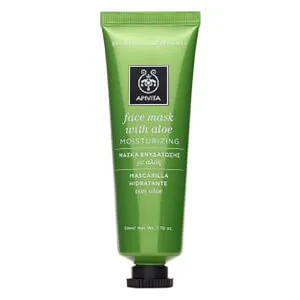
“Moisturizing Face Mask , Aloe”
This product can help improve hydration of the skin with the two types of ingredients.
The first type is called “humectants”:
these ingredients help attract water.
When humectants are on the surface of the skin, they “pull in” the moisture from the outside environment, or from
within deeper layers of the skin. The following ingredients in this product do the job:
arginine, glycerin.
This product also contains ingredients called “occlusives”. They help reduce the speed with which our skin loses moisture to the outside environment. These ingredients also help soften the upper layer of the skin, so it feels less tight and nicer to the touch. The following ingredients in this product do the job: arginine, butyrospermum parkii butter.
The following ingredients in this product are especially good for supporting the skin barrier and helping with the hydration level: panthenol
Anti-oxidationSide benefit · Camellia sinensis leaf extract, Triticum vulgare germ oil + 3 moreMay help
This product contains antioxidants (camellia sinensis leaf extract) that can help neutralize free radicals in skin to lessen the damage it gets from the UV light (sun). There is some human evidence for this effect in skin, though it is smaller or less consistent than the evidence for the best antioxidants.
Can it cause trouble?
Irritancy8 strong irritants: Rosa centifolia flower juice, Citrus aurantium bergamia fruit oil + 6 more — patch-test recommendedHigh risk
Comedogenic3 ingredients rated 2 or more on the 0–5 pore-clogging scale3 flagged


User reviews
Be the first — your take helps the next person decide.
Ingredients
Filter by role to see what each ingredient is doing.
Water~45–55%
Caprylic/capric triglyceride~6.7–8.2%
- Irritation risk
- Medium
A good mix of fatty acids that forms a protective layer on the skin. Improves the shelf life of products. Derived from coconut and glycerin
More about Caprylic/capric triglycerideSimmondsia chinensis seed oil~5.1–6.2%
- Irritation risk
- Medium
Softens the upper layer of skin and helps restore the healthy skin barrier. Has shown to help calm down inflammation in skin. It is a stable oil, meaning that it retains its properties even when exposed to air.
More about Simmondsia chinensis seed oilGlycerin~3.3–4.1%
- Irritation risk
- Low
One of the best moisturizing ingredients. Naturally present in skin. It attracts water to the upper layer of the skin working as a humectant
More about GlycerinTriticum vulgare germ oil~2.6–3.2%
- Irritation risk
- Low
- Comedogenicity
- 3/5
A good emoillient. Contains vitamin E which can help neutralise free radicals, however the oil is unstable. Avoid if you have gluten or wheat sensitivity (including food allergies).
More about Triticum vulgare germ oilPeg-40 hydrogenated castor oil~2.1–2.5%
- Irritation risk
- Medium
Helps oil and water mix together
More about Peg-40 hydrogenated castor oilButyrospermum parkii butter~1.9–2.3%
- Irritation risk
- Low
- Comedogenicity
- 3/5
A great moisturising ingredient that softens the skin and reduces water loss from its upper layer. It also can be helpful in protecting skin from free radicals
More about Butyrospermum parkii butterAloe barbadensis leaf juice powder~1.5–1.9%
- Irritation risk
- Medium
Traditionally used to treat sunburns, dermatitis and inflammation, but evidence for its effectiveness is lacking. The extract can contain humectants that help attract water into the skin
More about Aloe barbadensis leaf juice powderRosa centifolia flower juice~1.3–1.6%
- Irritation risk
- High
Camellia sinensis leaf extract~1–1.2%
- Irritation risk
- Low
Can contain potent anti-oxidant compounds (abbreviated ECG, GCG, EGC, and EGCG) that might help protect the skin from free radicals. Can help calm down inflammation and has some anti-bacterial properties. Unfortunately, these antioxidants are unstable and lose their effectiveness very quickly in products. The concentration of the antioxidant compounds in the extract also tends to be low to be effective in topical formulation
More about Camellia sinensis leaf extractSodium hyaluronate~0.7–1.1%
- Irritation risk
- Low
One of the best moisturizing ingredients. Attracts water into the upper layer of the skin
More about Sodium hyaluronateMel extract~0.6–0.9%
- Irritation risk
- Low
Citrus aurantium bergamia fruit oil~0.5–0.8%
- Irritation risk
- High
A plant oil with a high content of volatile compounds that can irritate the skin and lead to allergic reactions. Can lead to photosensitivity
More about Citrus aurantium bergamia fruit oilPelargonium graveolens flower oil~0.5–0.75%
- Irritation risk
- High
An essential oil. Can be irritating. Can become an allergen with oxidation
More about Pelargonium graveolens flower oilGlyceryl stearate~0.5–0.8%
- Irritation risk
- Low
An emollient that softens the skin and forms a protective layer on its surface. Helps water and oil mix together
More about Glyceryl stearateCyclopentasiloxane~0.5–0.75%
- Irritation risk
- Low
A silicone that helps improve the product texture and spreadability. Can absorb oil creating a short-term mattifying effect on the skin
More about CyclopentasiloxaneArginine~0.45–0.65%
- Irritation risk
- Low
An amino acid that is naturally present in skin and helps keep it hydrated. When used together with AHAs, it can reduce their irritating effect on the skin
More about ArginineTocopheryl acetate~0.45–0.65%
- Irritation risk
- Medium
A more stable but less bio-available form of vitamin E compared to Tocopherol. Might help moisturize and protect the skin from free radicals, but mostly used in low concentrations to stabilize other ingredients.
More about Tocopheryl acetatePeg-100 stearate~0.5–0.75%
- Irritation risk
- Low
Helps oil and water mix togehter and creates a nice product texture
More about Peg-100 stearatePhenoxyethanol~0.35–0.6%
- Irritation risk
- Low
A preservative. It helps prevent bacterial growth in cosmetic products
More about PhenoxyethanolPanthenol~0.3–0.55%
- Irritation risk
- Low
Helps attract water to the upper layer of the skin and can help improve skin barrier function
More about PanthenolCaprylyl glycol~0.3–0.6%
- Irritation risk
- Medium
Helps preserve products and creates a nice product texture
More about Caprylyl glycolCarbomer~0.3–0.5%
- Irritation risk
- Low
Helps create a thicker or gel-like product texture. It is not a surfactant but can be used in gentle cleansing formulations
More about CarbomerAcrylates/c10-30 alkyl acrylate crosspolymer~0.3–0.55%
- Irritation risk
- Medium
Maintains the texture of skincare products. Allows the product to spread evenly. Helps oil and water mix together
More about Acrylates/c10-30 alkyl acrylate crosspolymerEthylhexylglycerin~0.3–0.55%
Xanthan gum~0.3–0.55%
- Irritation risk
- Low
Used to create a thicker product consistency
More about Xanthan gumAllantoin~0.25–0.45%
- Irritation risk
- Low
Helps calm down inflammation in skin and can help reduce itching. Helps to repair the skin barrier and keep skin hydrated
More about AllantoinWater~0.25–0.5%
Sodium phytate~0.3–0.5%
Sorbitan oleate~0.25–0.5%
- Irritation risk
- Medium
- Comedogenicity
- 2/5
Helps oil and water mix together
More about Sorbitan oleateParfum~0.2–0.4%
- Irritation risk
- High
An aromatic blend of unspecified and possibly irritating ingredients
More about ParfumButylphenyl methylpropional~0.2–0.4%
- Irritation risk
- High
A fragrance. Can trigger allergic reactions and be irritating
More about Butylphenyl methylpropionalLinalool~0.2–0.35%
Limonene~0.15–0.3%
- Irritation risk
- High
A common frangrance that can easily irritate skin, especially if exposed to air, light or heat
More about LimoneneCitronellol~0.15–0.3%
Ci 19140~0.15–0.25%
Ci 61570~0.1–0.2%
- Irritation risk
- Low
Ingredient list view
Water, Caprylic/capric triglyceride, Simmondsia chinensis seed oil, Glycerin, Triticum vulgare germ oil, Peg-40 hydrogenated castor oil, Butyrospermum parkii butter, Aloe barbadensis leaf juice powder, Rosa centifolia flower juice, Camellia sinensis leaf extract, Sodium hyaluronate, Mel extract, Citrus aurantium bergamia fruit oil, Pelargonium graveolens flower oil, Glyceryl stearate, Cyclopentasiloxane, Arginine, Tocopheryl acetate, Peg-100 stearate, Phenoxyethanol, Panthenol, Caprylyl glycol, Carbomer, Acrylates/c10-30 alkyl acrylate crosspolymer, Ethylhexylglycerin, Xanthan gum, Allantoin, Water, Sodium phytate, Sorbitan oleate, Parfum, Butylphenyl methylpropional, Linalool, Limonene, Citronellol, Ci 19140, Ci 61570, Unknown
Compare prices
Retailers ranked by price — lowest first.
Affiliate links · As an Amazon Associate, WIMJ earns from qualifying purchases.
Worth comparing, line by line.
Match % combines shared ingredients, the first five ingredients, shared actives and hero ingredients, irritancy (lower counts in the alternative's favour), texture and body area. Only products in the same routine step are compared.
| APIVITAMoisturizing Face Mask - AloeYOUR PRODUCT | MEDIHEALD.N.A Hydrating Protein Sheet Mask | FOREOUFO Bulgarian Rose Mask | PEACH & LILYOvernight Star Sleeping Mask | |
|---|---|---|---|---|
| Match | — | 64% | 63% | 63% |
| Price | — | — | $13.30 | $45.00 |
| Shared key ingredients | — | 6 of 11 | 6 of 11 | 7 of 11 |
| Key difference | — | Copper Tripeptide-1 | Anhydroxylitol | Niacinamide |
| Irritancy | High | Medium | High | Medium |
| Drying alcohol | — | — | — | — |
| View product | Shop | Shop | Shop |


More alternatives: endota spa Instant Revival Power MaskSummer Fridays Mini Jet Lag Mask
Product summary
"APIVITA - Moisturizing Face Mask - Aloe" is effective for: Anti-inflammatory and Moisturizing
Ingredient callouts
- Humectants (sodium hyaluronate 0.70% - 1.10%, panthenol 0.30% - 0.55%, arginine 0.45% - 0.65% and glycerin 3.30% - 4.10%). These ingredients help attract water to the upper layer of the skin and improve the skin hydration.
Price
The product retails for 12.30£ in the United Kingdom.
For a detailed price comparison: click here.
Sources cited in this review
Every concentration estimate and effectiveness label is anchored to one of these 13 studies and safety reviews.
- 1
- 2
- 3Hyaluronic acid: A key molecule in skin agingncbi.nlm.nih.gov
- 4
- 5
- 6

Affiliate links · As an Amazon Associate, WIMJ earns from qualifying purchases.