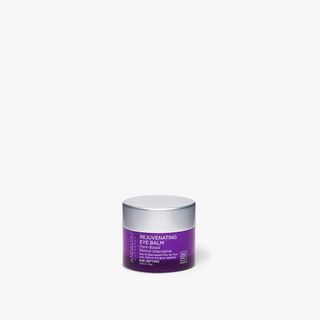
Andalou Naturals Age Defying Rejuvenating Plant-Based Retinol Alternative Eye Balm
Works for
2 of 2 advertised claims delivered
Anti-aging4 ingredients credited for this claimStrong support
“Age Defying Rejuvenating Plant-Based Retinol Alternative Eye Balm”
This product can help reduce and prevent fine lines and wrinkles, improve skin elasticity and firmness because it contains bakuchiol.
Keep in mind that it typically takes at least 6 weeks to notice any results because the changes that are needed to improve fine lines and elasticity happen in the deeper layers of the skin. No topical anti-aging product can “erase” wrinkles or fully reverse signs of aging.
Moisturizing19 ingredients credited for this claimGood support
“Gentle, fragrance-free eye cream deeply hydrates and smooths the delicate skin around the eye area.”
This product can help improve hydration of the skin with the two types of ingredients.
The first type is called “humectants”:
these ingredients help attract water.
When humectants are on the surface of the skin, they “pull in” the moisture from the outside environment, or from
within deeper layers of the skin. The following ingredients in this product do the job:
glycerin, isomalt.
This product also contains ingredients called “occlusives”. They help reduce the speed with which our skin loses moisture to the outside environment. These ingredients also help soften the upper layer of the skin, so it feels less tight and nicer to the touch. The following ingredients in this product do the job: caprylic/capric triglyceride, helianthus annuus seed oil.
Evens skin toneNot advertised by the brand · 1 ingredient credited for this claimStrong support
This product can help reduce hypepigmentation and even out the skin tone because it contains the following effective ingredients: bakuchiol
Keep in mind that you would need to apply any topical skincare targetted at hypigmentation consistently for a couple of months to get a result. No topical skincare product can help get rid of hyperpigmentation (including post-acne marks and age spots) instantly.
Anti-oxidationNot advertised by the brand · 6 ingredients credited for this claimStrong support
This product contains antioxidants (bakuchiol, superoxide dismutase) that can help neutralize free radicals in skin. By doing so, they can lessen the damage the skin gets from the UV light (sun).
The following ingredients - camellia sinensis extract also can have an antioxidant effect, but there is less evidence to confirm their effectiveness in skin.
Can it cause trouble?
Irritancy11 flagged ingredientsLow risk
Comedogenic1 ingredient rated 2 or more on the 0–5 pore-clogging scale1 flagged


User reviews
Be the first — your take helps the next person decide.
Ingredients
Filter by role to see what each ingredient is doing.
Water~40–60%
Dicaprylyl carbonate~4.5–6.8%
- Irritation risk
- Low
Helps products spread more easily and works as an emollient to soften skin
More about Dicaprylyl carbonateCetyl alcohol~3.2–4.9%
- Irritation risk
- Low
A non-drying alcohol that works to soften the skin and stabilize product formulations helping oil and water mix together
More about Cetyl alcoholGlyceryl stearate~2.6–3.8%
- Irritation risk
- Low
An emollient that softens the skin and forms a protective layer on its surface. Helps water and oil mix together
More about Glyceryl stearateCaprylic/capric triglyceride~2.2–3.3%
- Irritation risk
- Medium
A good mix of fatty acids that forms a protective layer on the skin. Improves the shelf life of products. Derived from coconut and glycerin
More about Caprylic/capric triglycerideGlyceryl stearate citrate~1.8–2.6%
- Irritation risk
- Low
Helps oil and water mix together while softening the upper layer of the skin
More about Glyceryl stearate citrateStearyl alcohol~1.5–2.3%
- Irritation risk
- Low
An emollient that helps soften the skin
More about Stearyl alcoholMyristyl myristate~1.4–2.1%
- Irritation risk
- Medium
- Comedogenicity
- 3/5
An emollient. Is not recommended for acne-prone skin as it can be comedogenic
More about Myristyl myristateGlycerin~1.1–1.6%
- Irritation risk
- Low
One of the best moisturizing ingredients. Naturally present in skin. It attracts water to the upper layer of the skin working as a humectant
More about GlycerinSqualane~0.9–1.35%
- Irritation risk
- Low
An oil naturally present in skin. Works as an emollient to soften the skin and form a protective layer on its surface without a greasy feeling.
More about SqualaneCetearyl olivate~0.5–1.15%
Sorbitan olivate~0.4–0.95%
Bakuchiol~0.4–0.9%
- Irritation risk
- Medium
A plant extract that is, though different in chemical structure, acts similar to retinoids. First studies show that it can help reduce fine lines and wrinkles, improve skin tone, reduce clogged pores and blemishes, and reduce inflammation. There is no conclusive evidence that bakuchiol is as effective as retinol however. The study that directly compared retinol with bakuchiol used bakuchiol applied twice daily compared to once per day for the retinol. According to this study, bakuchiol is less irritating than retinol. Bakuchiol is extracted from seeds of Babchi plant. Other parts of the plant contain coumarins that could cause allergic and irritant reactions. These compounds should be removed in the extraction process when bakuchiol is produced, but it is a good idea to be cautious and stay away from products that include the Babchi plant extracts other than purified bakuchiol to avoid irritation
More about Bakuchiol1,2-hexanediol~0.3–0.7%
Caprylyl glycol~0.35–0.75%
- Irritation risk
- Medium
Helps preserve products and creates a nice product texture
More about Caprylyl glycolPolyglyceryl-6 distearate~0.3–0.75%
- Irritation risk
- Medium
Helps oil and water mix together while softening the upper layer of the skin
More about Polyglyceryl-6 distearateMalus domestica fruit cell culture extract~0.2–0.75%
- Irritation risk
- Low
Vitis vinifera fruit cell extract~0.15–0.65%
- Irritation risk
- Low
Aloe barbadensis leaf juice~0.15–0.65%
- Irritation risk
- Medium
Traditionally used to treat sunburns, dermatitis and inflammation, but evidence for its effectiveness is lacking. The extract can contain humectants that help attract water into the skin
More about Aloe barbadensis leaf juiceEuterpe oleracea fruit extract~0.15–0.6%
- Irritation risk
- Medium
A plant extract that can have some anti-oxidant effect in skin
More about Euterpe oleracea fruit extractAronia melanocarpa fruit extract~0.15–0.55%
- Irritation risk
- Low
Lycium barbarum fruit extract~0.1–0.5%
- Irritation risk
- Medium
A plant extract that can help neutralize free radicals in skin and attract water to its upper layer
More about Lycium barbarum fruit extractTheobroma grandiflorum seed butter~0.1–0.45%
- Irritation risk
- Medium
Helps soften the upper layer of the skin and might as well help to attract moisture to its upper layer
More about Theobroma grandiflorum seed butterHelianthus annuus seed oil~0.15–0.5%
- Irritation risk
- Low
A great emollient due to its high linoleic acid content. One of the most effective plant oils in helping skin hydration and repairing skin barrier function
More about Helianthus annuus seed oilXanthan gum~0.1–0.45%
- Irritation risk
- Low
Used to create a thicker product consistency
More about Xanthan gumIsomalt~0.1–0.45%
- Irritation risk
- Low
Helps attract water to the upper layer of the skin
More about IsomaltLecithin~0.15–0.55%
- Irritation risk
- Low
Used mostly for creating emulsions - helping oil and water mix together. Helps soften the upper layer of the skin
More about LecithinCamellia sinensis extract~0.1–0.4%
- Irritation risk
- Low
Tea extract. Might be helpful in neutralizing free radicals in skin
More about Camellia sinensis extractPotassium sorbate~0.1–0.35%
Sodium benzoate~0.1–0.3%
Superoxide dismutase~0.1–0.35%
- Irritation risk
- Low
An antioxidant enzyme that is naturally present in skin. It can help support skin barrier function and reduce inflammation in skin. It is used in topical medications for inflammatory skin conditions including atopic dermatitis (eczema) and psoriasis. There are three types of natural Superoxide Dismutase in human skin. The compound used in topical treatments and cosmetics are mimics of typically one of these natural variants
More about Superoxide dismutaseAllantoin~0.05–0.3%
- Irritation risk
- Low
Helps calm down inflammation in skin and can help reduce itching. Helps to repair the skin barrier and keep skin hydrated
More about AllantoinTocopherol~0.05–0.25%
- Irritation risk
- Low
Pure form of vitamin E. Can help moisturise and protect the skin from free radicals. Often used to help stabilise other ingredients or the formula itself
More about TocopherolIngredient list view
Water, Dicaprylyl carbonate, Cetyl alcohol, Glyceryl stearate, Caprylic/capric triglyceride, Glyceryl stearate citrate, Stearyl alcohol, Myristyl myristate, Glycerin, Squalane, Cetearyl olivate, Sorbitan olivate, Bakuchiol, 1,2-hexanediol, Caprylyl glycol, Polyglyceryl-6 distearate, Malus domestica fruit cell culture extract, Vitis vinifera fruit cell extract, Aloe barbadensis leaf juice, Euterpe oleracea fruit extract, Aronia melanocarpa fruit extract, Lycium barbarum fruit extract, Theobroma grandiflorum seed butter, Helianthus annuus seed oil, Xanthan gum, Isomalt, Lecithin, Camellia sinensis extract, Potassium sorbate, Sodium benzoate, Superoxide dismutase, Allantoin, Tocopherol
Compare prices
Retailers ranked by price — lowest first.
.png)
Worth comparing, line by line.
Match % combines shared ingredients, the first five ingredients, shared actives and hero ingredients, irritancy (lower counts in the alternative's favour), texture and body area. Only products in the same routine step are compared.
| Andalou NaturalsAge Defying Rejuvenating Plant-Based Retinol Alternative Eye BalmYOUR PRODUCT | REVOLUTION SKINCAREToning Boost Bakuchiol Eye Cream | BYBIEye Plump Bakuchiol Eye Cream | Noble PanaceaThe Brilliant Vibrant Eye Infusion | |
|---|---|---|---|---|
| Match | — | 73% | 72% | 70% |
| Price | $20.99 | $9.00−$11.99 | $23.80+$2.81 | $138.00+$117.01 |
| Shared key ingredients | — | 2 of 11 | 2 of 11 | 6 of 11 |
| Key difference | — | Butyrospermum Parkii Butter | Lactic Acid | Niacinamide |
| Irritancy | Low | Low | Low | Medium |
| Drying alcohol | — | — | — | — |
| View product | Shop | Shop | Shop |


Sources cited in this review
Every concentration estimate and effectiveness label is anchored to one of these 25 studies and safety reviews.
- 1
- 2Bakuchiol in the Management of Acne-affected Skinresearchgate.net
- 3
- 4
- 5
- 6

Affiliate links · As an Amazon Associate, WIMJ earns from qualifying purchases.