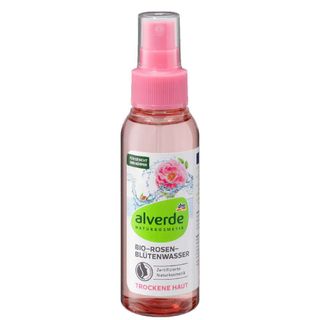
Works for
1 of 1 advertised claim delivered
Moisturizing5 ingredients credited for this claimGood support
“The vegetable glycerine in the formulation provides your skin with moisture.”
This product contains good ingredients to attract water to the upper layer of the skin. These ingredients are called "humectants": glycerin, sodium lactate.
When humectants are on the surface of the skin, they “pull in” the moisture from the outside environment, or from within deeper layers of the skin. If the air is dry, humectants can speed up the moisture loss from the skin. This is why it is a good idea to use another product on top of this one to help "seal in" the moisture (look for ingredients like dimethicone, squalane, oils and butters).
Can it cause trouble?
Irritancy7 strong irritants: Rosa damascena flower water, Alcohol + 5 more — patch-test recommendedHigh risk
ComedogenicClean of flagged comedogenic ingredientsNone flagged
User reviews
Be the first — your take helps the next person decide.
Ingredients
Filter by role to see what each ingredient is doing.
Water~40–60%
Rosa damascena flower water~6.6–9.9%
- Irritation risk
- High
Used to add a nice rose smell to the product. Might help attract water to the upper layer of the skin and have some anti-oxidant effect. Can be irritating
More about Rosa damascena flower waterAlcohol~3.9–5.8%
- Irritation risk
- High
Can be drying and contribute to skin irritation. Used in formulars to dissolve other ingredients, create a thinner product consistency or for its antibacterial properties
More about AlcoholGlycerin~2.7–4%
- Irritation risk
- Low
One of the best moisturizing ingredients. Naturally present in skin. It attracts water to the upper layer of the skin working as a humectant
More about GlycerinLevulinic acid~1.9–2.9%
Caprylyl/capryl wheat bran/straw glycosides~1.8–2.7%
Glycerin~1.4–2.2%
- Irritation risk
- Low
One of the best moisturizing ingredients. Naturally present in skin. It attracts water to the upper layer of the skin working as a humectant
More about GlycerinSodium levulinate~1.1–1.7%
Fusel wheat bran/straw glycosides~0.95–1.45%
Sodium lactate~0.6–1.35%
- Irritation risk
- Medium
Helps attract water to the upper layer of the skin. Is often used to adjust the pH level of the product
More about Sodium lactateSodium cocoyl glutamate~0.6–1.4%
- Irritation risk
- Medium
Helps oil and water mix together
More about Sodium cocoyl glutamateGlyceryl caprylate~0.45–1.05%
- Irritation risk
- Low
An emollient that can also help water and oil mix together, as well as prevent bacteria growth in products
More about Glyceryl caprylateLactic acid~0.35–0.75%
- Irritation risk
- Medium
An exfoliating and moisturizing alpha-hydroxy acid (AHA). Typically causes less irritation than other AHAs, for example, glycolic acid. At high concentrations (about 15%), lactic acid can help reduce lines and wrinkles. Recent studies show that lactic acid can support the "good" bacteria living on skin's surface (healthy skin microbiome)
More about Lactic acidPolyglyceryl-5 oleate~0.2–0.75%
Parfum~0.1–0.45%
- Irritation risk
- High
An aromatic blend of unspecified and possibly irritating ingredients
More about ParfumLinalool~0.1–0.35%
Geraniol~0.05–0.2%
Limonene~0.05–0.15%
- Irritation risk
- High
A common frangrance that can easily irritate skin, especially if exposed to air, light or heat
More about LimoneneCitronellol~0.05–0.1%
Ingredient list view
Water, Rosa damascena flower water, Alcohol, Glycerin, Levulinic acid, Caprylyl/capryl wheat bran/straw glycosides, Glycerin, Sodium levulinate, Fusel wheat bran/straw glycosides, Sodium lactate, Sodium cocoyl glutamate, Glyceryl caprylate, Lactic acid, Polyglyceryl-5 oleate, Parfum, Linalool, Geraniol, Limonene, Citronellol
Compare prices
Retailers ranked by price — lowest first.

Affiliate links · prices updated regularly
Worth comparing, line by line.
Match % combines shared ingredients, the first five ingredients, shared actives and hero ingredients, irritancy (lower counts in the alternative's favour), texture and body area. Only products in the same routine step are compared.
| AlverdeOrganic Rose Blossom WaterYOUR PRODUCT | PRIORI SkincareGel Perfector LCA fx120 | Dr. BotanicalsMandarin Orange Repairing Night Moisturiser | January LabsRetexturizing Night Cream | |
|---|---|---|---|---|
| Match | — | 61% | 59% | 59% |
| Price | $3.99 | $43.72+$39.73 | — | $86.00+$82.01 |
| Shared key ingredients | — | 3 of 3 | 2 of 3 | 3 of 3 |
| Key difference | — | Salicylic Acid | Ascorbyl Glucoside | Niacinamide |
| Irritancy | High | Medium | High | Medium |
| Drying alcohol | Contains drying alcohol | — | — | — |
| View product | Shop | Shop | Shop |


Sources cited in this review
Every concentration estimate and effectiveness label is anchored to one of these 6 studies and safety reviews.
- 1
- 2
- 3
- 4
- 5Epidermal and dermal effects of topical lactic acidncbi.nlm.nih.gov
- 6Dual Effects of Alpha-Hydroxy Acids on the Skinpdfs.semanticscholar.org

Affiliate links · As an Amazon Associate, WIMJ earns from qualifying purchases.