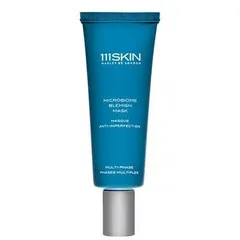
Works for:
based on ingredients and %- Moisturizing
- Anti-oxidation
Doesn't work for:
based on ingredients and %- Anti-aging
- Exfoliation
- Anti-blemish
Can it cause trouble?
- Irritation risk: high
- Comedogenic risk ingredients: 0
Key actives


Product Summary
"111SKIN - Clarity Microbiome Blemish Mask" could be helpful for: Moisturizing, but its actives are not the most effective or are not well-studied.
Ingredient callouts
- Humectants (soy amino acids 0.30% - 0.55%, betaine 0.30% - 0.60%, lactobacillus ferment 0.30% - 0.60% and glycerin 3.10% - 3.70%). These ingredients help attract water to the upper layer of the skin and improve the skin hydration.
Price
The product retails from 106.70£ up to 2556.00£ in the United Kingdom.
For a detailed price comparison: click here.
Anti-oxidation
This product contains antioxidants (tartaric acid) that might be able to help neutralize free radicals in skin to lessen the damage it gets from the UV light (sun). There is not enough evidence to confirm their effectiveness in skin though.
An AHA (alpha-hydroxy acid). It oxidizes quickly which makes it less effective in skincare formulations. It can support skin's barrier and moisture levels
A fermentation product created by bacteria Lactobacillus. The fermented product has anti-bacterial properties and might be helpful in calming down inflammation, but studies are lacking. Helps attract water to the upper layer of the skin. Can be used as a preservative
Helps attract water to the upper layer of the skin and might have some anti-oxidant and skin lightening properties. It can help calm down inflammation in skin
An active component of chamomile plant that historically has been used to calm down irritated skin. A recent study shows that bisabolol indeed can have some anti-inflammatory effect on skin, even though conclusive data is lacking. Bisabolol has a sweet floral scent and can be added to products for its aromatic properties
A plant oil with high content of volatile compounds that can irritate the skin. Can be used as a fragrance. Has anti-bacterial properties and might help neutralize free radicals on the surface of the skin
Moisturizing
What does the product description say?
Rosemary hydrolat provides antioxidant, anti-bacterial, and anti-inflammatory properties.
Source: Allbeauty
This product contains good ingredients to attract water to the upper layer of the skin. These ingredients are called "humectants": betaine, glycerin.
When humectants are on the surface of the skin, they “pull in” the moisture from the outside environment, or from within deeper layers of the skin. If the air is dry, humectants can speed up the moisture loss from the skin. This is why it is a good idea to use another product on top of this one to help "seal in" the moisture (look for ingredients like dimethicone, squalane, oils and butters).
A fermentation product created by bacteria Lactobacillus. The fermented product has anti-bacterial properties and might be helpful in calming down inflammation, but studies are lacking. Helps attract water to the upper layer of the skin. Can be used as a preservative
One of the best moisturizing ingredients. Naturally present in skin. It attracts water to the upper layer of the skin working as a humectant
Helps attract water to the upper layer of the skin and improves the product texture
Help attract water to the upper layer of the skin
An AHA (alpha-hydroxy acid). It oxidizes quickly which makes it less effective in skincare formulations. It can support skin's barrier and moisture levels
A "broth" with parts of dead cells of lactobacteria. Might be helpful supporting diverse microbiome in skin, but evidence is lacking
Used to create a nice product texture and help delivery of other ingredients. Might be somewhat helpful in attracting water to the upper layer of the skin
Helps attract water to the upper layer of the skin and might have some anti-oxidant and skin lightening properties. It can help calm down inflammation in skin
Helps calm down inflammation in skin and can help reduce itching. Helps to repair the skin barrier and keep skin hydrated
An exfoliating and moisturizing alpha-hydroxy acid (AHA). Typically causes less irritation than other AHAs, for example, glycolic acid. At high concentrations (about 15%), lactic acid can help reduce lines and wrinkles. Recent studies show that lactic acid can support the "good" bacteria living on skin's surface (healthy skin microbiome)
Anti-aging
What does the product description say?
Rosemary hydrolat provides antioxidant, anti-bacterial, and anti-inflammatory properties.
Source: Allbeauty
This product does not contain ingredients that are able to reduce fine lines and wrinkles or help with skin elasticity, but it can improve the look of the skin temporarily through moisturization. Well-moisturized skin might also be able to repair the sun damage better.
This ingredient tartaric acid might be able to help neutralize free radicals in skin and help it fight off some of the sun damage.
An exfoliating and moisturizing alpha-hydroxy acid (AHA). Typically causes less irritation than other AHAs, for example, glycolic acid. At high concentrations (about 15%), lactic acid can help reduce lines and wrinkles. Recent studies show that lactic acid can support the "good" bacteria living on skin's surface (healthy skin microbiome)
Exfoliation
What does the product description say?
111SKIN, Clarity This gentle exfoliator enhances the skin's natural barrier and helps to keep the skin calm.
Source: Allbeauty
This product might help exfoliate the skin with tartaric acid, lactobacillus/punica granatum fruit ferment extract, but These ingredients is not the most effective.
An AHA (alpha-hydroxy acid). It oxidizes quickly which makes it less effective in skincare formulations. It can support skin's barrier and moisture levels
An enzyme-based exfoliant
An exfoliating and moisturizing alpha-hydroxy acid (AHA). Typically causes less irritation than other AHAs, for example, glycolic acid. At high concentrations (about 15%), lactic acid can help reduce lines and wrinkles. Recent studies show that lactic acid can support the "good" bacteria living on skin's surface (healthy skin microbiome)
Helps calm down inflammation in skin and can help reduce itching. Helps to repair the skin barrier and keep skin hydrated
Anti-blemish
What does the product description say?
Clarity Microbiome Blemish Mask
Source: From product name
Effective ingredients missing or their concentration is too low.
Helps calm down inflammation in skin and can help reduce itching. Helps to repair the skin barrier and keep skin hydrated
How honest is this product?
| Promise | Can it deliver? |
|---|---|
| Moisturizing | |
| Anti-aging | |
| Exfoliation | |
| Anti-blemish |
Total Promises Fulfilled score: 43/100.
Potential irritants
Comedogenic ingredients
No comedogenic ingredients detected
User reviews (0)
Averages from community submissions.
No reviews yet for this product.
Be the first to share your experience!
Tried this product?
Help capture what the ingredient list can't—texture, finish, pilling, scent, and more. Answer what you can, skip the rest.
Takes ~30 seconds.
Reviews are shown in aggregate. No personal details.
| Product | Similarity | Price | Irritancy |
|---|---|---|---|
 111SKIN Clarity Microbiome Blemish Mask | Current | - | |
celimax Skin Repair Bee Tox Therapy Mask | 57% | $4.60 | |
Versed Skin Doctor's Visit Instant Resurfacing Mask | 57% | $17.67 | |
 Cultured Biome One Mask | 57% | ≈ $63.46 | |
 RéVive Masque De Brilliance Resurfacing Multi-Acid Mask | 56% | $150.00 | |
 Then I Met You Rose Resurfacing Facial Mask | 55% | $56.00 |
Key Actives
Helps calm down inflammation in skin and can help reduce itching. Helps to repair the skin barrier and keep skin hydrated
Helps attract water to the upper layer of the skin and might have some anti-oxidant and skin lightening properties. It can help calm down inflammation in skin
A fermentation product created by bacteria Lactobacillus. The fermented product has anti-bacterial properties and might be helpful in calming down inflammation, but studies are lacking. Helps attract water to the upper layer of the skin. Can be used as a preservative
An exfoliating and moisturizing alpha-hydroxy acid (AHA). Typically causes less irritation than other AHAs, for example, glycolic acid. At high concentrations (about 15%), lactic acid can help reduce lines and wrinkles. Recent studies show that lactic acid can support the "good" bacteria living on skin's surface (healthy skin microbiome)
An AHA (alpha-hydroxy acid). It oxidizes quickly which makes it less effective in skincare formulations. It can support skin's barrier and moisture levels
One of the best moisturizing ingredients. Naturally present in skin. It attracts water to the upper layer of the skin working as a humectant
Helps attract water to the upper layer of the skin and improves the product texture
Help attract water to the upper layer of the skin
Potential irritants
An enzyme-based exfoliant
Can be drying and contribute to skin irritation. Used in formulars to dissolve other ingredients, create a thinner product consistency or for its antibacterial properties
A plant oil with high content of volatile compounds that can irritate the skin. Can be used as a fragrance. Has anti-bacterial properties and might help neutralize free radicals on the surface of the skin
A common frangrance that can easily irritate skin, especially if exposed to air, light or heat
An AHA (alpha-hydroxy acid). It oxidizes quickly which makes it less effective in skincare formulations. It can support skin's barrier and moisture levels
Can work as an exfoliant but is typically used to adjust the product pH
Used to dissolve other ingredients and to improve smell of products. It could be irritating
A preservative that comes from radishes fermented by a bacteria. New research suggests that the preservation properties in the ingredient come from an ammonium salt that is not present naturally in radish root but used in its cultivation. Is problematic because the exact amount of the preservative agents is difficult to determine
An exfoliating and moisturizing alpha-hydroxy acid (AHA). Typically causes less irritation than other AHAs, for example, glycolic acid. At high concentrations (about 15%), lactic acid can help reduce lines and wrinkles. Recent studies show that lactic acid can support the "good" bacteria living on skin's surface (healthy skin microbiome)
Comedogenic ingredients
We couldn't find any comedogenic ingredients in this product
All ingredients
Acts as a solvent for other ingredients. Speeds up the absorption of other ingredients into the skin
One of the best moisturizing ingredients. Naturally present in skin. It attracts water to the upper layer of the skin working as a humectant
An enzyme-based exfoliant
Can be drying and contribute to skin irritation. Used in formulars to dissolve other ingredients, create a thinner product consistency or for its antibacterial properties
An AHA (alpha-hydroxy acid). It oxidizes quickly which makes it less effective in skincare formulations. It can support skin's barrier and moisture levels
Can work as an exfoliant but is typically used to adjust the product pH
Used to create a silky product texture and add volume to products
Used to create a nice product texture and help delivery of other ingredients. Might be somewhat helpful in attracting water to the upper layer of the skin
A "broth" with parts of dead cells of lactobacteria. Might be helpful supporting diverse microbiome in skin, but evidence is lacking
Used to dissolve other ingredients and to improve smell of products. It could be irritating
A preservative that comes from radishes fermented by a bacteria. New research suggests that the preservation properties in the ingredient come from an ammonium salt that is not present naturally in radish root but used in its cultivation. Is problematic because the exact amount of the preservative agents is difficult to determine
A preservative. It helps prevent bacterial growth in cosmetic products
Used to stabilize the product formulation and can help absorb oil
A fermentation product created by bacteria Lactobacillus. The fermented product has anti-bacterial properties and might be helpful in calming down inflammation, but studies are lacking. Helps attract water to the upper layer of the skin. Can be used as a preservative
An exfoliating and moisturizing alpha-hydroxy acid (AHA). Typically causes less irritation than other AHAs, for example, glycolic acid. At high concentrations (about 15%), lactic acid can help reduce lines and wrinkles. Recent studies show that lactic acid can support the "good" bacteria living on skin's surface (healthy skin microbiome)
Helps attract water to the upper layer of the skin and improves the product texture
Helps attract water to the upper layer of the skin and might have some anti-oxidant and skin lightening properties. It can help calm down inflammation in skin
Used to stabilize mixtures of oil and water, and create thicker, gel-like product textures
Helps calm down inflammation in skin and can help reduce itching. Helps to repair the skin barrier and keep skin hydrated
An active component of chamomile plant that historically has been used to calm down irritated skin. A recent study shows that bisabolol indeed can have some anti-inflammatory effect on skin, even though conclusive data is lacking. Bisabolol has a sweet floral scent and can be added to products for its aromatic properties
A plant oil with high content of volatile compounds that can irritate the skin. Can be used as a fragrance. Has anti-bacterial properties and might help neutralize free radicals on the surface of the skin
A common frangrance that can easily irritate skin, especially if exposed to air, light or heat
Ingredient list view
Rosmarinus officinalis leaf/stem water, Water, Propanediol, Glycerin, Lactobacillus/punica granatum fruit ferment extract, Alcohol, Tartaric acid, Citric acid, Hdi/trimethylol hexyllactone crosspolymer, Polyacrylate crosspolymer-6, Butylene glycol, 1,2-hexanediol, Lactobacillus ferment lysate, Taraxacum officinale leaf extract, T-butyl alcohol, Leuconostoc/radish root ferment filtrate, Silica, Phenoxyethanol, Ethylhexylglycerin, Tapioca starch polymethylsilsesquioxane, Agastache mexicana flower/leaf/stem extract, Sodium hydroxide, Maltodextrin, Lactobacillus ferment, Lactic acid, Betaine, Peg-40 hydrogenated castor oil, Yeast extract, Soy amino acids, Sodium chloride, Sodium carbonate, Potassium sorbate, Sodium benzoate, Allantoin, Bisabolol, Disodium edta, Rosmarinus officinalis leaf oil, Colloidal silver, Limonene
- Glycerol and the skin: holistic approach to its origin and functions
- Control of keratinization with á-hydroxy acids and related compounds: I. Topical treatment of ichthyotic disorders
- Dual Effects of Alpha-Hydroxy Acids on the Skin
- Method of treating wrinkles using tartaric acid
- Impact of the condition of storage of tartaric acid solutions on the production and stability of glyoxylic acid
- Public Report: 2-Butenedioic acid (2E)-, di-C12-15-alkyl esters (INCI Name: Di-C12-15 Alkyl Fumarate)
- The influence of alkane chain length on the skin irritation potential of 1,2-alkanediols
- Amended final report of the safety assessment of t-Butyl Alcohol as used in cosmetics
- The effect of probiotics on immune regulation, acne, and photoaging
- Comparison of clinical and histological effects between lactobacillus-fermented Chamaecyparis obtusa and tea tree oil for the treatment of acne: an eight-week double-blind randomized controlled split-face study
- Use of Probiotics for Dermal Applications
- Epidermal and dermal effects of topical lactic acid
- Dual Effects of Alpha-Hydroxy Acids on the Skin
- Amended Safety Assessment of PEGylated Oils as Used in Cosmetics
- The natural yeast extract isolated by ethanol precipitation inhibits melanin synthesis by modulating tyrosinase activity and downregulating melanosome transfer
- Evaluation of dermatological effects of cosmetic formulations containing Saccharomyces cerevisiae extract and vitamins
- Profile of wound healing process induced by allantoin
- α-(-)-Bisabolol Reduces Pro-Inflammatory Cytokine Production and Ameliorates Skin Inflammation
- Assessment report on Rosmarinus officinalis L., aetheroleum and Rosmarinus officinalis L., folium
- Screening of plant extracts for antimicrobial activity against bacteria and yeasts with dermatological relevance
- Occupational contact dermatitis due to essential oils
- The in vitro antimicrobial activity and chemometric modelling of 59 commercial essential oils against pathogens of dermatological relevance
- Antimicrobial and Antioxidant Properties of Rosemary and Sage (Rosmarinus officinalis L. and Salvia officinalis L., Lamiaceae) Essential Oils
- Chemical Composition, Plant Genetic Differences, Antimicrobial and Antifungal Activity Investigation of the Essential Oil of Rosmarinus officinalis L.