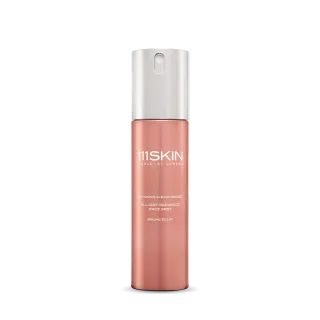
111SKIN All Day Radiance Face Mist

111SKIN All Day Radiance Face Mist

Efficacy87/100IrritancyHigh

Works for

Moisturizing
Palmitoyl pentapeptide-4, Palmitoyl tripeptide-1 + 27 more
Works well
What the product description says
“A radiance face mist that gives skin a healthy glow and instant hydration, while also promoting a more even skin tone and reducing redness.”
Source: 111skin

This product can help improve hydration of the skin with the two types of ingredients.

The first type is called “humectants”:
these ingredients help attract water. When humectants are on the surface of the skin, they “pull in” the moisture from the outside environment, or from within deeper layers of the skin. The following ingredients in this product do the job: glycerin, hyaluronic acid.

This product also contains ingredients called “occlusives”. They help reduce the speed with which our skin loses moisture to the outside environment. These ingredients also help soften the upper layer of the skin, so it feels less tight and nicer to the touch. The following ingredients in this product do the job: caprylic/capric triglyceride, helianthus annuus seed oil.

The following ingredients in this product are especially good for supporting the skin barrier and helping with the hydration level: acetyl hexapeptide-8, copper tripeptide-1, hexapeptide-9, palmitoyl pentapeptide-4, palmitoyl tripeptide-1, tripeptide-1

Palmitoyl pentapeptide-4HeroEffect: HighA type of peptide. Peptides are excellent moisturizers and might be able support collagen production reducing fine lines and wrinkles~0.15–0.5%
Palmitoyl tripeptide-1Hero· EmollientEffect: HighA type of peptide. Peptides are excellent moisturizers and might be able support collagen production reducing fine lines and wrinkles~0.15–0.65%
Tripeptide-1Hero· EmollientEffect: HighA type of peptide. Peptides are excellent moisturizers and might be able support collagen production reducing fine lines and wrinkles~0.15–0.6%
Hexapeptide-9Hero· HumectantEffect: HighA type of peptide. Peptides are excellent moisturizers and might be able support collagen production reducing fine lines and wrinkles~0.1–0.45%
Acetyl hexapeptide-8Hero· HumectantEffect: HighA type of peptide. Peptides are excellent moisturizers and might be able support collagen production reducing fine lines and wrinkles~0.1–0.4%
Copper tripeptide-1HeroEffect: HighA naturally occurring peptide. One of the most studied peptides in dermatology. It is sometimes abbreviated GHK-Cu. Belongs to the class of carrier peptides. It stimulates both synthesis and breakdown of collagen in skin. It is released in skin wounds and inflammation to support healing. It accelerates wound-healing of the skin and can stimulate hair growth. There are preliminary studies that confirm that copper tripeptide can help support collagen production reducing fine lines and wrinkles and decrease inflammation in skin.~0.05–0.25%
GlycerinKey active· HumectantEffect: HighOne of the best moisturizing ingredients. Naturally present in skin. It attracts water to the upper layer of the skin working as a humectant~3.4–5.1%
Caprylic/capric triglycerideKey active· Emollient, OcclusiveEffect: HighA good mix of fatty acids that forms a protective layer on the skin. Improves the shelf life of products. Derived from coconut and glycerin~0.5–1.2%
Helianthus annuus seed oilKey active· Emollient, OcclusiveEffect: HighA great emollient due to its high linoleic acid content. One of the most effective plant oils in helping skin hydration and repairing skin barrier function~0.45–1.05%
Polyglyceryl-10 oleateKey activeEffect: MediumHelps soften the upper layer of the skin~0.45–1%
GlycosphingolipidsKey active· EmollientEffect: HighA type of lipids naturally present in skin. They can be converted to ceramides in skin~0.35–0.8%
Beta-sitosterolKey active· EmollientEffect: HighA phytosterol that can support skin's barrier function and help the skin stay hydrated~0.35–0.8%
Lactobacillus ferment lysateKey activeEffect: MediumA "broth" with parts of dead cells of lactobacteria. Might be helpful supporting diverse microbiome in skin, but evidence is lacking~0.3–0.75%
Saccharide isomerateKey active· HumectantEffect: HighHelps attract water to the upper layer of the skin~0.2–0.75%
Sodium hyaluronateKey active· HumectantEffect: HighOne of the best moisturizing ingredients. Attracts water into the upper layer of the skin~0.2–0.75%
Chlorella vulgaris extractKey activeEffect: MediumA plant extract that can help to attract water to the upper layer of the skin and might have some anti-oxidant and anti-inflammatory properties~0.2–0.75%
Lactobacillus/soybean ferment extractKey activeEffect: MediumA fermentation product created by bacteria Lactobacillus out of soybean. The fermented product helps to attract water to the upper layer of the skin and has anti-bacterial properties. It might be helpful in calming down inflammation and could be helpful in evening out skin tone, but studies are lacking~0.2–0.75%
Hydrolyzed hyaluronic acidKey active· HumectantEffect: HighOne of the best moisturizing ingredients. Attracts water into the upper layer of the skin. A version of it is naturally present in skin~0.15–0.5%
Sodium acetylated hyaluronateKey active· HumectantEffect: HighA type of hyaluronic acid that works as an excellent moisturizer by attracting water into the upper layer of the skin. Is typically feels less sticky on the skin compared to the usual hyaluronic acid~0.15–0.5%
Hyaluronic acidKey active· HumectantEffect: HighOne of the best moisturizing ingredients. Attracts water into the upper layer of the skin. Naturally present in skin. Typically has large molecule size unless advertised otherwise on the product label. Helps support skin's barrier function and may help to reduce inflammation~0.1–0.45%
Hydrolyzed sodium hyaluronateKey activeEffect: HighAttracts water into the upper layer of the skin~0.1–0.45%
Sodium hyaluronate crosspolymerKey active· HumectantEffect: HighAttracts water into the upper layer of the skin~0.1–0.35%
Rosa damascena flower water· HumectantEffect: LowUsed to add a nice rose smell to the product. Might help attract water to the upper layer of the skin and have some anti-oxidant effect. Can be irritating~25–38%
Butylene glycol· HumectantEffect: LowUsed to create a nice product texture and help delivery of other ingredients. Might be somewhat helpful in attracting water to the upper layer of the skin~2.8–4.2%
Caprylyl glycol· Humectant, EmollientEffect: LowHelps preserve products and creates a nice product texture~0.35–0.8%
Scutellaria baicalensis root extract· HumectantEffect: LowA plant extract that might contain a compound baicalin that could be helpful in neutralizing free radicals and reducing inflammation in skin. The baicalin concentration in skincare products is often too low for an effective action. Can be used for its fragrant properties~0.15–0.7%
Portulaca oleracea extract· HumectantEffect: LowA plant extract that has some anti-oxidant activity, but solid research is lacking. Can help attract water to the upper layer of the skin~0.15–0.7%
LecithinEffect: Low, below effective doseUsed mostly for creating emulsions - helping oil and water mix together. Helps soften the upper layer of the skin~0.35–0.8%
Laminaria digitata extractUnder-dosedSeaweed extract that helps the skin to attract water and make it more smooth for touch. Also shows promise of anti-aging properties, but good research is lacking at the moment~0.2–0.7%
Evens skin tone
Ferulic acid
May help
What the product description says
“A radiance face mist that gives skin a healthy glow and instant hydration, while also promoting a more even skin tone and reducing redness.”
Source: 111skin

The following ingredient (ingredients) in this product might be helpful, but there is no evidence to confirm that it actually works: ferulic acid.

Ferulic acidKey activeEffect: MediumA potent anti-oxidant that has been shown to be effective in neutralizing free radicals in skin. There seem to have a synergetic effect of ferulic acid, vitamin E and C, meaning that when the ingredients are used together, they enhance each other's ability protect the skin against free radicals. Ferulic acid also helps to stabilize other ingredients - including vitamins C and E. It can help to even out the skin tone. Ferulic acid is approved for use as a sunscreen ingredient in Japan in concentrations up to 10%~0.95–1.4%
Anti-oxidation
Side benefit · Ferulic acid, Rosa damascena flower water + 11 more
Works well

This product contains antioxidants (ferulic acid) that can help neutralize free radicals in skin. By doing so, they can lessen the damage the skin gets from the UV light (sun).

Ferulic acidKey activeEffect: HighA potent anti-oxidant that has been shown to be effective in neutralizing free radicals in skin. There seem to have a synergetic effect of ferulic acid, vitamin E and C, meaning that when the ingredients are used together, they enhance each other's ability protect the skin against free radicals. Ferulic acid also helps to stabilize other ingredients - including vitamins C and E. It can help to even out the skin tone. Ferulic acid is approved for use as a sunscreen ingredient in Japan in concentrations up to 10%~0.95–1.4%
Rosa damascena flower waterEffect: LowUsed to add a nice rose smell to the product. Might help attract water to the upper layer of the skin and have some anti-oxidant effect. Can be irritating~25–38%
Tocopheryl acetateEffect: LowA more stable but less bio-available form of vitamin E compared to Tocopherol. Might help moisturize and protect the skin from free radicals, but mostly used in low concentrations to stabilize other ingredients.~0.45–1%
Chlorella vulgaris extractEffect: LowA plant extract that can help to attract water to the upper layer of the skin and might have some anti-oxidant and anti-inflammatory properties~0.2–0.75%
Salix alba bark extractEffect: LowA plant extract that can help neutralize free radicals in skin. It contains a compound salicin that can theoretically be converted into salicylic acid that, in turn, helps reduce inflammation in skin, but the evidence of effectiveness in skin is lacking and the extract is usually not used in a concentration that would enable an exfoliating effect~0.2–0.75%
Origanum vulgare leaf extractEffect: LowA plant extract. Can have an anti-oxidant effect, but can also contain irritants~0.2–0.75%
EscinEffect: LowA compound obtained from horse chestnut. It is claimed that this chemical can improve circulation, but there is no evidence available that it works in skin~0.2–0.75%
Aesculus hippocastanum seed extractEffect: LowPlant extract. Might have some anti-oxidant properties. Can be irritating~0.15–0.55%
Portulaca oleracea extractEffect: LowA plant extract that has some anti-oxidant activity, but solid research is lacking. Can help attract water to the upper layer of the skin~0.15–0.7%
Scutellaria baicalensis root extractEffect: LowA plant extract that might contain a compound baicalin that could be helpful in neutralizing free radicals and reducing inflammation in skin. The baicalin concentration in skincare products is often too low for an effective action. Can be used for its fragrant properties~0.15–0.7%
Laminaria digitata extractEffect: Low, below effective doseSeaweed extract that helps the skin to attract water and make it more smooth for touch. Also shows promise of anti-aging properties, but good research is lacking at the moment~0.2–0.7%
Rosmarinus officinalis leaf extractEffect: Low, below effective doseCan be helpful in reducing inflammation in skin, including inflamed acne. It can be irritating~0.1–0.45%
Sodium ascorbyl phosphateUnder-dosedA stable derivative of vitamin C. It is oil-soluble which means it is more likely to penetrate the skin compared to the pure form of vitamin C (which is water-soluble), but it is less bio-available and is way less effective in stimulating collagen and reducing wrinkles compared to the pure form of vitamin C (L-ascorbic acid) and its other derivatives (for example, magnesium ascorbyl phosphate). At the same time, this vitamin C derivative has been shown in studies to be effective in reducing acne, blemishes and clogged pores. It is less irritating then the pure form of vitamin C~0.35–0.8%
Anti-aging
Side benefit · Ferulic acid, Palmitoyl pentapeptide-4 + 8 more
May help

This product contains acetyl hexapeptide-8, copper tripeptide-1, ferulic acid, hexapeptide-9, palmitoyl pentapeptide-4, palmitoyl tripeptide-1, tripeptide-1. These ingredients might be able to help reduce and prevent fine lines and wrinkles, improve skin elasticity and firmness, but there is not enough evidence that it actually works.

Ferulic acidKey activeEffect: MediumA potent anti-oxidant that has been shown to be effective in neutralizing free radicals in skin. There seem to have a synergetic effect of ferulic acid, vitamin E and C, meaning that when the ingredients are used together, they enhance each other's ability protect the skin against free radicals. Ferulic acid also helps to stabilize other ingredients - including vitamins C and E. It can help to even out the skin tone. Ferulic acid is approved for use as a sunscreen ingredient in Japan in concentrations up to 10%~0.95–1.4%
Palmitoyl pentapeptide-4Key activeEffect: MediumA type of peptide. Peptides are excellent moisturizers and might be able support collagen production reducing fine lines and wrinkles~0.15–0.5%
Tripeptide-1Key activeEffect: MediumA type of peptide. Peptides are excellent moisturizers and might be able support collagen production reducing fine lines and wrinkles~0.15–0.6%
Palmitoyl tripeptide-1Key activeEffect: MediumA type of peptide. Peptides are excellent moisturizers and might be able support collagen production reducing fine lines and wrinkles~0.15–0.65%
Acetyl hexapeptide-8Key activeEffect: MediumA type of peptide. Peptides are excellent moisturizers and might be able support collagen production reducing fine lines and wrinkles~0.1–0.4%
Hexapeptide-9Key activeEffect: MediumA type of peptide. Peptides are excellent moisturizers and might be able support collagen production reducing fine lines and wrinkles~0.1–0.45%
Copper tripeptide-1Key activeEffect: MediumA naturally occurring peptide. One of the most studied peptides in dermatology. It is sometimes abbreviated GHK-Cu. Belongs to the class of carrier peptides. It stimulates both synthesis and breakdown of collagen in skin. It is released in skin wounds and inflammation to support healing. It accelerates wound-healing of the skin and can stimulate hair growth. There are preliminary studies that confirm that copper tripeptide can help support collagen production reducing fine lines and wrinkles and decrease inflammation in skin.~0.05–0.25%
Hyaluronic acidEffect: LowOne of the best moisturizing ingredients. Attracts water into the upper layer of the skin. Naturally present in skin. Typically has large molecule size unless advertised otherwise on the product label. Helps support skin's barrier function and may help to reduce inflammation~0.1–0.45%
Sodium ascorbyl phosphateEffect: Low, below effective doseA stable derivative of vitamin C. It is oil-soluble which means it is more likely to penetrate the skin compared to the pure form of vitamin C (which is water-soluble), but it is less bio-available and is way less effective in stimulating collagen and reducing wrinkles compared to the pure form of vitamin C (L-ascorbic acid) and its other derivatives (for example, magnesium ascorbyl phosphate). At the same time, this vitamin C derivative has been shown in studies to be effective in reducing acne, blemishes and clogged pores. It is less irritating then the pure form of vitamin C~0.35–0.8%
Laminaria digitata extractEffect: Low, below effective doseSeaweed extract that helps the skin to attract water and make it more smooth for touch. Also shows promise of anti-aging properties, but good research is lacking at the moment~0.2–0.7%

Can it cause trouble?

Irritancy
6 strong irritants: Rosa damascena flower water, Parfum + 4 more — patch-test recommended
High risk
We flagged 26 ingredients with irritancy potential. Severity depends on your sensitivity threshold; the table lists the worst offenders first.
IngredientFunctionIrritationEst. amount
Rosa damascena flower waterUsed to add a nice rose smell to the product. Might help attract water to the upper layer of the skin and have some anti-oxidant effect. Can be irritatingHigh~25–38%est.
ParfumAn aromatic blend of unspecified and possibly irritating ingredientsHigh~0.55–1.3%est.
Phenethyl alcoholA fragrance. Can be irritatingHigh~0.3–0.7%est.
EscinA compound obtained from horse chestnut. It is claimed that this chemical can improve circulation, but there is no evidence available that it works in skinHigh~0.2–0.75%est.
Salix alba bark extractA plant extract that can help neutralize free radicals in skin. It contains a compound salicin that can theoretically be converted into salicylic acid that, in turn, helps reduce inflammation in skin, but the evidence of effectiveness in skin is lacking and the extract is usually not used in a concentration that would enable an exfoliating effectHigh~0.2–0.75%est.
Origanum vulgare leaf extractA plant extract. Can have an anti-oxidant effect, but can also contain irritantsHigh~0.2–0.75%est.
Chamaecyparis obtusa leaf extractUsed as a fragranceHigh~0.2–0.75%est.
Cinnamomum cassia bark extractUsed as a fragrance. Can be irritatingHigh~0.3–0.7%est.
Scutellaria baicalensis root extractA plant extract that might contain a compound baicalin that could be helpful in neutralizing free radicals and reducing inflammation in skin. The baicalin concentration in skincare products is often too low for an effective action. Can be used for its fragrant propertiesHigh~0.15–0.7%est.
Aesculus hippocastanum seed extractPlant extract. Might have some anti-oxidant properties. Can be irritatingHigh~0.15–0.55%est.
Rosmarinus officinalis leaf extractCan be helpful in reducing inflammation in skin, including inflamed acne. It can be irritatingHigh~0.1–0.45%est.
1,2-hexanediolA preservativeMedium~1–1.45%est.
HydroxyacetophenoneUsed to increase effectiveness of preservativesMedium~1.4–2%est.
Polyglyceryl-6 laurateHelps oil and water mix togetherMedium~0.5–1.15%est.
Caprylic/capric triglycerideA good mix of fatty acids that forms a protective layer on the skin. Improves the shelf life of products. Derived from coconut and glycerinMedium~0.5–1.2%est.
Tocopheryl acetateA more stable but less bio-available form of vitamin E compared to Tocopherol. Might help moisturize and protect the skin from free radicals, but mostly used in low concentrations to stabilize other ingredients.Medium~0.45–1%est.
Disodium edtaStabilizes the product formulationMedium~0.35–0.85%est.
Sodium ascorbyl phosphateA stable derivative of vitamin C. It is oil-soluble which means it is more likely to penetrate the skin compared to the pure form of vitamin C (which is water-soluble), but it is less bio-available and is way less effective in stimulating collagen and reducing wrinkles compared to the pure form of vitamin C (L-ascorbic acid) and its other derivatives (for example, magnesium ascorbyl phosphate). At the same time, this vitamin C derivative has been shown in studies to be effective in reducing acne, blemishes and clogged pores. It is less irritating then the pure form of vitamin CMedium~0.35–0.8%est.
Caprylyl glycolHelps preserve products and creates a nice product textureMedium~0.35–0.8%est.
Sorbitan palmitateHelps water and oil mix together and stabilize the product formulationMedium~0.2–0.75%est.
Chlorella vulgaris extractA plant extract that can help to attract water to the upper layer of the skin and might have some anti-oxidant and anti-inflammatory propertiesMedium~0.2–0.75%est.
T-butyl alcoholUsed to dissolve other ingredients and to improve smell of products. It could be irritatingMedium~0.2–0.7%est.
EthylhexylglycerinA preservativeMedium~0.2–0.75%est.
Portulaca oleracea extractA plant extract that has some anti-oxidant activity, but solid research is lacking. Can help attract water to the upper layer of the skinMedium~0.15–0.7%est.
Polyglyceryl-10 laurateHelps water and oil mix togetherMedium~0.15–0.55%est.
Sodium hyaluronate crosspolymerAttracts water into the upper layer of the skinMedium~0.1–0.35%est.
Comedogenic
2 ingredients rated 2 or more on the 0–5 pore-clogging scale
2 flagged
These ingredients have a comedogenic rating of 2 or more on a 0–5 scale; the table shows each one's rating. In leave-on products they can clog pores in acne-prone skin.
IngredientFunctionRatingEst. amount
Laminaria digitata extractSeaweed extract that helps the skin to attract water and make it more smooth for touch. Also shows promise of anti-aging properties, but good research is lacking at the moment3/5~0.2–0.7%est.
Chlorella vulgaris extractA plant extract that can help to attract water to the upper layer of the skin and might have some anti-oxidant and anti-inflammatory properties3/5~0.2–0.75%est.

User reviews

Would you recommend?
No community reviews yet.

Be the first — your take helps the next person decide.

Ingredients

Filter by role to see what each ingredient is doing.

Rosa damascena flower water~25–38%
Irritant · high
Irritation risk
High
Works for
MoisturizingAnti-oxidation

Used to add a nice rose smell to the product. Might help attract water to the upper layer of the skin and have some anti-oxidant effect. Can be irritating

More about Rosa damascena flower water
Dipropylene glycol~5.6–8.5%
Formula
Irritation risk
Low

Helps to dissolve other ingredients in a formulation. Slows down the rate of product drying

More about Dipropylene glycol
Water~4.7–7%
Formula
Irritation risk
Low

Plain old water

More about Water
Glycerin~3.4–5.1%
Key active
Irritation risk
Low
Works for
Moisturizing

One of the best moisturizing ingredients. Naturally present in skin. It attracts water to the upper layer of the skin working as a humectant

More about Glycerin
Butylene glycol~2.8–4.2%
Formula
Irritation risk
Low
Works for
Moisturizing

Used to create a nice product texture and help delivery of other ingredients. Might be somewhat helpful in attracting water to the upper layer of the skin

More about Butylene glycol
1,2-hexanediol~1–1.45%
Irritant · medium
Irritation risk
Medium

A preservative

More about 1,2-hexanediol
Polyglyceryl-4 caprate~1.7–2.5%
Formula
Irritation risk
Low
Works for
Cleansing
More about Polyglyceryl-4 caprate
Hydroxyacetophenone~1.4–2%
Irritant · medium
Irritation risk
Medium

Used to increase effectiveness of preservatives

More about Hydroxyacetophenone
Sea water~1.1–1.7%
Formula
Irritation risk
Low

Dissolves other ingredients. It does not have additional skin benefits compared to plain water

More about Sea water
Ferulic acid~0.95–1.4%
Key active
Irritation risk
Low
Works for
Anti-oxidationAnti-agingEvens skin toneAnti-inflammatory

A potent anti-oxidant that has been shown to be effective in neutralizing free radicals in skin. There seem to have a synergetic effect of ferulic acid, vitamin E and C, meaning that when the ingredients are used together, they enhance each other's ability protect the skin against free radicals. Ferulic acid also helps to stabilize other ingredients - including vitamins C and E. It can help to even out the skin tone. Ferulic acid is approved for use as a sunscreen ingredient in Japan in concentrations up to 10%

More about Ferulic acid
Parfum~0.55–1.3%
Irritant · high
Irritation risk
High

An aromatic blend of unspecified and possibly irritating ingredients

More about Parfum
Polyacrylate crosspolymer-6~0.5–1.2%
Formula
Polyglyceryl-6 laurate~0.5–1.15%
Irritant · medium
Irritation risk
Medium
Works for
Cleansing

Helps oil and water mix together

More about Polyglyceryl-6 laurate
Caprylic/capric triglyceride~0.5–1.2%
Key activeIrritant · medium
Irritation risk
Medium
Works for
Moisturizing

A good mix of fatty acids that forms a protective layer on the skin. Improves the shelf life of products. Derived from coconut and glycerin

More about Caprylic/capric triglyceride
Polyglyceryl-10 oleate~0.45–1%
Key active
Irritation risk
Low
Works for
Moisturizing

Helps soften the upper layer of the skin

More about Polyglyceryl-10 oleate
Tocopheryl acetate~0.45–1%
Irritant · medium
Irritation risk
Medium
Works for
Anti-oxidation

A more stable but less bio-available form of vitamin E compared to Tocopherol. Might help moisturize and protect the skin from free radicals, but mostly used in low concentrations to stabilize other ingredients.

More about Tocopheryl acetate
Helianthus annuus seed oil~0.45–1.05%
Key active
Irritation risk
Low
Works for
Moisturizing

A great emollient due to its high linoleic acid content. One of the most effective plant oils in helping skin hydration and repairing skin barrier function

More about Helianthus annuus seed oil
Disodium edta~0.35–0.85%
Irritant · medium
Irritation risk
Medium

Stabilizes the product formulation

More about Disodium edta
Sodium ascorbyl phosphate~0.35–0.8%
Under-dosedIrritant · medium
Irritation risk
Medium
Works for
Anti-blemishAnti-oxidationAnti-aging

A stable derivative of vitamin C. It is oil-soluble which means it is more likely to penetrate the skin compared to the pure form of vitamin C (which is water-soluble), but it is less bio-available and is way less effective in stimulating collagen and reducing wrinkles compared to the pure form of vitamin C (L-ascorbic acid) and its other derivatives (for example, magnesium ascorbyl phosphate). At the same time, this vitamin C derivative has been shown in studies to be effective in reducing acne, blemishes and clogged pores. It is less irritating then the pure form of vitamin C

More about Sodium ascorbyl phosphate
Lactobacillus ferment lysate~0.3–0.75%
Key active
Irritation risk
Low
Works for
Moisturizing

A "broth" with parts of dead cells of lactobacteria. Might be helpful supporting diverse microbiome in skin, but evidence is lacking

More about Lactobacillus ferment lysate
Caprylyl glycol~0.35–0.8%
Irritant · medium
Irritation risk
Medium
Works for
Moisturizing

Helps preserve products and creates a nice product texture

More about Caprylyl glycol
Phenethyl alcohol~0.3–0.7%
Irritant · high
Irritation risk
High

A fragrance. Can be irritating

More about Phenethyl alcohol
Taraxacum officinale leaf extract~0.2–0.7%
Formula
Sorbitan palmitate~0.2–0.75%
Irritant · medium
Irritation risk
Medium
Works for
Cleansing

Helps water and oil mix together and stabilize the product formulation

More about Sorbitan palmitate
Laminaria digitata extract~0.2–0.7%
Under-dosedComedogenic 3/5
Irritation risk
Low
Comedogenicity
3/5
Works for
MoisturizingAnti-oxidationAnti-aging

Seaweed extract that helps the skin to attract water and make it more smooth for touch. Also shows promise of anti-aging properties, but good research is lacking at the moment

More about Laminaria digitata extract
Acetyl cysteine~0.2–0.7%
Formula
Lecithin~0.35–0.8%
Formula
Irritation risk
Low
Works for
CleansingMoisturizing

Used mostly for creating emulsions - helping oil and water mix together. Helps soften the upper layer of the skin

More about Lecithin
Soy isoflavones~0.2–0.75%
Formula
Chlorella vulgaris extract~0.2–0.75%
Key activeComedogenic 3/5Irritant · medium
Irritation risk
Medium
Comedogenicity
3/5
Works for
MoisturizingAnti-inflammatoryAnti-oxidation

A plant extract that can help to attract water to the upper layer of the skin and might have some anti-oxidant and anti-inflammatory properties

More about Chlorella vulgaris extract
Glycosphingolipids~0.35–0.8%
Key active
Irritation risk
Low
Works for
Moisturizing

A type of lipids naturally present in skin. They can be converted to ceramides in skin

More about Glycosphingolipids
Escin~0.2–0.75%
Irritant · high
Irritation risk
High
Works for
Anti-oxidation

A compound obtained from horse chestnut. It is claimed that this chemical can improve circulation, but there is no evidence available that it works in skin

More about Escin
Saccharide isomerate~0.2–0.75%
Key active
Irritation risk
Low
Works for
Moisturizing

Helps attract water to the upper layer of the skin

More about Saccharide isomerate
T-butyl alcohol~0.2–0.7%
Irritant · medium
Irritation risk
Medium

Used to dissolve other ingredients and to improve smell of products. It could be irritating

More about T-butyl alcohol
Ethylhexylglycerin~0.2–0.75%
Irritant · medium
Irritation risk
Medium

A preservative

More about Ethylhexylglycerin
Beta-sitosterol~0.35–0.8%
Key active
Irritation risk
Low
Works for
Moisturizing

A phytosterol that can support skin's barrier function and help the skin stay hydrated

More about Beta-sitosterol
Sodium hyaluronate~0.2–0.75%
Key active
Irritation risk
Low
Works for
Moisturizing

One of the best moisturizing ingredients. Attracts water into the upper layer of the skin

More about Sodium hyaluronate
Salix alba bark extract~0.2–0.75%
Irritant · high
Irritation risk
High
Works for
Anti-oxidationAnti-inflammatoryAnti-blemishExfoliation

A plant extract that can help neutralize free radicals in skin. It contains a compound salicin that can theoretically be converted into salicylic acid that, in turn, helps reduce inflammation in skin, but the evidence of effectiveness in skin is lacking and the extract is usually not used in a concentration that would enable an exfoliating effect

More about Salix alba bark extract
Origanum vulgare leaf extract~0.2–0.75%
Irritant · high
Irritation risk
High
Works for
Anti-oxidation

A plant extract. Can have an anti-oxidant effect, but can also contain irritants

More about Origanum vulgare leaf extract
Chamaecyparis obtusa leaf extract~0.2–0.75%
Irritant · high
Irritation risk
High

Used as a fragrance

More about Chamaecyparis obtusa leaf extract
Lactobacillus/soybean ferment extract~0.2–0.75%
Key active
Irritation risk
Low
Works for
Moisturizing

A fermentation product created by bacteria Lactobacillus out of soybean. The fermented product helps to attract water to the upper layer of the skin and has anti-bacterial properties. It might be helpful in calming down inflammation and could be helpful in evening out skin tone, but studies are lacking

More about Lactobacillus/soybean ferment extract
Cinnamomum cassia bark extract~0.3–0.7%
Irritant · high
Irritation risk
High

Used as a fragrance. Can be irritating

More about Cinnamomum cassia bark extract
Scutellaria baicalensis root extract~0.15–0.7%
Irritant · high
Irritation risk
High
Works for
Anti-inflammatoryAnti-oxidationMoisturizingReduces irritationAntibacterial

A plant extract that might contain a compound baicalin that could be helpful in neutralizing free radicals and reducing inflammation in skin. The baicalin concentration in skincare products is often too low for an effective action. Can be used for its fragrant properties

More about Scutellaria baicalensis root extract
Portulaca oleracea extract~0.15–0.7%
Irritant · medium
Irritation risk
Medium
Works for
MoisturizingAnti-oxidation

A plant extract that has some anti-oxidant activity, but solid research is lacking. Can help attract water to the upper layer of the skin

More about Portulaca oleracea extract
Polyglyceryl-10 laurate~0.15–0.55%
Irritant · medium
Irritation risk
Medium
Works for
Cleansing

Helps water and oil mix together

More about Polyglyceryl-10 laurate
Hydroxypropyltrimonium hyaluronate~0.3–0.7%
Formula
Aesculus hippocastanum seed extract~0.15–0.55%
Irritant · high
Irritation risk
High
Works for
Anti-oxidation

Plant extract. Might have some anti-oxidant properties. Can be irritating

More about Aesculus hippocastanum seed extract
Rosmarinus officinalis leaf extract~0.1–0.45%
Irritant · high
Irritation risk
High
Works for
Anti-blemishAnti-oxidationAntibacterial

Can be helpful in reducing inflammation in skin, including inflamed acne. It can be irritating

More about Rosmarinus officinalis leaf extract
Sodium acetylated hyaluronate~0.15–0.5%
Key active
Irritation risk
Low
Works for
Moisturizing

A type of hyaluronic acid that works as an excellent moisturizer by attracting water into the upper layer of the skin. Is typically feels less sticky on the skin compared to the usual hyaluronic acid

More about Sodium acetylated hyaluronate
Hydrolyzed hyaluronic acid~0.15–0.5%
Key active
Irritation risk
Low
Works for
Moisturizing

One of the best moisturizing ingredients. Attracts water into the upper layer of the skin. A version of it is naturally present in skin

More about Hydrolyzed hyaluronic acid
Hyaluronic acid~0.1–0.45%
Key active
Irritation risk
Low
Works for
MoisturizingAnti-inflammatoryAnti-aging

One of the best moisturizing ingredients. Attracts water into the upper layer of the skin. Naturally present in skin. Typically has large molecule size unless advertised otherwise on the product label. Helps support skin's barrier function and may help to reduce inflammation

More about Hyaluronic acid
Palmitoyl tripeptide-1~0.15–0.65%
Hero · Moisturizing
Irritation risk
Low
Works for
MoisturizingAnti-aging

A type of peptide. Peptides are excellent moisturizers and might be able support collagen production reducing fine lines and wrinkles

More about Palmitoyl tripeptide-1
Palmitoyl pentapeptide-4~0.15–0.5%
Hero · Moisturizing
Irritation risk
Low
Works for
MoisturizingAnti-aging

A type of peptide. Peptides are excellent moisturizers and might be able support collagen production reducing fine lines and wrinkles

More about Palmitoyl pentapeptide-4
Hexapeptide-9~0.1–0.45%
Hero · Moisturizing
Irritation risk
Low
Works for
MoisturizingAnti-aging

A type of peptide. Peptides are excellent moisturizers and might be able support collagen production reducing fine lines and wrinkles

More about Hexapeptide-9
Acetyl hexapeptide-8~0.1–0.4%
Hero · Moisturizing
Irritation risk
Low
Works for
MoisturizingAnti-aging

A type of peptide. Peptides are excellent moisturizers and might be able support collagen production reducing fine lines and wrinkles

More about Acetyl hexapeptide-8
Sodium hyaluronate crosspolymer~0.1–0.35%
Key activeIrritant · medium
Irritation risk
Medium
Works for
Moisturizing

Attracts water into the upper layer of the skin

More about Sodium hyaluronate crosspolymer
Hydrolyzed sodium hyaluronate~0.1–0.45%
Key active
Irritation risk
Low
Works for
Moisturizing

Attracts water into the upper layer of the skin

More about Hydrolyzed sodium hyaluronate
Tripeptide-1~0.15–0.6%
Hero · Moisturizing
Irritation risk
Low
Works for
MoisturizingAnti-aging

A type of peptide. Peptides are excellent moisturizers and might be able support collagen production reducing fine lines and wrinkles

More about Tripeptide-1
Copper tripeptide-1~0.05–0.25%
Hero · Moisturizing
Irritation risk
Low
Works for
MoisturizingAnti-aging

A naturally occurring peptide. One of the most studied peptides in dermatology. It is sometimes abbreviated GHK-Cu. Belongs to the class of carrier peptides. It stimulates both synthesis and breakdown of collagen in skin. It is released in skin wounds and inflammation to support healing. It accelerates wound-healing of the skin and can stimulate hair growth. There are preliminary studies that confirm that copper tripeptide can help support collagen production reducing fine lines and wrinkles and decrease inflammation in skin.

More about Copper tripeptide-1
Potassium hyaluronate~0.05–0.3%
Formula
Ingredient list view

Rosa damascena flower water, Dipropylene glycol, Water, Glycerin, Butylene glycol, 1,2-hexanediol, Polyglyceryl-4 caprate, Hydroxyacetophenone, Sea water, Ferulic acid, Parfum, Polyacrylate crosspolymer-6, Polyglyceryl-6 laurate, Caprylic/capric triglyceride, Polyglyceryl-10 oleate, Tocopheryl acetate, Helianthus annuus seed oil, Disodium edta, Sodium ascorbyl phosphate, Lactobacillus ferment lysate, Caprylyl glycol, Phenethyl alcohol, Taraxacum officinale leaf extract, Sorbitan palmitate, Laminaria digitata extract, Acetyl cysteine, Lecithin, Soy isoflavones, Chlorella vulgaris extract, Glycosphingolipids, Escin, Saccharide isomerate, T-butyl alcohol, Ethylhexylglycerin, Beta-sitosterol, Sodium hyaluronate, Salix alba bark extract, Origanum vulgare leaf extract, Chamaecyparis obtusa leaf extract, Lactobacillus/soybean ferment extract, Cinnamomum cassia bark extract, Scutellaria baicalensis root extract, Portulaca oleracea extract, Polyglyceryl-10 laurate, Hydroxypropyltrimonium hyaluronate, Aesculus hippocastanum seed extract, Rosmarinus officinalis leaf extract, Sodium acetylated hyaluronate, Hydrolyzed hyaluronic acid, Hyaluronic acid, Palmitoyl tripeptide-1, Palmitoyl pentapeptide-4, Hexapeptide-9, Acetyl hexapeptide-8, Sodium hyaluronate crosspolymer, Hydrolyzed sodium hyaluronate, Tripeptide-1, Copper tripeptide-1, Potassium hyaluronate

Compare prices

Retailers ranked by price — lowest first.

111skin100 ml
$85.00
Buy

Affiliate links · As an Amazon Associate, WIMJ earns from qualifying purchases.

Worth comparing, line by line.

Match % combines shared ingredients, the first five ingredients, shared actives and hero ingredients, irritancy (lower counts in the alternative's favour), texture and body area. Only products in the same routine step are compared.

Side-by-side comparison of this product against its closest alternatives
111SKINAll Day Radiance Face MistYOUR PRODUCTSUNGBOON EDITORDeep Collagen Barrier Serum MistOngredientsSkin Barrier Glow MistHayejinRiceFila Oil Toner
Match—61%59%55%
Price$85.00$16.22−$68.78$16.53−$68.47$13.77−$71.23
Shared key ingredients—12 of 1912 of 1913 of 19
Key difference—NiacinamideHexapeptide-11Niacinamide
Irritancy High Medium Medium Medium
Drying alcohol————
View product Shop Shop Shop

More alternatives: SWANICOCO Peptine Biome For Men All In One EssenceUSOLAB Bio Renaturation Repair Mist

Cheaper alternatives? See how this stacks up against similar formulas.
We compare ingredient profiles across our catalog — pick the closest match for your budget.
Open dupe finder

Sources cited in this review

Every concentration estimate and effectiveness label is anchored to one of these 42 studies and safety reviews.

  1. 1
  2. 2
  3. 3
  4. 4
  5. 5
  6. 6
111SKIN All Day Radiance Face Mist
111SKINAll Day Radiance Face Mist

Affiliate links · As an Amazon Associate, WIMJ earns from qualifying purchases.

As an Amazon Associate, WIMJ earns from qualifying purchases.