Works for
MoisturizingPropylene glycol, Aloe barbadensis leaf juice powder + 1 moreNot delivered
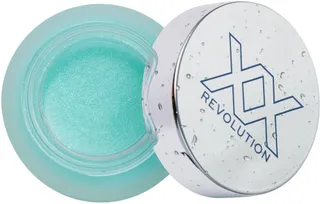
“A hydrating makeup primer.”
Does not contain good ingredients to help with moisturization.
Can it cause trouble?
Irritancy1 strong irritant: ParfumMedium risk
ComedogenicClean of flagged comedogenic ingredientsNone flagged
User reviews
Be the first — your take helps the next person decide.
Ingredients
Filter by role to see what each ingredient is doing.
Water~40–60%
Propylene glycol~4.2–6.3%
- Irritation risk
- High
Helps oil and water mix together and can enhance the penetration of other ingredients into the skin. It can be irritating
More about Propylene glycolAcrylates/beheneth-25 methacrylate copolymer~3.5–5.3%
- Irritation risk
- Low
Phenoxyethanol~0.5–1%
- Irritation risk
- Low
A preservative. It helps prevent bacterial growth in cosmetic products
More about PhenoxyethanolAloe barbadensis leaf juice powder~2–2.9%
- Irritation risk
- Medium
Traditionally used to treat sunburns, dermatitis and inflammation, but evidence for its effectiveness is lacking. The extract can contain humectants that help attract water into the skin
More about Aloe barbadensis leaf juice powderParfum~1.3–2%
- Irritation risk
- High
An aromatic blend of unspecified and possibly irritating ingredients
More about ParfumSodium benzoate~0.25–0.5%
Sodium hydroxide~0.95–1.45%
Xanthan gum~0.55–1.35%
- Irritation risk
- Low
Used to create a thicker product consistency
More about Xanthan gumCalcium sodium borosilicate~0.5–1.15%
Silica~0.6–1.35%
Disodium edta~0.15–0.65%
Ethylhexylglycerin~0.1–0.45%
Tin oxide~0.2–0.8%
- Irritation risk
- Low
A colorant that can add a pearl-like appearance to the formulation
More about Tin oxideTocopherol~0.05–0.15%
- Irritation risk
- Low
Pure form of vitamin E. Can help moisturise and protect the skin from free radicals. Often used to help stabilise other ingredients or the formula itself
More about TocopherolTitanium dioxide~0.05–0.15%
- Irritation risk
- Low
Works as a UV filter when used in high concentrations. It is photostable and is effective mostly against the UVB light, with some protection in the UVA range. In small concentrations, used for its ability to improve the color of cosmetic products. Is usually well tolerated by the skin
More about Titanium dioxideCi 42090~0.01–0.05%
Ingredient list view
Water, Propylene glycol, Acrylates/beheneth-25 methacrylate copolymer, Phenoxyethanol, Aloe barbadensis leaf juice powder, Parfum, Sodium benzoate, Sodium hydroxide, Xanthan gum, Calcium sodium borosilicate, Silica, Disodium edta, Ethylhexylglycerin, Tin oxide, Tocopherol, Titanium dioxide, Ci 42090
Compare prices
Retailers ranked by price — lowest first.

Sources cited in this review
Every concentration estimate and effectiveness label is anchored to one of these 6 studies and safety reviews.
- 1Surfactants and experimental irritant contact dermatitisncbi.nlm.nih.gov
- 2Propylene Glycolpubmed.ncbi.nlm.nih.gov
- 3Skin-sensitizing and irritant properties of propylene glycolonlinelibrary.wiley.com
- 4Safety Assessment of Tin(IV) Oxide as Used in Cosmeticscir-safety.org
- 5Vitamin E in dermatologyncbi.nlm.nih.gov
- 6Vitamin E and Skin Healthlpi.oregonstate.edu

Affiliate links · As an Amazon Associate, WIMJ earns from qualifying purchases.