Works for
2 of 2 advertised claims delivered
Moisturizing17 ingredients credited for this claimStrong support
“Just like getting a steam massage, this sleeping lip mask melts away dry flaky skin, reduces appearance of wrinkles and leaves lips moisturized and nourished.”
This product can help improve hydration of the skin with the two types of ingredients.
The first type is called “humectants”:
these ingredients help attract water.
When humectants are on the surface of the skin, they “pull in” the moisture from the outside environment, or from
within deeper layers of the skin. The following ingredients in this product do the job:
sodium hyaluronate, butylene glycol.
This product also contains ingredients called “occlusives”. They help reduce the speed with which our skin loses moisture to the outside environment. These ingredients also help soften the upper layer of the skin, so it feels less tight and nicer to the touch. The following ingredients in this product do the job: bis-diglyceryl polyacyladipate-2, caprylyl glycol.
The following ingredients in this product are especially good for supporting the skin barrier and helping with the hydration level: lactobionic acid, madecassoside
Anti-aging4 ingredients credited for this claimStrong support
“Just like getting a steam massage, this sleeping lip mask melts away dry flaky skin, reduces appearance of wrinkles and leaves lips moisturized and nourished.”
This product can help reduce and prevent fine lines and wrinkles, improve skin elasticity and firmness because it contains lactobionic acid.
These ingredients in the product can also be helpful, even though there is less evidence for their effectiveness: asiaticoside, madecassoside.
Keep in mind that it typically takes at least 6 weeks to notice any results because the changes that are needed to improve fine lines and elasticity happen in the deeper layers of the skin. No topical anti-aging product can “erase” wrinkles or fully reverse signs of aging.
ExfoliationNot advertised by the brand · 1 ingredient credited for this claimStrong support
This product can help exfoliate the skin. In other words, it helps break down the bonds between dead cells on the surface of the skin and speed up the skin turnover. Skin often appears softer and brighter after exfoliation, but overdoing it can result in disrupted skin barrier. The following ingredient is doing the exfoliating job in this product: lactobionic acid.
Anti-oxidationNot advertised by the brand · 8 ingredients credited for this claimStrong support
This product contains antioxidants (asiaticoside, lactobionic acid, madecassoside) that can help neutralize free radicals in skin. By doing so, they can lessen the damage the skin gets from the UV light (sun).
The following ingredients - epilobium angustifolium flower/leaf/stem extract also can have an antioxidant effect, but there is less evidence to confirm their effectiveness in skin.
Can it cause trouble?
Irritancy3 strong irritants: Citrus aurantium dulcis fruit extract, Citrus limon fruit extract + 1 more — patch-test recommendedHigh risk
ComedogenicClean of flagged comedogenic ingredientsNone flagged
User reviews
Be the first — your take helps the next person decide.
Ingredients
Filter by role to see what each ingredient is doing.
Polybutene~22–34%
Bis-diglyceryl polyacyladipate-2~6.3–9.4%
- Irritation risk
- Low
Helps soften the upper layer of the skin and reduce water loss from its surface
More about Bis-diglyceryl polyacyladipate-2Methyl hydrogenated rosinate~5.5–8.2%
- Irritation risk
- Low
Microcrystalline wax~3.5–5.3%
Tridecyl trimellitate~2.6–4%
- Irritation risk
- Medium
Used to create a thicker product consistency and soften the upper layer of the skin
More about Tridecyl trimellitateSilica~2.1–3.1%
Silica silylate~1.6–2.4%
Ceresin~1.3–1.9%
Eclipta prostrata extract~1.1–1.6%
- Irritation risk
- High
A plant extract that might help neutralize free radicals in skin. It can be irritating
More about Eclipta prostrata extractMelia azadirachta branch/leaf extract~0.85–1.25%
- Irritation risk
- Low
Moringa oleifera seed oil~0.55–1.3%
- Irritation risk
- Medium
A plant oil that helps soften the upper layer of the skin. Is unlikely to be helpful in restoring skin barrier function due to the low content of linoleic acid
More about Moringa oleifera seed oilCentella asiatica extract~0.35–0.85%
- Irritation risk
- Medium
A plant extract that has been shown to be able to reduce inflammation in skin, support restoration of skin barrier function, as well as support collagen production. Contains active compounds called centelloids: asiaticoside, madecasosside, asiatic acid and madecassic acid. Might be helpful in preventing stretch marks. It can be itself be irritating though.
More about Centella asiatica extractVaccinium myrtillus fruit/leaf extract~0.35–0.85%
- Irritation risk
- Low
Saccharum officinarum extract~0.35–0.8%
- Irritation risk
- Low
Sugar extract that helps attract water to the upper layer of the skin
More about Saccharum officinarum extractCitrus aurantium dulcis fruit extract~0.3–0.75%
- Irritation risk
- High
A plant extract that is used as a fragrance. Can be irritating and lead to photosensitivity
More about Citrus aurantium dulcis fruit extractCitrus limon fruit extract~0.3–0.75%
- Irritation risk
- High
Used as a fragrance. Can be irritating and cause photosensitivity
More about Citrus limon fruit extractAcer saccharum extract~0.2–0.8%
- Irritation risk
- Medium
A plant extract that contains small percentage of AHAs. Is unlikely to have any skin benefit due the small concentration of the active compounds
More about Acer saccharum extractEpilobium angustifolium flower/leaf/stem extract~0.2–0.75%
- Irritation risk
- High
A plant extract that might contain antioxidants
More about Epilobium angustifolium flower/leaf/stem extractSodium hyaluronate~0.15–0.65%
- Irritation risk
- Low
One of the best moisturizing ingredients. Attracts water into the upper layer of the skin
More about Sodium hyaluronatePropolis extract~0.15–0.7%
- Irritation risk
- High
A complex substance produced by honey bees. Can have anti-bacterial and some anti-oxidant effect. Is an allergen and can be irritating
More about Propolis extractLeptospermum scoparium leaf extract~0.15–0.6%
- Irritation risk
- Low
Diglyceryl sebacate/isopalmitate~0.2–0.75%
- Irritation risk
- Low
Octyldodecanol~0.15–0.7%
- Irritation risk
- Low
An emollient that helps to soften the skin and create a pleasant product texture and stabilize the formulation
More about OctyldodecanolPolyethylene~0.4–0.95%
Tocopheryl acetate~0.15–0.6%
- Irritation risk
- Medium
A more stable but less bio-available form of vitamin E compared to Tocopherol. Might help moisturize and protect the skin from free radicals, but mostly used in low concentrations to stabilize other ingredients.
More about Tocopheryl acetateCaprylyl glycol~0.2–0.7%
- Irritation risk
- Medium
Helps preserve products and creates a nice product texture
More about Caprylyl glycolGlyceryl caprylate~0.3–0.7%
- Irritation risk
- Low
An emollient that can also help water and oil mix together, as well as prevent bacteria growth in products
More about Glyceryl caprylateWater~0.15–0.55%
Lactobionic acid~0.15–0.55%
- Irritation risk
- Medium
A polyhydroxy acid (PHA) that helps shed dead cells from the surface of the skin revealing a smoother, more even skin. PHAs tend to be gentler on the skin compared to AHAs (for example, glycolic acid). It also has hydrating properties and helps attract water to the upper layer of the skin. It can help calm down inflammation in skin and support restoration of the barrier function. It has an anti-oxidant effect as well. It can help reduce fine line, wrinkles and improve skin elasticity
More about Lactobionic acidButylene glycol~0.15–0.5%
- Irritation risk
- Low
Used to create a nice product texture and help delivery of other ingredients. Might be somewhat helpful in attracting water to the upper layer of the skin
More about Butylene glycol1,2-hexanediol~0.1–0.4%
Asiaticoside~0.1–0.4%
- Irritation risk
- Medium
An active compound of Centella Asiatica plant extract. In combination with other active compounds of Centella Asiatica extract (madecasosside, asiatic acid and madecassic acid), asiaticoside has been shown to be helpful in wound-healing, restoring skin barrier function and supporting collagen production in skin. It can, however, itself be irritating
More about AsiaticosideAsiatic acid~0.1–0.4%
- Irritation risk
- Medium
An active compound of Centella Asiatica plant extract. In combination with other active compounds of Centella Asiatica extract (asiaticoside, madecasosside and madecassic acid) asiatic acid has been shown to be helpful in wound-healing, restoring skin barrier function and supporting collagen production in skin. It can, however, itself be irritating
More about Asiatic acidMadecassic acid~0.1–0.35%
- Irritation risk
- Medium
An active compound of Centella Asiatica plant extract. In combination with other active compounds of Centella Asiatica extract (asiaticoside, madecasosside and asiatic acid), madecassic acid has been shown to be helpful in wound-healing, restoring skin barrier function and supporting collagen production in skin. It can, however, itself be irritating
More about Madecassic acidMadecassoside~0.05–0.3%
- Irritation risk
- Medium
An antioxidant that is typically derived from plant Centella Asiatica. It can help neutralize free radicals in skin and support skin barrier function. It could, however, itself be irritating. It is often unstable in formulations
More about MadecassosideParfum~0.05–0.15%
- Irritation risk
- High
An aromatic blend of unspecified and possibly irritating ingredients
More about ParfumIngredient list view
Unknown, Polybutene, Bis-diglyceryl polyacyladipate-2, Methyl hydrogenated rosinate, Microcrystalline wax, Tridecyl trimellitate, Silica, Silica silylate, Ceresin, Eclipta prostrata extract, Melia azadirachta branch/leaf extract, Moringa oleifera seed oil, Centella asiatica extract, Vaccinium myrtillus fruit/leaf extract, Saccharum officinarum extract, Citrus aurantium dulcis fruit extract, Citrus limon fruit extract, Acer saccharum extract, Epilobium angustifolium flower/leaf/stem extract, Sodium hyaluronate, Propolis extract, Leptospermum scoparium leaf extract, Diglyceryl sebacate/isopalmitate, Octyldodecanol, Polyethylene, Tocopheryl acetate, Caprylyl glycol, Glyceryl caprylate, Water, Lactobionic acid, Butylene glycol, 1,2-hexanediol, Asiaticoside, Asiatic acid, Madecassic acid, Madecassoside, Parfum
Compare prices
Retailers ranked by price — lowest first.

Affiliate links · prices updated regularly
Product summary
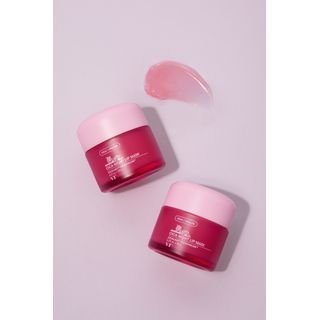
"VT - Cica Night Lip Mask" is effective for: Exfoliation, Moisturizing and Anti-aging
Ingredient callouts
- Actives derived from an extract of the Centella Asiatica plant (also known as Gotu Kola) - madecassoside 0.05% - 0.30%, madecassic acid 0.10% - 0.35%, asiatic acid 0.10% - 0.40% and asiaticoside 0.10% - 0.40% The Centella Asiatica Actives, even in low concentration, can help reduce inflammation in skin, strengthen the skin barrier and reduce photodamage. They can also help to decrease scarring.
Price
The product retails for 15.40$ in the United States.
For a detailed price comparison: click here.
Sources cited in this review
Every concentration estimate and effectiveness label is anchored to one of these 32 studies and safety reviews.
- 1
- 2
- 3
- 4
- 5
- 6

Affiliate links · As an Amazon Associate, WIMJ earns from qualifying purchases.