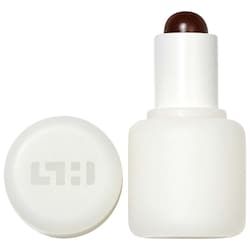
Simihaze Beauty Super Slick Tinted Lip Balm
Works for
0 of 1 advertised claim delivered
Moisturizing3 ingredients credited for this claimLimited support
“A moisture-boosting lip balm infused with rose oil for a soothing effect.”
Does not contain the most effective ingredients for moisturization. The emollients (diisostearyl malate) can help soften the upper layer of the skin. Keep in mind though that this product lacks humectants that attract water. You might want to use a separate product with ingredients like hyaluronic acid or glycerin in addition (use before this product for the best results).
Can it cause trouble?
Irritancy2 strong irritants: Parfum, LimoneneMedium risk
Comedogenic2 ingredients rated 2 or more on the 0–5 pore-clogging scale2 flagged
User reviews
Be the first — your take helps the next person decide.
Ingredients
Filter by role to see what each ingredient is doing.
Diisostearyl malate~22–34%
- Irritation risk
- Medium
Helps to soften the upper layer of the skin
More about Diisostearyl malateOctyldodecyl stearoyl stearate~4.9–7.4%
- Irritation risk
- Low
Pentaerythrityl tetraisostearate~3–4.5%
- Irritation risk
- Medium
Used to create a thicker product consistency
More about Pentaerythrityl tetraisostearateVp/hexadecene copolymer~3.1–4.6%
- Irritation risk
- Low
Creates a nice product texture and can support water-resistance of sunscreens
More about Vp/hexadecene copolymerPolyethylene~2.3–3.5%
Ozokerite~1.5–2.2%
Parfum~1–1.6%
- Irritation risk
- High
An aromatic blend of unspecified and possibly irritating ingredients
More about ParfumRosa canina fruit extract~0.95–1.4%
- Irritation risk
- Medium
A plant extract that might have some anti-oxidant properties, but evidence is lacking
More about Rosa canina fruit extractButyrospermum parkii butter~0.9–1.35%
- Irritation risk
- Low
- Comedogenicity
- 3/5
A great moisturising ingredient that softens the skin and reduces water loss from its upper layer. It also can be helpful in protecting skin from free radicals
More about Butyrospermum parkii butterLimonene~0.4–0.9%
- Irritation risk
- High
A common frangrance that can easily irritate skin, especially if exposed to air, light or heat
More about LimoneneCitric acid~0.35–0.8%
- Irritation risk
- Medium
Can work as an exfoliant but is typically used to adjust the product pH
More about Citric acidAluminum hydroxide~0.4–0.95%
- Irritation risk
- Low
Is used to add opaque (non-transparent) appearance to formulations. Can be used to coat other ingredients for even dispersion. This is a different ingredient compared to the ones used in antipersperants (aluminium chloride and aluminium chlorohydrate)
More about Aluminum hydroxideMica~0.35–0.85%
- Irritation risk
- Low
Creates an illusion of smoother and more radiant skin tone. Adds shimmer to the skin by reflecting light
More about MicaDiethylhexyl syringylidenemalonate~0.15–0.6%
- Irritation risk
- Medium
Used to stabilize the product formulation
More about Diethylhexyl syringylidenemalonateCaprylic/capric triglyceride~0.15–0.7%
- Irritation risk
- Medium
A good mix of fatty acids that forms a protective layer on the skin. Improves the shelf life of products. Derived from coconut and glycerin
More about Caprylic/capric triglycerideCi 77891~0.15–0.55%
- Irritation risk
- Low
Titanium dioxide~0.35–0.75%
- Irritation risk
- Low
Works as a UV filter when used in high concentrations. It is photostable and is effective mostly against the UVB light, with some protection in the UVA range. In small concentrations, used for its ability to improve the color of cosmetic products. Is usually well tolerated by the skin
More about Titanium dioxideCi 15850~0.15–0.6%
Ci 19140~0.1–0.45%
Ci 42090~0.1–0.35%
Blue 1 lake~0.1–0.35%
Ci 45410~0.1–0.3%
Ci 77491~0.05–0.25%
- Irritation risk
- Low
A red colorant made of iron oxide. Typically is not irritating
More about Ci 77491Iron oxides~0.05–0.15%
- Irritation risk
- Low
An umbrella term for the following three colorants: CI 77491, CI 77492, CI 77499. They might be able to offer some protection against visible light, but the degree of the protection is not clear
More about Iron oxidesCi 77492~0.05–0.15%
Iron oxides~0.01–0.05%
- Irritation risk
- Low
An umbrella term for the following three colorants: CI 77491, CI 77492, CI 77499. They might be able to offer some protection against visible light, but the degree of the protection is not clear
More about Iron oxidesCi 77499~0.01–0.05%
Iron oxides~0.01–0.05%
- Irritation risk
- Low
An umbrella term for the following three colorants: CI 77491, CI 77492, CI 77499. They might be able to offer some protection against visible light, but the degree of the protection is not clear
More about Iron oxidesIngredient list view
Diisostearyl malate, Octyldodecyl stearoyl stearate, Pentaerythrityl tetraisostearate, Vp/hexadecene copolymer, Polyethylene, Ozokerite, Parfum, Rosa canina fruit extract, Butyrospermum parkii butter, Limonene, Citric acid, Aluminum hydroxide, Mica, Diethylhexyl syringylidenemalonate, Caprylic/capric triglyceride, Ci 77891, Titanium dioxide, Ci 15850, Ci 19140, Ci 42090, Blue 1 lake, Ci 45410, Ci 77491, Iron oxides, Ci 77492, Iron oxides, Ci 77499, Iron oxides
Compare prices
Retailers ranked by price — lowest first.
Sources cited in this review
Every concentration estimate and effectiveness label is anchored to one of these 4 studies and safety reviews.
- 1
- 2
- 3
- 4

Affiliate links · As an Amazon Associate, WIMJ earns from qualifying purchases.